
Featured
ICPC Uncovers, Recovers N1.264b Tax Diversion

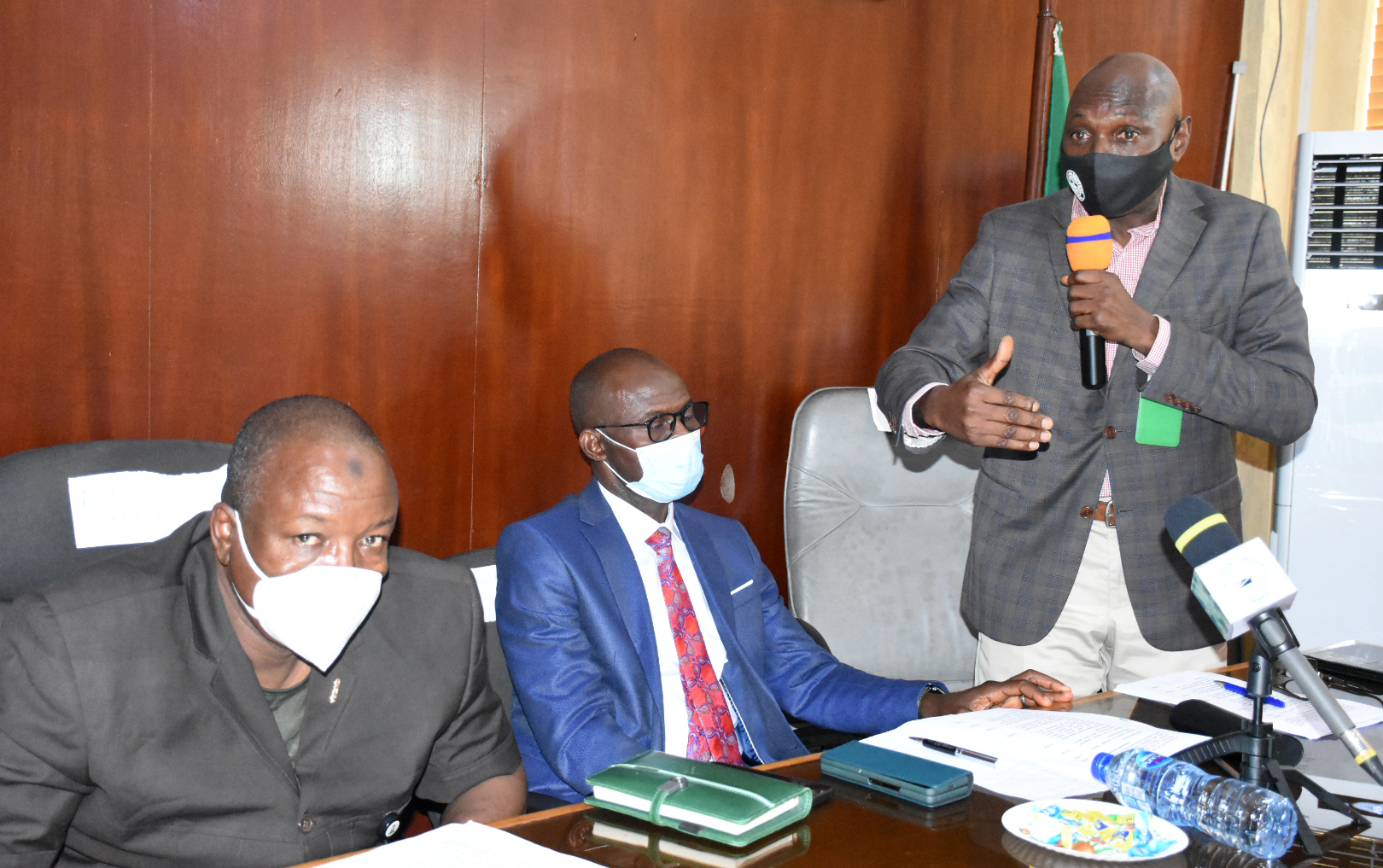
Independent Corrupt Practices and Other Related Offences Commission (ICPC), has disclosed that it has this year uncovered and recovered the sum of N1.264billion diversion of tax and other statutory revenues as part of routine investigations, in itssupport of government’s effort to improve revenue generation in the country.
This is true even as it stated that in order to differentiate between outright fraud and administrative errors, it met with some MDAs to discuss recurring surpluses in their payroll in order to determine proactive measures to improve the budget process.
As a result, it discovered soft projects worth more than N7billion for a catchment population of about a million people under the guise of empowerment and another instance of a successful increase in an agency’s budget.
It added that both cases done by politically exposed persons are under investigation.
Chairman, of ICPC, Bolaji Owasanoye, made the disclosure at the Fourth National Summit on Diminishing Corruption in the Public Sector, held at the Conference Hall of the Presidential Villa, Abuja, yesterday.
The event, with the theme: ‘Corruption and the Education Sector’, was jointly organised by the ICPC, the Office of the Secretary to the Government of the Federation (OSGF) and the Joint Admissions and Matriculation Board (JAMB).
He said: “As is now widely publicised ICPC has intensified its scrutiny of personnel and capital cost of MDAs leading to proactive restraining of surpluses or duplications in the budget. Just last week the commission in collaboration with the Budget Office and stakeholders met with some MDAs on the recurring surpluses in their payroll to determine proactive measures to improving the budget process.
“This is towards separating outright fraud from administrative lapses. We also actively review the budget to prevent abuse by senior civil servants and PEPs who sometimes personalise budgetary allocation for direct benefit. In one case, PEP successfully increased the budget of an agency in order for the agency to buy a property from him. In another case the PEP inserted soft projects worth over N7b for a catchment population of about one million people in the name of empowerment. Both cases are under investigation.”
The head of the ICPC said that among other things, the commission was assiduously working to root out phony appointments and scrutinize candidates for appointment to positions of permanent secretaries.
He noted that investigation results showed that numerous potential nominees are linked to financial misconduct, dishonest behaviour, a breach of code of conduct, and substance misuse.
Owasanoye applauded the commitment of the Head of Service to clean-up the stable by effective pre-appointment screening, noting that the ICPC would continue to play its part.
He said the commission was particularly delighted that Chief Superintendent Amah, who was conferred with the prestigious 2022 Public Service Integrity, for rejecting a $200,000 bribe from robbers, is from the Nigeria Police, an institution often derided, maligned and under- appreciated.
Amah, who was conferred the award by President Muhammadu Buhari is the Divisional Police Officer in charge of Nasarawa Division in Kano State.
The ICPC boss said: “On 24th April, 2022, a matter was reported to him that a suspect, one Mr. Ali Zaki convinced Bureau De Change Operators that he has $750,000 which he could sell to them at the rate of N430 to give him the equivalent N322,500,000.
“After a bank staff confirmed the availability of the money at the bank to the victims, the transaction took place. However, the suspect arranged with armed robbers to track and rob the victims while they were transporting the money.
“When the matter was reported to the Police Division in Kano State where SP Daniel Amah was the DPO, they recommended investigations. In the course of the investigation, they traced the principal suspect, Mr Ali Zaki who offered $200,000 to the SP to kill the case, through a bank staff. The offer was rejected, the bank staff was promptly arrested which led to the arrest of the principal suspect. The $200,000 was recovered and registered as exhibit.
“For this and other acts of integrity, SP Daniel Itse Amah is being conferred with the 2022 Public Service Integrity Awards.”
Owasanoye also said the ICPC has constituted a special team on investigation and prosecution of sexual harassment in secondary and tertiary institution in response to the recent epidemic of sexual harassment in the education sector.
He said: “ICPC has escalated its prevention mandate in the face of costly, time consuming and unpredictable outcomes of investigation and prosecution. In this regard we are strengthening the Anti-Corruption and Transparency Monitoring Unit (ACTU) in MDAs. For the education sector, we collaborated with other institutions, including Nigerian Universities Commission andNational Board for Technical Education (NBTE) and much more recently with JAMB our co-host for this event.
“With JAMB and Department of State Service, we conducted last year a series of undercover operations across the country on corruption in the university admissions processes leading to the busting of syndicates and arrest of its leaders responsible for compromising Interim Joint Matriculation Board (IJMB) and Joint Universities Preliminary Examinations Board (JUPEB).
At the event, Buhari pointedly accused the Academic Staff Union of Universities (ASUU) of being complicit in the corruption threat facing the nation’s tertiary education sector.
He said, “Incessant strikes especially by unions in the tertiary education often imply that government is grossly underfunding education, but I must say that corruption in the education system from basic level to the tertiary level has been undermining our investment in the sector and those who go on prolonged strikes on flimsy reasons are no less complicit.”
The President also noted additional actions taken by academics, such as the use of covert terminology to commit corruption in ivory towers, which, in his view, undermines efforts to combat the threat of corruption in the education sector.
“Government and stakeholders in the educational sector are concerned about the manifestation of various forms of corruption in the education sector. I am aware that students in our universities for example, use different terminologies to describe different forms of corruption they experience on our campuses.
“There is sorting or cash for marks/grades, sex for marks, sex for grade alterations, examination malpractice, and so on.
“Sexual harassment has assumed an alarming proportion. Other forms of corruption include pay-roll padding or ghost workers, lecturers taking up full time appointments in more than one academic institution, including private institutions, lecturers writing seminar papers, projects and dissertations for students for a fee, and admission racketeering, to mention only the most glaring corrupt practices,” he said.
Buhari, however, commended the ICPC for its due diligence in investigating and prosecuting sexual harassment as abuse of power in the country’s educational institutions.
He assured that “Government will continue to fund education within realistically available revenue”while urging stakeholders, including the media to “equally advocate for transparency in the amount generated as internally generated revenue by educational institutions and how such funds are expended.”
Buhari added that “Corruption in the expenditure of internally generated revenue of tertiary institutions is a matter that has strangely not received the attention of stakeholders in tertiary education, including unions.”
The President also urged stakeholders to demand transparency in the management of academic institutions and for unions to question their institutions’ bloated payrolls and ongoing expenses.
Additionally, he urged the unions to cooperate with the government in order to give names on the payroll faces and identities.
In his keynote address, former Chairman of Independent National Electoral Commission (INEC), Prof. Attahiru Jega, expressed concern that Nigeria is regarded as one of the most corrupt nations in the world in his keynote speech.
He asserted that the repercussions of corruption in the education sector limit the ability of the country to build the necessary social capital for socioeconomic growth and that no country can advance without making enough and wise investments in education.
He bemoaned that corruption from both the education sector itself and the larger public sector, as well as neglect, chronic underfunding, and crisis had all plagued Nigeria’s educational system.
In the higher education sector, particularly universities, which, according to the political science professor, statutorily enjoy some relative autonomy, there is growing evidence that corrupt practices anchored in the larger public sector influence and compel such behaviours.
He said: “There are examples of how reforms policies, formulated with good intentions are often circumscribed by endemic corruption in the public sector, and in their application in the education sector, create their own dynamics of corrupt practices. This can be illustrated with examples of how three reform policies by the Federal Government compel many vice chancellors of federal universities to become somewhat ‘compulsorily’, even if in some cases reluctantly, involved in or with endemic corrupt practices in the wider public sector.
“The first reform policy of measure is the Procurement Act 2007, which requires that contracts of certain threshold should seek for approval either at the Ministerial Tenders Board (MTB) or at the Bureau for Public Procurement (BPP). The second is the requirement by members of the National Assembly that every vice chancellor must appear before them to defend their budgetary proposals before funds would be appropriated to their universities. The third, which is relatively more recent, is the requirement by the Federal Government that no university should recruit any staff, even to fill existing vacancies, without at least three layers of approvals by the federal bureaucracy, at the NUC, at the Office of the Head of the Civil Service of the Federation, and at the Office of the Accountant General of the Federation”
Jega noted that all these three policies in spite of the good intentions, which may have underlined them, not only undermined the relative autonomy of the universities, but have also introduced extraneous relations and influences laden with corrupt practices.
Minister of Education, Adamu Adamu, commended the leadership of JAMB for “achieving what no other agency has achieved in recent past”.
He noted Nigeria must fight corruption to be liberated, adding that differences can be made in all sectors no matter how bad it is perceived.
“Nigeria has a bad reputation of being a corrupt society. Nobody will change that except us. At a moment you see people condemning corruption and the next moment, they engage in it. We have to sincerely fight it otherwise this nation is doom”, Adamu stated.
Speaking to newsmen after the investiture, Amah said “I’m quite happy. It’s, indeed, difficult to put these feelings into words. But I’m very excited.”
On what went through his mind when he rejected the huge amount of money, especially as a member of staff of a service that has been maligned over the years, he said
“Well, we have to protect the interest of the force, and the interests of the country at large. In all honesty, I take no personal credit. I believe there are very eminently qualified Nigerians out there that are doing great things for our country. To emerge from this stratum of Nigerians is indeed a great pleasure.
He dedicated the award to the Inspector General of Police, the ICPC and the President.



Rivers State Governor, Sir Siminalayi Fubara, has charged the newly appointed Secretary to the State Government (SSG) and Chief of Staff (CoS) to carry out their duties with discipline, loyalty and a firm commitment to the success of the administration and the wellbeing of the people of Rivers State.
The governor warned that any involvement in unauthorised nocturnal meetings or any conduct capable of embarrassing the government will attract immediate dismissal.
Fubara gave the warning yesterday shortly after the newly appointed Secretary to the State Government (SSG), Dr Dagogo S.A. Wokoma and the new Chief of Staff (CoS), Barrister Sunny Ewule, were sworn in at the Executive Council Chambers of Government House, Port Harcourt.
As part of the ceremony, the Chief Registrar of the State High Court, David Ihua-Maduenyi administered the Oath of Allegiance and Oath of Office on the duo before the governor gave his charge.
Addressing the appointees, Fubara reminded them that their elevation to the new positions was a call to service and not a platform for political grandstanding or the pursuit of personal ambition.
He stressed that their foremost responsibility should be to themselves and to the people of Rivers State, stressing that their conduct must always reflect integrity, restraint and dedication to public good.
Speaking directly to Dr. Wokoma, whom he described as an accomplished academic and mathematician, the governor expressed confidence in his intellectual depth and capacity to deliver on the new assignment.
The office of the Secretary to the State Government, Fubara stressed, demands thoroughness, discipline and a deep sense of responsibility. He charged the SSG to represent the State with honour at all times.
“Your duty includes representing the state government. You need to represent us in a way and manner that will bring honour to us.
“What is important to this administration is to see that the good works that we started and the ones that we met, are concluded in a way that will bring progress and development to our dear state,” he stated.
Turning to the new Chief of Staff, the governor explained that he is expected to ensure smooth administrative coordination, managing official engagements effectively and safeguarding the image of the Government House.
He underscored the sensitive and personal nature of the role and emphasised that the position operates strictly under the authority of the governor.
Fubara stressed that the role does not permit independent political engagements or private strategy meetings without his knowledge and consent.
“Let me sound it here very clearly. Your duty is to make sure that you handle the administrative duties and image making roles perfectly well, liaising with whoever is coming for any official assignment here.
“If you involve yourself in nocturnal meetings and all those things, I will sack you. I’m very serious. What is important to me today is peace, progress and prosperity of this state. I’m not going to compromise anything for it,” he said.
The governor cautioned that involvement of the new appointees in any action capable of bringing the government or his office to disrepute would attract appropriate sanctions.
While congratulating the new appointees, Fubara expressed optimism that they would justify the confidence reposed in them.
He called on all public officials to work together in unity, observing that collective success is stronger and more enduring than individual achievement.
The governor who also addressed the Permanent Secretaries present at the ceremony, directed those of them who have reached retirement age to start preparing their handover notes without delay.
The notice, he said, was not intended to scare anybody but to prepare their minds towards the inevitability of exiting the service one day and to pave way for an orderly transition.
He warned against any attempt to engage in financial misconduct or last-minute irregularities, stressing that he was closely monitoring the system to ensure strict enforcement of accountability rules.

Rivers State Governor, Sir Siminialayi Fubara, has dissolved the State Executive Council.
The governor announced the cabinet dissolution yesterday in a statement titled ‘Government Special Announcement’, signed by his new Chief Press Secretary, Onwuka Nzeshi.
Governor Fubara directed all Commissioners and Special Advisers to hand over to the Permanent Secretaries or the most Senior officers in their Ministries with immediate effect.
He thanked the outgoing members of the State Executive Council for their service and wished them the best in their future endeavours.
The three-paragraph special announcement read, “His Excellency, Sir Siminalayi Fubara, GSSRS, Governor of Rivers State, has dissolved the State Executive Council.
“His Excellency, the Governor, has therefore directed all Commissioners and Special Advisers to hand over to the Permanent Secretaries or the most Senior officers in their Ministries with immediate effect.
“His Excellency further expresses his deepest appreciation to the outgoing members of the Executive Council wishing them the best in their future endeavours.”
The Independent National Electoral Commission (INEC) yesterday told the National Assembly that it requires N873.78bn to conduct the 2027 general elections, even as it seeks N171bn to fund its operations in the 2026 fiscal year.
INEC Chairman, Prof Joash Amupitan, made the disclosure while presenting the commission’s 2026 budget proposal and the projected cost for the 2027 general elections before the National Assembly Joint Committee on Electoral Matters in Abuja.
According to Amupitan, the N873.78bn election budget covers the full conduct of national polls in 2027.
An additional N171bn is needed to support INEC’s routine activities in 2026, including bye-elections and off-season elections, the commission stated.
The INEC boss said the proposed election budget does not include a fresh request from the National Youth Service Corps seeking increased allowances for corps members engaged as ad-hoc staff during elections.
He explained that, although the details of specific line items were not exhaustively presented, the almost N1tn election budget is structured across five major components.
“N379.75bn is for operational costs, N92.32bn for administrative costs, N209.21bn for technological costs, N154.91bn for election capital costs and N42.61bn for miscellaneous expenses,” Amupitan said.
The INEC chief noted that the budget was prepared “in line with Section 3(3) of the Electoral Act 2022, which mandates the Commission to prepare its election budget at least one year before the general election.”
On the 2026 fiscal year, Amupitan disclosed that the Ministry of Finance provided an envelope of N140bn, stressing, however, that “INEC is proposing a total expenditure of N171bn.”
The breakdown includes N109bn for personnel costs, N18.7bn for overheads, N42.63bn for election-related activities and N1.4bn for capital expenditure.
He argued that the envelope budgeting system is not suitable for the Commission’s operations, noting that INEC’s activities often require urgent and flexible funding.
Amupitan also identified the lack of a dedicated communications network as a major operational challenge, adding that if the commission develops its own network infrastructure, Nigerians would be in a better position to hold it accountable for any technical glitches.
Speaking at the session, Senator Adams Oshiomhole (APC, Edo North) said external agencies should not dictate the budgeting framework for INEC, given the unique and sensitive nature of its mandate.
He advocated that the envelope budgeting model should be set aside.
He urged the National Assembly to work with INEC’s financial proposal to avoid future instances of possible underfunding.
In the same vein, a member of the House of Representatives from Edo State, Billy Osawaru, called for INEC’s budget to be placed on first-line charge as provided in the Constitution, with funds released in full and on time to enable the Commission to plan early enough for the 2027 general election.
The Joint Committee approved a motion recommending the one-time release of the Commission’s annual budget.
The committee also said it would consider the NYSC’s request for about N32bn to increase allowances for corps members to N125,000 each when engaged for election duties.
The Chairman of the Senate Committee on INEC, Senator Simon Along, assured that the National Assembly would work closely with the Commission to ensure it receives the necessary support for the successful conduct of the 2027 general elections.
Similarly, the Chairman of the House Committee on Electoral Matters, Bayo Balogun, also pledged legislative support, warning INEC to be careful about promises it might be unable to keep.
He recalled that during the 2023 general election, INEC made strong assurances about uploading results to the INEC Result Viewing portal, creating the impression that results could be monitored in real time.
“iREV was not even in the Electoral Act; it was only in INEC regulations. So, be careful how you make promises,” Balogun warned.
The N873.78bn proposed by INEC for next year’s general election is a significant increase from the N313.4bn released to the Commission by the Federal Government for the conduct of the 2023 general election.
-

 News2 days ago
Amend Constitution To Accommodate State Police, Tinubu Tells Senators
-
 Politics2 days ago
Senate Urges Tinubu To Sack CAC Boss
-

 News2 days ago
Disu Takes Over As New IGP …Declares Total War On Corruption, Impunity
-
Business3 days ago
President Tinubu Extends Raw Shea Nuts Export Ban To 2027
-
Business3 days ago
Crisis Response: EU-project Delivers New Vet. Clinic To Katsina Govt.
-
Business3 days ago
President Tinubu Approves Extension Ban On Raw Shea Nut Export
-
Sports3 days ago
NDG: Rivers Coach Appeal To NDDC In Talent Discovery
-
Rivers3 days ago
Etche Clan Urges Govt On Chieftaincy Recognition