
Banking/ Finance
Nigeria is Surging in Forex Traders

Nigeria is one of those African countries that are driving the frontiers of the foreign exchange market (Forex, FX) trading. It has become widely popular among its citizens and a lot of people are starting to generate income from trading daily. But the surge is visible not only by society but by the statistics as well. Nigerian traders currently hold as much as $1.25 million in their trading positions.
A recent report that has been released by one of the forex research firms has estimated that Nigeria’s forex traders are holding $1.25 million dollars in their trading positions. This is a huge volume to be traded daily considering how other countries are faring in this economic climate. Forex trading is not something people have working hours for. The platforms are open 24 hours 5 and a half days a week. This gives an immense amount of flexibility to everyone interested in this field. People can do trading as their main income, or work full-time and do it in the evenings. There are no opening or closing hours and thus there is no rush anywhere, apart from opening and closing positions because that’s what generates the money for traders. The options are absolutely up to the person. They can be on the bullish side trading aggressively or taking their time and passively work whenever they see fit. Otherwise, it is “choose your own schedule” type of deal. However, it is still considered to be a risky endeavor and one should never trade with what they need to get by during the month.
In terms, the scrutiny that the foreign exchange market is going through on a daily basis due to the fact that the whole point of FX is still considered to be short-term high-risk price speculation. These fears are justified to an extent but this doesn’t mean one shouldn’t try. People who excel at such activities are the ones that make money. Those who are doing, well, to be fair it’s the law of the jungle there. Either you are good at it and you make money or you overestimate your own abilities and knowledge and lose. However, it is not to say that everything can be calculated. However, this is not to say that everyone has their own unique strategy. If you are a new trader start by using fundamental analysis for trading that will decrease risks of losing your investment substantially. Going through such an ordeal with a lighthearted attitude is not going to lead you anywhere.
Trading in general, whether it is forex, cryptocurrency, stocks, commodities, or anything else is still based on luck. Unfortunately, humans do not have the foresight to see into the future and thus every opening and closing of trade is more or less a coin flip. What knowledge of the subject, as well as cunning and intelligence, adds to the trader is the reduction of risks but never elimination as a whole. Trading allows interested parties to gain some revenue from different currency pair trades. This means that people are buying currency pairs and then sell it when the price surge happens to make that small difference that they put their money on at the start of the trade. This may or may not happen. Forex is influenced by loads of factors that make or break things as they go.
A lot of people in these times of crisis are working hard on diversifying their asset classes. The coronavirus pandemic has hit hard and took a huge toll on the financial situations of everyday citizens all across the world. Even people living in developed countries with strong governments and financial policies are struggling to get by due to on-going lockdowns and social distancing laws or rules depending on the country we are talking about. The idea is quite simple. The surge can be largely attributed to the fact that a lot of people have lost their means of income due to the shutdown of the whole industries they were employed in. The coronavirus pandemic made sure that the whole spring and summer of 2020 are lost for tourist companies. International transportation is also being hit hard with airlines reporting incredible losses due to the fact that the airspace is locked down tight for everyone. There are no people traveling which means that there is no need for planes, trains, cars, yachts, or any other means of transportation.
Why Is FX Trading Becoming Popular in Nigeria?
Recently the head of Capital Markets in TRW Stockbrokers Ltd has been interviewed and asked this very same question. Mr. Abdul-Rasheed Oshoma Momoh is a veteran forex trader and extremely successful investor. He broke down some of the most important aspects that have led to such a surge in popularity for forex trading in Nigeria.
Accessibility
In the interview, he outlines the most valuable moves that every trader should be looking out for. He stated that trading FX is one of the most rewarding methods for investors to make revenue. This is why it is extremely important to choose what and when you are going to be trading. Forex offers the highest amount of leverage on trades in comparison to other financial markets. The trading accounts can differ as well from small to large depending on the amount of investment a trader is willing to make. An increase in leverage means that one can trade with higher amounts of money than initially invested. However, the risk is that any move against you may result in significant losses as well. This means that traders need to have proper risk management policies in place. The need for smaller amounts of the initial investment is what draws a lot of Nigerians into this fray. People come from underdeveloped countries with not much on their stake except for whatever they can scrap. Forex allows Nigerians to make such revenue that most of the daily jobs in the country wouldn’t even get close to.
Easy Trades
Trading on the foreign exchange market is not complicated, mechanically speaking. The idea is that the systems at hand can be learned by anyone anywhere without the need for in-depth knowledge of computers. The fact that trades can be done with one click of a mouse is something a lot of people get behind. Therefore, an ability to buy and sell at anytime that is convenient is a huge draw for individuals in Nigeria. If someone is a bullish trader they can quite easily go for a long time selling Nigerian Naira and buying United States Dollar. In comparison to this, the equities market has set boundaries where you are allowed to short-sell during the uptick.
Transaction Costs
It goes without saying that transactions are completed using the over-the-counter methodology. Traders are directly dealing with market makers and participants like banks, hedge funds, and other financial institutions.
Due to this, there are no extra fees that are piling upon every transaction the trader wants to make. This is something that sets forex apart from stocks, ETFs, or even bonds. More than usually market makers do not charge any fees for currency trades that are made on their trading platforms.
Regulations
What sets FX trading in Nigeria apart from most of the other developed parts of the world is the absence of regulations. Forex trading is still unregulated in Nigeria and a lot of people are utilizing this to make as much revenue as possible. This means that they are not taxed for this income. In comparison to this Nigerian stock market is regulated where local stocks cannot move either way up nor down beyond 10% of its present value.



Cornerstone of Financial Services
A survey of more than 1 000 global finance leaders undertaken by digital payment network Ripple shows that 72% of respondents believe they need to offer a digital asset solution to remain competitive.
According to Ripple, leaders from the banking, fintech, corporate and asset management sector have made it clear that the “digital asset revolution is happening now”.
“Digital assets are quickly becoming a cornerstone of financial services, underpinned by progressive regulation, growing interest from Tier-1 banks, a steady consumer shift from banks to fintech providers, and booming stablecoin adoption,” Ripple says.
The survey was conducted in early 2026 and the findings released in March.
Stablecoin Boon or Bane?
Ripple has experienced significant success in the stablecoin sector since launching its Ripple USD (RLUSD) stablecoin in 2024.
With a market cap of $1.56 billion, it is considered a major regulated player in the market.
No doubt the platform was pleased to learn through its own survey that financial leaders were most bullish about stablecoins.
Roughly three-quarters of respondents believed they could boost cash-flow efficiency and unlock trapped working capital.
Ripple noted that finance leaders were thinking about stablecoins as more than “just a new way to execute payments”; instead, they viewed them as effective tools for treasury management.
In March 2026, Ripple began testing a new trade finance model built around RLUSD in a bid to increase the speed of cross-border payments.
The pilot initiative, developed alongside supply chain finance company Unloq [https://unloq.com], is running on the XRP Ledger inside a testing framework developed by the Monetary Authority of Singapore.
The Asian city-state is one of the platform’s biggest growth markets.
The idea behind the project is to see whether stablecoin-based settlement can streamline trade finance, too often hampered by reliance on intermediaries and slow reconciliation.
The only potential drawback is that if the initiative takes off, the Ripple to USD price could be negatively affected.
Ripple has always championed its native XRP token as a bridge asset, the “middleman” in the process of a financial institution turning dollars in the US into pounds in the UK, for example.
Ripple converts dollars into XRP and then back into pounds.
If RLUSD can do exactly the same thing, questions will be asked about XRP’s relevance.
That is a bridge Ripple will have to cross if it gets to that point.
Tokenisation Partners
Another interesting finding from Ripple’s survey is that most banks and asset managers are seeking tokenisation partners to help execute their strategies.
Some 89% of respondents said digital asset storage and custody were top priority. “Token servicing/lifecycle management also ranks highly for banks at 82%, while asset managers place greater emphasis on primary distribution at 80%,” Ripple found.
The survey also revealed that just more than half of fintechs and financial institutions want an infrastructure provider that can offer a “one-stop-shop solution”. This rose to 71% among corporate financial leaders.
Ripple attributes this to institutions and firms wanting uncomplicated, cohesive systems.
Infrastructure Rules
In its final analysis, Ripple says companies across the board are looking for partners and solutions that are “secure, compliant, battle-tested and that enable growth and execution”.
“The message is clear: infrastructure decisions made today will shape competitive positioning tomorrow.”
No surprise that this is precisely where Ripple is placing much of its focus.
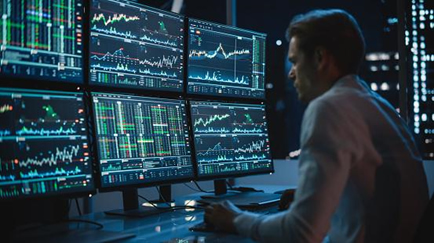
Forex trading signals are an automation tool. It represents trading advice based on analysis: in which direction the security price is going to go, to which levels it is most probable to reach as well as at which level it is reasonable to set a trailing stop loss.
Signals for Forex
Forex signals must answer the next questions:
- what asset does it make sense to open a deal at this moment?;
- in what direction will the price go?;
- open a short position or long?;
- what is the target profit level? ;
- at what level should I insure the deal and why?;
- when will the price reach the target level?;
- what is the probability of a positive result?.
A trader determines the volume of a deal him.
Benefits and Drawbacks of Trading Signals
For you, the benefits of signals in your trading are as follows:
- Time to save money.
Sometimes you can’t always keep track of all of the charts at the same time. It happens that you are not necessarily aware enough to make the correct choice. There is sometimes not enough time to go over dozens of data sources to figure out the right choice.
- Practices.
By using the signals of the ISP, the trader can analyze it. “Why did the signal provider pick this particular one and not this one? If I were in his shoes, what would I do?”. The signals are an avenue to learn from the lessons of others.
- Mental effect.
Based on the signals from the providers, to a certain extent, a trader absolves of responsibility for his decisions. Psychologically, in the case of misfortune, it will always be simpler to blame somebody else rather than yourself. In doing so, the mental burden is lessened.
As an alternative, the signals provider can always act as a signals provider itself, thus generating additional revenue. At certain brokers, there is multi-level social trading. The trader copies trades of one or more traders to his account. And he/she makes their account accessible for other traders to copy.
Using Forex Trading Signals
The Forex signals arrive in the form of a message. It necessarily includes the action, type of asset, and level of the stop-and-take profit. It is a big plus if the signal provider provides advice: they add a screenshot of the chart with installed indicators and explain the decision, giving comments on critical levels and the principle of pending orders deployment. To use the recommendations or not is the trader’s choice. The trader also chooses the volume of the transaction and calculates whether the deposit will be able to withstand a drawdown at the selected amount and the stop recommended.
Have fun saving money over lockdown, did you?
Sure, the distinct lack of expenditure over the past 15-16 months have been great, but things arestarting to get back to normal.With a return to normality,you’ll probably find your day-to-day spending is steadily rising to where it was before.
The next few months are set to be interesting ones from a budgeting perspective. Many rescheduled social events like weddings, stag and hen dos and other big celebrations that were postponed over the past year and a half are all getting crammed in close together. For those participating, that can rather quickly take monthly spending from next to nothing to an awful lot.
Indeed, summer is a classic time for unexpected costs to rear their head, but with this year especially likely to be a shock to the financial system, what can you do to deal with them?
Reasons your budget isn’t working
If your budget has gone from being watertight to looking shaky recently, these could be some of the reasons:
- You haven’t given it enough thought: Saving money over 2020 and beyond may have happened to you organically. By that we mean you didn’t make any budgetary decisions to generate savings, they just happened. Now that life is back to normal the associated costs come with it, so you might need to put more effort into your budget to stay in the black.
- You’re spending more than you’re earning: Again, this perhaps wasn’t a particular worry over the past year and a half with nothing to do, but that might have stopped youfrom thinking about where and how you’re spending your money. With every wedding, party or event you attend, you’ll be spending a small fortune.Those costs may well suddenly add up to more than your income on the month.
- You’re not budgeting properly for different categories: Now that a lot more recreational spending is back on the table, you may have to address your category spending and apportion more funds to having fun. That spending should come at the cost of another area, though, which is a key thing to figure out to get your budget in shape.
- You aren’t adjusting it: Summertime, and summer 2021 in particular, is always a period of higher spending. With holidays and general fun in the sun to consider, you need to account for that in your budget. Planning your finances to spend more now and save more later will help you to recover from the bigger spending months.
Building an emergency fund
Emergency funds are essential for dealing with unexpected costs, particularly if you’re getting to a point where you’re spending about as much as you earn again. Right now, you might be thinking about how next week’s stag do is going to affect your budget, but what if the boiler breaks down or a pipe suddenly bursts? Sudden, unanticipated but essential repair costs like these can send you into financial chaos if you’re not ready for them.That’s where an emergency fund can help.
You can build an emergency fundby aiming to set aside three to six months’ worth of living expenses. This might seem like a mammoth task, but if you put little bits of money aside gradually – as much as you can afford every month –you’ll build towards it quicker than you might think. Then, when a rainy (or chaotically sunny) day comes, you’ve got that all-important safety valve to keep you financially afloat.
Just remember to assess your finances and ensure you are only putting away an amount of money that will not leave you short.
-

 News2 days ago
RSG Targets Nine Million Residents in Mosquito Net Distribution Campaign
-

 Oil & Energy1 day ago
Aiyedatiwa Signs New Electricity Bill
-

 Maritime1 day ago
Marine Minister Commends President Tinubu On NPERA Bill Assent
-

 Oil & Energy1 day ago
NLNG Commissions Research And Innovation Centre In RSU
-

 News2 days ago
KenPoly Holds Eight Convocations, August 29
-

 News2 days ago
RMAFC Completes Revenue Sharing Review, Proposes New Pay
-

 News2 days ago
RSG Begins Another Phase of Projects Commissioning Today
-

 Maritime1 day ago
NAGAFF Petitions IGP Over Alleged Maritime Police Harassment