
Oil & Energy
Delta Targets 120MW Power Boost, Moves To Cut Reliance On National Grid

The State Commissioner for Works (Rural Roads) and Public Information, Charles Aniagwu, disclosed this at a press conference in Asaba, weekend, noting that the initiative was part of wider reforms aimed at opening up the power sector to private investors.
Aniagwu, who was accompanied by the Executive Assistant to the Governor on New Media, Felix Ofou, said the state was exploring alternative sources of electricity to support businesses, households and communities while reducing pressure on the national grid.
He said the government was particularly interested in exploiting Delta’s abundant natural gas resources for power generation, pointing to the Kwale Free Trade Zone, which is part of the state’s special economic zone, as a major opportunity for investors.
According to him, prospective investors were taken to the zone during the state’s recent economic summit to enable them to assess the availability of gas as a key raw material for electricity generation. ComparePower Rates
The commissioner explained that generating more electricity locally would not only increase supply in Delta but also free up power on the national grid for use by other consumers.
Aniagwu cited the 8.5MW Independent Power Plant located behind the state secretariat in Asaba as an example of what could be achieved through alternative power sources.
He said the facility had enabled the secretariat complex to operate independently of the national grid, thereby making the electricity that would otherwise have been consumed there available to other users.
He added that the planned 120MW partnership with Supply Power would further strengthen the state’s electricity supply capacity and provide a more reliable power base for small and medium-sized enterprises.
Aniagwu said the state government was also intervening in areas traditionally regarded as the responsibility of electricity distribution companies because inadequate power supply could no longer be allowed to constrain economic development. LearnQuantum Physics
He identified the extension of the electricity grid from Abraka towards the Ndokwa axis as one of the interventions being undertaken to connect more communities to electricity.
The commissioner, however, raised concerns over the burden placed on communities that are often required to provide transformers and other electricity infrastructure, only for distribution companies to take over the facilities and subsequently collect electricity bills without adequately accounting for the investments made by the communities.
He said the state would continue to support efforts aimed at energising communities, noting that improved electricity supply would stimulate businesses, create jobs and help tackle social problems associated with unemployment and idleness.
On regulation, Aniagwu said the government was working with the Ministry of Energy and a committee set up to develop an appropriate regulatory framework for the state’s emerging power sector. SwitchEnergy Plans
He said the proposed energy commission would be responsible for regulating new electricity producers, determining appropriate tariffs and overseeing distribution networks.
The commissioner stressed that liberalising the sector required effective regulation to protect consumers and investors, adding that decisions on power distribution infrastructure, including the use of overhead or underground lines, must take into account the peculiarities and safety requirements of each location.
He warned that power expansion without adequate regulation could expose residents to electrocution and other hazards, stressing the need to protect electricity infrastructure while ensuring consumers were not subjected to unfair pricing.
Aniagwu said the state government’s broader objective was to build an efficient and sustainable electricity market driven by private investment and capable of powering businesses, households and communities across Delta State.


Commodity analysts at Standard Chartered have reported that the latest OPEC survey of secondary sources reveals that Kazakhstan’s crude oil output clocked in at 1.852 mb/d in March, 384 kb/d above its OPEC+ quota. Further, the country also failed to keep its promise to cut 38 kb/d in compensation for overproduction in March, bringing its total overproduction to 422 kb/d. The same scenario is expected to unfold in the coming months. Kazakhstan produced 240 kb/d more y/y in March, a sharp contrast from the other eight OPEC+ members who produced a combined 612 kb/d less.
And now, the oil futures markets are sending a dire warning that oil bulls could find themselves in trouble quite soon due to a combination of the OPEC+ output hike and Trump’s tariffs.
Oil futures curve has formed a rare “smile” shape, a structure Morgan Stanley says was last seen briefly in February 2020 just before the infamous oil price crash. On Wednesday, Brent futures’ July contract was trading at a premium of 74 cents to the October contract, a market structure known as backwardation, foreshadowing immediate tight supply. However, prompt prices from November have formed a contango, with forward prices flipping to a discount, indicating oversupply as traders predict Trump’s tariffs will eventually weaken oil demand. Having backwardation and contango together leads to the rare “smile” shaped curve.
According to the latest available data by the International Energy Agency (IEA), global oil inventories stood at 7.647 billion barrels in February, down from 7.709 billion barrels for last year’s corresponding period and close to the bottom of their historical five-year range.
Meanwhile, refiners’ appetite for crude is climbing ahead of the peak driving season in July and August, “Refinery maintenance in the Atlantic basin will start to taper off, increasing oil demand (for refining)… Summer driving should provide some support,” BNP Paribas analyst told Reuters.
Global oil demand is expected to rise by 1.3 million barrels per day in the third quarter of the current year, up from an average of 104.51 million bpd in the second quarter, the IEA has predicted. The 1 million bpd output increases announced by OPEC+ so far, coupled with another 400 kb/d increase in July, almost matches the predicted demand increase, implying oil markets will not face a surplus till late in the year.
Meanwhile, oil prices jumped in Thursday’s session after the Trump administration announced it has struck a trade deal with the UK. Brent crude for July delivery was up 2.7% to trade at $62.75/bbl at 12.50 pm ET while WTI crude contract for June delivery added 3.0% to change hands at $59.86 per barrel. However, terms of the deal appear to fall well short of the “comprehensive” package Trump earlier touted.
According to Trump, UK Prime Minister Keir Starmer will further reduce non-tariff barriers and fast-track U.S. goods into his country. Meanwhile, another solid week of jobless claims underscored the Federal Reserve’s ongoing unwillingness to cut rates. U.S. jobless claims fell 13,000 to 228,000 for the period ending on May 3. Continued claims, however, clocked in at just over 1.9 million, near the highest levels since 2021, suggesting workers are still finding it difficult to secure new jobs as the economy stalls.
That said, commodity analysts at Standard Chartered have predicted that path of least resistance for oil prices is lower in the coming months, with oil prices to remain low before beginning a gradual recovery later in the year as U.S. oil output declines. StanChart, however, says there’s some technical support in the short-term, with fundamentals remaining fairly positive. Recently, StanChart cut its 2025 oil price forecast to $61/bbl from $76 and also lowered its 2026 forecast to USD 78/bbl from $85 citing Trump’s tariffs.
By Alex Kimani for Oilprice.com
Oil & Energy
Group Accuses NMDPRA Of Allowing Continued Importation, Sale Of Adulterated Fuel In Nigeria
The group said the alleged influx of blended fuel from Dubai and other countries had become a serious threat to consumers and the economy, accusing the regulator of failing to take decisive action against major marketers involved in the importation of such products.
In a statement issued at the weekend, President of the group, Alhaji Abdulrahman Sani Ibrahim, said the continued presence of questionable petroleum products in the Nigerian market was unacceptable, particularly after the regulator had previously acknowledged concerns over the quality of imported fuel.
The group said the NMDPRA had previously warned that it could stop supplying petrol to marketers found to be involved in importing or dealing in substandard products.
The consumer group, however, questioned why the regulator had not taken stronger action despite what it described as the continued mass influx of blended products into the country.
“This is no longer a matter that can be treated with regulatory caution or empty threats. The NMDPRA knows the concerns that have been raised about the continuous importation of blended products from Dubai and other countries, and it has even warned that marketers involved in such practices could be denied petroleum supplies. If the regulator is aware of these activities and still allows them to continue, then it is failing in its fundamental responsibility to protect Nigerian consumers,” the group said.
The organisation described the alleged continued importation of adulterated fuel as an economic crime, saying its consequences extend beyond individual consumers to businesses and the wider economy.
It said poor-quality petroleum products could damage vehicles and machinery, increase operating costs and impose additional financial burdens on Nigerians already struggling with high energy and transportation costs.
The group called on the NMDPRA to immediately intensify surveillance and testing of imported petroleum products at ports, depots and retail outlets.
It also demanded that marketers found to have imported or distributed products that failed regulatory standards should face sanctions.
The group said regulator cannot continue to issue warnings while the same practices it is warning against persist in the market. If a marketer deliberately imports or distributes adulterated fuel, the appropriate response should be immediate investigation, prosecution where necessary and sanctions that will deter others. Anything less gives the impression that the rules exist only on pape”.
The group further urged the federal government to investigate the activities of major petroleum marketers involved in the importation of blended products and determine whether regulatory officials had failed to perform their duties.
It said the issue should be treated as a matter of national economic security because of the potential impact on consumers, businesses and Nigeria’s reputation in the petroleum marketm
According to the group, Nigerians should not be forced to pay for the consequences of regulatory failures through damaged engines, higher transportation costs or reduced business productivity.
“Nigerians are already paying heavily for fuel, and they should not also be made to bear the cost of poor regulation. Every litre of fuel that enters this country must meet the required quality standard, regardless of who imported it or how influential the marketer is. NMDPRA must stop protecting the interests of operators at the expense of consumers and begin enforcing the law without fear or favour,” it said.
While prioritising sustainability, the firm said plans are underway to expand its petrochemical and fertiliser plants with a $3 billion investment to become Africa’s largest petrochemical and fertiliser hub.
The plan, according to the company would be executed within the next five years.
Managing Director, IEPL, Manish Mundra made the disclosure in his keynote address at the 7th Mid/Downstream Oil and Gas Conference organised by the Centre For Gas, Refining and Petrochemical Engineering (CGRP), University of Port Harcourt in conjunction with the Nigerian Society of Chemical Engineers (NSChE), and themed “Repositioning Nigeria’s Petrochemicals Sector for Industrial Growth, Innovations, and Sustainable Development”, in PortHarcourt.
“Nigeria again has the resource, large resource base for oil and gas, which is exported as LNG or converted into polymers, fertilizers, and downstream products. Past 5 years have changed the arithmetic of the choice.
“For this, we need to have the policy reform, like PIA 2021 and subsidy deregulation, which are resetting the investment signals across the value chain as new downstream landscape, large-scale refining and petrochemical capacities are coming up, pushing Nigeria from import dependence toward the next export state status, ” he said.
Mundra pointed out that increasing population growth, agriculture, construction, and packaging keep lifting African demand for polymers and fertilizers, including the Middle East crisis, urging Nigeria to capitalise on it.
“We need to capitalize this. Middle East crisis and logistic challenges will make Africa more attractive for the West. We have the highest massive gas stock in Africa, more than 206 TCF, which can be converted into orifins, poli, ammonia, urea, and intermediate integrated—integrated complexes. It can further be converted into resins and packaging pipes, textiles, for domestic consumption or exported to West and Central Africa, ” he stated.
-
 Metro5 days ago
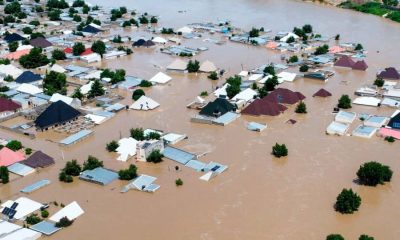
From Himalayan Ice to Niger Delta Floods: How Melting Glaciers Will Reshape Nigeria’s Coastline
-
 Featured3 days ago
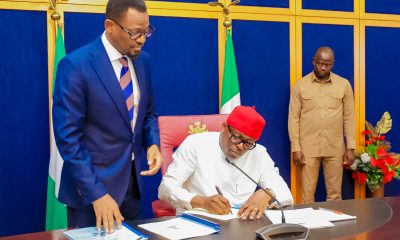
FUBARA SIGNS 2026 APPROPRIATION BILL INTO LAW
-
Oil & Energy13 minutes ago
Indorama Urges Stronger Innovation Drive For Oil, Gas Sector ….Targets $3b Investment
-
Sports11 minutes ago
Nigerian Female Keeper Joins Crystal Palace
-
Sports11 minutes ago
D’Tigress suffer defeat in 2026 FIBA World Cup opener
-
Oil & Energy4 minutes ago
Group Accuses NMDPRA Of Allowing Continued Importation, Sale Of Adulterated Fuel In Nigeria
-
Oil & Energy4 minutes ago
Tight Now, Loose Later: Oil Futures Flash Warning