Connect with us

Editorial

IWD: Moving Towards Gender Equality

Published

on

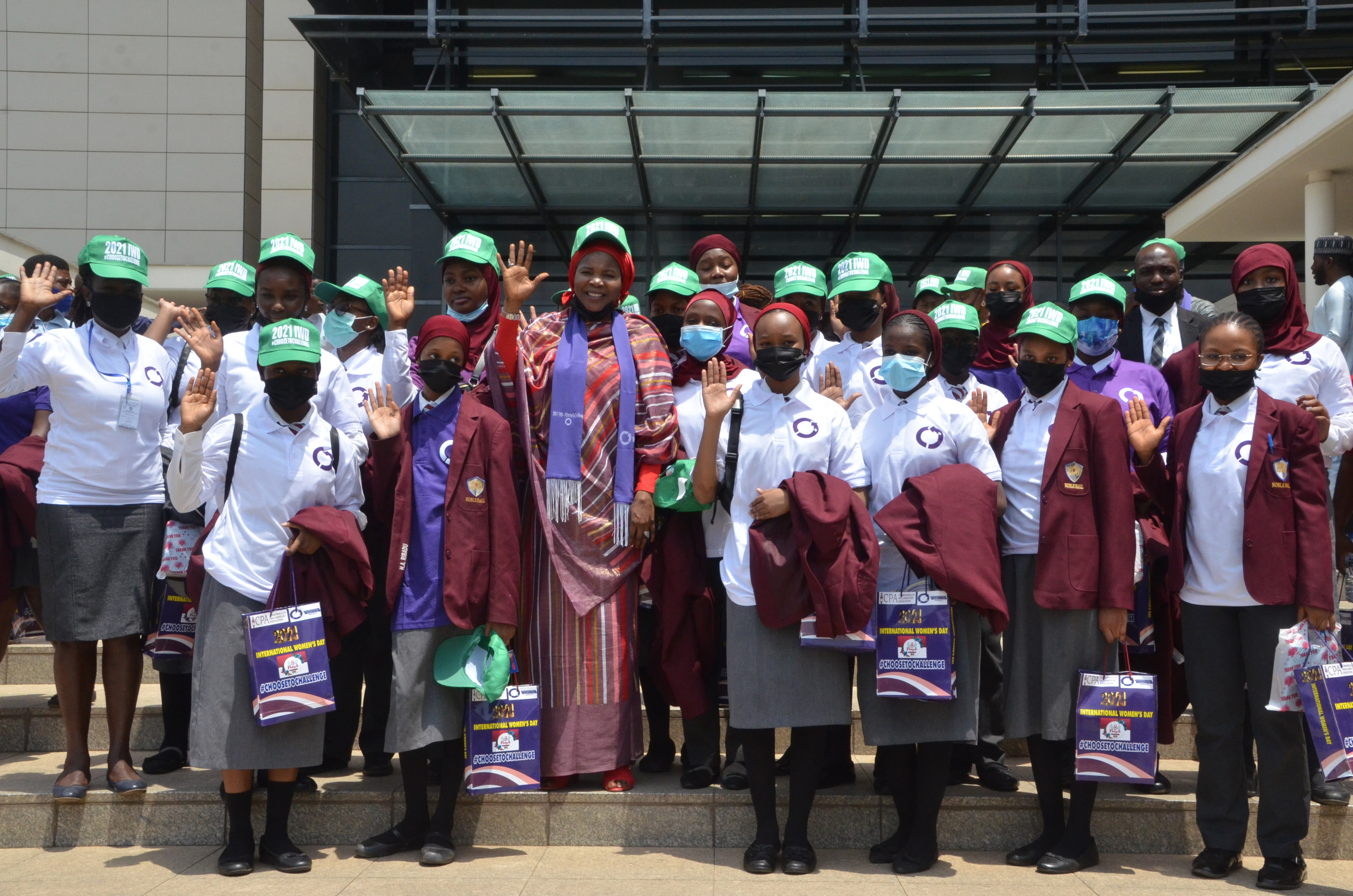
Today, March 8, marks International Women’s Day (IWD), a global observance devoted to recognising
and honouring the social, economic, cultural, and political accomplishments of women and girls. It is a moment to highlight the improvement made towards gender parity and to accentuate the ongoing work that still needs to be done.
The universal theme for 2024, “Invest In Women: Accelerate Progress,” highlights the relevance of investing in women’s education, healthcare, economic empowerment, and leadership development. By bolstering women through investment, we are not merely enhancing their individual opportunities and well-being but likewise fostering positive social and economic outcomes for communities and countries.
IWD, observed every year on March 8, is a worldwide celebration to honour women for their  attainment, acknowledge their contributions to society, and promote gender equality. The day serves to coalesce people around the world and contemplate the growths made towards obtaining gender uniformity, while further recognising the challenges that still prevail.
The origins of IWD can be traced to the early 20th century, when women groups battled for reformed working conditions and social justice. The inaugural National Women’s Day was observed in the United States on February 28, 1909, following a declaration by the Socialist Party of America. In 1910, at the International Conference of Working Women in Copenhagen, Denmark, Clara Zetkin proposed establishing an annual Women’s Day to advocate for women’s rights and suffrage. The proposal garnered unanimous support, leading to the first IWD being celebrated in 1911 by over a million people in Austria, Denmark and Switzerland.
Additionally, IWD sheds light on the ongoing challenges and barriers that women around the world continue to face. These include gender-based discrimination, violence, unequal access to education, denial of employment opportunities, injustice, limited economic prospects, gender-based violence, and inadequate healthcare and education. We have to assess our achievements and renew the search for solutions to promote gender equality and empower women and girls.
Collaborating across different sectors and advocating for systemic change, can build a fairer and more inclusive world where every woman and girl can achieve their full potential and make meaningful contributions to society. As we celebrate the day, we have to recommit ourselves to creating a future where gender equality is not just an aspiration but a lived reality for everyone. We have to embrace this theme and join forces to construct a more just, prosperous, and inclusive world.
To achieve gender equality, men must support this cause. They can do so by dismantling patriarchal systems and creating a society that promotes inclusivity, enabling women to thrive. Men should listen to women’s experiences, amplify their voices, and actively work towards building a more equitable world. Both men and women can work towards a future where discrimination is eliminated and everyone, regardless of gender, can have access to equal opportunities.
Every March 8, Nigerian women join the rest of the world to celebrate IWD. It is an ample opportunity for political leaders to make grand promises to improve the lives of women and help them evade poverty. From the lowest-ranking officials to those in the highest positions, women are promised equal representation, active involvement, and policies that give priority to gender balance. However, by the next day, these same politicians revert to their usual ways, conveniently forgetting the promises they made until the next IWD comes around, and the cycle continues indefinitely.
Women play vital roles in both private and public spheres, and should be granted complete support and respect from society for their contributions. They should be encouraged to engage in governance and public affairs without facing discrimination or obstacles. Consequently, public policies should be intentionally designed to harness their abilities for the betterment and advancement of our nation. Nigerian women have impacted the country’s growth and development, thus investing in them would drive transformation and promote a seamless transition to a more secure and equitable society.
Rwanda, recognised as one of the fastest-growing economies in Africa, boasts one of the highest rate of female representation globally. In a strategic move to rebuild the nation following the post-genocide era, a new constitution was drafted and approved in 2003, allowing for the implementation of proactive measures, including a gender quota ensuring that women occupy a minimum of 30 per cent of political positions. Consequently, Rwanda stands out for having established one of the most effective systems due to the inclusion of women in decision-making processes.
Unfortunately, Nigeria ranks 133rd, globally for female political representation, with only 20 per cent of formal sector enterprises owned by women. Women have less than 6 per cent representation in the National Assembly, with merely 19 out of 469 members serving in the Senate and House of Representatives. This low representation is indicative of discrimination, as only three women serve in the Senate and 16 in the House of Representatives.
Gender equality needs to be at the top of the federal, state, and local governments’ agenda, and acknowledged as a major priority by all people, organisations, and communities, if our country is to achieve inclusive and sustainable development. Restrictive clauses, norms, and traditions that support prejudice and discrimination against women and girls must be addressed and eradicated. Every legislation currently in place that impedes the advancement of women should be examined and reviewed by the state and federal legislature. This would be the most potent way to observe this year’s International Women’s Day.

Continue Reading

Editorial

HYPREP And The Collapsed Water Tank

Published

on

The recent collapse of a water tank built by the Hydrocarbon Pollution Remediation Project (HYPREP) in the Gwara area of Ogoni in Rivers State is an alarming reminder of how easily public faith in government interventions can erode when development projects fail so soon after their unveiling. The incident has stirred deep concern across the state, raising doubts about whether the communities can truly rely on the structures meant to improve their lives.
Only days earlier, the Minister of Environment, Balarabe Lawal, had proudly inaugurated two water projects in Bane and Gwara communities in the Khana Local Government Area, with residents celebrating what they believed would mark a new chapter in access to clean and safe drinking water. The communities had hoped these projects would bring long-awaited relief and stand as symbols of meaningful government presence.
Yet in an unexpectedly disturbing turn of events, the Gwara water station, designed to supply potable water to about 14 communities, collapsed merely three days after the commissioning. This rapid failure has left residents not only shocked but also frustrated, as such an outcome suggests deep flaws in planning, execution, supervision, or all three combined.
Some natives allege that the debacle resulted from the use of inferior construction materials, raising a serious accusation that calls into question the level of professionalism involved. If such claims turn out to be true, then the collapse becomes more than an accident; it becomes evidence of negligence that could have endangered several lives.
Others are alleging outright sabotage, a troubling claim that suggests there may be forces actively working against the progress of development projects in the area. This possibility only widens the scope of questions that investigators must answer to restore public confidence.
Meanwhile, HYPREP insists that its water projects in other Ogoni communities are functioning efficiently and that this particular incident does not define the overall quality of its work. However, this defence, while necessary, does little to calm a community that has already seen too many failed promises over the years.
This situation raises an important question about whether the good work of HYPREP is being undermined by unscrupulous individuals whose interests may not align with the welfare of the people. If sabotage is indeed at play, then identifying those responsible becomes crucial in preventing further setbacks.
Given the gravity of the matter, the collapse requires an immediate and rigorous investigation to uncover what truly happened and why. It is reassuring that a committee has already been set up to delve into the details, but the public expects nothing short of a transparent and thorough process.
The fact remains that if the tank had collapsed on people, the community would be counting casualties and dealing with a deeply grievous tragedy. The near-miss should serve as a wake-up call about the potential dangers that poorly executed infrastructure projects pose in vulnerable areas.
It is therefore expected that the findings of the committee will expose the actual competence or otherwise of the contractors HYPREP engages. Only a reliable and professional team can successfully deliver the kind of durable infrastructure that the Ogoni people deserve.
If such a catastrophe can occur just days after commissioning, it indicates that similar incidents may happen again in the future unless deliberate and strategic efforts are made to prevent them. Preventive measures must become a standard part of project planning and monitoring.
The public cannot help but question why an organisation as financially endowed as HYPREP appears unable to deliver a credible water project for the Gwara community. With the massive resources at its disposal, the people expect excellence, not excuses.
Ogoni, being a historically volatile area whose people have endured relentless injustice and environmental degradation, cannot afford provocations of this nature. A crisis could easily have been triggered if the collapse had caused casualties or severe destruction.
More regrettably, the Ogoni clean-up has evolved into a lucrative cash cow for corrupt officials who seem more interested in contracts and kickbacks than in the wellbeing of the people. Meanwhile, residents continue to drink polluted water, suffer from inadequate healthcare, and navigate treacherous road networks.
Communities across Ogoniland must refuse to remain silent when substandard projects are imposed on them. Their voices and vigilance are vital in demanding accountability and ensuring that development interventions truly meet their needs.
HYPREP, on its part, must reaffirm an unwavering commitment to quality, transparency, and accountability in all ongoing and future water projects across Ogoni. Only through this can it rebuild trust and demonstrate that it genuinely prioritises the people.
Finally, HYPREP must enforce rigorous internal and external quality assurance mechanisms that leave no room for negligence. Restoration work should commence urgently, with all efforts dedicated to ensuring that project delivery meets global standards and restore hope to the long-suffering communities of Ogoniland.
Continue Reading

Editorial

Resurgence Of Illegal Structures In PH

Published

on

The resurgence of illegal structures in Port Harcourt has become a thing of deep concern for residents who remember what the city once looked like and what it has now become. From street corners to backyard spaces, unapproved buildings and makeshift extensions are rising once again, disturbing the orderliness that once defined the capital of Rivers State. The return of this ugly trend signals a worrying decline in urban discipline.
Illegal structures were decisively prohibited during the administration of Rt. Hon. Chibuike Rotimi Amaechi, who enforced the ban in 2008. His government recognised that Port Harcourt was slipping into chaos, and firm action was taken to restore the integrity of the city’s physical environment. What followed was a sweeping clampdown on structures that violated the city’s masterplan.
The enforcement was so severe and so uncompromising that many residents of the Garden City took it upon themselves to demolish their own illegal structures in order to avoid heavier sanctions. It was a defining moment in the city’s recent history, because it demonstrated that with political will and consistent implementation, urban order could be restored.
The demolition exercise brought back the beauty of Port Harcourt. The city began to breathe again as congested spaces opened up and previously blocked access routes became free. There was a noticeable improvement in cleanliness and spatial organisation, and the renewed aesthetic appeal was appreciated by many who had longed for a well-planned urban landscape.
Many backyards became so spacious that they were not only neat but motorable. Before the enforced clean-up, these same spaces had been used for all kinds of menial activities. Some were turned into mechanic workshops, while others were cluttered with kiosks and shanties that distorted the environment. The transformation that followed the demolition was evidence of what strong governance can achieve.
When former Governor Nyesom Wike assumed office in 2015, he sustained the ban and continued the demolition of illegal structures. This ensured that the gains of the previous administration were not eroded. Residents saw a continuation of orderliness and appreciated the consistency in urban policy.
Sadly, today, illegal structures have returned in full force, defacing the state capital and reintroducing the very problems that had earlier been tackled. These structures now appear everywhere, giving Port Harcourt the look of a city sliding back to its infamous reputation as a Garbage City. This development is unacceptable and raises questions about the laxity of enforcement agencies.
We therefore urge the Ministry of Physical Planning and Urban Development to halt this dangerous trend by rigorously enforcing the ban on illegal structures across Port Harcourt. Without immediate action, the city risks losing the gains of years of disciplined planning.
Such structures must be identified and demolished without hesitation, and their owners prosecuted in accordance with the law. This is necessary to send a clear message that Port Harcourt cannot be returned to filth, especially in an era when cities around the world strive to modernise and maintain order.
Additionally, the Urban Development Ministry should intensify the monitoring and control of physical development in the city. Before any new site is approved, the Ministry must ensure that access roads, drainage systems, markets, and other social amenities are included in the layout. Proper planning must precede construction.
The Rivers State Government must take more than a passive interest in the development of virgin areas within the metropolis. It is discouraging that illegal structures continue to spring up even in locations where earlier demolitions had taken place. This shows a lack of consistent supervision.
A responsible government sustains good policies introduced by previous administrations rather than discarding them. The fight against illegal structures should not depend on who occupies the Brick House, but on the collective desire to preserve the city’s integrity.
One of the primary features of a modern city is its aesthetic value, complemented by good roads and effective sanitation. Illegal structures distort these values. They obstruct traffic, endanger pedestrians, and increase the likelihood of accidents. When order is compromised, everyone suffers.
There must also be policies to regulate the indiscriminate sale of properties in the state. Many illegal structures exist because land transactions are poorly monitored. Enlightenment campaigns will help residents understand the dangers and legal implications of contributing to urban disorder.
Finally, the authorities must rise to their responsibilities. The Ministry of Urban Development must take immediate action to restore sanity. Port Harcourt is the only real metropolitan centre that Rivers State can boast of, which means it must be carefully maintained. Its masterplan should not be tampered with, and the city must be preserved for future generations.
Continue Reading

Editorial

Certificate Forgery, Loss Of Public Trust

Published

on

Nigeria has found itself once more in an uncomfortable global spotlight after the abrupt resignation of Geoffrey Uche Nnaji, the former Minister of Innovation, Science, and Technology. The circumstances surrounding his exit were neither dignifying nor reassuring. Instead, they have brought about a profound sense of national embarrassment and institutional opprobrium.
The allegations that Nnaji forged his university degree and National Youth Service Corps certificate have raised serious questions about integrity in public office. The University of Nigeria, Nsukka, (UNN) expressly denied awarding him a degree, stating unequivocally that he did not complete his studies. Such a revelation is not only scandalous but deeply unsettling for a nation already battling credibility deficit.
Even more troubling is the fact that the former Minister, under intense scrutiny, reportedly conceded that he was never issued a certificate by the university. This revelation begs the most fundamental question. Where then did he secure the UNN decree certificate he allegedly tendered upon his appointment? That inquiry alone unravels layers of possible complicity and systematic failure.
This matter has opened a can of worms. It is a sad commentary on a nation struggling to project an image of responsibility and moral uprightness. Instead of inspiring confidence, such cases reinforce the perception that Nigeria suffers from chronic ethical erosion in leadership recruitment processes.
It is particularly depressing that individuals who commit crimes of this nature can simply resign and walk away unscathed, as if public office was a revolving door of impunity. A mere resignation does not absolve one of accountability. It is imperative that those who defraud the nation must be held to legal consequences, not treated as though they merely committed a social faux pas.
Unfortunately, this is not the first time Nigeria is grappling with such an ignoble scandal. A former Speaker of the House of Representatives, Salisu Buhari, was once enmeshed in a forgery controversy over a fake degree and age falsification. Former Finance Minister Kemi Adeosun resigned after being found with a forged NYSC exemption certificate. Such shameful precedents have become almost predictable.
When high-profile officials indulge in such fraudulent practices and face little to no consequence, it sends a dangerous message. It tells ordinary citizens that integrity is negotiable and that laws are flexible privileges reserved for the powerful.
It is unconscionable that the law eagerly pursues the poor for petty infractions while turning a blind eye when the wealthy and politically connected commit more grievous offences. This selective justice is a tragic indictment of our system and values as a nation.
Our leaders, by virtue of the trust placed in them, should be punished doubly when they violate the law. The law must not merely exist on paper. If leaders continue to evade accountability, then what exists is not a legal system but a symbolic facade.
Time has come for the authorities to demonstrate that all Nigerians are indeed equal before the law. That principle, which is the bedrock of every functioning democratic society, must be evident not only in rhetoric but in action.
While it is commendable that Nnaji resigned, resignation alone cannot suffice as closure. We insist that he be properly investigated and prosecuted where found culpable. Likewise, previous offenders should also be recalled to face justice. National healing requires consequences, not concealment.
This scandal exposes the rottenness of our political selection process. It signals that trust has been replaced with convenience and accountability substituted with nonchalance. Nigeria cannot move forward if leadership continues to be riddled with fraudulent representation.
The Department of State Services (DSS) must be held accountable for clearing an appointee whose records were allegedly not thoroughly verified. Screening is not a ceremonial exercise. It is supposed to involve critical background checks and authentication of claims.
Similarly, the National Assembly must put an end to the hollow practice of asking nominees to “take a bow and go.” Ministerial screenings are not social receptions. They are constitutionally mandated checks intended to protect national interest. When legislators fail in this role, the entire country suffers the consequences.
Both the DSS and the National Assembly must reform their processes immediately. The continued casual, wishy-washy scrutiny of appointees is not only an indictment of leadership but a disservice to Nigerians. If Nigeria must rebuild trust and respect, it begins with ensuring that only individuals of proven integrity occupy public office. Accountability must prevail, and the era of impunity must be brought to an end.
Continue Reading

Trending