
News
Kamala Harris Makes History As First Woman And Woman Of Colour As Vice President

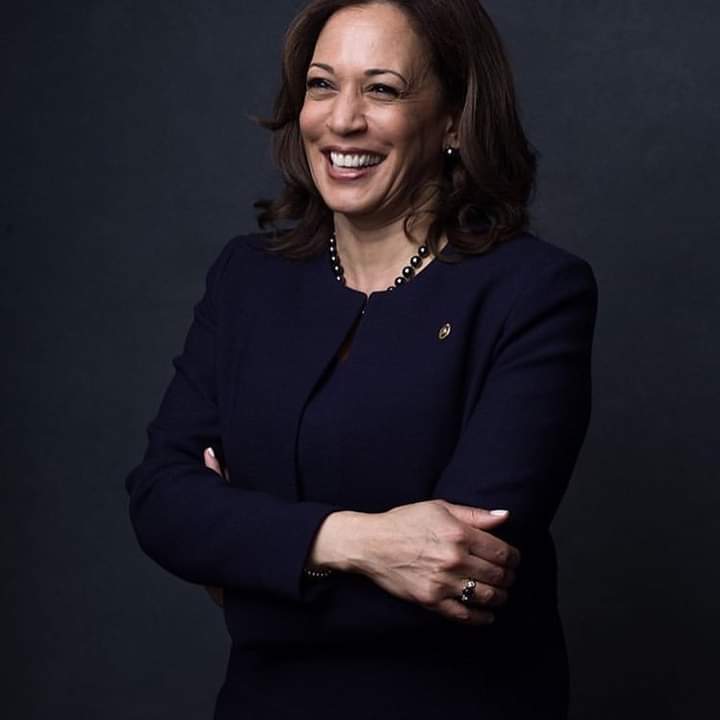
A senator from California and a former prosecutor, Ms. Harris has a track record in breaking new ground. Now, she is the first woman, first Black person, and first person of Asian descent elected to the country’s second-highest office.
A barrier-breaking prosecutor with a love for grilling — “Question, I will repeat —” — and music: “One nation under a groove —”
California Senator Kamala Harris is making history as the first woman, and first woman of colour, elected vice president. “Let’s talk about who is prepared to lead our country over the course of the next four years.”
She ran for president, going head-to-head with Biden over school busing. “You know, there was a little girl in California who was part of the second class to integrate her public schools, and she was bused to school every day. And that little girl was me.” But she later endorsed him, and he picked her as his running mate. And soon they will be entering the White House together.
“I am incredibly honored by this responsibility, and I am ready to get to work.” Haris has a track record of being the first. “You may be the first to do many things, but make sure you’re not the last.”
She was the first black person and first woman to become district attorney of San Francisco, and later attorney general of California. “I decided to become a prosecutor because I believed that there were vulnerable and voiceless people who deserved to have a voice in that system.”
And in 2016, she was elected the first Black senator from California. And now she will be the first woman, first Black person and first person of Asian descent elected to the country’s second-highest office. So what is she known for in Washington? “So my question to you —” As a senator, Harris served on four committees, and was perhaps best known for her tough questions. “It makes me nervous.” “Is that a no?” “Is that a yes?” “Can I get to respond please, ma’am?” “No, sir. No, no.” And some of her policy priorities? Criminal justice reform and racial justice legislation. “Racial justice is on the ballot in 2020.”
After George Floyd’s killing in police custody, Harris became an outspoken voice in the national debate on police brutality.
“We should have things like a national standard for excessive use of force.” And on the campaign trail, she doubled down on that message, making a concerted effort to reach voters of color. “People have been asking, ‘Why should I vote?’ One: Honor the ancestors. Honor people like the late, great John Lewis, who shed his blood on the Edmund Pettus Bridge so we could vote.”
But she’s faced criticism from progressive activists over her record as a prosecutor, including her push for higher cash bails for certain crimes, and for refusing to support independent investigations for police shootings as recently as 2014. So what does she bring to the White House? “This is our house!”
She is policy-oriented and pragmatic. Proponents say that her experience in law enforcement will help her face the unique challenges of the moment and that her lack of ideological rigidity makes her well suited for the vice presidency.
“We can overcome these challenges.” Harris embodies the future of a country that is growing more racially diverse. As one of the best-known Black women in American politics, Harris now finds herself the most clearly positioned heir to the White House, with the oldest incoming president in history.
From the earliest days of her childhood, Kamala Harris was taught that the road to racial justice was long.
She spoke often on the campaign trail of those who had come before her, of her parents, immigrants drawn to the civil rights struggle in the United States — and of the ancestors who had paved the way.
As she took the stage in Texas shortly before the election, Ms. Harris spoke of being singular in her role but not solitary.
“Yes, sister, sometimes we may be the only one that looks like us walking in that room,” she told a largely Black audience in Fort Worth. “But the thing we all know is we never walk in those rooms alone — we are all in that room together.”
With her ascension to the vice presidency, Ms. Harris will become the first woman and first woman of color to hold that office, a milestone for a nation in upheaval, grappling with a damaging history of racial injustice exposed, yet again, in a divisive election. Ms. Harris, 56, embodies the future of a country that is growing more racially diverse, even if the person voters picked for the top of the ticket is a 77-year-old white man.
That she has risen higher in the country’s leadership than any woman ever has underscores the extraordinary arc of her political career. A former San Francisco district attorney, she was elected as the first Black woman to serve as California’s attorney general. When she was elected a United States senator in 2016, she became only the second Black woman in the chamber’s history.
Almost immediately, she made a name for herself in Washington with her withering prosecutorial style in Senate hearings, grilling her adversaries in high-stakes moments that at times went viral.
Yet what also distinguished her was her personal biography: The daughter of a Jamaican father and Indian mother, she was steeped in racial justice issues from her early years in Oakland and Berkeley, Calif., and wrote in her memoir of memories of the chants, shouts and “sea of legs moving about” at protests. She recalled hearing Shirley Chisholm, the first Black woman to mount a national campaign for president, speak in 1971 at a Black cultural center in Berkeley that she frequented as a young girl. “Talk about strength!” she wrote.
After several years in Montreal, Ms. Harris attended Howard University, a historically Black college and one of the country’s most prestigious, then pursued work as a prosecutor on domestic violence and child exploitation cases. She speaks easily and often of her mother, a breast cancer researcher who died in 2009; of her white and Jewish husband, Douglas Emhoff, who will make history in his own right as the first second gentleman; and of her stepchildren, who call her Momala.
It was a story she tried to tell on the campaign trail during the Democratic primary with mixed success. Kicking off her candidacy with homages to Ms. Chisholm, Ms. Harris attracted a crowd in Oakland that her advisers estimated at more than 20,000, a tremendous show of strength that immediately established her as a front-runner in the race. But vying for the nomination against the most diverse field of candidates in history, she failed to capture a surge of support and dropped out weeks before any votes were cast.
Part of her challenge, especially with the party’s progressive wing she sought to win over, was the difficulty she had reconciling her past positions as California’s attorney general with the current mores of her party. She struggled to define her policy agenda, waffling on health care and even her own assault on Joseph R. Biden Jr.’s record on race, perhaps the toughest attack he faced throughout the primary campaign.
“Policy has to be relevant,” Ms. Harris said in an interview with The New York Times in July 2019. “That’s my guiding principle: Is it relevant? Not, ‘Is it a beautiful sonnet?’”
But it is also this lack of ideological rigidity that makes her well suited for the vice presidency, a role that demands a tempering of personal views in deference to the man at the top. As the vice-presidential nominee, Ms. Harris has endeavored to make plain that she supports Mr. Biden’s positions — even if some differ from those she backed during the primary.
While she struggled to attract the very women and Black voters she had hoped would connect with her personal story during her primary bid, she continued to make a concerted effort as Mr. Biden’s running mate to reach out to people of color, some of whom have said they feel represented in national politics for the first time.
Many witnessed — and recoiled at — the persistent racist and sexist attacks from conservatives. President Trump has refused to pronounce her name correctly and after the vice-presidential debate, he derided her as a “monster.”
For some of her supporters, the vitriol Ms. Harris had to withstand was another aspect of her experience they found relatable.
“I know what I was thrown into as the only African-American at the table,” said Clara Faulkner, the mayor pro tem of Forest Hill, Texas, as she waited for Ms. Harris to address a socially distanced crowd in Fort Worth. “It’s just seeing God move in a mighty way.”
While some members of the political establishment professed outrage at the insults, friends of Ms. Harris knew that her pragmatism extended to her understanding of how the political world treats women of color.
Senator Cory Booker, a colleague and friend of Ms. Harris’s who has known her for decades, said in an interview that some of her guardedness was a form of self-protection in a world that has not always embraced a barrier-breaking Black woman.
“She still has this grace about her where it’s almost as if these things don’t affect her spirit,” Mr. Booker said. “She’s endured this for her entire career and she does not give people license to have entrance into her heart.”
After waiting days for results, Democrats rejoiced in a victory that offered a bright spot in an election that delivered losses to many of their candidates, including several high-profile women.
Representative Barbara Lee, Democrat of California, who got involved in politics through Ms. Chisholm’s presidential campaign, said she always believed she would see the first Black woman at the steps of the White House.
“Here you have now this remarkable, brilliant, prepared African-American woman, South Asian woman, ready to fulfill the dreams and aspirations of Shirley Chisholm and myself and so many women of color,” she said. “This is exciting and is finally a breakthrough that so many of us have been waiting for. And it didn’t come easy.”
‘We are in a better place than we were four years ago.’
The Democrats’ down-ballot defeats tempered the celebratory mood a bit, as did a wistful sense among some activists and leaders that this historic first still leaves women in second place — closer than ever to the Oval Office, sure, but not in it.
The end to a presidency that inspired waves of opposition from women, many politically engaged for the first time, has left the “highest, hardest glass ceiling” intact. Democratic primary voters, including a significant number of women, had rallied behind Mr. Biden, eschewing the women and people of color in the race because they believed Mr. Biden would be most capable of beating Mr. Trump. Scarred by Hillary Clinton’s defeat four years ago, many believed the country was not quite ready to elect a female commander in chief.
Ms. Harris’s presence on the ticket will forever be linked to Mr. Biden’s explicit promise to select a female running mate in an acknowledgment that the party’s future probably does not look like him.
Ms. Harris now finds herself the most clearly positioned heir to the White House. Perhaps more than any other vice president in recent memory, she will be carefully scrutinized for her ambitions, a level of attention that is perhaps inevitable for the No. 2 of the oldest incoming No. 1 in history.
Mr. Biden understands this, Mr. Booker said: “He is really bringing us to the next election.”
Allies say Ms. Harris is acutely aware of her place in history. She views her work as connected to both the civil rights leaders who came before her — the “ancestors,” as she calls them — and the generations she hopes to empower.
Representative Pramila Jayapal, Democrat of Washington, a rising figure in the party’s left wing, said Ms. Harris’s ascent was a deep source of pride among South Asians, expanding the imaginations of how high they can climb in American public life. Ms. Jayapal has spoken proudly of her own connection to the new vice president, writing an op-ed article in The Los Angeles Times in August describing their intertwined family history in South India.
“She understands what it means to be the child of immigrants — what it means to be a person of color seeking racial justice,” she said, pointing to Ms. Harris’s work on rights for domestic workers and helping Muslim immigrants get access to legal counsel. “There’s just so much you don’t have to explain to a Vice President Harris and I believe she will fight for many of the issues that are important to our South Asian community.”
The small sorority of Black women in federal politics also views Ms. Harris as a mentor and an ally, praising her championing of issues like Black maternal mortality and anti-lynching legislation that have not typically received the spotlight that can follow a high-wattage political brand.
When Representative Lauren Underwood was mounting her first race for Congress, trying to become the first Black women to win her predominantly white suburban Chicago district, Ms. Harris reached out for coffee.
“There’s not that many Black women who have been at the highest level of politics in this country. Not that many Black women who have run very competitive races,” said Ms. Underwood, who became the youngest Black woman ever elected to Congress in 2018. “To have the opportunity to learn from, counsel from and just know someone who has done that is something I find incredibly valuable.”
Kimberlé Crenshaw, a prominent Black progressive scholar, hailed Ms. Harris’s ascension to the vice presidency and described her as “well positioned to weather the storms that will definitely come now that she has broken through the glass ceiling.”
But amid the joy and sense of empowerment in seeing a woman of color as the nation’s second-highest elected official, she also cautioned that the history-making moment should not distract progressives from continuing to push their agenda.
“This is still the Biden administration — what Kamala Harris thinks or does has to be recognized as being part of that administration,” she said. “So we cannot let the pedal to the metal be slowed in any way because we’re celebrating the fact that we’ve had this breakthrough moment.”
For others, that moment has been a very long time coming.
Opal Lee, 94, paid a poll tax when she first went to vote, choosing between casting her ballot for the Democratic candidate or buying food for her four young children. Decades later, Ms. Lee, a former teacher and activist from Fort Worth, Texas, celebrated at President Barack Obama’s inauguration.
Despite the health risks from the coronavirus pandemic, Ms. Lee has no intention of missing Mr. Biden’s inauguration in Washington this January — to witness Ms. Harris.
“I want to be able to tell my great-great-grandchildren how it felt for a woman to be vice president,” she said. “I just got to go.”


The Rivers State Government has commended the Church of Nigeria (Anglican Communion) for its outstanding contributions to the development of Rivers State, particularly in the areas of peacebuilding, education, healthcare, and moral development.
Governor of Rivers State, Siminalayi Fubara, stated that the Church has remained a dependable partner in promoting peace, unity, justice, moral discipline, and social harmony across society.
The Governor, who was represented by the Secretary to the State Government, Dr. Dagogo Wokoma, made the remarks during the thanksgiving service marking the 30th Anniversary and First Session of the 11th Synod of the Diocese of Niger Delta North, held at St. Peter’s Anglican Church on Sunday.
Governor Fubara described the Synod’s theme, “Kingdom Advancement: The Priority of Every Believer,” as timely and relevant, considering the prevailing realities in society.
According to him, the Church continues to play a vital role in shaping societal values and inspiring hope among citizens.
“The Church remains a vital partner in promoting peace, unity, justice, and moral discipline. Its role in shaping values and inspiring hope cannot be overemphasized,” he stated.
The Governor further acknowledged the Anglican Communion’s contributions in education, healthcare delivery, youth empowerment, humanitarian services, and spiritual guidance across communities in Rivers State.
“The Rivers State Government appreciates the invaluable contributions of the Anglican Communion in education, healthcare, youth development, humanitarian support, and spiritual guidance. Your impact across communities in Rivers State continues to strengthen families and promote peaceful coexistence among our people,” he added.
Governor Fubara reaffirmed his administration’s commitment to building a peaceful, united, and prosperous Rivers State where all citizens can thrive irrespective of religion, ethnicity, or social background.
He also urged the Synod to continue praying for sustainable development and progress in Rivers State and Nigeria at large.
Earlier in his sermon, the Guest Minister, Joseph Olushola, spoke on the topic, “Kingdom Investment and Internal Rewards,” urging Christians to remain faithful stewards of God’s blessings and committed to advancing God’s kingdom through service and generosity.
The cleric emphasized that believers are custodians of the virtues and resources entrusted to them by God, stressing that divine rewards are based on faithfulness and impact rather than material possessions.
The Shell Nigeria Gas Limited, in partnership with the Manufacturers Association of Nigeria (MAN), has reaffirmed support for efforts to expand gas distribution infrastructure in Rivers State as part of initiatives aimed at improving access to affordable, cleaner and more reliable energy for industries across the South-South region.
The commitment was highlighted during the SNG–MAN Business Forum held in Port Harcourt, where stakeholders from the industrial and public sectors examined the role of natural gas in driving industrialisation, boosting local production and strengthening energy security.
Speaking at the forum on behalf of the Managing Director of Shell Nigeria Gas Limited, the company’s Head of Gas Distribution, Mr. Chukwuka Amos Ejesi, described natural gas as a critical component of Nigeria’s energy mix and a key driver of sustainable industrial growth.
According to him, Nigeria’s gas development agenda has reached a stage where policy direction must be matched with practical implementation capable of addressing the energy challenges confronting manufacturers.
He noted that pipeline gas offers industries a cleaner, more dependable and cost-effective energy alternative capable of supporting uninterrupted operations, reducing emissions and improving production efficiency.
“Gas is the backbone of manufacturing, and we are encouraged by the growing recognition among stakeholders of the need for cleaner and more reliable energy solutions,” he said.
Ejesi stressed the need for sustained collaboration among energy providers, government institutions and industrial stakeholders to maximise the country’s gas resources for economic development.
He added that improved gas infrastructure would strengthen manufacturing value chains, enhance productivity and promote more competitive industrial operations across Rivers State and the wider South-South region.
Participants at the forum also emphasised the importance of expanding energy infrastructure as a pathway to unlocking industrial capacity, reducing operating costs and promoting sustainable industrial development.
Representing Governor Siminalayi Fubara, the Director-General of the Rivers State Investment Promotion Agency, Dr. Chamberlain Peterside, reaffirmed the state government’s commitment to partnering with private sector investors to revitalise industrial activities in the state.
He identified key projects targeted under the initiative to include the revival of the Ahoada Industrial Park, the New Port City project and the proposed Bonny Industrial Park, all aimed at stimulating economic growth and expanding industrial opportunities along the Bonny corridor.
According to the governor, the long-term vision is to position Rivers State as a leading manufacturing hub in Southern Nigeria through strategic public-private partnerships.
Governor Fubara also commended Shell Nigeria Gas and MAN for sustaining engagements geared towards improving industrial energy access, noting that gas infrastructure development remains central to the state’s economic recovery plans.
He further observed that the gas sector presents enormous opportunities for economic growth, especially as global energy systems continue to shift towards cleaner energy sources.
The governor called on stakeholders to work collectively towards developing a practical and sustainable gas framework capable of supporting the state’s industrial and energy development objectives.
By; Kevin Nengia
Rivers State Deputy Governor, Prof. Ngozi Nma Odu, has charged newlywed couples to build their marriages on the virtues of love and submission as taught in the Word of God.
Prof. Odu gave the charge at the wedding ceremony of Amblessed Favour Sunny-Cookey and Samson Jesuganji at Lifegate Power Ministries, Dominion Cathedral, in Port Harcourt on Saturday, 16th May 2026.
The Deputy Governor congratulated the couple on beginning a new phase of life together and prayed for God’s blessings upon their union, noting that the couple had been raised by godly parents and encouraged them to uphold the Christian values instilled in them.
Referring to the sermon delivered during the ceremony, Prof. Odu emphasized that the principles of love and submission remain fundamental to a successful marriage.
According to her, genuine love reflects the nature of God, stressing that love should remain the foundation of the couple’s relationship as they journey through life together.
Prof. Odu further prayed for enduring peace, happiness, and progress in the home, expressing confidence that the marriage would continue to flourish under God’s guidance.
The Deputy Governor also commended the families of the couple for their support and upbringing, while urging the newlyweds to always remember the significance of the day and the commitment they had made before God and witnesses.
In his sermon at the wedding, the Founder and Presiding Pastor of Salvation Ministries, Pastor David Ibiyeomie, stated that marriage did not originate from Western culture, traditions, or human ideas, but from God, whom he described as the “manufacturer” of marriage.
According to the cleric, couples seeking lasting and peaceful homes must rely on biblical principles rather than societal trends or assumptions.
He explained that many marital crises and rising divorce rates stem from ignorance and failure to apply scriptural teachings in family life.
Drawing from the biblical parable of building a house on a rock, Pastor Ibiyeomie said the Word of God remains the only solid foundation capable of sustaining marriages through challenges and difficult times.
He noted that marriage naturally comes with unexpected realities and pressures, stressing that religious ceremonies or cultural practices alone are not enough to sustain a home without proper understanding of God’s instructions.
The pastor further warned that ignorance of scripture remains one of the greatest weapons against believers, urging Christians to study and practice the Word of God rather than merely attending church services.
It would be recalled that the bride is the daughter of Pastor Sunny Cookey the Founder and Presiding Pastor of Lifegate Ministries. The Ceremony had lots of Ministers in attendance which includes Apostle Zilly Aggrey, Pastor George Izunwa, and Bishop Winston Iwo
-

 Editorial4 days ago
Enough Of Xenophobic Attacks On Nigerians
-

 Education4 days ago
UNIPort Senate Grants Two-Year Amnesty to U2010–U2018 Students
-

 Nation4 days ago
RSU, Otonti Nduka Foundation Holds Centenary Conference, Unveil Book on Values in Nigeria
-

 Sports4 days ago
Oparaodu Urges Rivers United To Win Katsina United
-

 Oil & Energy4 days ago
Rivers PETROAN Elects 12-Member Executive
-
Politics4 days ago
APC Group Protests Ex–Presidential Aspirant’s Disqualification From Rivers Senatorial Race
-

 Sports4 days ago
” Nigeria’s best domestic players are not in NPFL”
-
Politics4 days ago
Reps Speaker Secures APC Return Ticket For Fifth Term