Oil & Energy
Gas Policy: Expert Wants Commercial Incentives For Rural Consumers
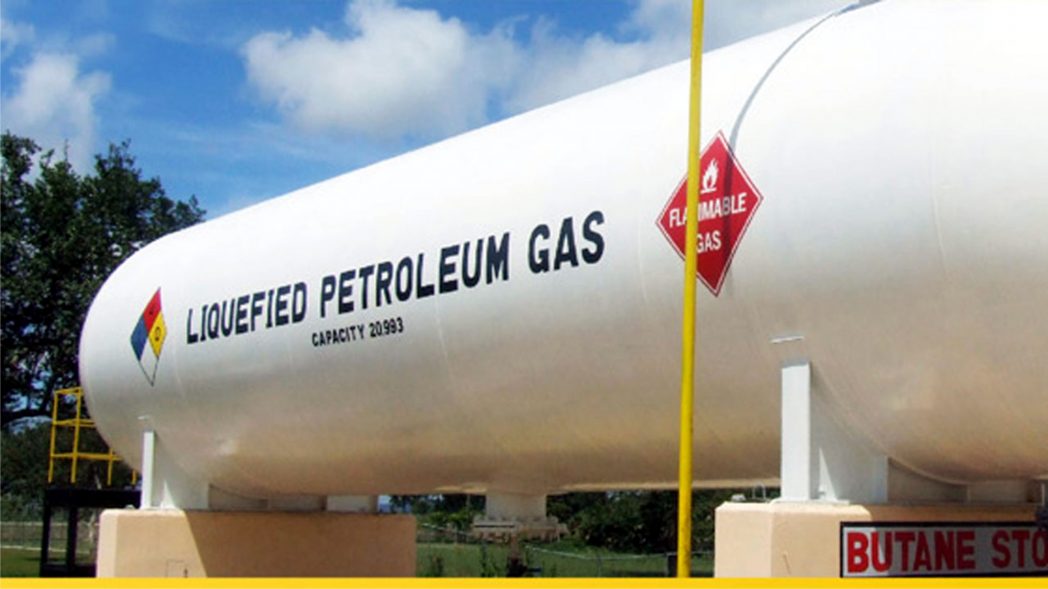
An expert in the Liquefied Petroleum Gas (LPG), and the Vice Chairman of the Nigeria Association of LPG Marketers (NALGAM) in Rivers State, Chief Ogbonnna Sam Okoro, has urged the Federal Government to give commercial incentives to rural consumers of the products.
The expert gave the urge while speaking with The Tide in an exclusive interview in his office in Port Harcourt, last Tuesday.
He said without adequate motivation and mobilisation of the rural dwellers through the provision of commercial incentives, the objectives of deepening LPG penetration and utilisation would not achieve the desired result.
He said the income in the hands of Nigerians was so depleted and dismal for them to access the products, and urged the DPR to provide initial investment capital to the target users to key actively into the use of LPG as a cheaper, cleaner and more efficient energy source.
Okoro, who is the Managing Director of Gaserve LPG and Logistic Services, lauded the DPR for organising interactive sessions for stakeholders on safety operations in the LPG sector, but emphasised the need for a more drastic and proactive measures to be taken to make the products more accessible to Nigerians.
He said, “DPR should provide initial investment capital to the target users to enable them play active role in the LPG sector. Women should be encouraged to form cooperatives while loans should be provided for them to own small surface tanks to boost economic activities in the grassroot”.
He also recommended that the DPR should engage in the commercial dispensing of LPG, by setting up gas stations like the Nigeria National Petroleum Corporation mega stations in the rural areas.
The expert who was a member of the CONTEAM that constructed the Nigeria Liquefied Natural Gas (NLNG) Plant in Bonny, also called for stronger collaboration among DPR, NLNG and other critical stakeholders in the LPG sector for technical support services and proper reach to the target users.
He called for the review of Nigeria oil and gas policies to address the endemic challenges in the sector, particularly to tackle issues of local contents, weak institutions, ecological disasters and royalties to oil bearing communities, among others.
He also expressed concern over the politicisation of issues requiring expertise, noting that the country can only be on the right track of economic development when institutions are strengthened and critical stakeholders are given the opportunities to make inputs in national planning and development.
Taneh Beemene

Oil & Energy
Take Concrete Action To Boost Oil Production, FG Tells IOCs
Speaking at the close of a panel session at the just concluded 2026 Nigerian International Energy Summit, the Minister of State for Petroleum Resources (Oil), Senator Heineken Lokpobiri, said the government had created an enabling environment for oil companies to operate effectively.
Lokpobiri stressed that the performance of the petroleum industry is fundamentally tied to the success of upstream operators, noting that the Nigerian economy remains largely dependent on foreign exchange earnings from the sector.
According to him, “I have always maintained that the success of the oil and gas industry is largely dependent on the success of the upstream. From upstream to midstream and downstream, everything is connected. If we do not produce crude oil, there will be nothing to refine and nothing to distribute. Therefore, the success of the petroleum sector begins with the success of the upstream.
“I am also happy with the team I have had the privilege to work with, a community of committed professionals. From the government’s standpoint, it is important to state clearly that there is no discrimination between indigenous producers and other operators.
“You are all companies operating in the same Nigerian space, under the same law. The Petroleum Industry Act (PIA) does not differentiate between local and foreign companies. While you may operate at different scales, you are governed by the same regulations. Our expectation, therefore, is that we will continue to work together, collaborate, and strengthen the upstream sector for the benefit of all Nigerians.”
The minister pledged the federal government’s continued efforts to sustain its support for the industry through reforms, tax incentives and regulatory adjustments aimed at unlocking the sector’s full potential.
“We have provided extensive incentives to unlock the sector’s potential through reforms, tax reliefs and regulatory changes. The question now is: what will you do in return? The government has given a lot.
Now is the time for industry players to reciprocate by investing, producing and delivering results,” he said.
Lokpobiri added that Nigeria’s success in the upstream sector would have positive spillover effects across Africa, while failure would negatively impact the continent’s midstream and downstream segments.
“We have talked enough. This is the time to take concrete actions that will deliver measurable results and transform this industry,” he stated.
It would be noted that Nigeria’s daily average oil production stood at about 1.6 million barrels per day in 2025, a significant shortfall from the budget benchmark of 2.06 million barrels per day.
Oil & Energy
Host Comm.Development: NUPRC Commits To Enforce PIA 2021
Oil & Energy
PETROAN Cautions On Risks Of P’Harcourt Refinery Shutdown
The energy expert further warned that repeated public admissions of incompetence by NNPC leadership risk eroding investor confidence, weakening Nigeria’s energy security framework, and undermining years of policy efforts aimed at domestic refining, price stability, and job creation.
He described as most worrisome the assertion that there is no urgency to restart the Port Harcourt Refinery because the Dangote Refinery is currently meeting Nigeria’s petroleum needs.
“Such a statement is annoying, unacceptable, and indicative of leadership that is not solution-centric,” he said.
The PETROAN National PRO reiterated that Nigeria cannot continue to normalise waste, institutional failure, and retrospective justification of poor decisions stressing that admitting failure is only meaningful when followed by accountability, reforms, and a clear, credible plan to prevent recurrence.
-
Sports1 day agoArsenal Women End Man City’s Invincibility
-
Sports1 day agoU-20 WWC: Falconets claim qualifier win
-
Sports1 day agoInsurance Deepen Enyimba’s Trouble
-
Environment1 day agoRivers State Government Suspend Fire Service Collection Levies
-
Sports1 day agoYouth Olympics preparation Gears up
-
Environment1 day agoLASEMA pushes attitudinal change to cut fire outbreaks in Lagos
-
Sports1 day agoTornadoes Set For NPFL exit over Stadium Ban
-
Sports1 day agoCologne Youth Team Set Crowd Record