
City Crime
Rivers @ 58: Let’s Celebrate Past Successes While Working For Brighter Future -Ibas

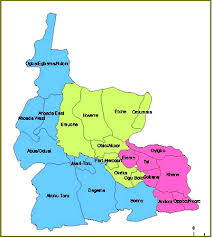
As Rivers State marks its 58th anniversary, today, the State Administrator, Vice Admiral Ibok-Ete Ibas (Rtd), has called on citizens to reflect on past achievements while embracing unity and collaboration to build a more prosperous future.
The Sole Administrator gave the charge while speaking at a Special Inter-denominational Thanksgiving Service held at the Ecumenical Centre in Port Harcourt on Sunday.
This was contained in a statement by the Senior Special Adviser to Sole Administrator on Media, Hector Igbikiowubo.
Ibas emphasized that the strength of Rivers State lies not only in its diversity but in the shared identity, harmony, and common purpose of its people.
He urged political, traditional, religious, and community leaders to prioritize the collective good of the state above divisions.
“We are bonded together by a common destiny—the hope of a better tomorrow where every Rivers citizen can thrive, contribute, and belong,” he said. “Let us not only celebrate our past but also commit to shaping a future where our children are confident in their identity, faithful to their heritage, innovative in enterprise, and God-fearing in character,” he said.
The Administrator described the thanksgiving service as more than a ceremonial event but a sacred moment for reflection, forgiveness, and reconciliation.
He expressed confidence that despite historical challenges —political uncertainties, economic difficulties, and social transformations, Rivers State would emerge stronger and more united.
“Through every season of trial, God has preserved this land and its people. I am certain that our current challenges, whatever they may be, shall pass. By His grace, Rivers State will rise stronger and more determined than ever before,” he declared.
Addressing critical developmental gaps, Ibas highlighted the need for improved infrastructure, quality education, and accessible skills acquisition programmes for youths, srressing that development must be inclusive, not a privilege reserved for a few.
“Our public institutions must be transparent, accountable, and responsive. Development must be a shared experience—fair to every community, village, and local government. This is the standard we must uphold,” he stated.
In his sermon, Chaplain of the Chapel of Everlasting Grace, Government House, Pastor Barasin Ogan, emphasized the power of thanksgiving as a divine command that unlocks blessings and acknowledges God as the source of all prosperity.
The service featured a Bible reading from Psalm 100:1-5, delivered by the Secretary to the Rivers State Government, Prof. Ibibia Lucky Worika.
As Rivers State celebrates 58 years, the government reaffirms its commitment to fostering unity, equitable growth, and sustainable development for all its citizens.





City Crime
Women In STEAM: Overcoming underrepresentation: A Nigerian woman’s journey in Asian tech, design


In this episode of Women in STEAM, Nabhel Harmony, a Nigerian product designer living in Indonesia, reflects on her journey navigating the global tech industry as an African woman in the room.
Ms Harmony says underrepresentation is a major challenge, often leading to bias and underestimation.
PT: What inspired you to pursue a career in product design?
Ms Harmony: I began as a graphic designer in 2017, first learning CorelDRAW to help my mom with flyers, then building skills with Adobe Suite and working at a printing press. The real shift happened during my master’s programme when I came across a Microsoft UX video. That moment, along with learning Figma, inspired me to pursue product design. Since then, I have focused on creating intuitive, human-centred digital experiences, driven by the belief that design should be both impactful and useful.
PT: What experiences or skills do you think are essential to break into the field?
Ms Harmony: I think the essentials for breaking into design right now come in two layers. First, you still need a strong foundation in UX, understanding user needs, problem-solving, and being able to communicate ideas clearly. Tools like Figma are great, but more important is learning how to think like a designer: how to frame problems, test assumptions, and iterate.
The second layer is adaptability. With the rise of AI-powered tools like Stitch, Claude, Cursor, Lovable and others, the way we design is evolving. These tools can speed up workflows and even generate starting points for us, but they do not replace the need for critical thinking or empathy. I always encourage new designers to learn the traditional UX process and experiment with AI tools to see how they can supercharge creativity and productivity.
Finally, I would say, the designers who will thrive are those who are curious, willing to explore, and able to use both human insight and machine assistance to create experiences that feel truly meaningful.
PT: Can you share an example of a project that had a significant social impact, and how you approached designing for that specific challenge?
Ms Harmony: One project with real social impact was the redesign of iglooconnect, a platform that links smart locks with services like Airbnb. The old system was clunky and confusing, creating barriers for property managers, small businesses, and international users, sometimes even affecting safety and livelihoods. I approached it with empathy, becoming a user myself, gathering insights from support teams, and studying competitors.
We streamlined user flows, simplified navigation, and improved accessibility. The result was a platform that now supports thousands globally, helping property managers focus on hospitality, enabling small businesses to grow, and making the experience intuitive for international users. It reinforced for me that good design isn’t just about looks, it’s about equity, trust, and opportunity.
PT: As a senior product designer, what qualities do you look for in a design team, and how do you foster a collaborative and innovative environment?
Ms Harmony: As a senior product designer, I look for curiosity, empathy, and resilience in a design team. Curiosity drives exploration, empathy ensures we design for people and collaborate well, and resilience helps us embrace feedback and ambiguity. To foster collaboration and innovation, I focus on building trust, encouraging open dialogue, celebrating collective wins, and creating a safe space for experimentation and growth.
PT: As a design tutor, how do you approach mentoring junior designers, and what advice would you give to those looking to grow in their careers?
Ms Harmony: I mentor by focusing on mindset over tools. I encourage juniors to see design as problem-solving, not just screen-making. I give them small, real projects to build confidence, and I make feedback a two-way process so they learn to see critique as growth.
My advice is simple: stay curious, build portfolios that show your process (not just polished screens), and find a design community to learn with. Skills evolve, but curiosity, empathy, and resilience will always set great designers apart.
PT: Can you discuss your approach to designing accessible and user-centred solutions, and how you balance business needs with user requirements?
Ms Harmony: My approach to accessible, user-centred design starts with empathy. I focus on understanding user pain points, then simplify flows to make products clear, inclusive, and intuitive. To balance this with business needs, I connect user pain points to outcomes such as efficiency, adoption, and retention. For example, in one of my recent projects, I simplified access flows for property managers by creating an integrated dashboard which not only improved usability but also reduced support tickets, creating value for both users and the business.
PT: What challenges have you faced as a woman of African descent in the tech and design industries, and how have you overcome them?
Ms Harmony: One of the biggest challenges I have faced as a woman of African descent in tech and design is representation. Living in Asia, particularly here in Indonesia, I have often found myself as the only African woman in the room, which sometimes meant dealing with bias, being underestimated, or having to work harder to prove my expertise.
I have overcome this by leaning into resilience and community. I built networks with other designers and used those connections for support and growth. More importantly, I let my work speak for itself, focusing on delivering impact and creating meaningful solutions.
PT: How do you think designers can give back to the community, and are there initiatives you have been involved in to promote design education and awareness?
Ms Harmony: One of the most meaningful ways designers can give back is by creating access to knowledge, to opportunities, and representation. For many people, design may feel like an unfamiliar career path, especially now with the rapid rise of AI. And the first barrier is often simply not knowing where to start. By mentoring, sharing resources, and opening doors, we can demystify design and make it more inclusive.
ALSO READ: Women in STEAM: Excellence Joshua speaks on navigating motherhood, building a career
I have been mentoring women who are breaking into tech and design through She Code Africa. Additionally, I mentor on ADPList, guiding emerging designers worldwide on career growth. Last year, I partnered with the Interaction Design Foundation (IxDF) to provide free and discounted memberships, extending access to high-quality courses that many may not otherwise be able to afford. I also run a Telegram tech community of over 800 designers, where I regularly share opportunities like jobs, internships and courses that can help someone to take the next step in their career. Altogether, these efforts have allowed me to support hundreds of aspiring designers in building strong foundations and finding their place in the industry.
PT: How do you stay up-to-date with the latest design trends and technologies, and what resources would you recommend for others looking to do the same?
Ms Harmony: I stay up to date by staying active online, especially on Twitter (X). It may sound a little cheesy, but it genuinely works for me. I follow thought leaders and official design team accounts like Google Design, Microsoft Design, and tools like Figma and Framer on Twitter (X) and LinkedIn. I also make it a point to experiment with new tools as they are released, particularly AI-powered ones like Figma Make, Cursor, Lovable, and Stitch. From time to time, I complement this with online courses, which help me strengthen my foundation and stay adaptable.
For others, I would recommend a balance: structured learning through platforms like the Interaction Design Foundation or Coursera, paired with mentorship opportunities on ADPList or She Code Africa for aspiring African women in tech. That mix of formal education, community learning, and hands-on exploration is what keeps you not only up to date but truly adaptable in such a fast-moving field.
PT: What message would you like to convey to women and underrepresented groups who are interested in pursuing a career in tech and design, but may be hesitant or unsure?
Ms Harmony: My message would be simple: you belong here. Tech and design can sometimes feel intimidating, especially when you don’t see many people who look like you in the room, but your perspective is not just valid, it’s valuable. The industry needs diverse voices and experiences to create solutions that work for everyone. If you are hesitant, start small. Take a course, join a community like She Code Africa and surround yourself with people who will support and encourage you. Do not wait until you feel “ready”; none of us ever really does. Growth comes from trying, learning, and showing up consistently.
City Crime
Ministry Raises Concern Over Rising Teenage Pregnancies, Begins Adolescent Sensitisation Campaign

The Department of Public Health in the Rivers State Ministry of Health has raised concern over the increasing cases of teenage pregnancies in society as it intensifies efforts to educate adolescents across the state.
Programme Manager for Adolescent Health and Development in the department, Mrs. Tammy Briggs, expressed the concern during a sensitisation programme held at Government Girls Secondary School Rumueme in Obio/Akpor Local Government Area of Rivers State.
Briggs explained that the campaign was designed to educate adolescents on the dangers of teenage pregnancy and other health-related issues affecting young people.
According to her, teenage pregnancy is currently on the rise, making it necessary for the ministry to step up awareness programmes among students.
“This is something that is on the rise for now. We have observed that there are many cases of teenage pregnancies, so we are here to sensitise them on ways to prevent it entirely,” she said.
She disclosed that the sensitisation campaign is being carried out in selected schools across four local government areas of the state, namely Obio/Akpor Local Government Area, Port Harcourt City Local Government Area, Ogba/Egbema/Ndoni Local Government Area and Eleme Local Government Area.
Briggs noted that the programme focuses on several key issues affecting adolescents, including sexual and reproductive health, gender-based violence, teenage pregnancy, substance abuse, emotional health and proper nutrition.
She added that the outreach programme also featured tuberculosis screening for students as well as the distribution of sanitary pads and mathematical sets to support their health and academic development.
The programme manager commended the management of Government Girls Secondary School Rumueme for their cooperation and support in hosting the sensitisation exercise. She also advised the students to avoid behaviours that could jeopardise their future.
Speaking during the session, Dr. Nwadike Chinonso urged the students to make informed decisions about their lives and remain focused on their education.
He cautioned them against engaging in early sexual activities, stressing that abstinence remains one of the most effective ways to prevent sexually transmitted infections and unintended pregnancies.
Some of the students who participated in the programme expressed appreciation to the team for the awareness campaign and pledged to apply the knowledge gained to make responsible life choices.

-

 Editorial1 day ago
Domesticate FG’s Exit Benefit Scheme
-

 News1 day ago
DHQ Confirms Deaths Of Terrorists, Soldiers In Borno Attack
-

 News1 day ago
RSU Unveils Five-Year Strategic Dev Plan …Calls For Collective Commitment To Institutional Excellence
-

 News1 day ago
Tinubu Commissions Bayelsa Gas Turbine, Other Projects Today
-
Rivers1 day ago
Dep Gov Seeks Collaboration, Transparency Between RIVCHPP, PHCMB
-
Nation1 day ago
Rumuji Youth Leader Condemns Protest, Disowns Alleged Government Empowerment Claim
-
Business1 day ago
Niger Delta Investment Summit Targets $5bn Inflows, 500,000 Jobs
-

 Featured1 day ago
FG Reaffirms Nigeria’s Stability As US Embassy Suspends Visa Appointments In Abuja Office