
Opinion
Of Anthropology And African Society

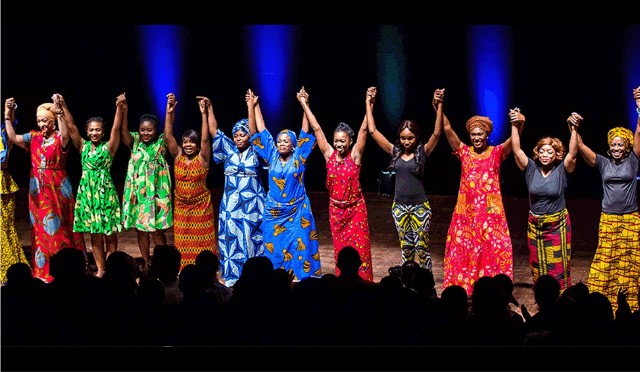
Anthropology can be defined as the scientific study of people, their societies and culture.
The origin of anthropology can be traced to ancient time when travellers and philosophers speculated about human culture and physical differences which bordered on language, body shape and skin colour from place to place.
The concept of culture was developed out of the need for an objective term to characterise the similarities and wide differences between groups of people. Many people, for example, hold the view that culture is synonymous with development or improvement by training and education. A cultured person, they say, is one who has acquired a command of certain specialised fields of knowledge. On the other hand, persons who are not well educated in these fields, or those of low socio-economic status, are often referred to as uncultured.
The impact of anthropology to the development of African culture became apparent in the middle of last century when English men of science and letters, concerned themselves with the problems of slavery, the treatment of the native people of the empire and the atitude of colonial administration which needed the facts of anthropology to find answers to their position. For instance, in 1838, the Aborigines’ Protective Society was established in London. The academic faction wanted to study native people to find out how they lived and what their opinions were before trying to help them. This group seceded in 1843 and formed the Ethnological Society of London in 1863.
The Anthropological Society of London was highly successful and very popular because of its position on racial superiority. A leading member of the society, Dr James Hunt, argued that science had proved the Black man of African origin to be physically, intellectually and morally inferior to the European man. However, modern anthropologists today have revised the white man’s works and literature in the areas of physical and cultural evolution, human diversity and human race. The Black African man now has new perspective of himself; he now feels equal, if not superior to the white man, who has earlier subjugated him and regarded him as sub-human.
Nevertheless, the Black man admits that he lags behind technologically, but he has the confidence in himself to know that given the opportunity to utilise his potentiality and resources, he will develop and advance in his own way, perhaps a better or more desirable way.
However, to maintain the tempo in the development of African culture, African leaders should give the training of anthropologists the desired reference since it is their fact findings that mostly determine the development of the culture of a people.
Culture, according to modern anthropologists, is not restricted to one specialised field of knowledge nor is it the attribute of persons who have good manners, but should encompass language, means of making a living, arrangement of family life, the focus of group loyalties and ways of perceiving the world, both the physical world and the world beyond.
It is also important to note that culture puts control on man’s drives; it influences his eating habits, hours of sleep, display of emotion and sexual behavior.
Edward Taylor, an eminent scholar (1871), saw culture as a complex whole which includes knowledge, belief, art, morals, law, custom and any other capabilities and habits acquired by man as a member of a given society.
The fact that the culture of a given society is bound to change over a period of time is apparent when one considers the present developmental stage of Africa. Indeed, there have been significant changes in the aspect of the African culture; even some of our institutions are undergoing drastic changes. This is attributable to the area of consciousness gained in the study of anthropology by Africans because in the early times, most investigations into psychological developments were carried out by psychologists in Euro-American societies. This raises the question of whether or not the results of such investigations are valid or applicable for societies worldwide.
Most of the major African universities now offer courses in general anthropology which hitherto was in the department of sociology. Some universities in Nigeria have joint departments of sociology and anthropology.
A good number of state and federal universities today also offer overseas scholarships in the study of anthropology so as to achieve the great status expected for the development of African culture.
The creation of a separate ministry of culture and tourism by the Federal Government is no doubt the recognition of the social and economic importance of culture in the advancement of our nation as an African country.
Fuayefika, a commentator on social issues, writes from Port Harcourt.
Tonye Fuayefika



Quote: “Ogoniland does not
The latest attack by Chief
Instead, the gathering and
The proposal for a unified
The question should be: who
It is easy to criticise
The people are looking beyond
onest people can reach
Society must therefore
Quote: “Privilege should
There is an old saying that
While motivations cannot
A person who benefits from a
This is why citizens should
We must not assume that
By: Michael Abraham
Quote:”Although the Federal
The recent outburst by the
The senator also alleged
They connect ports, airports,
To address these challenges,
Rwanda and Morocco, for
FERMA should also prioritize
Many Nigerians have asked
-

 News3 days ago
RSG Targets Nine Million Residents in Mosquito Net Distribution Campaign
-

 Oil & Energy3 days ago
Aiyedatiwa Signs New Electricity Bill
-

 Maritime3 days ago
Marine Minister Commends President Tinubu On NPERA Bill Assent
-

 Oil & Energy3 days ago
NLNG Commissions Research And Innovation Centre In RSU
-

 News3 days ago
KenPoly Holds Eight Convocations, August 29
-

 News3 days ago
RSG Begins Another Phase of Projects Commissioning Today
-

 News3 days ago
RMAFC Completes Revenue Sharing Review, Proposes New Pay
-

 Maritime3 days ago
NAGAFF Petitions IGP Over Alleged Maritime Police Harassment