In a democracy, political power is never expected to operate without scrutiny. Those entrusted with public authority must be answerable to the people, while those outside...


Quote: “The Flamingos have conquered the world; Nigeria must now rise to its responsibility of nurturing the next generation of champions.” Sometimes, sporting victories go far beyond the excitement of winning a trophy. They become defining moments in a nation’s history, inspiring generations and reminding people of what can be achieved through talent, determination, discipline, and teamwork. The historic triumph of the nation’s U-17 women’s football team, the Flamingos, at the 2026 FIFA U-17 Women’s World Cup in Morocco is one such watershed moment. To the young Nigerian ladies who have brought honour and international recognition to our country: congratulations. You have made Nigeria proud, given Africa a historic milestone to celebrate, and demonstrated that our young girls can compete successfully with the very best in the world By defeating Japan 2–1 in the final on November 7, 2026, the Flamingos became the first African country to win the FIFA U-17 Women’s World Cup. More significantly, they became the first African women’s national team to win a FIFA World Cup title at any level. This extraordinary achievement deserves far more than a passing celebration. The final against Japan demonstrated the character and composure that carried the Nigerian team to the summit of world football. Nigeria took the lead in the 39th minute through Awawu Bashiru. Just two minutes into the second half, Oluebube Umejiaku doubled the advantage with an impressive finish. Japan refused to surrender, reducing the deficit through Fuki Ito in the 80th minute following a corner kick, but the Flamingos remained resolute and held on until the final whistle. It was a moment of pure joy not only for Nigeria, but for the entire African continent. Umejiaku deserves special commendation for her outstanding performance throughout the competition, earning the prestigious Golden Ball award as the tournament’s best player. Her composure, attacking intelligence, and ability to deliver when it mattered most demonstrated the enormous potential within Nigeria’s young footballers. However, this victory was not the work of a single individual. It was the product of collective effort. The depth of talent in the squad was highlighted by five different Nigerian players receiving Player of the Match honours across the team’s six victories. Oluwakemi Adegbuyi earned recognition following the two-zero group stage win over Puerto Rico, while Kanyinsola Yusuf was named top player after the three-one win against North Korea. Umejiaku received the award in both the round of sixteen victory against Mexico and the final against Japan. Favour Nkwocha was honored after the one-zero quarter-final victory over Venezuela, and Awawu Bashiru claimed hers following a dynamic two-goal performance in the three-one semi-final defeat of Brazil. These performances underline an important lesson: successful teams are built on collective strength rather than reliance on one star player. The magnitude of this achievement becomes even clearer when viewed against the history of the competition. Since the tournament’s inception in New Zealand in 2008, the trophy had been dominated by a small group of global powerhouses, including North Korea with four titles, Spain with two, and South Korea, France, and Japan with one title each. Nigeria has now broken into this elite circle, adding a new name to the list of champions and ending Africa’s long wait for the trophy. For a country that has enjoyed considerable success in men’s youth football—where the male U-17 team has claimed five titles across past decades—this victory is particularly significant. With the Flamingos becoming world champions, Nigeria has proven its strength across both male and female youth football, extending the country’s record of winning at least one FIFA U-17 World Cup title across five consecutive decades, from the 1980s to the 2020s. Beyond statistics, there is a far more vital message in the Flamingos’ success. It reminds us that Nigerian girls deserve opportunities, encouragement, and real investment to develop their talents. For too long, young girls in many parts of our society have had to contend with cultural expectations and social limitations that discourage them from pursuing careers in sports. Some parents still regard football as unsuitable for their daughters, while others prioritize the sporting development of boys. The Flamingos have provided a compelling reason why such attitudes must change. Given the right environment, training, and opportunities, Nigerian girls can compete at the highest international level and bring glory home. The Federal Government and the Nigerian Football Federation must not allow the excitement surrounding this victory to fade without concrete action. We must commend President Bola Tinubu for the cash rewarding each player with a savings certificate rewards for the technical crew and the players....
Quote: “A public convenience that is inaccessible, filthy, unsafe or without water is public inconvenience in disguise.” The expression “public convenience” sounds reassuring. Yet, in many...


On November 10, 1995, the Nigerian military government of General Sani Abacha executed Ken Saro-Wiwa and eight other Ogoni leaders after a deeply controversial trial. Their...


The National Youth Service Corps (NYSC) was established in 1973, after the Nigerian Civil War, to promote national unity, reconciliation and integration. By deploying graduates beyond...


Quote: “Democracy is not secured by the silence of opponents, but by their freedom to organise, speak and compete without fear. When intimidation replaces argument, the whole nation loses.” As the 2027 general elections draw nearer, reports of attacks on opposition supporters, disrupted meetings and restrictions on political activities raise serious concerns about Nigeria’s democracy. From Akwa Ibom and Cross River to Enugu, Kaduna, Sokoto and Kebbi, recent developments test citizens’ freedom to organise and campaign. Each incident requires impartial investigation; together, they demand national attention. In Akwa Ibom, police ordered political parties and groups to suspend and reschedule rallies, meetings and processions approved for October 1, citing intelligence about possible security threats. The directive affected a planned two-million-man march in Uyo organised by the Obidient Movement in support of Nigeria Democratic Congress (NDC) presidential candidate, Peter Obi, and running mate, Rabiu Kwankwaso. Organisers said they had prior approval and spent over N20 million mobilising supporters across the state’s 31 local government areas. Police described the measure as precautionary and applicable to all groups. Although public safety matters, restrictions must be necessary, proportionate and must not deny a fair platform to all and sundry. Cross River presented a disturbing picture on November 4. Peter Obi’s NDC convoy was reportedly attacked around Watt Market in Calabar, where suspected hoodlums threw stones and other objects at vehicles and supporters. Windscreens were damaged and supporters reportedly injured. Police confirmed the attack and arrested a 27-year-old suspect, while investigations continued. That day, tension also arose when NDC supporters and an APC group conducting a road walk converged around Metropolitan Hotel. Police intervention reportedly prevented a wider confrontation. There were suggestions that the convoy’s attack, arose from internal disagreements within the NDC. All that require impartial investigation. In Enugu, suspected armed hoodlums reportedly stormed an NDC ward meeting at Ndiuno-Obuoffia, Nkanu West, on September 12 and opened fire, injuring two attendees. That day, a separate Peoples Democratic Party gathering at Agbani was disrupted, with canopies and chairs destroyed. Police confirmed both incidents and ordered investigations, although they said organisers had not requested security coverage. The attackers’ political affiliation had not been established. In Kaduna, the ADC accused security personnel and others of intimidating supporters during a September gathering. Police said tear gas was used only after protesters blocked a major road and public order deteriorated. These conflicting accounts make transparent inquiries essential. Sokoto and Kebbi have added to the alarm. Ahead of the ADC’s November 4 campaign rally in Sokoto, the party alleged its office was sealed, delegates’ accommodation disrupted and supporters subjected to hostility. The state government disputed key claims, citing a property dispute over the office and denying it directed hotels to reject ADC guests. Amnesty International reported that at least two suspected ADC supporters were allegedly shot along the Wurno-Sokoto Road and vehicles conveying supporters attacked in Tambuwal. These claims require prompt verification and accountability where wrongdoing is established. On November 5, the ADC campaign convoy of Atiku Abubakar was attacked in Birnin Kebbi. Amnesty International said footage it reviewed showed armed men attacking vehicles, striking people with cutlasses, blocking roads and targeting journalists’ equipment. Cameras, tripods and recording tools were reportedly destroyed. The organisation warned that such violence threatens opposition parties’ rights to association and peaceful assembly. Coming a day after the Calabar attack, the incident reinforces the urgency of protecting political activities nationwide. These are not merely partisan disputes. Section 40 of the Constitution guarantees freedom of assembly and association, including the right to form or belong to a political party, while Section 39 protects expression. These rights apply equally to government supporters and opponents. Democracy cannot flourish if only the powerful or popular can assemble. Public safety must not become a pretext for arbitrary restrictions. Governors must keep state institutions and security outfits neutral. Police and other agencies must protect lawful gatherings, prevent attacks and investigate allegations without fear or favour. Where threats exist, authorities should provide security and engage organisers rather than impose blanket restrictions. Political parties must discipline supporters, reject thuggery and avoid inflammatory language. The media and civil society should distinguish facts from allegations while demanding accountability. Political intimidation discourages participation, deepens distrust and drives voters into apathy. It can also create conditions for disputed results and violence. No ambition, party or candidate is worth a Nigerian life. The 2027 elections must be a contest of ideas, competence and public service, not fear. Every attack should be investigated consistently, transparently and without political favour, perpetrators brought to justice and citizens’ rights protected. Safeguarding democratic space is not a favour to the opposition; it is a constitutional obligation owed to all Nigerians. The ballot must decide political contests, not thugs, threats or abuse of state power. By: Sylvia ThankGod-Amadi
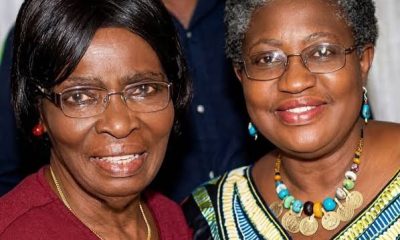

Quote “Professor Kamene Okonjo’s life was a testament to the power of scholarship, courage and service. Beyond raising a daughter who would attain global prominence, she distinguished herself as an accomplished sociologist, an advocate for women’s empowerment and a royal matriarch whose remarkable journey included surviving a kidnapping at 82. At 96, she leaves behind a legacy that transcends family ties and deserves enduring recognition.” Some women leave behind more than a family name. They leave behind a legacy of intellectual accomplishment, courage, service and commitment to humanity that deserves to be celebrated long after their departure. Professor Kamene Okonjo, the renowned sociologist, women’s rights advocate and mother of Dr Ngozi Okonjo-Iweala, Director-General of the World Trade Organisation (WTO), was one such woman. Professor Okonjo died on Friday, October 23, 2026, at the age of 96. Her death was announced on Sunday October 25, 2026 by the Umu Obi Obahai Royal Family of Ogwashi-Uku Kingdom in Delta State. Her passing has drawn tributes to a life distinguished by academic excellence, dedication to family, community service and the advancement of women. Yet, to remember Professor Kamene Okonjo merely as the mother of one of Nigeria’s most internationally recognised women would be to tell only a part of her story. She was an accomplished academic whose contributions to sociology earned her recognition beyond Nigeria. Her lifelong interest in women’s rights and empowerment reflected a conviction that women deserved opportunities to develop their abilities and contribute meaningfully to society. Her life demonstrated that a woman could combine professional distinction with family responsibilities and traditional obligations without allowing one aspect of her identity to diminish the others. She occupied a place in the academic community while remaining a respected figure within the royal institution of Ogwashi-Uku. Professor Okonjo was the beloved wife of the late Professor Chukwuka Okonjo, a distinguished scholar and former Obi of Ogwashi-Uku. Their marriage lasted 66 years, representing decades of companionship, family building and shared responsibilities. Together, they raised children who made their own contributions to society, including Dr Ngozi Okonjo-Iweala, who served as Nigeria’s Finance Minister before becoming the first woman and first African to lead the WTO. Her daughter’s international accomplishments have naturally brought additional attention to the family. However, the late professor’s own scholarly achievements and advocacy for women’s advancement deserve recognition in their own right. The achievements of children may bring honour to their parents, but they should never obscure the individual contributions of those parents. one of the most dramatic chapters of her life occurred in december 2012, when she was 82 years old. On December 9, 2012, Professor Okonjo was kidnapped in Delta State, an incident that attracted national and international attention. Her abduction was particularly disturbing because of her advanced age and the public position occupied by her daughter, who was then serving as Nigeria’s Finance Minister under President Goodluck Jonathan. Reports at the time indicated that her abductors demanded a substantial ransom. The incident also generated widespread concern about insecurity in the Niger Delta and the vulnerability of citizens to kidnapping. For five days, the family endured uncertainty over her whereabouts and safety. The situation became a major national concern, with security agencies intensifying efforts to secure her release. On December 14, 2012, the then Delta State Governor, Emmanuel Uduaghan, confirmed that Professor Okonjo had been released. According to reports, she was dropped off near her residence. The governor attributed her release to pressure from security operatives, although the precise circumstances surrounding the incident remained unclear. Her release brought relief to her family and the wider public. At 82, she had survived an ordeal that exposed the frightening reality of kidnapping in Nigeria. Her experience remains a reminder that insecurity does not discriminate by age, social standing or family background. Nearly 14 years later, Professor Okonjo’s death at 96 closes a remarkable chapter in the story of a woman whose life encompassed scholarship, motherhood, royal responsibilities and personal resilience. She leaves behind children, grandchildren and great-grandchildren, as well as a legacy that extends beyond her immediate family. The royal family described her as a woman of exceptional intellect, humility, compassion and grace. These qualities, alongside her academic achievements and commitment to women’s empowerment, form an important part of her enduring contribution. Her passing also offers an opportunity to reflect on the often-overlooked contributions of women whose influence may be overshadowed by the public achievements of their relatives. Behind many prominent Nigerians are parents, mentors and family members whose sacrifices, values and personal accomplishments helped shape their own journeys. Professor Kamene Okonjo deserves to be remembered not simply because she was the mother of a globally influential woman, but because she was herself a scholar, an advocate and a woman who lived through extraordinary circumstances with dignity. At 96, she had completed a long journey marked by intellectual distinction, family devotion and service. Her story reminds younger generations that a meaningful life is measured not only by longevity or public recognition, but also by the knowledge imparted, the people encouraged and the causes advanced. As the Okonjo family and Ogwashi-Uku Kingdom mourn their matriarch, her life offers a fitting lesson: true legacies are built through years of purposeful living, and their influence continues long after their authors have departed. May her soul rest in perfect peace. By: Sylvia ThankGod-Amadi