Connect with us

Opinion

Still On Insecurity In Nigeria (II)

Published

on

Overall, this present administration has been
burdened with the almost helpless situation of insecurity in the country. Many people have tried to proffer explanation as to the reason for this group’s action. Several causes come to mind. They include: religion, poverty, lack of education, unemployment and lack of social infrastructure.
Religion is embedded in politics of developing nations. This  embodiment has been poorly understood by some secular sects, hence creating a notion that religion is an obstacle to development. With reference to the global South, non Western traditional religion existed prior to the colonization era, and the religion shaped the way people were governed and ruled, hence creating a specialized politicized role for high priests and priestess, the colonial era established a political secular constitutional government that operated on principles of social morality inscribed into written law.
However, recent studies of political system in Nigeria have shown a paradign shift in the system of governance.
Consequently, political parties are divided along religious lines. This has resulted into inter-religious violence and killings.
The security of surrounding nations and the porosity of our boarders should not be ignored. Information from the media largely seems to suggest that a good number of attacks especially the herdsmen gun attacks are perpetuated by non Nigerians from neighbouring countries. The likelihood of these claims is reasonably high. Countries like Mali, Chad, Niger and Cameroon, have been experiencing rising insecurity in recent decade and in combination with our loose borders. It is possible that criminals from these places easily get into the country to cause problems.
Also, the presence of poor infrastructure in these countries provides, hidden training camps for terrorist movement to grow and design action plan without being caught.
The cost of war and terrorism in these places and indeed some places in northern nigeria is cheap. Most weapons are locally made coupled with large number of idle youths, who are easily lured into these groups, setting up an attack is not only affordable but logistically convenient.
Identifying these causative variables in the background of generalized poverty and religious fanatism will help the government and people of Nigeria to fashion out mitigation strategies to curb the tide of terrorism in the country.
The first and most critical step will be to change the perception of citizens to the idea of totalitarianism and the deadly consequences that come with it via intolerance and supremacist beliefs. Young people should be educated to appreciate the limit of their own knowledge and give room for open mindedness that will accommodate fresh ideas. By doing so, we will have a generation of Nigerian citizens who are willing to compromise and dialogue out differences rather than resort to frequent violent outburst and actions.
Much as government should sustain skill acquisition centres and donating aids, there is also the need to install measures to reduce poverty in the country. These provisions will automatically influence the environment and actively encourage young people to go into entrepreneurial ventures and become self-reliant.
It becomes incumbent on government to expend some of their revenue on public enlightenment and mass mobilization, in the area of awareness creation. In view of the large scale insecurity ravaging the country, facilities such as security cameras, metal devices capable of preventing easy access to sensitive areas become a sine qua non. Diplomatic outreaches to friendly neighbours should be put in the burner to win their co-operation and assistance in giving this hydra-headed problem of insurgency and terrorism a frontal attack.
Experiences from other parts of the world should be considered. The case of Uganda lords Army should be studied. Information gathering is a key element in the fight against terrorism. A close network of information gathering, exchanging and clear dissemination need to be put in place.
There will be need for mass training and re-training of professionals in the social media, information agencies and news gathering outfits.
All stakeholders are to be involved. For sure, Boko Haram insurgence is a clear cut case of carefully crafted and syndicated terrorism. There is certainly more that meets the eye. The most worrisome aspect of this  group is its pen chant for unmitigated human right abuses. Again, all hands should be on deck to curb this menace. This becomes even more important in view of the forth coming general election of 2015. Life and property of citizens are of utmost importance.

Concluded.
Ezeanocbie is of theFederal Information Centre,
Port Harcourt.


Mary Uchenna Ezeanochie

Continue Reading

Opinion

Kudos  Gov Fubara

Published

on

Please permit me to use this medium to appreciate our able governor, Siminalayi Fubara for the inauguration of the 14.2-kilometre Obodhi–Ozochi Road in Ahoada-East Local Government Area.  This inauguration marks a significant milestone in the history of our communities and deserves commendation. We, the people of Ozochi, are particularly happy because this project has brought long-awaited relief after years of isolation and hardship.
The expression of our traditional ruler, His Royal Highness, Eze Prince Ike Ehie, JP, during the inauguration captured the joy of our people.  He said, “our isolation is over.”  That reflects the profound impact of this road on daily life, economic activities, and social integration of the people of Ozochi and other neighbouring communities. The road will no doubt ease transportation, improve access to markets and healthcare, and strengthen links between Ahoada, Omoku, and other parts of Rivers State.
The people of Ahoada, Omoku, and indeed Rivers State as a whole are grateful to our dear governor for this laudable achievement and wish him many more successful years in office. We pray that God endows him with more wisdom and strength to continue to pilot the affairs of the state for the benefit of all. As citizens, we should rally behind the governor and support his development agenda. Our politicians and stakeholders should embrace peace and cooperation, as no meaningful progress can be achieved in an atmosphere of conflict. Sustainable development in the state can only thrive where peace prevails.
Samuel Ebiye
Continue Reading

Opinion

… And It Came To Pass

Published

on

Quote:“Leadership is not measured by how hard one strikes back, but by how steady one remains under provocation.”
Tell it  in Rivers State, publish it  in the streets of Port Harcourt, so  the daughters of the State could rejoice, and the daughters of the uncircumcised triumph and know that Fubara is not vindictive”. And it came to pass that Rivers State emerged from one of the most delicate chapters in its political journey, the period of emergency rule that spanned from March 18 to September 18, 2025. It was a season that tested institutions, strained loyalties, and exposed the fragile balance between power and principle. During that time, the suspended Governor, Sir Siminalayi Fubara DSSRS, was widely believed to have suffered not only political setbacks but personal betrayal, allegedly from some top civil servants within the state apparatus. These were individuals expected to uphold neutrality and professionalism, yet were accused in public opinion of taking sides against the very government they served.
As the emergency rule ended and Governor Fubara resumed office, expectations were shaped less by policy and more by emotion. Many assumed that revenge would quietly find expression through governance. The loudest suspicion centered on the 2025 Christmas bonus of ?100,000 traditionally paid to each worker. The thinking was simple and cynical: a wounded governor would surely withhold goodwill. Some voices even mocked workers  openly hoping that the governor would refuse to pay the bonus. To them, denial of the bonus would serve as proof of political strength and justified retaliation. In reality, such thinking revealed a troubling desire to see governance reduced to personal vendetta. Yet,  it came to pass, the governor chose a path that confounded suspicion. Against all expectations, the 2025 Christmas bonus was paid.
That single decision quietly but firmly reframed the narrative. It showed a leader focused on governance rather than grudges, on institutional continuity rather than emotional satisfaction. The payment was not a favor, nor was it a concession; it was a statement that public administration must rise above personal injury. By honoring the bonus, Governor Fubara demonstrated that leadership is not measured by how hard one strikes back, but by how steady one remains under provocation. He made it clear that workers’ welfare would not become collateral damage in political disagreements. This action also served as a moral rebuke to those who celebrated division and hoped for punishment. Governance is not validated by the suffering of workers, nor is leadership strengthened by withholding entitlements. At the same time, the issue of alleged sycophancy and betrayal within the civil service cannot be brushed aside. If proven, such conduct deserves firm, lawful, and institutional correction. Civil servants are bound by duty to the state, not to political conspiracies or shifting loyalties.
However, justice must never be confused with revenge. The strength of governance lies in correcting wrongs without destroying the system itself. Governor Fubara’s restraint suggested an understanding that the future of Rivers State mattered more than settling scores. For workers, this moment carried an important lesson. Celebration should be rooted in good governance, not in the expectation of another’s downfall. Rejoicing in rumors of denial or punishment undermines the very stability that protects workers’ welfare. Public service thrives where professionalism, mutual respect, and accountability are upheld. Pettiness, gossip, and political scheming only weaken institutions and erode trust. History often remembers leaders not for the crises they inherit, but for the character they display in response. In paying the 2025 Christmas bonus, Governor Fubara chose legacy over impulse, maturity over malice.
And so, it came to pass that focus defeated revenge, governance triumphed over bitterness, and Rivers State was reminded that true leadership is proven when restraint is expected least but delivered most. Beyond the symbolism of the Christmas bonus lies a deeper question about the kind of political culture Rivers State intends to cultivate in the years ahead. Periods of emergency rule, anywhere in the world, often leave behind residues of suspicion, fear, and silent realignments. Institutions do not emerge untouched; individuals recalibrate loyalties, some out of conviction, others out of self-preservation. What distinguishes stable democracies from fragile ones is not the absence of such moments, but the discipline with which leadership manages their aftermath. River.
King Onunwor
Continue Reading

Opinion

That Withdrawal of Police   Orderlies  From VIPs

Published

on

Quote:”Balancing VIP security with public safety remains a tightrope walk in a country where the majority of citizens are still under-protected.”
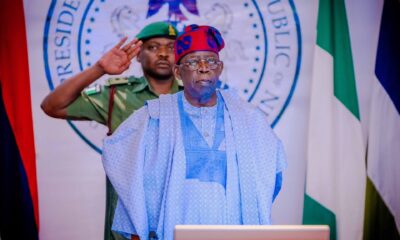
The Presidential announcement on the removal of police orderlies from persons in authority and their relations  ( Very Important Persons ) last month came as a relief to many Nigerians who felt deprived    of one major  role of government ; security of lives and property.The higher  population of Nigerians  missed needed security because the VIPs and the VVIPs kept  retinue of Police Officers  totalling over 100 ,000 to  themselves and their family members as if they are all that matter  while some  communities under attack of terrorists  have no single unit of  police station located there in. While many hailed the announcement , some said perhaps the government has just woken up to her major responsibility of securing the lives and property of all  citizens while many expressed indifference on the note that it may be one of those pronouncements which come only in words but no action .Many keep their fingers crossed watching how it will play out , how Mr President  will  go about the implementation of the seemingly dicey  policy .
Benjamin Franklin  said “well said is better than well done ”  It is sufficient today to say that many Nigerians including me are still waiting and watching to see  how well  and how long this  return  of the Police service to the ordinary people will go . Wishing hopes will not be crashed ,  It  is note worthy, that  the recent complaints by the VIPs of being exposed to attacks  may in a way affect the action on implementation. Recently, at Senate plenary , another worrisome  angle came up as Senator Abdul Ningi  coming through a motion    disclosed that he had only one police officer attached to him ( his office ) and that  the officer was recalled the week before following  Mr President’s directive  . Senator Ningi said the withdrawal exposed him to high risks but underscored the angle that while his orderly  was recalled , many other politicians , men  and women in authority, business concerns   foreigners  and even children of some  VIPs are still enjoying retinue of police protection ( officially attached to them ).
 It’s note  worthy also that the Deputy Senate President , Distinguished Senator Jibrin Barau,  who presided  over  the session revealed that the  leadership of both chambers are already in discussion with President Tinubu on the need  to exempt  the law makers  from the new policy .  Senator Ningi may not be  wrong . After all he emphasized he is okay  provided that the removal of the Police Orderlies be done across board . Senator Barau noted that talks are on  over the issue of law makers’    in line with international practice . Further details from the Presidency  noted  that   Presiding officers  will retain their  police officers ,  others would have Civil Defense  officers ( NSCDC) as orderlies while  any other VIP who feels he or she deserves personal police protection should get clearance from  his office . In the midst of all  issues weighing in on the proper implementation , it becomes necessary  to bear in mind that  the decision  hinges on  the realization that Nigeria has peculiar security issues (of kidnappings, banditry, and terrorism.) and that  majority of Nigerians   are under protected.
More so, that if well  implemented, Police officers will focus on core duties; even as 30,000 new police officers are to  recruited to enhance security .That implementation  must be made in a  way that leaves no room.for selective  treatment loss of confidence  and  controversies.  Looking at previous attempts of  implementation  of this policy  gives faint hope  as several  attempts consistently failed . Former  IGPs like Tafa Balogun (2003), Ogbonnaya Onovo (2009), and Ibrahim Idris (2018) tried  the policy but all  failed due to political resistance from various angles. All the failed attempts  were tied to lack of political will  mostly due to the fact that the directives came from police chiefs, not the president. Selective Enforcement was another killer to the policy  as  partial implementation  met  resistance   and   later  reversal . Egbetokun (2023) and Adamu (2020) saw minimal impact.
Further more entrenched corruption in the system saw  Politicians and VIPs quietly regain police escorts due to ‘transactional economics”and pressure. Worse still the mindset of the  police officers  withdrawn didn’t help the policy Underpaid police prioritize VIP duties for extra benefits. Many wish President Tinubu’s move can  break this cycle.  As at today, he  still  insists the move is non-negotiable while stressing collaboration with states to upgrade training facilities. As citizens look forward to  success of the policy  without undue exposure of both sides, balancing VIP security with public safety remains a tightrope walk. Talk fades ; action echoes.  How the Presidency  implements this policy.  has  much to tell on the governments stand on national / community  security , choice of priority and the ability to   stand uncomprised . The known  goal is clear:  The outcome is  not yet certain.  Fingers crossed , we await . Definitely , time will tell.
By: Nneka Amaechi-Nnadi.
s State stood at such a crossroads in September 2025. The temptation to rule with a long memory and a heavy hand was real. Yet, the choice made signaled a preference for healing over hardening. Leadership after crisis demands more than administrative competence; it requires moral clarity.
 Governor Fubara’s decision reminded the state that authority is not best exercised through silent punishment or selective generosity. Rather, it is strengthened when rules remain rules, irrespective of personal injury. By keeping faith with workers, the government preserved an essential firewall between politics and public service. That firewall, once breached, turns governance into a battlefield where livelihoods become weapons. Rivers State narrowly avoided that descent. In doing so, it affirmed that institutions must outlive tempers, and governance must not mirror the bitterness of political seasons. This moment also invites sober introspection within the civil service itself. Allegations of partisanship, if left unresolved, corrode professionalism and weaken public confidence. A civil service that drifts into political camps loses its moral authority and operational effectiveness.
Therefore, reform, where necessary, should be guided by due process, transparency, and institutional review—not whispers, witch-hunts, or mob verdicts. Accountability strengthens systems when it is fair; it destroys them when it is arbitrary. The restraint shown by the executive places a corresponding burden on administrative leadership to restore discipline, neutrality, and pride in public service. For the wider political class and the commentariat, the episode serves as a caution against normalizing cruelty as strategy. The eagerness with which some anticipated workers’ suffering revealed a dangerous appetite for scorched-earth politics. When governance becomes a spectator sport where pain is cheered and deprivation is weaponized, society inches toward moral exhaustion. Rivers State has seen enough turbulence to know that stability is not sustained by triumphalism, but by restraint.
The lesson is simple yet profound: power is fleeting, but institutions endure; leaders pass, but precedents remain. In the end, the payment of the 2025 Christmas bonus was more than a fiscal act—it was a civic statement. It told workers they were not expendable. It told political actors that revenge would not be policy. And it told the state that maturity in leadership is not weakness, but strength under control. In a climate where many expected fire, restraint prevailed; where bitterness was predicted, balance emerged. Thus, Rivers State was offered a rare reminder that governance, at its best, is an act of discipline, and leadership, at its highest, is the courage to rise above provocation.
Continue Reading

Trending