
Featured
Buhari Extends Lockdown On Lagos, Abuja, Ogun …Unveils Economic Recovery Team …Says FG Achieves 92% Of Contacts Tracing …Orders Addition Of One Million Persons To Social Register

President Muhammadu Buhari has extended the presidential lockdown order on Ogun, Lagos, and Abuja to two more weeks to be able to contain the spread of the Coronavirus pandemic in the country.
Buhari said this in a nationwide broadcast, yesterday.
According to the president, the approach to the virus remains in 2 steps – First, to protect the lives of fellow Nigerians and residents living here and second, to preserve the livelihoods of workers and business owners.
“With this in mind and having carefully considered the briefings and Report from the Presidential Task Force and the various options offered, it has become necessary to extend the current restriction of movement in Lagos and Ogun states as well as the FCT for another 14 days effective from 11:59 pm on Monday, 13th of April, 2020. I am therefore once again asking you all to work with government in this fight.
“This is not a joke. It is a matter of life and death. Mosques in Makkah and Madina have been closed. The Pope celebrated Mass on an empty St. Peter’s Square. The famous Notre Dame cathedral in Paris held Easter Mass with less than 10 people. India, Italy and France are in complete lockdown. Other countries are in the process of following suit. We cannot be lax.
“The previously issued guidelines on exempted services shall remain.
“This is a difficult decision to take, but I am convinced that this is the right decision. The evidence is clear.
“The repercussions of any premature end to the lockdown action are unimaginable”.
Also, President Muhammadu Buhari has issued a new directive to ministers as he extended the Coronavirus lockdown order for another 14 days.
Buhari, while addressing the nation in a nationwide broadcast, yesterday, directed the ministers to develop a comprehensive policy for a ‘Nigerian Economy functioning with COVID-19’.
He said: “To ensure our economy adapts to this new reality, I am directing the Ministers of Industry, Trade and Investment, Communication and Digital Economy, Science and Technology, Transportation, Aviation, Interior, Health, Works and Housing, Labour and Employment and Education to jointly develop a comprehensive policy for a ‘Nigerian economy functioning with COVID-19’.
“The ministers will be supported by the Presidential Economic Advisory Council and Economic Sustainability Committee in executing this mandate.
“I am also directing the Minister of Agriculture and Rural Development, the National Security Adviser, the Vice Chairman, National Food Security Council and the Chairman, Presidential Fertiliser Initiative to work with the Presidential Task Force on COVID-19 to ensure the impact of this pandemic on our 2020 farming season is minimized.”
The President further thanked the health workers at the frontline fighting COVID-19 as he commended the achievement so far during these days of lockdown.
It would be recalled that Buhari had on March 29 ordered a total movement restriction in Lagos, Abuja and Ogun states.
According to the president, the order was based on the advice of the Federal Ministry of Health and the NCDC.
Similarly, the Presidential Task Force (PTF) on the COVID-19 pandemic, yesterday, said the spread of the virus in the country has slowed down.
The Secretary to the Government of the Federation (SGF), Mr Boss Mustapha, disclosed this during the daily media briefing by the task force in Abuja.
He further stated that based on the evaluation of experts, assessment of available data and experiences of other nations currently in the same situation, the PTF has submitted its recommendations to President Muhammadu Buhari, and urged Nigerians to please await further pronouncements in this regard.
Mustapha, who is also the chairman of the PTF, said 92 per cent of contacts tracing has been achieved.
He assured Nigerians that the task force was already making headway on the fight against the pandemic, urging the public to continue to maintain calm, observing all the advisories and to continue showing understanding by respecting the measures instructed in containing the spread of the virus.
“Ladies and gentlemen, since the broadcast of the President on Sunday, 29th March, 2020, the Presidential Task Force has, with your support accomplished the following objectives that underpinned the measure: ‘Slow down the spread in order so as not to overwhelm our fragile health system; intensified case identification, testing and isolation. Intensified contact listing and isolation-(92 per cent of all contacts have been identified).
“Increased laboratories by 100 per cent – (Lagos -3; Abuja-2; Irua-1; Ibadan UCH-1; Iree-1; Jos-1; Kano-1; Abakaliki-1), there are now 11 laboratories in the network.
“Increased testing by 50 per cent, to the current capacity of 1,500 tests per day, with over 6,000 tests done. Procurement concluded for new high throughput testing by end of the month.
“Distributed Personal Protective Equipment to over 40,000 healthcare workers – there have been no stock outs. Trained over 7,000 Healthcare workers on infection prevention and control. Deployed NCDC teams to 19 states. Visited Lagos to evaluate the readiness.
“Despite all of these, the PTF is convinced that we must deliver more. We have also been assessing the impact of the lockdown and the level of compliance by Nigerians.
“While we recognize the difficulties associated with such unprecedented action, we remain certain, however, that it is a step in the right direction for us to secure a healthier tomorrow.
“Based on the evaluation of experts, assessment of available data and experiences of other nations currently in the same situation, the PTF has submitted its recommendations to Mr. President and I urge Nigerians to please await further pronouncements in this regard.
“The PTF continues to appeal to all Nigerians to remain calm, maintain personal hygiene, observe physical distancing and stay at home”, he said.
The Federal Government also recommended the use of face masks by Nigerians in order to reduce their susceptibility to infection by the novel Coronavirus.
According to the government, Nigerians do not have to resort to using ‘medical-grade’ or surgical masks which are normally discarded after four hours of usage, advising that homemade masks which are cheap and reusable would serve the same purpose.
The Health Minister, Dr Osagie Ehanire, said the usage of mask was not compulsory, but only a recommendation by the task force.
“We said we are recommending. We are not saying it is compulsory, we are recommending. Secondly, we also said that, it does not have to be hospital-grade mask. It does not have to be medical or surgical-grade. You can make your own and preferably, your mask can be washable. You can wash it and iron it and reuse.
“The ones many of us are using here now are single-use which you have to throw away but you do not need that for day to day activities and the purpose of that mask is to shield you and shield your opposite because if anyone is emitting any kind of droplet or particles by way of coughing or sneezing or when people are shouting, laughing or exclaiming, you can capture them through the barrier.
“It can even be a scarf you tie across your mouth so that you do not run the risk of transmitting it to someone else. That is why we said it must be washed every evening, preferably in warm water and then dried and ironed. If you do that, you are safe to reuse it the next day. We are making that recommendation and also particularly stretching it to food vendors in the interest of their customers”, he said.
The National Coordinator of the Task Force, Dr Sani Aliyu, on his part, said newly-opened laboratories in the country are currently underutilized.
According to him; “On the issue of testing, I know there has been a lot in the Press recently. Part of the reason why we have not proceeded as fast as we can is because of the demand as well. We are not having as much demand for testing in those laboratories that we have activated and I am asking those laboratories particularly the ones that were activated in the last few days to please put forward processes that will allow them to key in, particularly in areas where there are suspicions of people having COVID-19.
“This does not only include people who have had contact or those who have travelled abroad. It also includes persons with unusual respiratory tract infections, particularly severe respiratory tract infections requiring hospitalization and I will ask that those laboratories that we have activated in the last one week should widen their scope when it comes to selection of testing based on our protocols so that we can have more positives identified and isolated.
“There is no room for massive community testing for Coronavirus. I would rather do a hundred tests and get 10 positives rather than do 1, 000 tests and get 10 positives. It is all a out improving the efficiency of the tests. It is better to test persons that have symptoms because what we call the pre-test probability is higher.
“When we talk about incubation period, this is the period between when you get an infection and the time the symptoms happen. And the incubation period is when the virus multiplies in the body and it is not excreted. If you are in the incubation period, you will not be excreting the virus and the test is looking for the presence of the virus.
“Therefore, if you do the test during the incubation period which may range from between two, three days to 14 days, the test will be negative. In other words, you could still be in an incubation period and it will give you a false assurance that everything is alright. That is why we do not recommend doing the tests in the absence of symptoms.
“The reason why in some cases some people might be asymptomatic and still have a positive result, which is extremely rare, is because a lot of people might have mild symptoms that you will not even notice. This is why we need to do the test at the right time in order to pick up the virus.
“So, we are not going to start doing massive testing in the communities. It will be inefficient, it will be expensive and it is not going to help us increase the number of positives”, he explained.
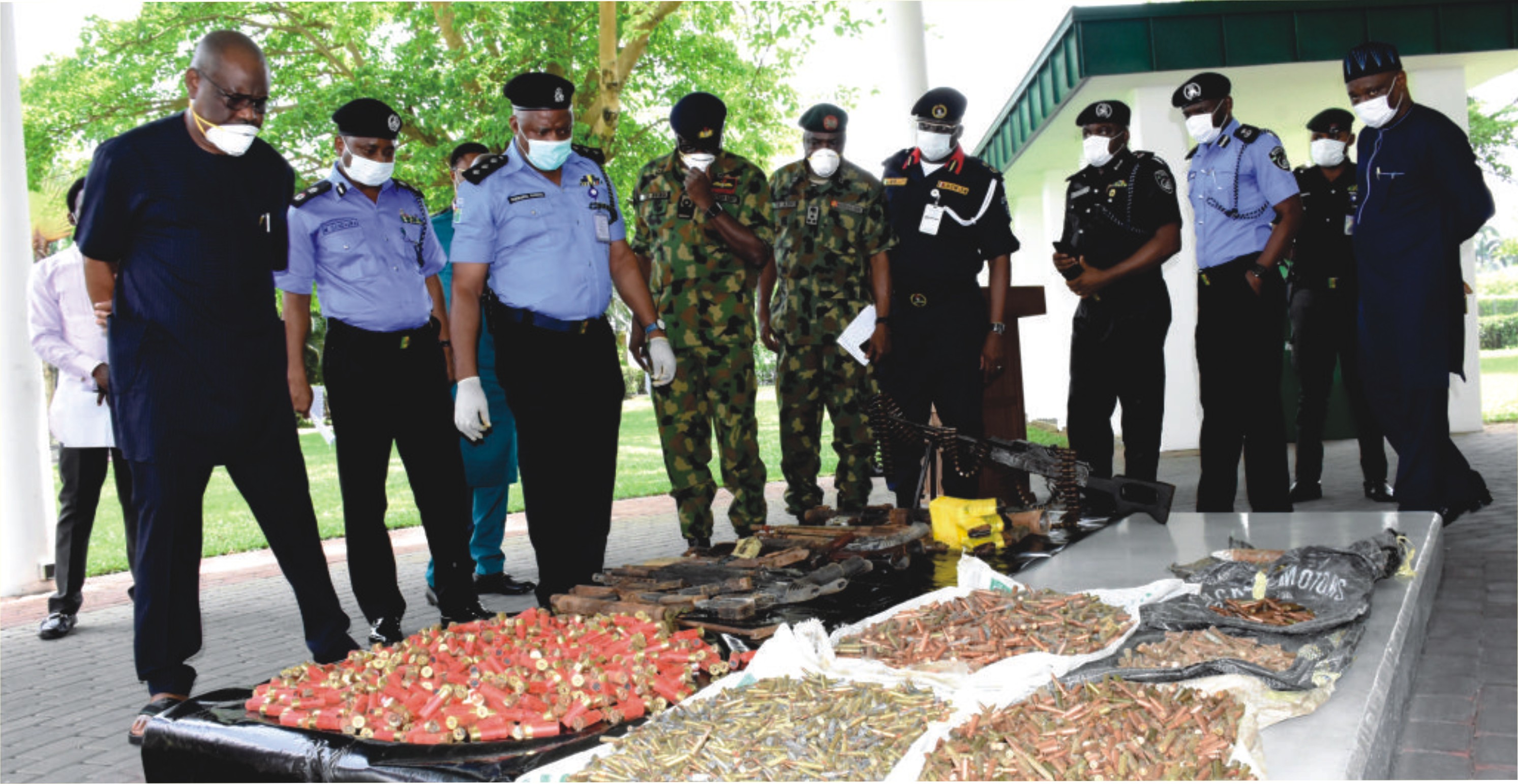
In his remarks, the Aviation Minister, Senator Hadi Sirika, who spoke on the face-off between the ministry and the Rivers State Government, said the Federal Government was currently dialoguing with the state government to effect the release of two pilots of Caverton Helicopters who were last week arrested and remanded at a state facility in Port Harcourt for breaching an Executive Order made by the state Governor, Chief Nyesom Wike.









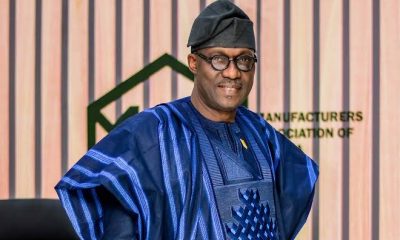


Governor of Rivers State, Sir Siminalayi Fubara, says Nigeria needs God-fearing leaders for the nation to move in the right direction and make meaningful progress.
The Governor stated this yesterday when he received in audience, the World President of the Seventh Day Adventist Church, Pastor Erton Kohler; his wife, Andriene Marques Kohler; daughter Mariana Marques Kohler and a retinue of ministers of the church at Government House, Port Harcourt.
Fubara who hailed the Seventh Day Adventist Church for its contributions to education and the grooming of future leaders in Nigeria, expressed delight that the Church had over the years, been investing in education at various levels and currently runs two universities in the country.
He commended the church for not only using its institutions to spread the gospel of Christianity but to groom future leaders for the country.
According to him, religion should not be just about defending one’s faith, but also making meaningful impact on the lives of the people.
He said that by floating these educational institutions, the church has demonstrated capacity to support Nigeria in the task of producing not only educated people but a breed of God-fearing leaders.
“Our country is where it is today because we lack the fear of God. If you have the fear of God, there should be a limit to what you can do because you understand the supremacy of God. But when God is not in your equation, you’ll go beyond the line and that is what has brought us to where we are today.
“So, I feel very happy that you are contributing to the development of our future leaders in this country. We need the right people being in the right place; prepared properly with good minds; that is what we need, not just in Nigeria but round the whole world.,” he said.
Governor Fubara further observed that the absence of God-fearing people in high places to take the right decisions that could impact positively on the society, has also given rise to other problems such as social inequality, poverty, corruption and criminality. According to him, Nigeria needs a system where the average parent could afford quality education for their children and a guarantee that upon graduation, the average child will have the capacity to compete favourably with anybody, anywhere in the world.
“If we have a situation where the little money that you’re being paid as wage can also afford you quality healthcare and after working at least for 15-20 years, you have a roof over your head, tell me why you should be involved in any kind of crime? At that point, you’ll feel secured and this attitude of insecurity about the future that leads to all the social vices we have today won’t be there,” he said.
Governor Fubara expressed appreciation to the delegation for the visit and for their prayers for Rivers State, assuring them of his continued support for their programmes in the state.
Leader of the delegation and World President of the Seventh Day Adventist Church, Pastor Erton Kohler said he was in Nigeria for a special conference of the church during which thousands of the church’s ministers will be undergoing an empowerment programme to further equip them for the task of herding their flocks and serving the society.
He expressed gratitude to the Governor for the warm reception accorded his entourage, saying the memory of the visit will linger in his mind for a lifetime.
Kohler disclosed that the Church has over twenty -four million (24,000,000) members and more than 182,000 places of worship, spread across 212 countries of the world.

The Rivers State House of Assembly has approved the 2026–2028 Medium Term Expenditure Framework (MTEF) submitted by Governor Siminalayi Fubara.
This reaffirms the lawmakers’ commitment to enacting laws and taking legislative actions geared towards the overall development of the State.
The Assembly gave the approval during its Second Legislative Sitting of the Fourth Session held last Friday.
Speaking on the MTEF document during plenary, the House Speaker, Rt. Hon. Martin Amaewhule, noted that by the provision of Section 10(1)(b) of the Rivers State Fiscal Responsibility Law No. 8 of 2010, the MTEF ought to have been laid before the House in September 2025.
Amaewhule explained that traditionally, the document is expected to be presented four months before the commencement of the next financial year and immediately after the expiration of every three-year fiscal cycle.
He, however, stated that in the interest of the State and its people, the House considered it necessary to deliberate on the document, describing it as a precursor to the 2026 Budget Estimates.
The Speaker expressed concern that the year had already progressed significantly before the presentation of the framework.
During deliberations on the document, members examined the assumptions and projections contained in the MTEF and observed that strict adherence to the outlined fiscal parameters would ultimately serve the interest of Rivers people.
The lawmakers maintained that effective implementation of the framework would promote prudent financial management and enhance developmental planning across the State.
Following the debate and positive consideration by members, the Speaker put the question to the House and members voted overwhelmingly in support of the approval of the MTEF.
Meanwhile, during the same sitting last Friday, the House also received a petition from the Chairman of Obio/Akpor Local Government Council, Dr. Gift Worlu.
The petition was presented by the member representing Obio/Akpor Constituency II, Hon. Emilia Amadi.
According to the petition, concerns were raised over an imminent security breach, threats to lives, destruction of property and alleged forceful takeover of property by some lawless persons within parts of the Local Government Area.
Presenting the petition before the House, Hon. Amadi appealed to the lawmakers to revisit the matter and take necessary steps aimed at safeguarding lives and property in the affected communities.
The House is expected to further deliberate on the petition and consider measures to address the concerns raised in order to sustain peace and security in the area.
King Onunwor
Featured
JUNE 12: Democracy Remains Nigeria’s Strongest Path To Unity, Progress, Says Fubara ….Extols Abiola, Wife


Governor of Rivers State, Sir Siminalayi Fubara, has reaffirmed that democracy remains the most effective system of government for Nigeria, given the country’s rich diversity of ethnic, religious, and cultural identities.
In a goodwill message to Nigerians on the occasion of the 2026 Democracy Day celebration, Governor Fubara said June 12 represents far more than a historic date; as it embodies the enduring struggle, sacrifice, and collective aspiration of Nigerians for freedom, justice, and representative governance.
The Governor extended warm felicitations to Nigerians at home and in the Diaspora, paying tribute to the heroes and heroines of the democratic struggle, particularly Chief MKO Abiola, his wife, Kudirat Abiola, and countless others whose courage and sacrifices helped secure the democratic freedoms Nigerians enjoy today.
According to him, “June 12 is a reminder of the price paid for the democracy we enjoy today. The sacrifices made by Chief MKO Abiola, Kudirat Abiola, and many other patriots who laid the foundation for the democratic journey we continue to enjoy today. Their commitment to the principle that power must ultimately reside with the people remains a source of inspiration for every generation of Nigerians.”
Governor Fubara noted that thirty-three years after the historic June 12, 1993 election, Nigeria’s democratic experiment has continued to evolve despite challenges and setbacks.
“Our democratic journey has not been without difficulties, but the resilience of our institutions and the determination of our people have kept the nation moving forward. The ability to express differing opinions, engage in constructive debate, and peacefully choose leaders through the ballot remains one of the greatest achievements of our nation,” he said.
Governor Fubara stressed that democracy provides the best framework for managing Nigeria’s diversity and transforming it into a source of national strength.
“Nigeria’s diversity should never be seen as a weakness. Properly harnessed, it is our greatest asset. Democracy offers us the opportunity to build consensus, promote inclusion, strengthen national unity, and create the conditions for sustainable development and shared prosperity,” he said.
Governor Fubara commended President Bola Ahmed Tinubu, for his commitment to the Renewed Hope Agenda and ongoing efforts aimed at economic revitalization, strengthening security, and deepening democratic institutions across the country.
He reiterated the readiness of Rivers State to continue partnering with the Federal Government in advancing policies and programmes that improve the lives of citizens through infrastructure development, job creation, enhanced security, quality education, healthcare delivery, and good governance.
The Governor further called on Nigerians, regardless of political affiliation, ethnic background, or religious belief, to use the occasion of Democracy Day to renew their commitment to the Nigerian project and the ideals that underpin democratic governance.
“Democracy must not be viewed merely as a periodic electoral exercise. It must be reflected in our daily commitment to accountability, transparency, tolerance, justice, respect for the rule of law, and responsible leadership. As citizens and leaders, we all share a collective responsibility to strengthen our democracy and build a nation that future generations will be proud to inherit,” he said.
Governor Fubara expressed optimism about Nigeria’s future, urging citizens to remain united, hopeful, and committed to the values of peace, dialogue, and national development.
“Together, we can build a stronger, more inclusive, and more prosperous Nigeria where every citizen has the opportunity to thrive and contribute meaningfully to national progress,” he said.