
Environment
AEPB rates performance of waste evacuation contractors low


The Abuja Environmental Protection Board (AEPB) has decried the low performance of the waste evacuation and cleaning contractors, engaged by the Federal Capital Territory Administration to keep Abuja clean.
The Director, Mrs Kate Ogbonna gave the assessment during an interactive session with the contractors in Abuja, yesterday.
Ogbonna said she was overwhelmed with unsavoury reports from the supervisors who monitor the daily performance of the cleaning and waste contractors.
According to her, routine checks by the Board have shown that the contractors are lagging in their task.
“The reports at my disposal from our supervisors, who monitor the performance of the contractors are not too good.”
She called on the contractors to brace up and ensure proper and efficient waste evacuation across the Federal Capital City.
She said that the FCT Minister, Mr Nyesom Wike, has been keeping his promise of paying the contractors on time, stressing that they, therefore, have no excuse not to deliver on the terms of agreement.
She acknowledged that there could be challenges, which were normal with every job, and advised the contractors to procure more equipment and engage more hands where necessary, to make their job easy and seamless.
The director reminded the contractors that they signed the contracts on grounds that they were capable, and assured them that the Board would assist where necessary.
Ogbonna explained that the meeting was to educate and guide the contractors on the full weight of their duties as waste managers and evacuators.
“We want them to know that there are standards and what we expect from them. We have set rules and agreements guiding their schedules.
“All we want is for the Federal Capital City to be clean,” she said.
Speaking on indiscriminate dumping of construction waste, the director said that the Board was working with the Department of Development Control to ensure that such waste were properly disposed of.
She appealed to residents and institutions doing businesses in the capital city to pay their waste and cleaning bills and procure the right size of waste bins commensurate with their residences and business offices.
She noted that waste removal and management was capital intensive, adding that residents need to do their part while the Board do its part.
“You cannot be owing and expect clinical waste removed.
“You cannot also have a bin meant for one household for a block of 10 flats and expect it to hold the waste you generate until the contractor’s trucks come around. It will definitely overflow and mess up the environment.
“To ensure Abuja capital city remains clean, devoid of pollution and epidemic free, all must do their part,” she said.
In his remarks, Mr Benjamin Enwerem, Director, Solid Waste Management, AEPB, said that some of the contractors have complained that most of the waste on the streets was being generated by night traders and funfare operators.
“These traders and funfare operators generate waste and litter the whole area, thereby, forming illegal waste dumps around residential and business areas.
“We have taken notice of this complaint and we will send our task force after them,” Enwerem said.
On the performances of the contractors, Enwerem said that although there were still lapses, the contractors were doing better by the day, noting that additional capable hands have been injected into the cleaning force.
On his part, Chairman, Association of Solid Waste Contractors, Mallam Ibrahim Babayo, acknowledged the unsatisfactory performance of the contractors and promised that they would improve.
Babayo also promised that the contractors would procure modern equipment and employ more hands to improve on routine evacuation of waste.


Continue Reading
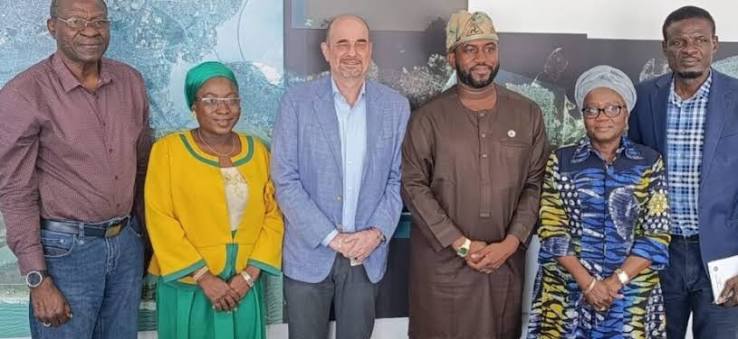
The Lagos Water Corporation (LWC) has commenced discussions with Julius Berger Nigeria Plc to strengthen coordination between water and road infrastructure projects.
This is contained in a statement issued by the corporation.
The corporation said the engagement followed a courtesy and familiarisation visit led by its Managing Director, Mr Mukhtaar Tijani, to Julius Berger’s Ijora office.
It said the visit was aimed at strengthening institutional relations and creating opportunities for deeper collaboration between both organisations.
The corporation stressed the importance of cordial relationships with neighbouring organisations and strategic stakeholders to promote future collaboration.
The meeting focused on road construction, water pipeline protection, water infrastructure development and sustainable water supply across Lagos Island and its environs.
Both organisations highlighted the need for early communication and technical coordination to prevent conflicts between road projects and existing water infrastructure.
Julius Berger Regional Commercial Manager, Region West, Mr Alexander Bauer, reaffirmed the company’s commitment to sustainable engineering solutions rather than short-term fixes.
Bauer stressed the importance of early stakeholder engagement and proper coordination before construction activities begin.
The meeting also examined access to project drawings and technical information required to improve coordination between water and road infrastructure projects.
Julius Berger explained that releasing detailed project drawings remained subject to approval from the appropriate client.
Both organisations therefore agreed on the need to engage the Lagos State Government to secure necessary approvals and strengthen technical collaboration.
The discussions also focused on accurate pipeline information and its importance in planning future water infrastructure and urban development projects.
The LWC delegation raised concerns about uncoordinated borehole drilling and its potential effects on groundwater resources and the ecosystem.
Participants noted that stronger public water supply systems could reduce dependence on individual boreholes and help protect underground water resources.
Construction & Maintenance
They also agreed on the importance of sharing information on construction activities, road conditions, project schedules and potential disruptions.
Security and community considerations were also discussed, with Julius Berger highlighting its engagement with relevant authorities on security infrastructure within the area.
The meeting ended with a shared commitment to open communication, stronger technical coordination and exploring further opportunities for collaboration.
The engagement is expected to strengthen synergies between water and road infrastructure planning and support resilient and sustainable infrastructure development across Lagos.
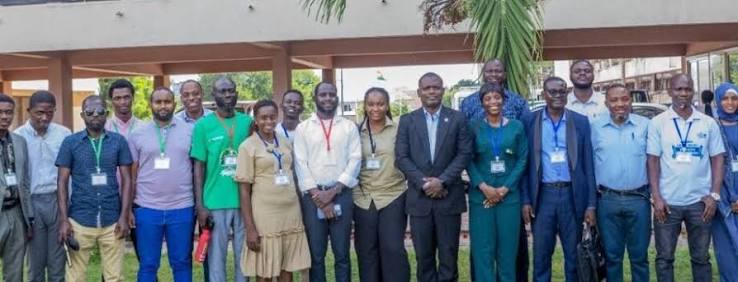
Some Climate Experts across Africa have called for investment in African youth to enhance future security.
They made the call on Wednesday during a webinar organised by Planet, People and Peace Foundation (PPPF), a non-governmental organisation, to observe 2026 International Youth Day (IYD).
According to them, there is a need to invest, listen and create opportunities for young African people.
The Tide source reports that the 2026 theme of the IYD is “Different Contexts, Common Aspirations’’.
Miss Bisi Kumuyi, the Secretary, Climate Beyond Border Caravan (CBBC), Nigeria, who canvassed for investment in youth, said the future of Africa would be determined by the opportunities the continent created for its young people today.
The CBBC, an initiative of PPPF, is a pan-African, youth-led campaign promoting climate action, cross-border cooperation and green economic transformation across the continent.
‘‘As Africa joins the rest of the world to commemorate International Youth Day on Aug. 12, 2026, we celebrate the energy, creativity, resilience and determination of young Africans who continue to shape the continent’s present and future.
‘‘This year’s theme reminds us that young people across Africa live in different social, economic and cultural circumstances.
‘‘They share common aspirations: access to quality education, decent employment, innovation, peace, inclusion, environmental sustainability and opportunities to fulfil their potential,’’ she said.
Also speaking, Mrs Nouran Farouk, an Egyptian Climate Activist, called for urgent investment in Africa’s youth.
According to her, Africa is the world’s youngest continent, and its youthful population represented one of its greatest assets.
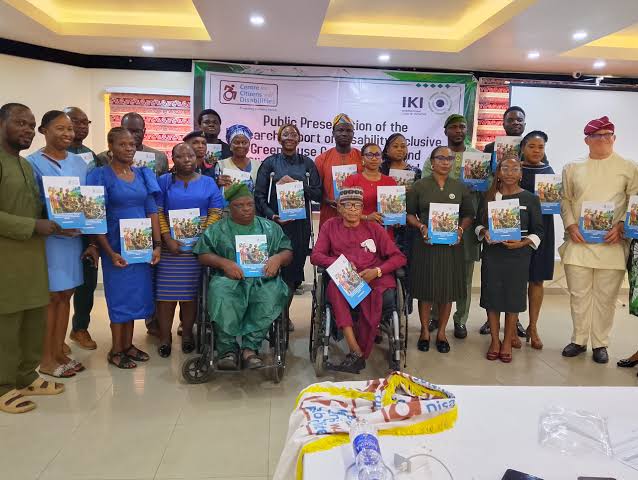
The Centre for Citizens with Disabilities (CCD) has unveiled a research report on impacts of climate change on Persons With Disabilities (PWDs), calling for its implementation in the country.
The Acting Director CCD, Mr Godwin Unumeri, made the call at the public presentation of the report titled: “Disability-Inclusive Greenhouse Gas Emission and Climate Change Adaptation and Mitigation in Nigeria” on Wednesday in Lagos.
The event brought together government institutions, development partners, civil society organisations, persons with disabilities and other key stakeholder to foster dialogue, collaboration and stronger commitment to disability-inclusive climate change adaptation and mitigation in Nigeria.
Unumeri urged stakeholders to strengthen collaboration and policy commitment toward building climate resilience and ensuring the inclusion of persons with disabilities in Nigeria’s climate response.
He noted that valuable insights and recommendations from stakeholders at a validation workshop in February had been incorporated into the report.
According to him, effective implementation of the recommendations requires sustained collaboration, strong policy commitment, adequate resource mobilisation and coordinated action across sectors.
“By working together, we can translate these findings into practical interventions that strengthen climate resilience and ensure the full inclusion of persons with disabilities in Nigeria’s climate response,” he said.
In her remarks, the General Manager, Lagos State Office for Disability Affairs (LASODA), Adenike Oyetunde-Lawal, urged the stakeholders to ensure that the report would be translated into practical interventions to enhance full inclusion of PWDs particularly in climate change policies.
-

 Education19 hours ago
FCE Yola Graduates 3,555 Teachers , Seeks Upgrade to University
-

 Niger Delta21 hours ago
Diri Restates Stance On Lagos-Calabar Coastal Highway
-

 Sports18 hours ago
Nigerian Trio Target Titles At PFL Africa Finals
-

 Niger Delta21 hours ago
C’River, NUJ Pay Tribute To Late Guardian Editor
-

 News22 hours ago
NDLEA Recovers Tons Of Illicit Drug Consignments In Nine States
-

 Opinion21 hours ago
Checking Voter Apathy In Nigeria’s Electoral Process
-

 Politics18 hours ago
2027: DICKSON’S EX-ALLY VOWS TO WORK AGAINST NDC INTEREST IN BAYELSA
-

 Politics18 hours ago
2027: GROUP PLEDGES 40,000 SUPPORTERS FOR COALITION CANDIDATES IN RIVERS