
Featured
Terrorism Rating: Bomb Bandits Now, Buhari Orders Air Force …Summon Buhari On National Security, PDP Charges NASS …As Suicide Bomber Attacks Mosque, Kills Four, Injures Scores

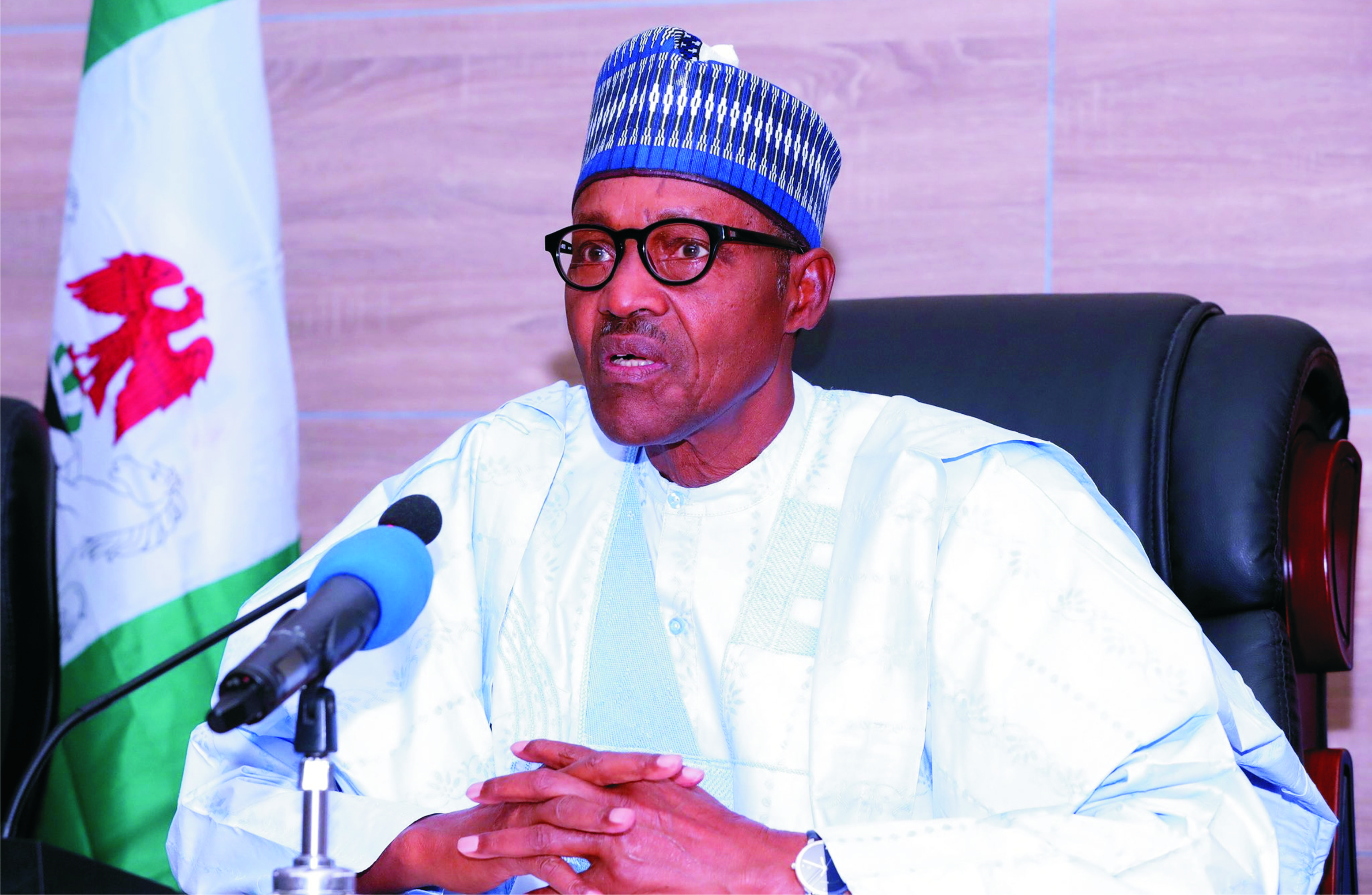
President Muhammadu Buhari has condemned the repeated attacks by bandits on communities in Niger State and its environs, directing the Nigerian Air Force to deploy its fighter aircraft in checking the menace.
The president gave the directive in a statement by his Senior Special Assistant on Media and Publicity, Malam Garba Shehu, in Abuja, yesterday.
Buhari described the repeated attacks which led to the loss of several lives in the affected communities “as a disaster for the nation”.
He, therefore, authorised the deployment of air power to support troops and policemen deployed to the “difficult terrain,” to counter the menace of the attackers operating in the forest area bordering Kaduna, Niger and Zamfara states.
In line with this directive, according to the presidential aide, the Nigerian Air Force is setting up refuelling facilities at Minna, Niger State, to support the air operations.
Shehu revealed that relevant military authorities had assured the president that given the improved weather conditions, a major exercise to “visually acquire targets” and launch attacks would soon follow.
He said: “President Buhari has received assurances that with the harmattan dust gradually easing its hold on the skies, fighter aircraft would this week join the efforts to provide effective air attacks against bandits, kidnappers and cattle rustlers that have been attacking remote communities around Dogon Gona forest in Niger State.”
He added that the Police Command in Niger had equally given assurances that “the planned dedicated air raids to complement the police helicopter gunship operations remain the best approach given the lack of motorized roads in the areas constantly under attack”.
Buhari commiserated with the government and people of Niger State over the attacks and loss of lives, and assured that affected communities would not be abandoned by the rest of the country.
Meanwhile, the Peoples Democratic Party (PDP), has urged federal lawmakers to upon resumption, tomorrow, use its legislative instruments to invite President Muhammadu Buhari to address it on the worsening security situation across the country.
The party, in a statement, yesterday, premised its call on what it called “the alarming Global Terrorism Index report by the Institute for Economics and Peace (IEP), which ranked Nigeria as the third country with the highest level of terrorism in 2019, after Iran and Afghanistan.”
Signed by its spokesman, Kola Ologbondiyan, the PDP described the report as “distressing particularly as its indices show that insecurity and deaths from acts of terrorism increased in Nigeria in spite of promises by the current administration.”
The statement further continued: “The party notes that the IEP rating has further confirmed its position that the security of lives and property in our nation has gone beyond what the Buhari administration’s security architecture, as presently composed, can guarantee.
“Our party posits that the issue of security has gone beyond partisan and sectional sentiments as well as propaganda and now requires a concerted effort by all stakeholders to compel a review of security structure and method by Mr President.
“The PDP, as a pan-Nigerian platform, urges the National Assembly to step in by persuading President Buhari to heed wise counsel and rejig his security high command so as to inject new blood to tackle our security challenges.
“The party also urges the National Assembly to compel President Buhari to take a decisive step in ordering the apprehension and prosecution of perpetrators of acts of terrorism including the mass killing in Benue, Nasarawa, Bauchi, Taraba, Kogi, Adamawa, Borno, Yobe, Zamfara, Kaduna, Ekiti and other parts of the country under the current administration.
“The failure to track down and prosecute the perpetrators of heinous crimes had continued to embolden marauders, insurgents, bandits and kidnappers to further ravage communities and major highways, beheading compatriots, killing, maiming and taking innocent citizens captives in droves, to the extent that our nation has become the third with the highest level of terrorism in the world.
“Indeed, this is not the way to go. Our party restates that such situation should not have been allowed to fester and degenerate to this abyss.
“While the PDP salutes the gallantry and patriotism of our troops fighting and daily risking their lives in the fronts, our party charges the National Assembly to use its legislative instruments to invite Mr President Buhari for an appropriate briefing as a prelude to decisive step towards ensuring adequate security in our country”, the PDP argued.
Similarly, no fewer than four persons were said to have died during a suicide attack on a mosque in Gwoza, in Borno State, yesterday.
Gwoza was at the peak of the ongoing Boko Haram insurgency, the administrative capital and caliphate of the terrorist group.
It was reported that the suicide bomber ran into a group of worshippers during early morning prayer.
As at the time of filing this report, yesterday, no official confirmation has been received from the government or the military authorities.
However, the Nigerian Army troops of ‘Operation Lafiya Dole’ have foiled efforts by the Boko Haram insurgents to attack some soft targets in Borno State.
The Nigerian Army Operations Media Coordinator, Col. Aminu Iliyasu, who disclosed this in a statement, yesterday, said the troops also continued to decimate the insurgents from different encounters across the North-East.
Iliyasu disclosed that the troops of 3 Battalion deployed in Gamborou-Ngala Local Government Area of Borno had on January 18 repelled a Boko Haram attack on the Ngala community.
According to him, the insurgents sneaked into the peaceful community in five gun trucks, motorcycles and a number of foot soldiers through the rear of a humanitarian hub.
“They used a farm as cover with the heinous intent to unleash one of the most devastating terror attacks in recent times.
“Fortunately for the residents, the vigilant troops responded swiftly, engaging the criminals with overwhelming superior firepower, thereby forcing them to beat a hasty retreat in complete disarray.
“During the ensuing pursuit and exploitation embarked upon by the troops, one Boko Haram criminal suicide truck driver strapped with a suicide vest was neutralised.
“Items captured during the encounter include one AK-47 rifle, one FN rifle, one motorcycle and one heavily-laden vehicle borne Improvised Explosive Device (IED) with deadly explosive materials,” he said.
Iliyasu added that preliminary investigations revealed that vehicles laden with IEDs and suicide bombers were heading to the IDP Camp in Gamborou-Ngala before the troops foiled the attack.
He added that five humanitarian workers who took refuge in a bunker during the attack were successfully rescued by the troops.
According to him, on January 24, troops of the same 3 Battalion deployed at Ngala bridge repelled another Boko Haram attack on their location.
He disclosed that the insurgents, who came in three gun trucks and a number of foot soldiers late afternoon, were engaged by the troops and inflicted heavy casualty on both their men and equipment.
The spokesperson disclosed that two of the three gun trucks belonging to the terrorists were captured at the end of the encounter.
He added that two anti-aircraft guns, one GPMG gun, two AK-47 rifles, one GPMG barrel, 688 rounds of 7.62mm NATO ammunition, 20 rounds of PKT ammunition and 63 rounds of 50 ammunition were also captured.
“One neutralised body of the criminal insurgents was recovered during exploitation while several other bodies and the wounded were believed to be carted away as evident by the trails of blood found along their withdrawal route.
“Similarly, on January 24, troops of 7 Division decisively cleared a Boko Haram ambush while on clearance operations between Firgi and Banki Junction in Bama Local Government Area of Borno.
“In the aftermath of the encounter, two Boko Haram criminals were neutralised while others are believed to have escaped with varying degrees of gunshot wounds”, he was quoted as saying.
However, the General Officer Commanding (GOC), 2 Division, Ibadan, Maj-Gen Anthony Omozoje, has advised officers and men of the Nigerian Army to remain disciplined and continue to abide by existing regulations.
Omozoje made the call during the Fire Night organised as part of activities marking the West African Social Activity (WASA) for 2019 in Okitipupa.
Represented by the Chief of Staff of 4 Brigade, Benin, Col. Auwal Haruna, Omozoje said: “To the officers and soldiers of this battalion, I hereby congratulate you for seeing the end of another demanding year.
“I want to use this opportunity to implore you all to remain disciplined and continue to abide by all existing regulations as well as instructions that will be passed to you from time to time.
“We must also be focused and stand firm in order to checkmate militancy, bunkering, vandalism of oil and gas infrastructure, piracy and kidnapping, among other criminal activities in the state and Nigeria at large,” Omozoje said.
The GOC further charged the officers and soldiers to discharge their lawful duties without intimidating citizens.
He called on members of the public to cooperate with the Nigerian Army and other security agencies to ensure that crimes were reduced in the country.
The Nigerian Army has been at the forefront of battle against insurgency in Nigeria.
Recently, troops of Operation Lafiya Dole prevented efforts by the Boko Haram insurgents to attack some soft targets in Borno State.















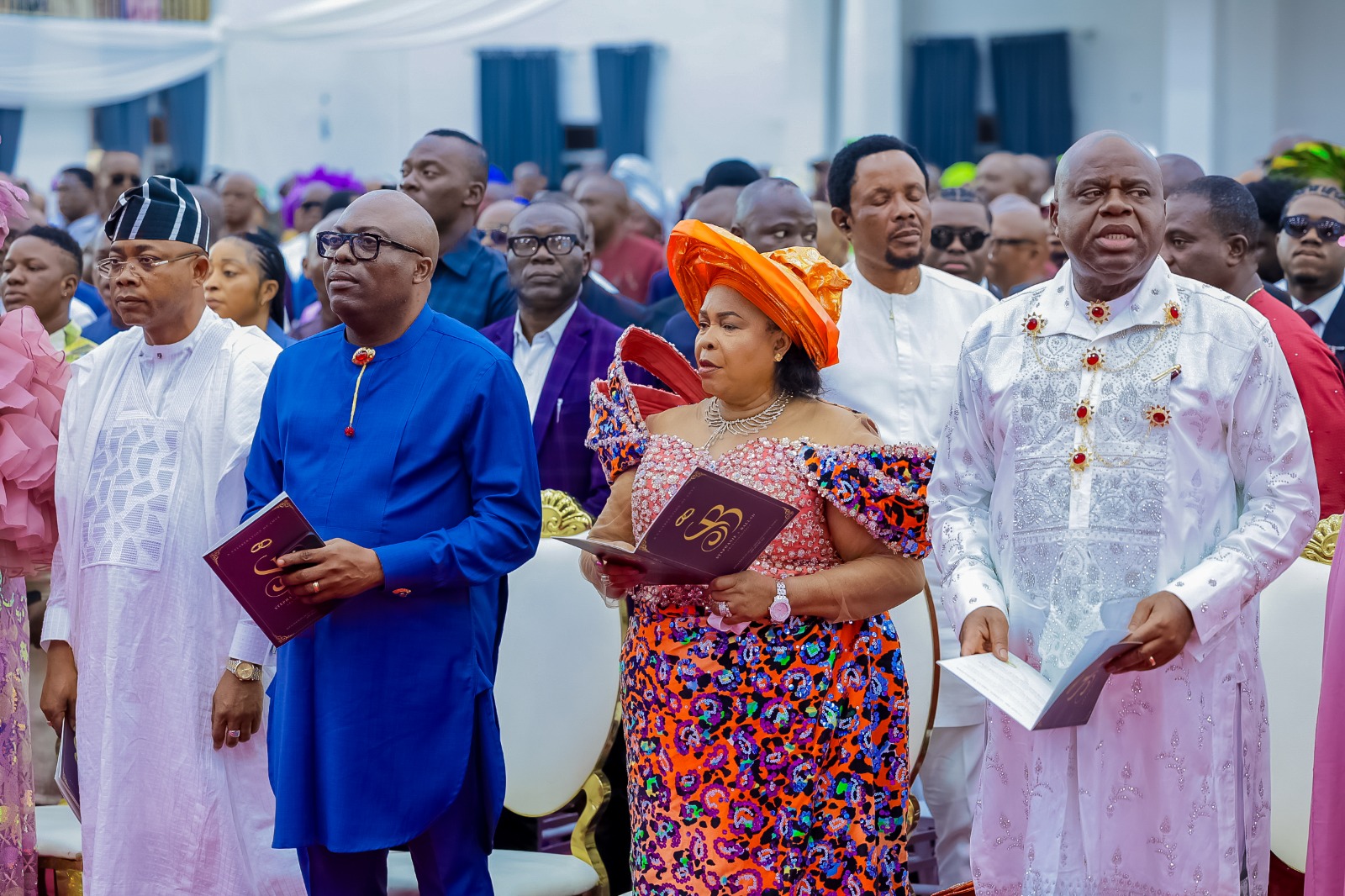
Rivers State, Sir Siminalayi Fubara, has assured members of the National Youth Service Corps (NYSC) of his administration’s commitment to supporting and strengthening the scheme in the State.
Fubara gave the assurance last Friday at the NYSC permanent orientation camp, Nonwa-Gbam, Tai Local Government Area in the State, during the swearing-in ceremony of 2026 Batch B Stream II orientation course.
Represented by the Permanent Secretary, Cabinet Bureau, Office of the Secretary to the State Government, Dr. Promise Oguzie, the governor said the State Government would remain intentional in providing the necessary support to improve the NYSC scheme and enhance the experiences of corps members deployed to the state.
He charged the corps members to be role models and quality nation-builders in their service to the good people of Rivers State in particular, and Nigeria at large.
“I charge you to be exemplary, dedicated and committed in all you do. Take full advantage of all the camp programmes and activities to enrich yourselves”, he said.
In his welcome address, the State Coordinator of NYSC in Rivers State, Mr. Moses Oleghe, urged corps members to see their deployment to Rivers State as a “veritable opportunity to make meaningful contribution to the growth of the State in particular and Nigeria at large.”
He further charged them to serve with all sense of “integrity, discipline, and the fear of God, especially when they will be engaged as INEC ad-hoc staff that will conduct the 2027 general elections.”
A total of 3,584 corps members composed of 1,421 males and 2,163 females were sworn in by the Chief Judge of Rivers State, who was represented by Justice Godspower Aguma.

Governor of Rivers State, Sir Siminalayi Fubara, says Nigeria needs God-fearing leaders for the nation to move in the right direction and make meaningful progress.
The Governor stated this yesterday when he received in audience, the World President of the Seventh Day Adventist Church, Pastor Erton Kohler; his wife, Andriene Marques Kohler; daughter Mariana Marques Kohler and a retinue of ministers of the church at Government House, Port Harcourt.
Fubara who hailed the Seventh Day Adventist Church for its contributions to education and the grooming of future leaders in Nigeria, expressed delight that the Church had over the years, been investing in education at various levels and currently runs two universities in the country.
He commended the church for not only using its institutions to spread the gospel of Christianity but to groom future leaders for the country.
According to him, religion should not be just about defending one’s faith, but also making meaningful impact on the lives of the people.
He said that by floating these educational institutions, the church has demonstrated capacity to support Nigeria in the task of producing not only educated people but a breed of God-fearing leaders.
“Our country is where it is today because we lack the fear of God. If you have the fear of God, there should be a limit to what you can do because you understand the supremacy of God. But when God is not in your equation, you’ll go beyond the line and that is what has brought us to where we are today.
“So, I feel very happy that you are contributing to the development of our future leaders in this country. We need the right people being in the right place; prepared properly with good minds; that is what we need, not just in Nigeria but round the whole world.,” he said.
Governor Fubara further observed that the absence of God-fearing people in high places to take the right decisions that could impact positively on the society, has also given rise to other problems such as social inequality, poverty, corruption and criminality. According to him, Nigeria needs a system where the average parent could afford quality education for their children and a guarantee that upon graduation, the average child will have the capacity to compete favourably with anybody, anywhere in the world.
“If we have a situation where the little money that you’re being paid as wage can also afford you quality healthcare and after working at least for 15-20 years, you have a roof over your head, tell me why you should be involved in any kind of crime? At that point, you’ll feel secured and this attitude of insecurity about the future that leads to all the social vices we have today won’t be there,” he said.
Governor Fubara expressed appreciation to the delegation for the visit and for their prayers for Rivers State, assuring them of his continued support for their programmes in the state.
Leader of the delegation and World President of the Seventh Day Adventist Church, Pastor Erton Kohler said he was in Nigeria for a special conference of the church during which thousands of the church’s ministers will be undergoing an empowerment programme to further equip them for the task of herding their flocks and serving the society.
He expressed gratitude to the Governor for the warm reception accorded his entourage, saying the memory of the visit will linger in his mind for a lifetime.
Kohler disclosed that the Church has over twenty -four million (24,000,000) members and more than 182,000 places of worship, spread across 212 countries of the world.

The Rivers State House of Assembly has approved the 2026–2028 Medium Term Expenditure Framework (MTEF) submitted by Governor Siminalayi Fubara.
This reaffirms the lawmakers’ commitment to enacting laws and taking legislative actions geared towards the overall development of the State.
The Assembly gave the approval during its Second Legislative Sitting of the Fourth Session held last Friday.
Speaking on the MTEF document during plenary, the House Speaker, Rt. Hon. Martin Amaewhule, noted that by the provision of Section 10(1)(b) of the Rivers State Fiscal Responsibility Law No. 8 of 2010, the MTEF ought to have been laid before the House in September 2025.
Amaewhule explained that traditionally, the document is expected to be presented four months before the commencement of the next financial year and immediately after the expiration of every three-year fiscal cycle.
He, however, stated that in the interest of the State and its people, the House considered it necessary to deliberate on the document, describing it as a precursor to the 2026 Budget Estimates.
The Speaker expressed concern that the year had already progressed significantly before the presentation of the framework.
During deliberations on the document, members examined the assumptions and projections contained in the MTEF and observed that strict adherence to the outlined fiscal parameters would ultimately serve the interest of Rivers people.
The lawmakers maintained that effective implementation of the framework would promote prudent financial management and enhance developmental planning across the State.
Following the debate and positive consideration by members, the Speaker put the question to the House and members voted overwhelmingly in support of the approval of the MTEF.
Meanwhile, during the same sitting last Friday, the House also received a petition from the Chairman of Obio/Akpor Local Government Council, Dr. Gift Worlu.
The petition was presented by the member representing Obio/Akpor Constituency II, Hon. Emilia Amadi.
According to the petition, concerns were raised over an imminent security breach, threats to lives, destruction of property and alleged forceful takeover of property by some lawless persons within parts of the Local Government Area.
Presenting the petition before the House, Hon. Amadi appealed to the lawmakers to revisit the matter and take necessary steps aimed at safeguarding lives and property in the affected communities.
The House is expected to further deliberate on the petition and consider measures to address the concerns raised in order to sustain peace and security in the area.
King Onunwor
-

 News2 days ago
RSG Targets Nine Million Residents in Mosquito Net Distribution Campaign
-

 Oil & Energy1 day ago
Aiyedatiwa Signs New Electricity Bill
-

 Oil & Energy1 day ago
NLNG Commissions Research And Innovation Centre In RSU
-

 Maritime1 day ago
Marine Minister Commends President Tinubu On NPERA Bill Assent
-

 News2 days ago
KenPoly Holds Eight Convocations, August 29
-

 News2 days ago
RSG Begins Another Phase of Projects Commissioning Today
-

 News2 days ago
RMAFC Completes Revenue Sharing Review, Proposes New Pay
-

 Maritime1 day ago
NAGAFF Petitions IGP Over Alleged Maritime Police Harassment