
Featured
NDDC: Beyond Annual Ritual Of Free Healthcare Outreaches

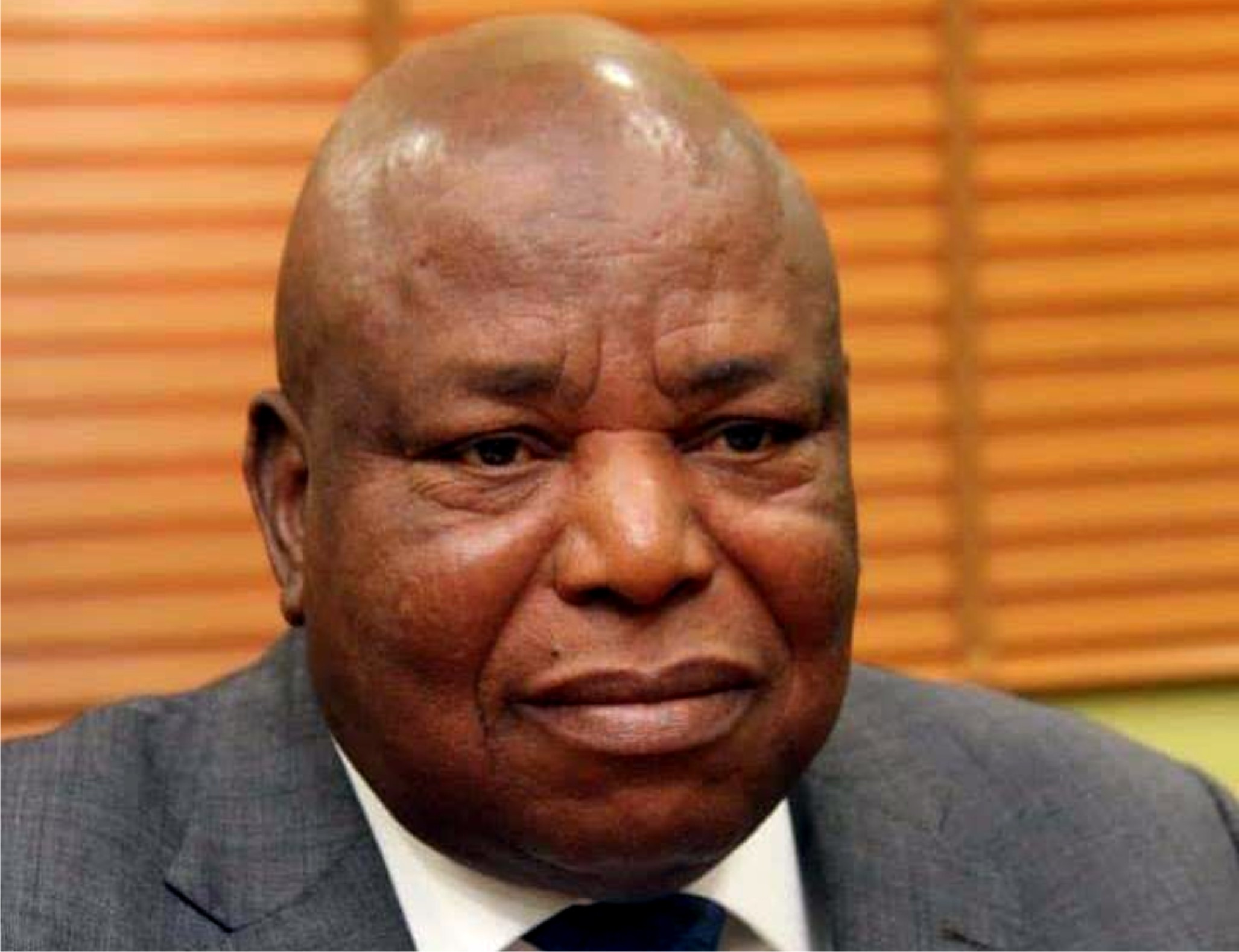
According to the Acting Managing Director of the Niger Delta Development Commission (NDDC), Professor Nelson Brambaifa, the interventionist agency is poised to conduct soon, its 2019 free healthcare outreach for Niger Delta communities. This disclosure came during a courtesy visit to his office by the Vice Chairman of the Rivers State Chapter of the Nigerian Medical Association (NMA), Dr Ebbi Robinson. In a statement made available to journalists and signed by Nancy Ijaopo, a media aide to the NDDC MD, the agency also intends to renovate and equip some cottage hospitals across the nine mandate states under its statutory purview. The envisaged free healthcare exercise is a continuation of an annual ritual by the commission since 2004 and comprises a one-week intensive delivery of free healthcare services to as many patients that can be mobilised to a location. Apparently, the locations for launching the exercise vary from year to year. By the commission’s claim, the free healthcare exercise has benefitted over two million people in the oil rich zone since its inception in 2004.
In its contemporary setting, a free health care programme enjoys significant merit within any benefitting community as it provides them with waivers of whole or portions of patient payable fees for medical treatment. For the Niger Delta area and even across the entire country, the waiving of medical fees provides invaluable relief to beneficiaries, by reducing the financial burdens many of them face in sourcing money for medical treatment. In any cases even when the money may be available, the facilities for medical service delivery are far and not immediately accessible, thereby leaving patients in a quandary.
In another vein, budgetary considerations have been cited as restricting the free healthcare service in variety and scope. Hence, for instance, the NDDC exercise lasts for just a week in each particular year, and the range of services is similarly limited, making the entire free healthcare service a largely salutary measure when compared to the humongous scope of healthcare challenges of the Niger Delta region. Among the typical challenges of the zone is the difficult terrain which prevents easy movement of the sick from home to hospital. Added to this is its serial neglect by past administrations at the federal level with the attendant result of denial of critical infrastructure including hospitals in the zone.
It was to improve on the situation that the commission since 2010 planned to establish world class medical facility in the region in collaboration with foreign interests. Nine years since that initiative was born, it is yet to see the light of day, leaving the current leadership the opportunity to write their names in history by changing the project’s history. Hence, while the 2019 free healthcare exercise may engage the sights of the NDDC leadership for now, nothing precludes them from giving life and flesh to the proposed worldclass healthcare institution. Among the reasons for fast-tracking the establishment of the envisaged world-class healthcare facility, is the need to reverse the narrative that the annual free healthcare service is the flagship of the commission’s health management agenda for the region.
In its operational blueprint and budgetary proposals, the commission promotes a robust agenda for healthcare management which spans the entire gamut of areas needy of intervention. Regrettably, however, the story of project management by the NDDC especially before the advent of the present management, has not been without multiplicity of instances of less than optimal discretion, with the attendant consequence that several projects of strategic significance suffer avoidable compromise and even outright truncations. This syndrome in the operations of the commission reportedly reached its apogee from June 2015 when crass politicisation of its leadership became an unbridled affair. It is therefore not unlikely that several projects including the envisaged world-class healthcare facility, may have ended up as mere still births.
However, with the sterling antecedents in the demanding academic terrain of the current Managing Director of NDDC, Professor Nelson Brambrainfa as a world acclaimed pharmacist, the game changing prospects of the expected healthcare facility cannot be lost on him. While the commission remains justified in paying attention to cottage hospitals which are invaluable to the grassroot communities, it is also time to look beyond baseline targets.















Rivers State, Sir Siminalayi Fubara, has assured members of the National Youth Service Corps (NYSC) of his administration’s commitment to supporting and strengthening the scheme in the State.
Fubara gave the assurance last Friday at the NYSC permanent orientation camp, Nonwa-Gbam, Tai Local Government Area in the State, during the swearing-in ceremony of 2026 Batch B Stream II orientation course.
Represented by the Permanent Secretary, Cabinet Bureau, Office of the Secretary to the State Government, Dr. Promise Oguzie, the governor said the State Government would remain intentional in providing the necessary support to improve the NYSC scheme and enhance the experiences of corps members deployed to the state.
He charged the corps members to be role models and quality nation-builders in their service to the good people of Rivers State in particular, and Nigeria at large.
“I charge you to be exemplary, dedicated and committed in all you do. Take full advantage of all the camp programmes and activities to enrich yourselves”, he said.
In his welcome address, the State Coordinator of NYSC in Rivers State, Mr. Moses Oleghe, urged corps members to see their deployment to Rivers State as a “veritable opportunity to make meaningful contribution to the growth of the State in particular and Nigeria at large.”
He further charged them to serve with all sense of “integrity, discipline, and the fear of God, especially when they will be engaged as INEC ad-hoc staff that will conduct the 2027 general elections.”
A total of 3,584 corps members composed of 1,421 males and 2,163 females were sworn in by the Chief Judge of Rivers State, who was represented by Justice Godspower Aguma.

Governor of Rivers State, Sir Siminalayi Fubara, says Nigeria needs God-fearing leaders for the nation to move in the right direction and make meaningful progress.
The Governor stated this yesterday when he received in audience, the World President of the Seventh Day Adventist Church, Pastor Erton Kohler; his wife, Andriene Marques Kohler; daughter Mariana Marques Kohler and a retinue of ministers of the church at Government House, Port Harcourt.
Fubara who hailed the Seventh Day Adventist Church for its contributions to education and the grooming of future leaders in Nigeria, expressed delight that the Church had over the years, been investing in education at various levels and currently runs two universities in the country.
He commended the church for not only using its institutions to spread the gospel of Christianity but to groom future leaders for the country.
According to him, religion should not be just about defending one’s faith, but also making meaningful impact on the lives of the people.
He said that by floating these educational institutions, the church has demonstrated capacity to support Nigeria in the task of producing not only educated people but a breed of God-fearing leaders.
“Our country is where it is today because we lack the fear of God. If you have the fear of God, there should be a limit to what you can do because you understand the supremacy of God. But when God is not in your equation, you’ll go beyond the line and that is what has brought us to where we are today.
“So, I feel very happy that you are contributing to the development of our future leaders in this country. We need the right people being in the right place; prepared properly with good minds; that is what we need, not just in Nigeria but round the whole world.,” he said.
Governor Fubara further observed that the absence of God-fearing people in high places to take the right decisions that could impact positively on the society, has also given rise to other problems such as social inequality, poverty, corruption and criminality. According to him, Nigeria needs a system where the average parent could afford quality education for their children and a guarantee that upon graduation, the average child will have the capacity to compete favourably with anybody, anywhere in the world.
“If we have a situation where the little money that you’re being paid as wage can also afford you quality healthcare and after working at least for 15-20 years, you have a roof over your head, tell me why you should be involved in any kind of crime? At that point, you’ll feel secured and this attitude of insecurity about the future that leads to all the social vices we have today won’t be there,” he said.
Governor Fubara expressed appreciation to the delegation for the visit and for their prayers for Rivers State, assuring them of his continued support for their programmes in the state.
Leader of the delegation and World President of the Seventh Day Adventist Church, Pastor Erton Kohler said he was in Nigeria for a special conference of the church during which thousands of the church’s ministers will be undergoing an empowerment programme to further equip them for the task of herding their flocks and serving the society.
He expressed gratitude to the Governor for the warm reception accorded his entourage, saying the memory of the visit will linger in his mind for a lifetime.
Kohler disclosed that the Church has over twenty -four million (24,000,000) members and more than 182,000 places of worship, spread across 212 countries of the world.

The Rivers State House of Assembly has approved the 2026–2028 Medium Term Expenditure Framework (MTEF) submitted by Governor Siminalayi Fubara.
This reaffirms the lawmakers’ commitment to enacting laws and taking legislative actions geared towards the overall development of the State.
The Assembly gave the approval during its Second Legislative Sitting of the Fourth Session held last Friday.
Speaking on the MTEF document during plenary, the House Speaker, Rt. Hon. Martin Amaewhule, noted that by the provision of Section 10(1)(b) of the Rivers State Fiscal Responsibility Law No. 8 of 2010, the MTEF ought to have been laid before the House in September 2025.
Amaewhule explained that traditionally, the document is expected to be presented four months before the commencement of the next financial year and immediately after the expiration of every three-year fiscal cycle.
He, however, stated that in the interest of the State and its people, the House considered it necessary to deliberate on the document, describing it as a precursor to the 2026 Budget Estimates.
The Speaker expressed concern that the year had already progressed significantly before the presentation of the framework.
During deliberations on the document, members examined the assumptions and projections contained in the MTEF and observed that strict adherence to the outlined fiscal parameters would ultimately serve the interest of Rivers people.
The lawmakers maintained that effective implementation of the framework would promote prudent financial management and enhance developmental planning across the State.
Following the debate and positive consideration by members, the Speaker put the question to the House and members voted overwhelmingly in support of the approval of the MTEF.
Meanwhile, during the same sitting last Friday, the House also received a petition from the Chairman of Obio/Akpor Local Government Council, Dr. Gift Worlu.
The petition was presented by the member representing Obio/Akpor Constituency II, Hon. Emilia Amadi.
According to the petition, concerns were raised over an imminent security breach, threats to lives, destruction of property and alleged forceful takeover of property by some lawless persons within parts of the Local Government Area.
Presenting the petition before the House, Hon. Amadi appealed to the lawmakers to revisit the matter and take necessary steps aimed at safeguarding lives and property in the affected communities.
The House is expected to further deliberate on the petition and consider measures to address the concerns raised in order to sustain peace and security in the area.
King Onunwor
-

 News4 days ago
RSG Targets Nine Million Residents in Mosquito Net Distribution Campaign
-

 Oil & Energy3 days ago
Aiyedatiwa Signs New Electricity Bill
-

 Maritime3 days ago
Marine Minister Commends President Tinubu On NPERA Bill Assent
-

 Oil & Energy3 days ago
NLNG Commissions Research And Innovation Centre In RSU
-

 News4 days ago
KenPoly Holds Eight Convocations, August 29
-

 News4 days ago
RSG Begins Another Phase of Projects Commissioning Today
-

 News4 days ago
RMAFC Completes Revenue Sharing Review, Proposes New Pay
-

 Maritime3 days ago
NAGAFF Petitions IGP Over Alleged Maritime Police Harassment