
Politics
Lesson From The British Elections

Great Britain is an old parliamentary democracy in Europe. It occupies an area of about ninety-four square miles and has a population of about fifty-eight million. It comprises England, Scotland, Wales, Northern Island, the Isle of Man and the Channel Islands. As already stated, it is’ a parliamentary democracy with a central and local governments. It is not a federal system but a unitary system of government. It is one of the most advanced countries of the world having some of the oldest universities on earth. These include Oxford, Cambridge and St. Anclrew’s universities. The country is also known as the United Kingdom. It is a welfare state where citizens enjoy a social security scheme to stave off abject poverty.
However, on May 6, 2010, the British people went to the polls to elect a new government. The main contending parties were the Labour Party led by Gordon Brown, the conservative party led by David Cameron and the Liberal Democratic Party led by Nicholas Clegg. At the end of the polls, the elections produced a hung parliament. Which means no party was able to win majority seats in parliament to form the government. For instance, the conservative party got three hundred and five seats, the Labour Party scored two hundred and eighty-seven seats while the Liberal Democratic Party won fifty-eight seats. To be able to form the government a party must win three hundred and twenty-six seats. Altogether the parliament has six hundred and fifty seats. In any case, because of the hung parliament a coalition government was formed by the Conservative Party and the Liberal Democratic Party. The Conservative Party is the leader in this arrangement because it scored the highest number seats in the parliament. The two parties won three hundred and sixty-three seats in the six-hundred and fifty seat parliament.
At all events, what should be noted is that the whole process of party selection, campaign, election results and formation of government lasted only one month. It should further be noted that apart from the three leading parties forty other parties including independent candidates contested for the elections. And yet the whole process lasted only one month as already indicated. There was no thuggery, there was no electoral malpractice. No party manipulated electoral register. No party went into the voting arena and seized ballots after elections. No money exchanged hands, no bribery, no corruption, no godfathers, no infringement of the electoral rules, the whole game was played according to the rules. Infact, the whole political parties and the Independent candidates were satisfied with the outcome of the elections. That is how it should be. The political game should be played according to the rules. If the rules are followed in the game there will be no problem whatsoever. In the United Kingdom the rules are followed. That is why they have political stability. When there is political stability there will be economic and social stability and progress.
But the case in Nigeria is different. Elections in Nigeria are seen as a “do or die” affair. Because of this electoral rules are not obeyed. Votes are rigged. Elections are manipulated. Thugs are used to disrupt electoral process. There are bribery and corruption at every level of the process. In some cases offices of the Independent National Electoral Commission are set on fire and razed all in the name of politics. Our most recent general election the 2007 elections were not free and fair. Because of this the electoral tribunals and the courts of the land are still deciding cases brought to them by aggrieved politicians. That is three years after the 2007 elections in Nigeria.
One of the cases just settled in 2010 was that between Chief Alphonsus Igbeke of the All Nigeria People’s Party and Mrs Joy Emodi of the People’s Democratic Party over who will represent Anambra North Senatorial District. Victory was earlier given to Mrs Emodi and since 2007, she was the senator representing the disputed District. Chief Igbeke felt he was cheated because he won the election for the Anambra North Senatorial District. He took the matter to the Appeal Court and the court decided in his favour and ordered that he should be sworn in as the Senator representing Anambra North Senatorial District on May 11, 2010. Other candidates who won in the courts included Governors Chibuike Rotimi Amaechi of Rivers State and Adams Oshiomhole of Edo State.
“ Nonetheless, the lessons to be learnt from the British elections are that we in Nigeria should always obey the electoral rules whenever we are going to the polls to elect our leaders. Our leaders should follow the exempt of the British party leaders and play the electoral game according to that’ rules. Nobody should bribe. Nobody should employ thugs because of elections and manipulate ballots. The British leaders/parties did not do this. We should copy it. Actually, the problem with Nigerian politics and election is not in the chairman of the Independent National Electoral Commission but in the players of the political game. If we all are honest and follow the rules there will be no electoral malpractice. The lesson is clear: follow the rules and get a free and fair election as it is in Great Britain.
Dr Tolofari, Fellow,
Institute of Corporate Administration of Nigeria.
Mann Tolofari



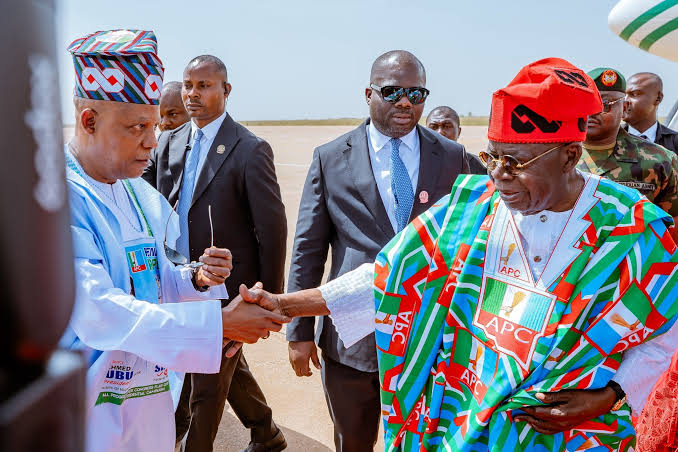
The campaign rally, held at the Kaduna Township Stadium, attracted Vice-President Kashim Shettima, APC governors, party leaders, federal and state lawmakers, political stakeholders and supporters from across the country.
The flag-off marks the beginning of the APC’s drive to secure a second presidential term for President Tinubu, with the party expected to promote its achievements, defend its economic reforms and outline its policy priorities under the proposed Renewed Hope 2.0 agenda.
Kaduna’s selection for the campaign launch underscores the strategic importance of the North-West, a region with a substantial voting population and considerable influence on presidential election outcomes.
The APC faces a significant challenge in Kaduna, where the Peoples Democratic Party’s presidential candidate, Alhaji Atiku Abubakar, defeated President Tinubu in the 2023 election. The rally therefore provides the ruling party an opportunity to strengthen its grassroots structures and regain electoral support in the state.
Addressing supporters, Vice-President Shettima appealed to Northern voters, highlighting President Tinubu’s political relationships with prominent Northern leaders, including Alhaji Abubakar, Mallam Nuhu Ribadu and the late President Muhammadu Buhari.
The Vice-President’s appeal reflects the APC’s determination to consolidate its support in the North as the party intensifies preparations for the presidential contest.
The Renewed Hope 2.0 agenda is expected to feature prominently in the campaign, providing a platform for President Tinubu to explain his administration’s economic policies and outline plans for another term.
However, the President’s record on economic reforms, rising living costs, petrol prices, employment, infrastructure and insecurity is expected to attract considerable scrutiny during the electioneering period.
-

 Education2 days ago
FCE Yola Graduates 3,555 Teachers , Seeks Upgrade to University
-

 Sports2 days ago
Nigerian Trio Target Titles At PFL Africa Finals
-

 Niger Delta2 days ago
Diri Restates Stance On Lagos-Calabar Coastal Highway
-

 Niger Delta2 days ago
C’River, NUJ Pay Tribute To Late Guardian Editor
-

 News2 days ago
NDLEA Recovers Tons Of Illicit Drug Consignments In Nine States
-

 Opinion2 days ago
Checking Voter Apathy In Nigeria’s Electoral Process
-

 Politics2 days ago
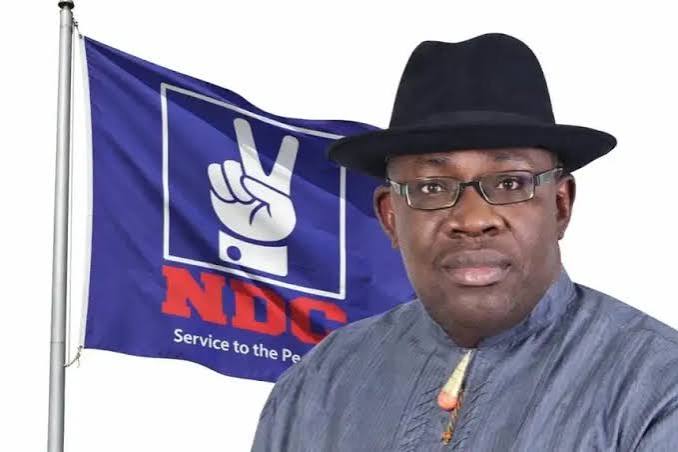
2027: DICKSON’S EX-ALLY VOWS TO WORK AGAINST NDC INTEREST IN BAYELSA
-

 Politics2 days ago
2027: GROUP PLEDGES 40,000 SUPPORTERS FOR COALITION CANDIDATES IN RIVERS