
Nation
THE STATES

Bauchi
The Bauchi State Government has concluded plans to rehabilitate all the infrastructure in the 20 local government areas of the state destroyed by windstorm during the 2011 rainy season.
The Commissioner for Water Resources and Rural Development, Alhaji Sani Bura, disclosed the plan in Bauchi on Tuesday while addressing the people of Gabarin/Konkiyel; Sabon Sara and Toro communities.
He said that the affected infrastructure included water, electricity and road projects in the 20 local government areas.
Bura said that most of the projects affected by the windstorm had reached various stages of completion, while others were being assessed and quantified to facilitate their completion.
He said that the projects, which also included roads rehabilitation and reconstruction, would be completed before the inception of the 2012 rainy season.
FCT
The Minister of National Planning Commission, Dr Shamsuddeen Usman, says that the National Bureau of Statistics (NBS) has computed Gross Domestic Products (GDP) in six pilot states.
This was contained in a statement issued on Tuesday in Abuja by the Head, Information unit of the Commission, Mr Salisu Haiba.
Usman while flagging-off of the State GDP Computation Project in Nigeria in Minna, Niger, said that six pilot states that had been selected were Anambra, Rivers, Niger, Kano, Lagos, Gombe and Rivers.
He said that the six states were selected based on the size of their economies and commitment of reform programmes.
He described the project as significant in the economic history of Nigeria being the first time it was being undertaken by the NBS.
Jigawa
Governor of Jigawa State Sule Lamido has said that his desire to boost small-scale businesses in the state informed his decision to build a modern market.
Lamido, who stated this while addressing newsmen Tuesday after an inspection of the market project in Dutse, said that the market was constructed to boost commerce, eradicate poverty and entrench economic prosperity in the state.
“This market will accommodate 80 per cent of those in small businesses like vegetables sellers, barbers and butchers, among others.
“Shops would be rented out to people at affordable rates because the essence of the exercise is to fight poverty”, he said.
Kano
Governor of Kano State Rabi’u Kwankwaso has called on the Federal Government to pay more attention on the training and equipping of the police and other security agencies in the country.
Kwankwaso made the call when he received members of the Presidential Task-Force on Police Reforms, who paid him a courtesy visit on Tuesday in Kano.
He said that the call was necessary in view of the prevailing security challenges facing the country.
The governor stressed the need for security agencies to collaborate with other stakeholders so as to reduce the level of crime in the country.
Kwankwaso said that the Kano State Government had been working with security agencies in the state with a view to ensuring peace and security.
Katsina
The Congress for Progressive Change (CPC) in Katsina State has announced the dismissal of all members of the party who accepted any form of appointment under the Katsina State government.
The Interim Chairman of the party in the state, Alhaji Farouq Aliyu, told newsmen in Katsina on Tuesday that the action of the members was an “unpardonable offence”.
‘’Members who had taken appointments with the Katsina State government, committed an unpardonable offence and should consider themselves out of the party, because CPC does not believe in the government of national unity at the federal, state or local level.’’
He accused such members of selfishness, saying their acceptance of the appointments was to better their lots and not in the interest of the party.
Kebbi
The Kebbi State Department of Fire Service recorded 34 incidents of fire outbreaks in Kebbi State within the last three months.
The state Director of Fire Service, Alhaji Bello Zagga, disclosed this to newsmen in Birnin Kebbi recently.
He, however, said there were no loss of lives in the incidents.
The director said the usage of inferior electrical cables were responsible for 90 per cent of the fire incidents while the remaining 10 per cent could be traced to undue exposure of animal feeds to open fire.
Zagga said the department “would organise workshops to sensitise the public on preventive measures”.
Lagos
A lecturer in the Department of Architecture at Covenant University, Mr Eziyi Ibem, has advised the Federal Government to adopt Public-Private Partnership (PPP) for effective housing delivery.
Ibem told newsmen in Lagos that provision of housing would continue to be a problem until all stakeholders were involved.
“For instance, the Building Materials Manufacturers and Suppliers Association of Nigeria should be involved in the public-private partnership.
“Their involvement will ease the constraints in the procurement of building materials.
“If the association is properly integrated into all PPP projects, it will give housing developers access to quality, durable and reasonably priced building materials,” Ibem said.
Oyo
The National Agency for Food and Drug Administration and Control (NAFDAC) on Tuesday in Ibadan alerted Nigerians of a fake brand of sugar in circulation.
The Zonal Coordinator for Oyo State, Mrs Omosola Osinbanjo, said the discovery of the fake sugar followed the intensive surveillance exercise carried out across the state by officials of the agency.
Osinbanjo said the initiatives of NAFDAC led to the discovery of the fake product at a market in Agbeni area of the metropolis.
Plateau
The Special Task Force (STF) maintaining peace in Plateau on Tuesday paraded a young man alleged to be a fake soldier and four suspected armed robbers at its headquarters in Jos.
The STF Media Officer, Capt. Mdahyelya Markus, who briefed newsmen on the arrest, alleged that the “fake soldier” was arrested in a Nigerian Army Camouflage with the rank of sergeant.
Markus said the suspect was arrested by STF personnel at a checkpoint in Lantang South Local Government Area of Plateau.
He said that one of the suspected robbers had claimed that he was a student of ECWA Seminary, Jos, while another claimed to be a 400 level Accounting student of University of Jos.
Taraba
Construction work on the multipurpose Kashimbilla Dam project in Taraba is 50 per cent completed, Mr Regy Ikpeawujo, the Deputy Director, Dams and Reservoir Operations, Federal Ministry of Water Resources, has said.
Ikpeawujo, who disclosed this in Abuja in an interview with newsmen said the that dam would commence full operation in 2014.
“By the year 2014, the dam should fully take off its operation,’’ he said, adding that work on the project was being carried out in stages.
He said that if completed, the dam would generate hydro power, provide irrigation and supply to water to several towns and villages in Taraba and Benue states.
Yobe
Two months into the staff verification exercise by Yobe State Universal Basic Education Board, primary school teachers in the state have decried the non-payment of their two-month salary.
Some teachers who spoke to newsmen on Tuesday in Damaturu, said the verification was taking too long while they wallowed in poverty and hunger.
Malam Yusuf Umar, a teacher in Damaturu, said the delay in completing the exercise was having a negative effect on the welfare of teachers across the state.
Another teacher, Malam Manu Bukar, said there had been series of screening in the past but this one had subjected them to “hunger and poverty”.
Zamfara
The Zamfara State House of Assembly has extended the tenure of the local government caretaker committees in the state from January to June 2012.
The Assembly had last July approved the formation of the caretaker committees with a mandate to serve for a maximum of six months, with the hope that elections into the councils would be conducted in January 2012.
Its Majority Leader, Alhaji Salisu Tsafe, said at the presentation of the bill that it sought to amend the law establishing the caretaker committees.
He said the decision was in accordance with section 18, sub section 4 of the state’s local governments’ law.
Tsafe explained that the law had given the house absolute powers to terminate or extend the tenure of local government councils.
He argued that in the event that the state government could not conduct elections into positions in the local government councils, the house could extend the tenure of the councils to allow the conduct of the elections within the period covered by the extension.
After debating the matter, the House unanimously agreed that the tenure of committees be extended from Jan. 29 to June 2012 during which elections should be conducted.



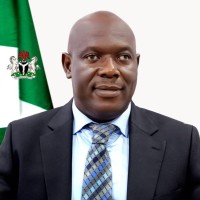
The Hydrocarbon Pollution Remediation Project (HYPREP) has commemorated the 15th anniversary of the release of the United Nations Environment Programme (UNEP) Environmental Assessment Report on Ogoniland, reaffirming its commitment to restoring the environment and improving the livelihoods of affected communities.
In a statement signed by the Project Coordinator, Prof Nenibarini Zabbey, to commemorate the anniversary, HYPREP described the anniversary as a significant milestone in Nigeria’s environmental restoration efforts, noting that the project has made remarkable progress in implementing the recommendations of the landmark UNEP report released on August 4, 2011.
The UNEP report had revealed extensive oil pollution across Ogoniland, severe environmental degradation, and serious public health risks resulting from decades of petroleum operations. It also recommended an initial $1 billion fund to commence the cleanup of the affected communities.
According to HYPREP, the Federal Government formally launched the Ogoni clean-up in 2016, while the Project Coordination Office was established in 2017 to drive the implementation of UNEP’s recommendations.
Zabbey said the current administration has continued to prioritise the project under the Renewed Hope Agenda.
Providing an update on the cleanup, the Project Coordinator disclosed that 30 of the 65 contaminated sites identified by UNEP have been fully remediated, while work is ongoing at several medium- and high-risk locations. It also stated that more than 1.5 million mangrove seedlings have been planted as part of what it described as the world’s largest restoration of oil-degraded mangroves, with over 1,000 hectares of shoreline already rehabilitated.
Zabbey further revealed that 49 Ogoni communities have been connected to potable water schemes through multiple water projects and booster stations aimed at providing safe drinking water across the region.
In the health sector, he said the 100-bed Ogoni Specialist Hospital in Kpite and the 43-bed Cottage Hospital in Buan are nearing completion, adding that several existing health facilities have been upgraded with modern medical equipment, while five ambulances have been donated to improve emergency healthcare services. The Project Coordinator also disclosed that a three-year human health biomonitoring study is being conducted in collaboration with the World Health Organization’s International Agency for Research on Cancer (IARC).
On economic empowerment, Zabbey stated that the Project has created more than 8,000 direct jobs and trained thousands of Ogoni youths and women in various vocational and technical skills, including software development, cybersecurity, aviation, commercial diving, seafaring, mechatronics, and creative arts. The project also reported awarding scholarships to more than 1,000 students, providing grants to small businesses, and supporting persons living with special needs through skills acquisition programmes.
The statement further highlighted ongoing legacy projects, including the Ogoni Power Project and the Centre of Excellence for Environmental Restoration, which it said is about 96 per cent complete. HYPREP also welcomed the recent designation of the Ogoni Wetland as a Ramsar Site of International Importance and pledged to continue promoting biodiversity conservation and sustainable management of the ecosystem.
Marking the anniversary, Zabbey said the progress achieved over the past 15 years demonstrates the collective commitment of government, development partners, stakeholders, and local communities to restoring Ogoniland. He called for renewed collaboration to sustain the cleanup effort, promote environmental sustainability, and support the long-term development of the region. 3
-

 News2 days ago
RSG Targets Nine Million Residents in Mosquito Net Distribution Campaign
-

 Oil & Energy2 days ago
Aiyedatiwa Signs New Electricity Bill
-

 Oil & Energy2 days ago
NLNG Commissions Research And Innovation Centre In RSU
-

 Maritime2 days ago
Marine Minister Commends President Tinubu On NPERA Bill Assent
-

 News2 days ago
KenPoly Holds Eight Convocations, August 29
-

 News2 days ago
RSG Begins Another Phase of Projects Commissioning Today
-

 News2 days ago
RMAFC Completes Revenue Sharing Review, Proposes New Pay
-

 Maritime2 days ago
NAGAFF Petitions IGP Over Alleged Maritime Police Harassment