
Nation
THE STATES

Bauchi
The National Commission for Museums and Monuments (NCMM), says it will partner with the private sector to fast-track the development of historical and social monuments in the country.
The Director-General of the commission, Malam Yusuf Usman, disclosed this in an interview with newsmen.
He said the participation of the private sector would complement government’s funding towards the maintenance of the monuments.
Usman explained that government was providing the enabling environment that would make the private sector to take the maintenance of monuments and museums as a social responsibility.
“It is true that there is no much money that is provided for the maintenance of monuments across the country. But what government does is to provide some funding – that is seed money, to be able to generate interest among the private sector who can come in to participate in the maintenance of this important national edifices.
“So, we are hopeful that the private sector will join us to do this especially where it can be a form of their social responsibility since private sector is about profit and our monument and heritage resources are not for profit in terms of naira and kobo but in terms of the value that they add to our wellbeing as a people.’’
Benue
President Goodluck Jonathan has commissioned N2.6 billion water plant in Otobi, Otukpo Local Government Area of Benue.
In his speech at the occasion, the President commended Governor Gabriel Suswam for establishing water projects in the state.
He said such projects would not only assist in reducing the incidence of water borne diseases, but would also address the water and health needs of the cluster communities they were meant to serve.
“More than 30 per cent diseases are water borne and by the construction of this water project, you have solved not only the water needs of the people, but also taken care of their health needs,” Jonathan said.
Earlier, Gov. Suswam, who conducted the President round the site of the project, said the construction of the water plant was in fulfillment of his campaign promises to the people.
FCT
Chairman, Abaji Area Council of the FCT, Alhaji Yahaya Mohammed on Thursday advised residents to ensure clean environment by evacuating waste and materials that could harbour rats in their houses.
Mohammed gave the advice in Abaji at the opening of a community awareness sensitisation programme on the prevention of Lassa fever organised by the council.
The council boss, who was represented by Dr Basil Magaji, Head of Health Department, said the awareness programme became necessary following reported cases of outbreak of Lassa fever in some parts of the country.
He said the programme was part of the council’s commitment to ensure clean environment and healthy living among residents.
Mohammed called on residents to take advantage of health facilities across the wards in the council, meant for routine immunisation to prevent the six child-killer diseases.
Kaduna
The Polio Technical Consultant to the Northern Governors’ Forum (NGF), Dr Zikrullah Giwa, said last week that Nigeria recorded four cases of wild polio virus in the past 10 weeks
Giwa who made this known at a meeting in a forum in Kaduna, said the cases were recorded in Kaduna, Sokoto, Borno and Zamfara states.
“In 2012, Nigeria has four cases of wild polio virus in four states compared to four cases in three states for the same period in 2011.’’
According to him, the current National Epidemiology the country recorded 62 cases of the wild polio virus in 2011 in eight states.
Giwa stated that the total number of “circulating vaccine derived polio virus’’ (cVDPV2) was 35 in 10 states of the federation in 2011.
“In 2012, Nigeria has zero cVDPV2 compared to five cases in four states for the same period.”
Kebbi
A prominent member of the Congress for Progressive Change (CPC) in Kebbi, Alhaji Adullahi Muslim, has returned to the Peoples Democratic Party (PDP).
Muslim was registered along with 1,500 supporters on Thursday at the Nasarawa Ward by the PDP Ward Chairman, Alhaji Bande Mainama.
Muslim was a member of the House of Representatives on the platform of the PDP between 1999 and 2011and later defected to the CPC.
He said his decision to return to the PDP was due to lack of internal democracy in CPC.
“I was disowned by CPC through a court affidavit.”
He explained that he was back into the PDP in order to contribute his quota to the socio- economic development of the state.
Kwara
Governor Abdulfatah Ahmed of Kwara has promised to effectively use the excess crude oil funds to develop the infrastructure in the state.
Represented by his Deputy, Mr Peter Kishira, the governor made the promise at the flag-off of the 2012 Excess Crude Oil Funds projects held at Share.
He said that the funds would be channeled to priority areas of need “for the sustenance of our people and communities’’.
According to the governor, the funds would also be utilised to reposition all the local governments areas and to develop water project, power generation, schools, health, road networks, youth empowerment, agriculture, scholarship and traditional institution.
Kogi
The immediate-past Chief Whip of the Kogi House of Assembly, Alhaji Suleiman Babadoko, has denied hatching plots to impeach the Speaker, Alhaji Abdullahi Bello.
Addressing newsmen in Lokoja last Babadoko, who represents Lokoja 1 Constituency, dismissed as unfounded, the allegation that he held discussions with four principal officers of the house to perfect plans for the removal of the Speaker.
He explained that his meeting with the principal officers centred on how to rally support for the state governor, Capt. Idris Wada, to stabilise the new administration.
The lawmaker said he took the step to ward off plans by the opposition to pressurise INEC to conduct fresh governorship
Lagos
Some lawyers in Lagos have called for the involvement of more women in the judicial activities.
The lawyers made the call as part of the activities marking the International Women‘s Day.
The Day is marked worldwide on March 8 every year, to celebrate the political, social and economic achievements of women.
Nasarawa
The traditional ruler of Doma in Nasarawa, Alhaji Ahmadu Aliyu-Ogah, has urged the people of the area to cut down on the amount of bride price on their daughters to encourage young suitors.
He gave the advice recently while addressing Imams in Doma and its environs
“The minimum amount payable as bride price is N7,660, which is most blessed in the sight of Allah,’’ he declared.
Aliyu-Ogah, who is the Andoma of Doma, said most young men of marriageable age were scared of approaching ladies for marriage because of the high price being demanded by their prospective in-laws.
Niger
Former INEC Chairman, Prof Maurice Iwu has called on the National Assembly to ensure the quick passage of the bill that sought to protect traditional medicine and regulate access to genetic resources.
Iwu, who is the Chairman of the Bio-resources Institute of Nigeria, made the appeal during a mini national stakeholders forum on the draft legal document on the Act.
The Act is to provide for “The Protection of Traditional Knowledge Regulation of Access to Genetic Resources and Related Matters”.
He said if the bill was passed into law, it would ensure proper regulation of trado-medicine practice in the country, thus leading to the creation of jobs for millions of Nigerians as well as wealth creation.
Ogun
The Ogun Government says it will provide loans for women to make them financially independent.
Mrs Elizabeth Sonubi, the state’s Commissioner for Women Affairs, said this at the 101st International Women Day celebration in Abeokuta last Thursday.
“Government has set up loans, empowerment kits and programmes to help empower our women so as to reduce hunger and poverty,” Sonubi said.
Governor Ibikunle Amosun and his wife, Mrs Olufunsho Amosun, attended the programme.
The programme had as theme: “Uplifting Women: Empowering Rural Women to End Hunger and Poverty.’’
Plateau
Local Government workers in Plateau have accepted to collect half of the N18,000 minimum wage owing to paucity of funds, according to Mr Jibrin Bancir, the state’s Nigeria Labour Congress Chairman.
Bancir told newsmen last Thursday in Jos that the Local Governments have, however, agreed in principle to pay the new wage.
“We have seen the monthly subventions of the councils from the federal allocation and have noticed indeed that the money is not enough to pay the minimum wage.
“What we have agreed with the council managements and the Ministry for Local Government and Chieftaincy Affairs is that the councils should be paying 50 percent of the increment pending when their revenue status gets better.”



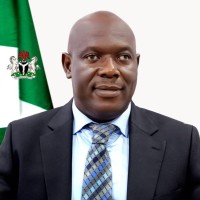
The Hydrocarbon Pollution Remediation Project (HYPREP) has commemorated the 15th anniversary of the release of the United Nations Environment Programme (UNEP) Environmental Assessment Report on Ogoniland, reaffirming its commitment to restoring the environment and improving the livelihoods of affected communities.
In a statement signed by the Project Coordinator, Prof Nenibarini Zabbey, to commemorate the anniversary, HYPREP described the anniversary as a significant milestone in Nigeria’s environmental restoration efforts, noting that the project has made remarkable progress in implementing the recommendations of the landmark UNEP report released on August 4, 2011.
The UNEP report had revealed extensive oil pollution across Ogoniland, severe environmental degradation, and serious public health risks resulting from decades of petroleum operations. It also recommended an initial $1 billion fund to commence the cleanup of the affected communities.
According to HYPREP, the Federal Government formally launched the Ogoni clean-up in 2016, while the Project Coordination Office was established in 2017 to drive the implementation of UNEP’s recommendations.
Zabbey said the current administration has continued to prioritise the project under the Renewed Hope Agenda.
Providing an update on the cleanup, the Project Coordinator disclosed that 30 of the 65 contaminated sites identified by UNEP have been fully remediated, while work is ongoing at several medium- and high-risk locations. It also stated that more than 1.5 million mangrove seedlings have been planted as part of what it described as the world’s largest restoration of oil-degraded mangroves, with over 1,000 hectares of shoreline already rehabilitated.
Zabbey further revealed that 49 Ogoni communities have been connected to potable water schemes through multiple water projects and booster stations aimed at providing safe drinking water across the region.
In the health sector, he said the 100-bed Ogoni Specialist Hospital in Kpite and the 43-bed Cottage Hospital in Buan are nearing completion, adding that several existing health facilities have been upgraded with modern medical equipment, while five ambulances have been donated to improve emergency healthcare services. The Project Coordinator also disclosed that a three-year human health biomonitoring study is being conducted in collaboration with the World Health Organization’s International Agency for Research on Cancer (IARC).
On economic empowerment, Zabbey stated that the Project has created more than 8,000 direct jobs and trained thousands of Ogoni youths and women in various vocational and technical skills, including software development, cybersecurity, aviation, commercial diving, seafaring, mechatronics, and creative arts. The project also reported awarding scholarships to more than 1,000 students, providing grants to small businesses, and supporting persons living with special needs through skills acquisition programmes.
The statement further highlighted ongoing legacy projects, including the Ogoni Power Project and the Centre of Excellence for Environmental Restoration, which it said is about 96 per cent complete. HYPREP also welcomed the recent designation of the Ogoni Wetland as a Ramsar Site of International Importance and pledged to continue promoting biodiversity conservation and sustainable management of the ecosystem.
Marking the anniversary, Zabbey said the progress achieved over the past 15 years demonstrates the collective commitment of government, development partners, stakeholders, and local communities to restoring Ogoniland. He called for renewed collaboration to sustain the cleanup effort, promote environmental sustainability, and support the long-term development of the region. 3
-

 News2 days ago
RSG Targets Nine Million Residents in Mosquito Net Distribution Campaign
-

 Oil & Energy1 day ago
Aiyedatiwa Signs New Electricity Bill
-

 Oil & Energy1 day ago
NLNG Commissions Research And Innovation Centre In RSU
-

 Maritime1 day ago
Marine Minister Commends President Tinubu On NPERA Bill Assent
-

 News2 days ago
KenPoly Holds Eight Convocations, August 29
-

 News2 days ago
RSG Begins Another Phase of Projects Commissioning Today
-

 News2 days ago
RMAFC Completes Revenue Sharing Review, Proposes New Pay
-

 Maritime1 day ago
NAGAFF Petitions IGP Over Alleged Maritime Police Harassment