
News
RMAFC Completes Revenue Sharing Review, Proposes New Pay

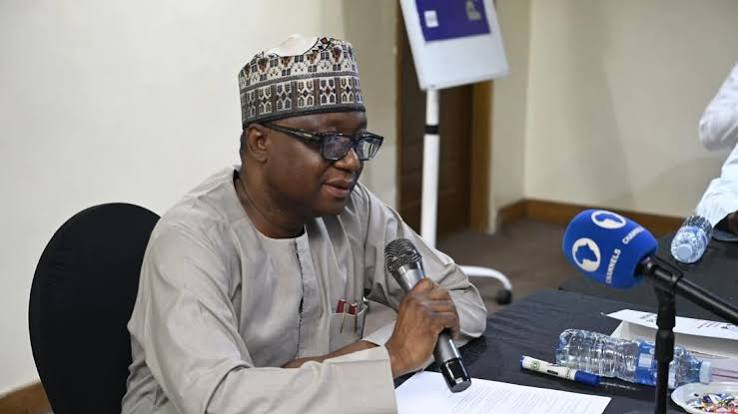
The Revenue Mobilisation Allocation and Fiscal Commission (RMAFC) has completed the review of Nigeria’s Revenue Allocation Formula, paving the way for a new framework for sharing revenues among the federal, state and local governments.
The commission also said it had concluded the review of remuneration for executive, legislative and judicial officeholders, while the review of salaries and allowances for political and public officeholders had reached an advanced stage.
The chairman of RMAFC, Mohammed Shehu, disclosed this during an interactive session with members of the Nigerian Guild of Editors in Lagos, where he presented an overview of the commission’s activities and reforms from 2023 to date.
Shehu, in a statement issued by the Head, Information and Public Relations Unit, Maryam Yusuf, on Saturday, said the completed revenue allocation review followed extensive consultations with the three tiers of government, technical stakeholders and other relevant institutions across the country.
According to him, the exercise involved an assessment of fiscal responsibilities, revenue trends and comparative federal systems, culminating in a harmonised report and legislative proposals that are now ready for transmission to the appropriate authorities.
“The commission has completed a comprehensive review of Nigeria’s Revenue Allocation Formula. It has completed the review of remuneration for judicial officeholders, culminating in the enactment of the Judicial Office Holders (Salaries and Allowances) Act, 2025.
“Also, the review of remuneration for executive and legislative officeholders is at an advanced stage, with an executive bill on the Political and Public Office Holders (Salaries and Allowances) Act, 2026 expected to be transmitted to the National Assembly,” the commission stated.
The RMAFC chairman said the objective was to create a revenue-sharing system that would be more equitable and sustainable while taking into account the changing economic and governance realities in the country.
Shehu also confirmed that the commission had completed the review of remuneration for judicial officeholders, which culminated in the enactment of the Judicial Office Holders (Salaries and Allowances) Act, 2025.
He said the review of remuneration for executive and legislative officeholders was also at an advanced stage, with an executive bill on the Political and Public Office Holders (Salaries and Allowances) Act, 2026 expected to be transmitted to the National Assembly.
The development comes amid long-running concerns over the adequacy of remuneration for public officeholders and the need to balance improved compensation with accountability and performance.
Shehu stressed that salary increases must be accompanied by better service delivery, saying improved remuneration should not be treated as an end in itself.
He said, “Remuneration reforms must be matched with accountability and performance. Improved pay should translate into improved service delivery.”
Beyond the revenue formula and remuneration reviews, the chairman said RMAFC had intensified its monitoring of oil and gas production data to ensure that the 13 per cent derivation principle was accurately applied.
He said the commission had deployed verification exercises, geospatial mapping and collaboration with relevant agencies to address discrepancies in oil well attribution and ensure that states received the revenues due to them.
One of the major interventions, according to Shehu, was the reallocation of 17 oil wells from Imo State to Rivers State in compliance with a Supreme Court judgment.
He said similar interventions had been carried out in Cross River, Akwa Ibom, Imo and Anambra states, while improved reporting of gas production had enabled Enugu and Kogi states to benefit from derivation revenues.
The commission also said it had strengthened its collaboration with the Nigerian Upstream Petroleum Regulatory Commission, Nigeria National Petroleum Company Limited, the Nigerian Midstream and Downstream Petroleum Regulatory Authority, the National Boundary Commission and the Office of the Surveyor-General of the Federation.
Shehu said the partnerships were aimed at improving revenue monitoring, resolving attribution disputes and strengthening compliance.
He also disclosed that RMAFC was engaging the Ministry of Defence on the persistent challenges of crude oil theft, pipeline vandalism and production losses, which he described as major threats to government revenue.
The commission is also looking beyond the petroleum sector for additional sources of revenue.
Shehu said RMAFC was exploring partnerships with the Federal Airports Authority of Nigeria and the National Space Research and Development Agency, including the deployment of satellite and geospatial technologies to identify new revenue opportunities.
He said the reforms were part of the commission’s broader effort to improve data integrity, strengthen inter-agency collaboration and ensure a fairer distribution of national revenue.
The chairman said RMAFC had also recorded improvements in its institutional infrastructure through the rehabilitation of critical facilities, enhanced security systems and ongoing renovation of its headquarters.
He added that staff welfare had received attention through improved healthcare services, training and capacity development programmes designed to strengthen the technical expertise of the commission.
Shehu said the engagement with the Nigerian Guild of Editors was aimed at improving transparency and ensuring that Nigerians better understood the commission’s constitutional mandate.
He reaffirmed RMAFC’s commitment to proactive communication, data-driven reforms and stronger collaboration with the media in promoting accountability in public finance.
In his vote of thanks, the Chairman of the Public Affairs and Communication Committee and Federal Commissioner representing Kwara State on the commission, Ismail Agaka, commended the media for its role in strengthening democratic accountability.
Agaka reaffirmed the commission’s commitment to sustained engagement with stakeholders as it advances its fiscal and institutional reforms.
Other members of the Public Affairs and Communication Committee at the event included Federal Commissioners Peter Opara (Imo), Ekene Enefe (Anambra), Hadizatu Mustapha (Borno), Ahmed Hassan (Adamawa), Bob-Helen Inafa (Bayelsa), Oti Linda (Abia), Prof Olusegun Wright (Lagos) and Victor Eboigbe (Edo).
RMAFC is a constitutional body responsible, among other functions, for monitoring revenue accruals into and disbursements from the Federation Account, reviewing the revenue allocation formula and determining appropriate remuneration for political and public office holders.
The current push to review revenue sharing comes as the country’s fiscal structure continues to face pressure from rising expenditure, uneven revenue generation among the tiers of government and growing demands from states and local governments for greater fiscal capacity.
The completion of the review therefore sets the stage for the Federal Government and the National Assembly to consider a possible restructuring of how federally collected revenues are distributed among the three tiers of government.


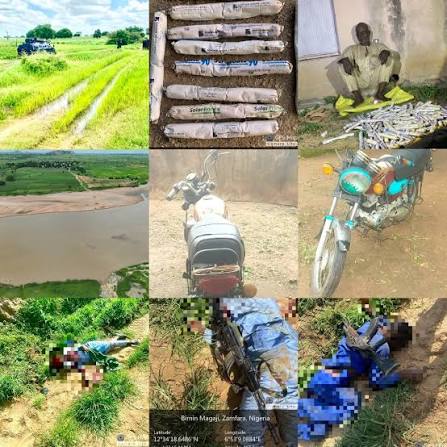
Troops of the Joint Task Force North West, Operation FANSAN YAMMA, have intercepted a suspected arms and explosives courier carrying 180 units of 20mm Super Power explosives in Zamfara State.
The interception was made last Friday during routine snap checks on vehicles conducted by troops of Sector 2.
The suspect, identified as 57-year-old Sani Umar, was reportedly transporting the explosives from Gusau Local Government Area of Zamfara State to suspected terrorist elements operating in Jibia Local Government Area of Katsina State.
According to a post by the Nigerian Army on X on Saturday, the Media Information Officer of the Joint Task Force (North West), Operation FANSAN YAMMA, Lt. Col. Aliyu Danja, said a search of Umar’s vehicle led to the recovery of the explosives.
“The suspect, vehicle and recovered explosives are currently in custody for further investigation,” the military said.
“The interception came as troops simultaneously conducted offensive operations against terrorist elements in Birnin Magaji Local Government Area.
“Troops engaged terrorists around Garin Kaso in a fierce firefight, killing two suspected terrorists and recovering two rifles, two magazines, nine rounds of ammunition and two motorcycles,” the statement said.
The Socio-Economic Rights and Accountability Project (SERAP) has urged the Independent National Electoral Commission, Economic and Financial Crimes Commission and Independent Corrupt Practices and Other Related Offences Commission to investigate alleged vote-buying, financial inducement, violence and other electoral offences linked to the 2026 Osun State governorship election.
The call came shortly after the Independent National Electoral Commission has declared Governor Ademola Adeleke of the Accord Party the winner of Saturday’s governorship election, returning him for another term in office.
The demand comes against the backdrop of reports of alleged vote-buying and other irregularities during the poll.
The State Returning Officer, Vice-Chancellor of the Federal University, Oye Ekiti, Prof Joshua Ogunwole, declared Adeleke the winner at about 7:24 am on Sunday.
Adeleke polled 511,067 votes to defeat his closest challenger, the All Progressives Congress candidate, Bola Oyebamiji, who scored 444,815 votes. Adeleke won in 19 of the state’s 30 local government areas, while Oyebamiji won 11. The African Democratic Congress candidate, Najeem Salaam, came third.
SERAP, in a petition dated August 16, 2026, and signed by its Deputy Director, Kolawole Oluwadare, urged INEC, EFCC and ICPC to “…Urgently, jointly and transparently investigate reported cases of vote-buying, financial inducement, illegal election financing, voter intimidation, violence, misuse of public resources and other electoral offences in connection with the 2026 Osun State governorship election.”
The organisation also urged the agencies “to invite and facilitate independent regional and international assessment through the African Union (AU), ECOWAS, the African Commission on Human and Peoples’ Rights and relevant UN human-rights mechanisms, as complementary scrutiny to domestic accountability processes.”
SERAP further urged the agencies “to trace the sources and movement of funds allegedly deployed for vote-buying or other unlawful electoral purposes and identify those who provided, authorised, distributed, financed or facilitated the alleged conduct.”
It also called for the preservation and examination of banking and mobile-money records, telecommunications data, CCTV footage, polling-unit records and other documentary and digital evidence.
SERAP added, “The legitimacy and credibility of the Osun State election result ultimately depend upon whether voters were genuinely able to freely exercise their right to participation and political choice. Where voters are allegedly induced with money or other benefits, threatened with violence, intimidated, obstructed or otherwise coerced, serious questions arise as to whether the Osun election reflected the free and genuine will of the electorate.”
The group called for a joint investigation, saying, “A joint investigation by the agencies would ensure coordinated examination of the electoral, financial and criminal dimensions of the reported electoral offences and violations.”
It further said, “Inviting appropriate regional and international mechanisms would provide complementary independent scrutiny, strengthen transparency and accountability, and help assess the wider implications of the reported violations for Nigeria’s human-rights and democratic obligations.”
SERAP cited preliminary reports by the EU Support to Democratic Governance in Nigeria Election Observation Hub, saying civil society observers recorded 323 electoral offences and irregularities across 726 polling units observed as of noon on Saturday.
The organisation quoted the observers as saying the incidents included 103 cases of vote trading, 28 cases of inducement of polling and security officials, 31 cases of voter obstruction, 38 cases of campaigning at polling units, 14 cases of voter impersonation, 12 cases of multiple voting, seven cases of election-official misconduct and 85 cases involving exposure of ballot papers.
It added, “The observers also recorded 38 security incidents, including reported cases of thuggery, attacks on electoral officials and voter intimidation. The Situation Room also reported the harassment of an election observer and alleged disruption by thugs,” the organisation said.
The group asked the agencies to investigate compliance with sections 91 to 94 of the Electoral Act 2026, particularly provisions relating to campaign contributions, expenditure and sources of funds. It also urged them to investigate, arrest and, where appropriate, prosecute persons reasonably suspected of electoral, corruption or other criminal offences, including those who financed or facilitated the alleged conduct.
“The three agencies should make their findings public and ensure that relevant evidence is available, where lawful and appropriate, to competent electoral tribunals and other accountability mechanisms. These measures are important not only for accountability for the Osun election but also for preventing recurrence, deterring electoral corruption and violence, strengthening public confidence in INEC and other institutions, and safeguarding the integrity and credibility of the 2027 general elections”, the group added.
SERAP said the reported allegations should be subjected to transparent investigation irrespective of the outcome of the election, stressing that accountability was necessary to protect the integrity of future elections.
It urged INEC, EFCC and ICPC to “publish the findings and take all lawful measures necessary where credible evidence shows that corruption, inducement, coercion or violence materially affected voters or the election outcome.”
It also asked the agencies to facilitate regional and international scrutiny and make relevant evidence available to competent electoral and judicial bodies where appropriate and lawful.
“We would be grateful for information on the steps being taken in response to this petition,” SERAP said.
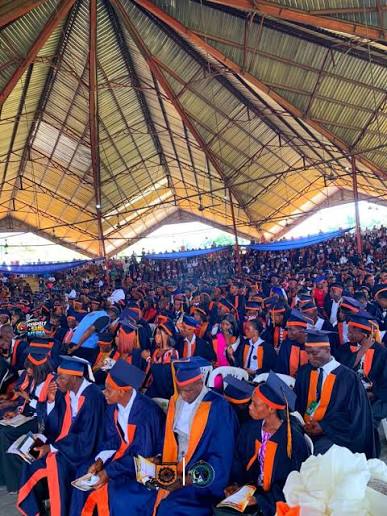
The Kenule Beeson Saro Wiwa Polytechnic, Bori, is holding its 25th to 32nd Convocation ceremony on August 29.
The Registrar of the Polytechnic, Dr. ThankGod Abalubu, disclosed this in a statement sent to The Tide at the weekend.
The Convocation ceremony will cover graduands who completed their academic programmes from 2017/ 2018 to 2024/2025, making eight academic sessions.
Rivers State Governor, Sir Siminialayi Fubara, who is also the Visitor of the Polytechnic, is expected to be the Special Guest of Honour at the event.
The statement added that the Acting Rector of the Polytechnic, Dr. George Wadike, said the ceremony would be used to clear up backlog of graduation ceremonies for deserving graduands of the institution since 2018.
This, he said, aligns with his policy thrusts of doing the right thing for staff and students at the right time.
By: Chinedu Wosu

