Quote:“Apathy may express frustration, but surrendering our votes only gives others greater power to determine our future. Nigeria needs credible elections, accountable leaders and citizens who refuse to abandon their democratic rights.”
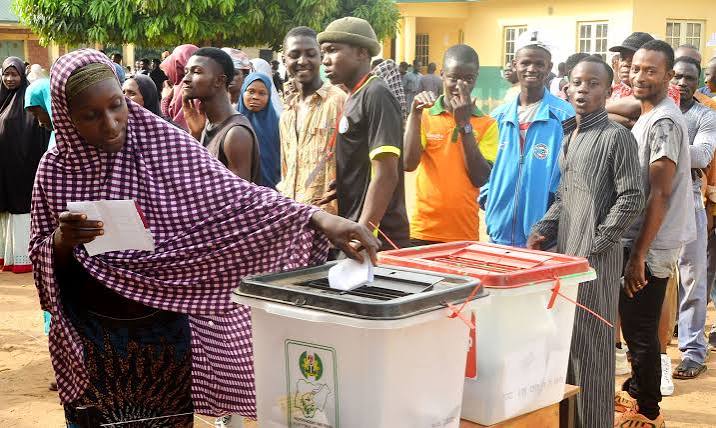
“I actually don’t know what is wrong with this country called Nigeria. Nothing will ever make me go out under the scorching sun to vote for anybody again. After all, my vote doesn’t count. “We go out and vote, but in the end, they announce whatever result they want and tell the opponents to go to court. Is this the Nigeria we all want?” These are the frustrations of many Nigerians who have lost faith in the electoral process. For them, elections have become a cycle of high expectations, alleged irregularities and disappointing outcomes. Consequently, many are becoming indifferent to how political leaders emerge and what they do after assuming office. This growing voter apathy poses a serious threat to Nigeria’s democracy and must be addressed before the 2027 general election.
Some politicians, including councillors, local government chairmen, members of the House of Representatives, senators and governors, have disappointed the people they were elected to represent. Constituents who expect their representatives to address pressing community needs often complain of neglect, poor performance and limited engagement after elections.bAs Chinua Achebe’s celebrated novel, “Things Fall Apart”, suggests, things appear to be falling apart in Nigeria’s electoral system. Yet, withdrawing from the electoral process is not the solution. Rather, it could worsen the situation by allowing a relatively small proportion of voters to determine the country’s political future. Recently, the National Orientation Agency (NOA) launched a nationwide grassroots mobilisation campaign to address voter apathy, vote buying and electoral violence ahead of the 2027 general election.
The campaign, themed “Your Vote, Your Voice, Our Future: Say No to Apathy, Vote Buying and Violence. Let’s Build a United Nigeria in 2027,” was inaugurated in Abuja. Speaking at the event, the Minister of Information and National Orientation, Mohammed Idris, commended the agency for the initiative, emphasizing that citizens must recognize the importance of their votes in determining the country’s political leadership and future. He warned that voter apathy, vote buying and electoral violence threatened democratic development, calling for stronger collaboration among government institutions, electoral authorities, security agencies, community leaders and citizens. The Director-General of the NOA, Mallam Lanre Issa-Onilu, explained that the agency would deploy its state directorates across the 36 states and the Federal Capital Territory to promote responsible electoral participation.
The campaign will use local languages, radio programmes, town hall meetings, community dialogues, drama and digital platforms to reach Nigerians in both urban and rural communities. The Chairman of the Independent National Electoral Commission (INEC), Prof. Joash Ojo Amupitan, also reaffirmed the commission’s commitment to conducting free, fair, transparent, inclusive and credible elections in 2027. He stressed the importance of early preparation, stakeholder collaboration and active citizen participation. These initiatives are commendable. However, their success will depend on sustained implementation rather than public announcements alone. Voter education must continue beyond election periods, while electoral institutions must demonstrate through their conduct that citizens’ votes deserve protection.
The government, political parties, electoral authorities and civil society organisations (CSOs) all have important roles to play. First, governments must demonstrate genuine commitment to credible elections by rejecting electoral manipulation, vote buying and the use of thugs to intimidate voters. Electoral offences must be investigated and prosecuted in accordance with the law. Security agencies must also remain professional and impartial throughout the electoral process. Beyond elections, elected officials must deliver the dividends of democracy. Reliable electricity, accessible healthcare, quality education, good roads and employment opportunities can help restore public confidence in governance. Citizens are more likely to participate when they see that democracy can improve their lives.
Political officeholders must also change their attitude towards their constituencies. Representatives should maintain regular contact with their constituents, explain their activities and demonstrate how they address local concerns. Representation should not end with election campaigns, nor should elected officials remember their constituents only when another election approaches. CSOs and political parties must intensify voter education, helping citizens understand that voting is a fundamental democratic right and an important means of holding leaders accountable. Voters should also learn to verify electoral information, report irregularities through appropriate channels and reject inducements that compromise their choices.
The electorate, too, has responsibilities. Voters must resist the temptation to sell their votes for money, food or other temporary benefits. Although economic hardship makes such inducements attractive to some, selling a vote undermines the opportunity to demand accountable leadership. Equally important is the rejection of electoral violence and misinformation. Nigerians must learn to disagree politically without becoming enemies. Citizens should verify claims before sharing them, particularly on social media, and report suspected electoral malpractice to the appropriate authorities. Participation also extends beyond voting. Citizens can attend community meetings, question elected representatives, monitor public projects and demand transparency between elections.
Nevertheless, citizens cannot be expected to sustain enthusiasm when credible complaints are ignored or electoral processes lack public confidence. INEC must therefore strengthen transparency, improve election logistics, communicate promptly and ensure that electoral complaints are handled in accordance with the law. Where disputes arise, the courts must provide lawful remedies. Nigeria’s democracy cannot thrive when eligible voters surrender their voices out of frustration. Restoring participation requires more than urging people to turn out on election day. It demands credible elections, responsible leadership, effective civic education and accountability. The 2027 general election presents an opportunity to rebuild public trust.
The NOA campaign is a welcome step, but all stakeholders must translate its message into action. Every eligible Nigerian should understand that a vote is not merely a mark on a ballot paper; it is an opportunity to influence the country’s future. Apathy may express frustration, but active and responsible participation offers a better chance of achieving change. The time to restore confidence in Nigeria’s electoral process is now. The earlier we act, the better for our democracy and future generations.
By: Calista Ezeaku






 Oil & Energy2 hours ago
 News2 hours ago

 News3 hours ago

 Oil & Energy2 hours ago

 News3 hours ago

 News3 hours ago

 News3 hours ago
 News2 hours ago