
Maritime
NAGAFF President Charges PTML Executives On Accountability

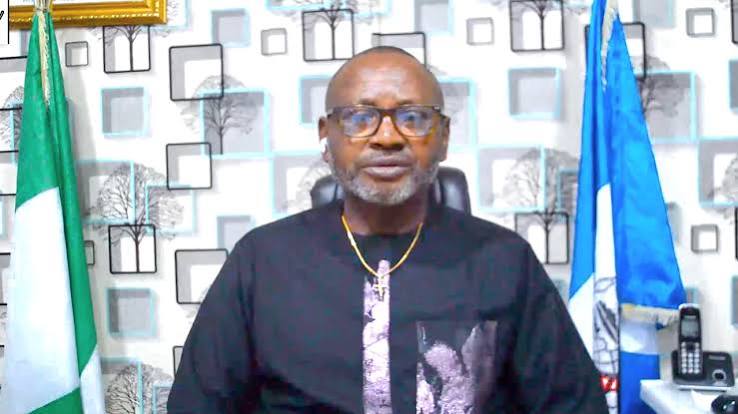
National President of the National Association of Government Approved Freight Forwarders (NAGAFF), High Chief Tochukwu Ezisi, has charged executives and members of the association’s Ports and Terminal Multiservices Limited (PTML) Chapter to embrace unity, transparency and accountable leadership to strengthen the association’s operations.
Ezisi gave the charge Thursday, during a working visit to the PTML Chapter, aimed at strengthening internal relationships, promoting collaboration among members and enhancing cooperation with key stakeholders in the maritime sector.
During the visit to the PTML Customs Command, the NAGAFF president urged the command to report any unprofessional conduct by members or executives of the association, stressing the importance of discipline and professionalism in freight forwarding practice.
He also congratulated Nura Miko on his promotion and appointment as Customs Area Controller (CAC) of the command, urging him to maintain a cordial relationship with the chapter’s leadership and provide the necessary support to facilitate its activities.
Responding, Miko commended NAGAFF for distinguishing itself among freight forwarding associations through its organisational structure and approach to industry engagement.
He assured Ezisi and his delegation of the command’s commitment to providing a conducive working environment, describing the command as a community where stakeholders must work together to achieve common objectives.
In his vote of thanks, the Deputy National President of NAGAFF, Mr Simeon Nwonu, expressed appreciation to Miko for his reception and described him as a man of his word.
At the NAGAFF PTML Chapter’s temporary secretariat, Ezisi thanked the chapter’s leadership and members for the warm reception accorded him and his delegation.
He reiterated the need for transparency, unity and mutual support, urging members to rally behind the chapter chairman and his executive team to ensure the success of their administration.
Earlier, the PTML Chapter Chairman, Fwdr. Thomas Alor, assured the national leadership of his administration’s commitment to membership mobilisation, members’ welfare and accountability to the national headquarters.
Alor pledged to discharge his leadership responsibilities diligently, assuring the national leadership that his administration would work towards achieving the chapter’s objectives.
Also speaking, the PTML Chapter Chairman of the Association of Nigeria Licensed Customs Agents (ANLCA), Chief Odinanwata Nwarienne, commended NAGAFF’s leadership for its efforts to promote seamless cargo movement and improve operational efficiency within the maritime sector.
The visit also featured a celebration in honour of Ezisi, as members of the PTML Chapter joined in celebrating the national president in recognition of his leadership.
The engagement provided an opportunity for the national leadership to interact directly with chapter executives and members, reinforce the association’s expectations and strengthen relationships with customs officials and other industry stakeholders.
By: Nkpemenyie Mcdominic, Lagos


Continue Reading

The National Single Window Secretariat has set a target of reducing cargo clearance time in Nigeria to one day, from the current average of two to three weeks, as maritime stakeholders called for smarter ports, greener logistics and improved coordination among regulatory agencies.
The National Coordinator of the National Single Window Secretariat, Mr. Tola Fakolade, disclosed this at the Primetime Reporters’ 5th Annual Lecture and Awards held at Apapa, Lagos, on Thursday.
Fakolade, who was represented by a Deputy Director at the Secretariat, Mr. Jude Oboh, said the initiative was designed to simplify trade procedures, reduce cargo dwell time, eliminate unnecessary physical examinations and lower the cost of doing business in Nigeria.
He explained that the Federal Government’s directive was to reduce cargo clearance time to one day for both imports and exports, noting that prolonged cargo clearance had contributed significantly to the high cost of doing business in the country.
According to him, the National Single Window seeks to address these challenges through a centralised digital platform that allows importers and exporters to submit documentation once, enabling relevant government agencies to access the information they require without repeatedly requesting the same documents.
He said the platform would also improve transparency, strengthen risk management and enable regulatory agencies to identify compliant traders for faster cargo processing while directing greater scrutiny towards high-risk transactions.
Fakolade noted that Nigeria’s current practice of subjecting approximately 95 per cent of cargo to intrusive physical examination was excessive, adding that the Secretariat hoped to reduce the proportion to below 10 per cent in line with international best practices.
He attributed the high rate of physical examination partly to the absence of a centralised risk management system and the overlapping responsibilities of regulatory agencies operating at the ports.
The National Single Window, he said, would facilitate information-sharing among agencies, allowing them to assess cargo risks collectively and reduce unnecessary inspections.
He added that the Federal Government had also directed that Nigeria’s cargo clearance costs should, at worst, be comparable to those of other West African countries, where some Nigerian-bound cargo had been diverted in recent years.
Providing an update on the initiative, Fakolade said the platform had issued more than 156,000 licences and permits within six months, eliminating the need for applicants to visit multiple regulatory agencies physically.
He disclosed that more than 12,000 importers and clearing agents had registered on the platform, while five ministries, departments and agencies were already using it.
According to him, the platform’s first phase, which focuses on non-oil imports, has commenced with the integration of pre-shipment documentation and permits issued by relevant regulatory agencies.
He explained that importers could now apply for applicable licences and permits through the platform, while shipping manifests submitted by shipping lines and airlines were also being channelled through the system to the relevant authorities.
Fakolade said the Secretariat was preparing to extend the initiative to exports, with plans to commence operations by the end of the fourth quarter of 2026, subject to the implementation schedule.
He added that the third phase would cover the oil and gas sector and trade visualisation solutions, which are expected to provide greater visibility into Nigeria’s trade activities.
He urged maritime stakeholders, including freight forwarders, shipping companies and regulatory agencies, to continue providing feedback to improve the system.
In his keynote address, a former lecturer at the Nigerian Maritime University, Okerenkoko, Delta State, and Managing Director/Chief Executive Officer of Kamany Marine Services Limited, Dr. Charles Okorefe, said Nigeria still had significant ground to cover in developing smart and environmentally sustainable ports.
Speaking on the theme, “Smarter Gateways, Greener Logistics: Leveraging Port Community System and National Single Window for Seamless Trade Flows,” Okorefe described ports as critical gateways for international commerce whose efficiency must extend beyond receiving vessels and clearing cargo to ensuring the seamless movement of goods.
He explained that smart ports deploy advanced technologies, including artificial intelligence, the Internet of Things, big data, blockchain and automation, to accelerate cargo handling, reduce energy consumption, minimise delays and lower operating costs.
According to him, these technologies can improve vessel scheduling, automate cargo-handling operations and facilitate real-time monitoring of port equipment.
He observed that Nigerian ports had yet to achieve the level of automation and technological integration evident in leading international ports such as Rotterdam and Singapore.
By: Nkpemenyie Mcdominic, Lagos

The Director-General of the Standards Organisation of Nigeria (SON), Dr Ifeanyi Chukwunonso Okeke, has warned that Nigeria cannot achieve lasting economic stability without making product quality and standardisation a priority.
Okeke, in a statement issued by SON’s Director of Corporate Affairs, Mrs Ethan Talatu, on Thursday in Abuja to mark Nigeria’s 66th Independence Anniversary, said the country’s reform gains must be backed by quality-driven local production.
“A nation cannot consume its way to greatness; it must produce its way there.
However, production without standardisation is an exercise in futility,” he said.
He described substandard products as a drain on the economy, a threat to consumers and a major risk to Nigeria’s reputation in international markets.
According to him, SON has intensified enforcement of the Nigerian Industrial Standards (NIS) as part of efforts to convert economic reforms into sustainable stability for businesses and consumers.
Okeke said SON had expanded its testing capacity from 23 to 52 internationally accredited parameters, while its Mass and Balance Calibration Laboratory secured EGAC ISO/IEC 17025:2017 accreditation.
The agency has also commissioned laboratory and office complexes in Minna and Sokoto, bringing testing and calibration services closer to businesses and reducing delays for manufacturers.
On digitalisation, Okeke said SON had introduced the Digital Standards Platform, Electronic Product Identification Scheme, Product Identification Scheme and Special Economic Zones Conformity Assessment Programme to improve access to standards and strengthen product tracking.
He disclosed that 62 new Nigerian Industrial Standards had been introduced, while more than 220 products from 131 Nigerian companies had secured certification to adopted African Standards.
The development, he said, would position Nigerian manufacturers to compete more effectively under the African Continental Free Trade Area (AfCFTA).
SON has also installed a 200kW solar power system at its Ogba laboratory complex in Lagos to support uninterrupted operations.
Okeke called for stronger collaboration among SON, the Nigeria Customs Service, Nigerian Ports Authority and security agencies, particularly through real-time intelligence sharing to tackle substandard and counterfeit products.
“When you see the SON quality mark, you are looking at a shield of safety and a stamp of national pride,” he said.
He urged manufacturers to maintain quality, traders to reject fake products and Nigerians to support locally made goods.
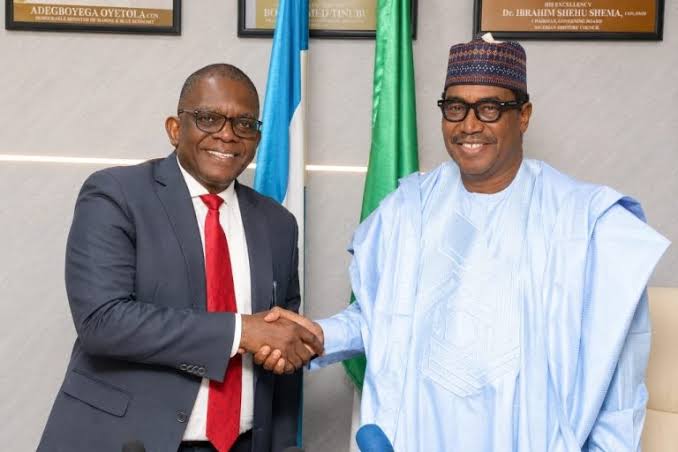
The Director-General/Chief Executive Officer(CEO) of the Nigerian Ports Economic Regulatory Agency (NPERA), Dr. Pius Akutah, has said that
transparent and predictable port economic regulation is critical to lowering logistics costs, attracting investment and unlocking the potential of Nigeria’s fisheries and wider blue economy,
Speaking at the Maritime Correspondents’ Organisation of Nigeria (MARCON) National Conference on Sustainable Fishing in Lagos on Wednesday, Akutah said efforts to grow Nigeria’s fisheries sector must go beyond increasing fish production to addressing the infrastructure, logistics and regulatory bottlenecks that constrain the movement of fish from landing sites to consumers and export markets.
Akutah was represented by NPERA’s deputy director in-charge of Standard Services, Mr Waheed Olagunju at the conference themed, “Sustainable Fishing in Nigeria: Pathways to Growth, Food Security and Coastal Livelihoods.”
Speaking on “Port Economic Regulation as a Catalyst for Sustainable Fishing and Blue-Economy Development in Nigeria,” Akutah said Nigeria’s maritime economy extended beyond shipping and cargo handling to include fisheries, aquaculture, coastal commerce, marine services, logistics and tourism.
He noted that although many artisanal fishers did not directly use major seaports, the broader port and maritime logistics system remained important to the fisheries value chain.
According to him, “fishing vessels and operators depend on imported equipment and components, while processors require machinery, packaging materials and refrigeration equipment. Seafood exporters rely on efficient cargo handling, documentation and transportation to access domestic and international markets”.
Akutah identified high input costs, inadequate cold-chain infrastructure, post-harvest losses, illegal, unreported and unregulated fishing, limited access to finance and governance challenges as major constraints to the sector.
“The central proposition is that transparent, predictable, evidence-based and coordinated economic regulation can reduce friction throughout the fisheries value chain, promote investment and trade, improve food security and strengthen coastal livelihoods,” he said.
He warned that excessive or unclear charges, weak service standards, fragmented procedures and avoidable delays could raise the cost of fish and undermine the competitiveness of Nigerian seafood in domestic and export markets.
Akutah explained that port economic regulation went beyond tariffs to encompass service standards, competition, market access, commercial conduct and dispute resolution.
He said the regulatory framework under the Port Economic Regulations 2015 provided for tariff guidelines, monitoring of service standards, protection of competition, prevention of abuse of dominant market positions, dispute resolution, promotion of efficiency and reduction of the cost of doing business.
The framework, he added, also sought to encourage private-sector investment and monitor concession agreements.
He said the transfer in 2026 of the former economic-regulatory functions of the Nigerian Shippers’ Council to NPERA provided an opportunity to strengthen regulation across the port system.
Akutah clarified that while NPERA is responsible for areas including tariffs and charges, licensing, service standards, fair competition, commercial dispute resolution, trade facilitation and protection of port users, the Nigerian Ports Authority retained responsibility for port infrastructure and its landlord functions.
The NPERA chief executive said the price consumers pay for fish was influenced by a long chain of costs extending beyond harvesting, including fuel, vessel maintenance, landing, ice, storage, transportation, inspection, documentation and port services.
He therefore advocated transparent tariffs, publication of approved charges, closer monitoring of billing practices and effective dispute-resolution mechanisms to eliminate unnecessary costs and commercial disputes.
He advocated greater interoperability among port, customs, maritime, fisheries, health and other government systems to eliminate repetitive submissions and speed up cargo clearance.
He cited the International Maritime Organisation’s Maritime Single Window framework as an important reference for achieving greater digital integration.
Akutah identified efficiency, predictability, inclusion, accountability and sustainability as five principles that should guide port economic regulation in support of the blue economy.
By: Nkpemenyie Mcdominic, Lagos
-
Niger Delta3 days ago
Delta TUC Chairman Congratulates Omare On SAN Elevation
-
Rivers3 days ago
IAUE Hits 2nd Spot In Staff Google Scholar Ranking
-
News3 days ago
RSG Distributes Relief Materials To Khana, Gokana
-

 News2 hours ago
Presidency Refutes Makinde’s ?250bn LNLG Claim
-
News3 days ago
Rivers Information Ministry Pledges Support For Export Promotion Committee
-

 News2 hours ago
Ex-Commissioner Urges Accelerated Enrollment Into Rivers Health Insurance Scheme
-
Niger Delta3 days ago
Diri Promises Sustained Support For Military …Wants Review Of Bayelsa Command’s Location
-

 Opinion1 hour ago
Gift Or Will: Why Wait Until Death To Give?