
Business
AFEX Launches Impact Report On Food Security

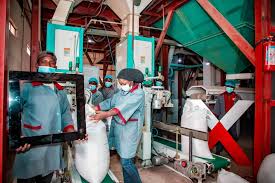
A Pan-African commodities player, AFEX, has released its second impact report covering its activities over the past five years.
The company, which launched operations in 2014, has worked with over 500,000 farmers and executed over 1,000,000 MT in trades since inception. Following the publication of its first impact report in 2021, AFEX has doubled down on driving impact through its work in Africa’s commodities markets, positively contributing to SDGs 1,2,5,8, 12 and 13.
The new report features an updated version of the AFEX theory of change, which was released for the first time in 2021, when the first report was published. The company’s work in Climate Action, SDG 13, has also been captured and included within the context of the ToC and the fuller report.
Climate change effects have become increasingly relevant in Africa, with farmers facing record impacts on their activities.
Floods, increased droughts, and fewer rainfalls have threatened farmer productivity, resulting in food insecurity. AFEX is contributing to enabling sustainable climate resilient agriculture for farmers in Africa, which helps increase Africa’s food security while achieving self- sufficiency for the continent.
According to the report, rural poverty in Nigeria is more widespread in 2023 compared to baseline measurement in 2020.
“Over 80 per cent of Nigerian farmers still existed around and below the poverty line compared to 43 per cent of Kenyan farmers existing around and below the poverty line”, the report stated.
AFEX, which has operations across these two countries highlighted its efforts to secure livelihoods, including providing farmers with certified seeds, quality fertiliser, as well as extension and storage services through strategically distributed warehouses.
The group Chief Executive Officer (CEO), AFEX, Ayodeji Balogun, said “our impact goals are essential as we grow our business and expand, as it ensures that we are able to build a commodities market that is as inclusive as it is efficient.
“We look to create a positive difference in the places that we operate, empowering farming communities, fostering economic opportunity and helping Africa sustainably provide for itself”.
According to the President, AFEX Nigeria, Akinyinka Akintunde, “this report marks a significant milestone for AFEX. It serves as a roadmap that guides us towards a more sustainable and responsible future building an efficient marketplace for commodities in Africa.
“We will continue to build a food system for the future and create shared prosperity, ensuring that no one is left behind in the journey to transform the agricultural ecosystem”.
Akintunde continued that comprehensive efforts are required to create sustainable value in the commodities market, particularly as challenges



Business
Jonathan, Diri, Others Laud Firm’s Milestone in Bayelsa …Says Project Will Drive Industrialisation, Create Jobs



-

 News4 days ago
RSG Targets Nine Million Residents in Mosquito Net Distribution Campaign
-

 Oil & Energy4 days ago
Aiyedatiwa Signs New Electricity Bill
-

 Oil & Energy4 days ago
NLNG Commissions Research And Innovation Centre In RSU
-

 Maritime4 days ago
Marine Minister Commends President Tinubu On NPERA Bill Assent
-

 News4 days ago
KenPoly Holds Eight Convocations, August 29
-

 News4 days ago
RSG Begins Another Phase of Projects Commissioning Today
-

 News4 days ago
RMAFC Completes Revenue Sharing Review, Proposes New Pay
-

 Maritime4 days ago
NAGAFF Petitions IGP Over Alleged Maritime Police Harassment