Nation
Call For PDP National Chairman’s Resignation Ill-timed, Inappropriate – Senator Abba Moro
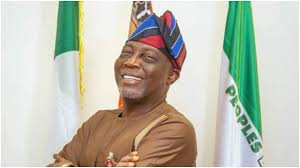
The Senate Minority Leader, Comrade Abba Patrick Moro PhD, has described the call for resignation of Peoples Democratic Party (PDP) Acting National Chairman, Amb. Umar Lliya Damagum as ill-timed and inappropriate.
Senator Moro was reacting to the call for Amb. Damagum’s resignation by member representing Ideato Federal Constituency in Imo State, Hon. Ugochinyere Ikenga who accused the National Chairman of working for the ruling All Progressives Congress (APC) .
Ikenga had also picked his failure to call a National Executive Council (NEC) since he replaced Senator Iyorchia Ayu as the PDP National Chairman.
Reacting to the call over the weekend , Senator Moro said the call was a personal opinion of Hon. Ugochinyere as it does not reflect the opinion of PDP federal lawmakers, especially PDP Senators. He said the call coming few days to the long-awaited and most anticipated NEC meeting of the party was a needless ruffling of feathers.
The Minority Leader in a statement signed by his Adviser on Media, Emmanuel Eche’Ofun John, noted that the party has already scheduled a NEC meeting, which he said would afford members opportunity to ventilate their opinions on the goings on in the party. He said they were looking forward to a very robust discussion on the issues concerning the party and Nigeria in the meeting.
On the seat of the National Chairman of the party, the Senator said the issue was a very crucial one. He averred that there was no basis for anyone to suggest that the seat be thrown open or zoned to any other region apart from North Central. He said PDP had a constitution, the grand norm of its existence, which provides for two deputy Chairmen. He said where there’s vacancy, the deputy chairman of the zone where the embattled National Chairman comes from will act.
He said he didn’t subscribe to any call for the seat to be thrown open or zoned to any region aside North Central. He counseled that if the party must regain its lost glory and remain formidable as the biggest political party in Africa, then NEC members must go into the next meeting with some level of circumspection so that the baby is not thrown away with the bath water.
Commenting on APC government, Senator Moro said the strange bedfellows that seized power in 2015 seem not to know what to do with power. He said everything had gone haywire in the country. According to him, everything about governance in the country at the moment is wrong.
“Nigerians are hurting. The cost of living is so high that Nigerians cannot afford two-square meal in a day. Even the reported appreciation of the naira against the dollar, which is a mind game being played on Nigerians by the APC government, has no impact on the prices of things in the market. Things are getting worse by the day and in the face of this grinding suffering, the government has gone ahead to increase electricity tariff. I think this is height of insensitivity,” he lamented.
On opposition politics, Senator Moro said it was unfair to say that PDP has not been playing opposition politics. According to him, “Opposition is not fighting. We are not going to war with ourselves but we have been voicing out the ills of the APC government.”
On disciplinary measures against erring members of the party, Senator Moro said NEC would not sit in Abuja and compile names of members who acted in ways and manners that undermined the party in the last elections.
“Relevant organs of the party have relevant responsibilities to discharge to the party. NEC cannot sit in Abuja and write names of party member A or B that acted to undermine the party in the last elections, that’s the duty of the various ward EXCOs,” he said.
Senator Moro expressed optimism that PDP would come out in the next election reclaiming its winning ways. He said members only needed to sit down and reflect on the way forward to reclaiming the lost glory of the party.
By: Nneka Amaechi-Nnadi, Abuja

Nation
Nigeria Risks Drifting Without Strong Education Policies-Don
Nigeria’s quest for national greatness may remain elusive if educational policies continue to suffer poor implementation, Prof Nathaniel Abraham has warned, declaring that education remains the strategic compass capable of steering the country toward sustainable growth and global competitiveness.
The respected scholar made this assertion while delivering the 206th Inaugural Lecture of the University of Port Harcourt at its Abuja Centre of Excellence. His lecture, titled, “The Rudderless Ship and Its Major Rescuer,” employed a striking maritime metaphor to illustrate the state of the nation’s educational system and, by extension, its development trajectory.
According to Prof. Abraham, the rudder, though a small and seemingly insignificant component located at the rear of a ship, determines the direction, stability, and safety of the entire vessel. Without it, even the most magnificent ship with powerful engines and sophisticated equipment will drift aimlessly and is at risk of wreckage. He likened this crucial component to educational policies in a nation’s governance structure, arguing that policies serve as the guiding mechanism that determines whether a country reaches its intended destination or wanders endlessly without direction.
In his analysis, he noted that Nigeria possesses abundant human and natural resources and is not! lacking in intellectual capacity or policy formulation. However, he emphasised that the country’s recurring challenge lies in weak implementation, inconsistency, and a culture of cutting corners.
He recalled that at independence in 1960, Nigeria stood shoulder to shoulder with several nations that are now classified among the world’s leading economies. The difference, he maintained, is not destiny or potential, but discipline and adherence to policy execution.
“What made them move forward was discipline and the will to implement policies the way they were designed. For as long as we trivialise our educational policies, we will continue to drift. But the moment we commit to proper implementation, Nigeria is destined for greatness,” he stated.
Prof. Abraham stressed that education remains the foundation upon which every other sector stands. He argued that a properly structured and effectively managed educational system produces competent manpower, ethical leadership, innovation, and national cohesion. Conversely, a poorly managed system weakens governance, slows economic growth, and undermines social stability.
Delving into higher education administration, the Professor identified funding as a critical coordinate of effective university management. Drawing from his scholarly publications in international journals, he explained that adequate and well-managed funding directly impacts teaching quality, research output, infrastructure development, staff motivation, and global competitiveness of universities.
He described the current funding situation in Nigerian universities as grossly inadequate, noting that without intentional and strategic financial investment, reforms may remain theoretical.
“Funding is very poor. If we address it deliberately and commit to doing it right, the transformation will be evident,” he affirmed.
Beyond funding, he called for collective responsibility in rebuilding the education sector, urging policymakers, administrators, lecturers, parents, and students to play active roles in restoring value and credibility to the system.
He emphasised that education should not be seen as the exclusive concern of those currently within school walls, but as a national asset that shapes future generations and determines the country’s long-term prosperity.
Respondents at the well-attended lecture described it as both diagnostic and prescriptive, noting that Prof. Abraham not only identified systemic weaknesses but also offered a roadmap for reform. Some participants expressed optimism that the insights presented could serve as a blueprint for policymakers if carefully studied and adopted.
The event drew members of the academia, deans, the clergy, stakeholders, and guests from various sectors who commended the inaugural lecturer for what many described as a courageous and timely intervention in the national conversation on education.
At the conclusion of the lecture, Prof. Abraham was flanked by deans and colleagues in recognition of his contribution to scholarship and public discourse.
The 206th Inaugural Lecture once again highlighted the role of the University of Port Harcourt as a centre for intellectual engagement and policy advocacy. More importantly, it amplified a central message: without a functional “rudder” in the form of faithfully implemented educational policies, Nigeria’s journey toward development may remain uncertain. But with discipline, adequate funding, and unwavering commitment to policy execution, the nation can chart a new course toward enduring greatness.
Nation
Ex-UNIPORT SUG Leaders Organise Symposium In Honour Of VC

Former Students’ Union Government (SUG) leaders of the University of Port Harcourt, have organised a one-day symposium in honour of the institution’s outgoing Vice Chancellor, Prof Owunari Abraham Georgewill, as his tenure draws to a close.
The maiden symposium, with the theme, “Resolution: From Agitations to Negotiations,” was convened by five past presidents of the university’s SUG as a mark of appreciation for what they described as a student-friendly and peaceful administration under the 9th Vice Chancellor of the university.
The event, held recently at the University of Port Harcourt Centre of Excellence, Abuja Campus, attracted past and present student leaders, members of the academic community, and invited guests.
In his remarks, the current SUG President, Sen. Amaechi Walson Tonye, said the cordial relationship between the Vice Chancellor and the student body informed the decision to organise the symposium, noting that students were proud to associate with a Vice Chancellor who consistently listened to their concerns and prioritised dialogue in resolving issues.
He commended the past SUG leaders for taking the bold initiative to honour the Vice Chancellor, describing the gesture as a reflection of the mutual respect and understanding that characterised the administration.
Speaking in an interview, Prof. Georgewill expressed gratitude to God and the students for the recognition accorded him. He described the honour as deeply significant, recalling that from his first day in office, he pledged to work closely with students to foster peace and ensure uninterrupted academic activities.
According to him, the peaceful atmosphere enjoyed on campus over the past five years was a result of deliberate engagement and a shared commitment to negotiation rather than confrontation.
“For the five years of my administration, we did not experience student-related demonstrations, closure of the school, or management-student crises, which are common in many institutions.We are celebrating because we chose negotiation over agitation. That is the essence of today’s honour,” he said.
He urged Vice Chancellors and student union leaders across the country to prioritise dialogue in addressing grievances, stressing that negotiation remains the best pathway to stability and academic progress.
Prof. Georgewill added that he would like to be remembered for humble and humane leadership anchored on inclusiveness and constructive engagement. He attributed the stability and infrastructural development recorded during his tenure to the grace of God and the cooperation of stakeholders.
The symposium featured a keynote lecture delivered by Prof. Obari Gomba, presentation of awards to the Vice Chancellor and the Dean of Student Affairs, Prof. Wokoma Chima, as well as a drama performance and goodwill messages from former SUG presidents.
Among those who spoke were Comrade Ubabuike Gift; Comrade Dickson Senibo; Comrade Okpara Martins; and Comrade Harmony Lawrence, who initiated and coordinated the event alongside other past student leaders.
The event concluded with renewed calls for sustained collaboration between university management and students to preserve the culture of peace and dialogue at the institution.
City Crime
NCSU Hails Fubara Over 2025 New Telegraph Man Of The Year Award

The Nigeria Civil Service Union (NCSU) has congratulated Rivers State Governor, Siminalayi Fubara, on his emergence as the 2025 Man of the Year for the New Telegraph newspaper, describing the honour as well deserved and a testament to a leadership style anchored on peace, development and the welfare of the people.
The award, which was presented in Lagos, recognises Governor Fubara’s stewardship amid political and economic challenges in the State.
In a statement personally signed by the Rivers State Chairman of the union, Comrade Chukwuka Richman Osumah, the NCSU said the recognition is a befitting reward for a focused and committed administration that consistently places the interests of the people and the State first.
Osumah noted that Governor Fubara has demonstrated in both words and actions that he is committed to peace, stability and measurable governance outcomes.
According to him, the administration has pursued people-centred policies aimed at improving public service delivery, strengthening institutions and promoting inclusive development across Rivers State.
He stated that the Man of the Year award represents a celebration of purposeful leadership, resilience, dedication and unwavering commitment to service.
The union leader further observed that the governor’s efforts to sustain governance in the face of political tensions have distinguished him as a calm and conciliatory figure in the national political landscape.
The NCSU pointed to ongoing investments in infrastructure, healthcare and education, as well as initiatives targeted at improving workers’ welfare and supporting vulnerable groups, as practical demonstrations of the administration’s priorities.
It said such interventions have contributed to stabilising the polity and reinforcing public confidence in governance.
Describing the award as a defining moment in Governor Fubara’s political career, Osumah said it marks an important milestone in the development trajectory of Rivers State and would serve as motivation for the governor to intensify efforts toward peace, good governance, economic growth and sustainable development.
“The award simply tells Governor Fubara to continue the good works of his administration, anchored on prioritising development of the state and the welfare of the people, particularly civil servants,” Osumah said.
The union also commended the Governor for dedicating the award to the Minister of the Federal Capital Territory, Nyesom Wike, describing the gesture as a bold move aimed at consolidating the gains of reconciliation and political stability in the State.
While expressing appreciation to the New Telegraph for recognising what it described as the governor’s leadership qualities, the NCSU urged Governor Fubara to view the honour as both recognition and renewed responsibility.
The union called on him to continue championing policies that promote peace and development, and to consider incorporating the interests of organised labour in the process of reconstituting his cabinet, noting that labour unions have played a significant role in maintaining stability within the State.
-
Maritime3 days ago
Nigeria To Pilot Regional Fishing Vessels Register In Gulf Of Guinea —Oyetola
-
Sports3 days agoGombe-Gara Rejects Chelle $130,000 monthly salary
-
Maritime3 days ago
Customs Declares War Against Narcotics Baron At Idiroko Border
-
Maritime3 days ago
NIMASA,NAF Boost Unmanned Aerial Surveillance For Maritime Security
-
Sports3 days agoTEAM RIVERS SET TO WIN 4×400 ” MORROW” …Wins Triple jump Silver
-
Maritime3 days ago
NIWA Collaborates ICPC TO Strengthen Integrity, Revenue
-
Sports3 days agoNPFL Drops To 91st In Global League Rankings
-
Sports3 days agoNPFL Impose Fines On Kwara United Over Fans Misconduct