
Business
Blue Economy Ministry Earmarks N1.03bn For Vehicles, Foreign, Local Trips

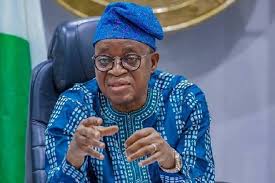
The Federal Ministry of Marine and Blue Economy has earmarked N1 billion on the purchase of vehicles in 2024, and also spend a total of N35 million on local and foreign travel in the same year.
According to the 2024 Appropriation Act signed into law by President Bola Tinubu, the ministry will spend N10 million on local travel and transport, training; N15 million on local travel and transport, others; and N10 million on international travel and transport, others.
Speaking on the appropriation, the President, National Association of Managing Director of Licensed Customs Agents (NCMDLCA), Lucky Amiwero, said the money for the purchase of vehicles for the ministry should be channelled towards port rehabilitation, instead.
According to him, purchasing such a huge amount of vehicles is a misplaced priority especially at a time Nigerian seaports require rehabilitation.
“Until Nigerians are ready to change, we will continue to be in crisis. It’s a terrible thing for us to go through what we are going through currently.
“What are we using N1 billion vehicles to do when our port facilities are dilapidated. It’s not worth it, we are supposed to make our port infrastructure at par with its contemporaries in the sub region so that we can compete favourable.
“This money allocated for vehicles should have been used for infrastructure development. Our ports lack modern infrastructure and we are not competing with any country.
“For instance, the ports in Lagos lack infrastructure to compete. We should dredge the channels and make our port more competitive with larger vessels calling, but rather, we buy vehicles. It’s unfortunate.
“Look at our port system, we are getting worried and tired but we will continue to ask the government to do things properly. They have vehicles before, what are they buying again?
“That money should be used for infrastructure provision and that would make our port competitive with its contemporaries in West and Central Africa”, Amiwero stated.
Also speaking, a frontline clearing agent, Ikechukwu Anaba, condemned the N1 billion allocated for the purchase of vehicles in the 2024 appropriation budget of the ministry.
Anaba stated that the minister, Adegboyega Oyetola, should set the ministry’s priority right
“N1 billion for vehicles? What happened to the vehicles purchased in 2023 and 2022? Are the vehicles foreign or Nigerian used? Are they not brand new?” he asked rhetorically.
“This is an absolutely misplaced priority because we have lots of other priorities than vehicles”, he stated.



The facility will be disbursed through participating Microfinance Institutions (MFIs), which will in turn extend the loans to their customers, particularly SMEs, as they directly interface with businesses at the grassroots level.
The Executive Director of COMCIN, Mr. Micheal Ogbaa who represented the Chairman, Dr. Iredele Oyedele (FCA, FCCA), said the initiative is designed to strengthen micro-lending institutions and expand access to finance for grassroots entrepreneurs, particularly women and youths in the informal sector.
Ogbaa explained that COMCIN does not lend directly to individuals but works through its network of microfinance and cooperative institutions, which in turn provide loans to end users.
“We came together to advocate for the microfinance ecosystem. Commercial banks often exclude people at the grassroots, but our members are positioned to reach them. This facility will empower them to do more,” he said.
He noted that the loan scheme offers low interest rates and flexible repayment plans, making it more accessible to small business owners.
According to him, about 90 percent of beneficiaries are expected to be women, who play a key role in sustaining families and driving economic activities at the local level.
“Our focus is on traders, service providers, and players in the informal sector. These are the real movers of the economy. By supporting them, we are strengthening families and contributing to national development,” he added.
Ogbaa disclosed that eligible SMEs with proven integrity and business track records could access up to N5 million each through participating micro-lending institutions. The rollout has commenced in Lagos and will extend to Abuja, Enugu, and other regions, including the South-West, South-East, and North-East.
He said 12 micro-lending institutions have already benefited from the scheme, while 85 applications are currently being processed under the pilot phase.
“Our target is to reach at least 100,000 SMEs nationwide. We are building a platform that connects funding partners with credible micro-lending institutions, creating a reliable channel for financial inclusion,” Ogbaa said.
He added that COMCIN is also working to attract larger funding pools from development finance institutions and private investors, noting that successful implementation of the pilot phase would boost confidence and unlock more capital for SMEs.
“We have seen encouraging testimonies from early beneficiaries. As we demonstrate transparency and efficiency, more institutions will be willing to channel funds through us,” he said.


-
Opinion2 days ago
Ozoro Festival: Tradition or Tyranny?
-

 News3 days ago
RSG Reiterates Commitment To Youth Dev
-

 Oil & Energy3 days ago
Transcorp Energy, Renewvia Partner On Renewable Energy Gap
-
Politics2 days ago
RIVERS WOMEN RALLY SUPPORT, CONTINUOUS PRAYERS FOR TINUBU
-
Politics2 days ago
AKPABIO, DIRI, OBOREVWORI, OTHERS VOW TO REELECT TINUBU …AS GIADOM RETAINS APC ZONAL CHAIR
-

 Business3 days ago
NSCDC Discloses Illegal Dump Site In Ikwerre Community
-
Politics2 days ago
Viral 2027 Nomination Forms Price List Fake, Misleading – APC
-
 Business3 days ago
Yenagoa’s Radisson Hotel Ready December — NCDMB, Other