
Politics
2023: Group Tasks INEC On Fairness To Political Parties

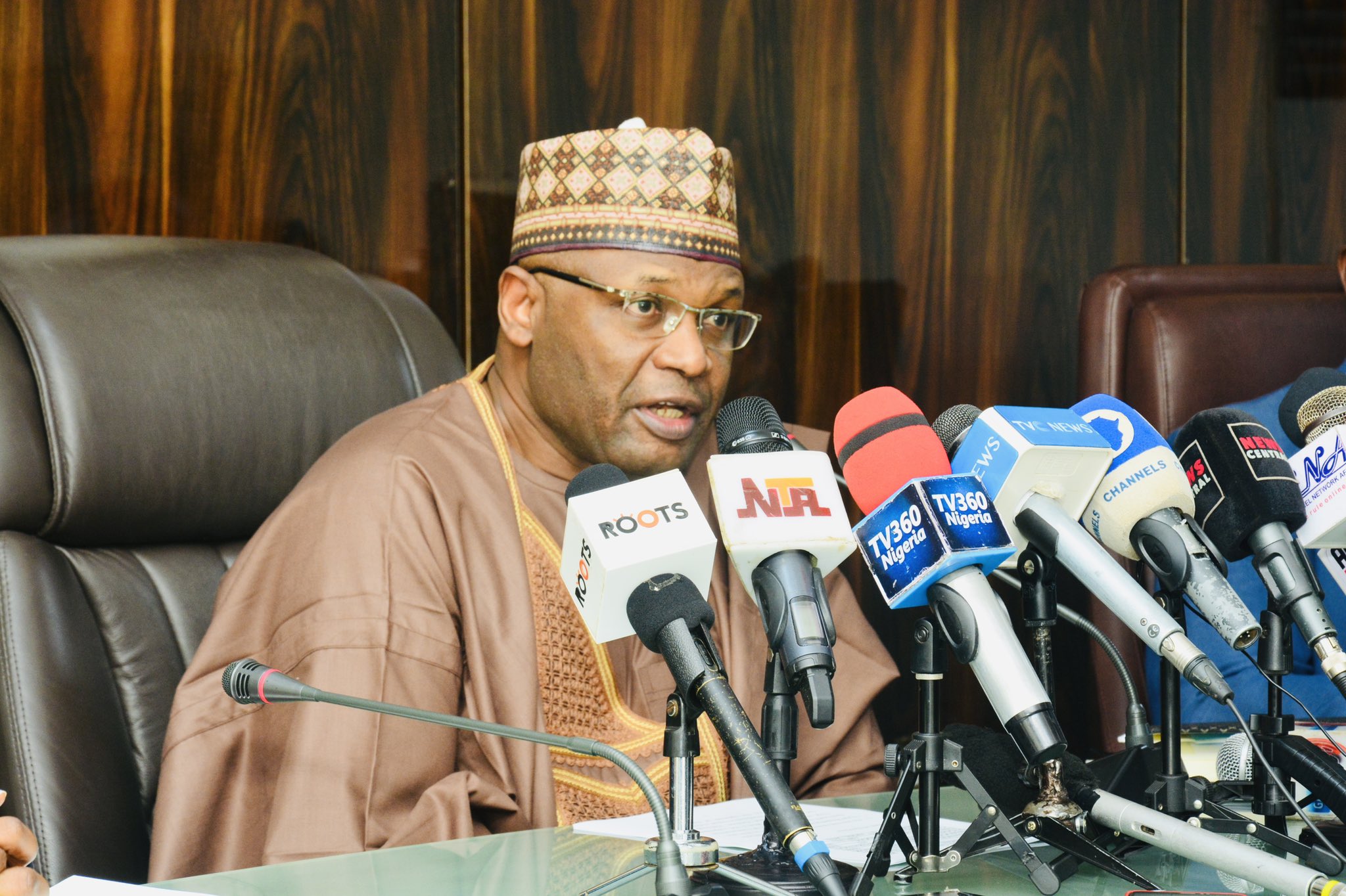
The Abuja School of Social and Political Thoughts (ASSPT) has tasked the Independent National Electoral Commission (INEC) to be fair to all political parties ahead of 2023 general elections.
The Director of the School, Dr Sam Amadi, made the call at a news conference in Abuja, on Tuesday while speaking on the uploading of party agents for the Feb. 25 presidential election.
Amadi urged INEC to work hard and simplify its digital processes to enable efficient and timely upload of Polling Units (PUs) agents by political parties.
He equally advised the commission to factor the interests and challenges faced by the less established political parties in managing its deadlines.
Amadi said from the group’s interactions with some of the parties “outside the major ones, namely the Peoples Democratic Party, the All Progressives Congress, the Labour Party and the New Nigeria People’s Party” the feedbacks were not encouraging.
“We receive reports of difficulty in uploading party agents including difficulty of using the INEC’s portal and the number of PUs to be uploaded.
”Some of the officials of these parties informed us that INEC official did not notify them that their method will only provide online forms suitable for self-service and not for enterprise use cases.
“Some of them have also complained that the tasks requires more time that INEC allocates.
”Some of these party officials are requesting INEC to adopt the Enterprise Data Upload Method which will be easier and faster to enable them to quickly upload their agents.
”And this will enable them be in a position to monitor and defend their votes, especially in the presidential and governorship elections where incentives for rigging and manipulations may be high.
“INEC should recognise the comparative disadvantage of the less established parties and grant them amply opportunity to meet the deadline.
”If INEC is not able to be flexible with its system to enable smooth upload, then it should, within its conveniences and schedule, consider to extend the deadline.
“This will enable effective participation by the less established parties, outside the Big Four to ensure fair participation in competitive election, “ Amadi explained.
Our correspondent reports that the school at the event launched a 2023 Election Observatory to monitor, analyse and provide solutions to issues that would affect the credibility and fairness of the elections.
Amadi said the gesture became necessary in order to help the INEC with necessary information in its preparations towards a credible exercise.
He said, “the objective of the observatory is to offer an independent analysis of the challenges of free and fair election to INEC as the country approaches its general elections.
“We believe that the most important aspect of the electoral process is not the actual voting, but actions taken by the electoral management body to make voting free and fair.
“We are not engaged in election monitoring but rather in observing and analysing the processes and procedures that guarantee fairness and credibility of voting and declaration of results.
“To this end, we will be having weekly press briefings to highlight challenges and offer solutions to ensure the conduct of the 2023 elections remain free, fair and credible.”
The school urged INEC to ensure that all eligible registered voters collect their Permanent Voter Cards(PVCs) before the election dates to avoid disenfranchisement.
He explained that the logistics could be overwhelming for the institutions, adding that the election is a crucial one and its competitiveness requires more transparency and accountability than in the past.
He commended INEC for the decision to use its staff to conduct the election rather than academics outside its control.
“By establishing a committee of its senior management and taking ownership of the process, INEC is proving that it is learning from the failures of the past and is determined to conduct more efficient and reliable elections in 2023.
“This decision underlines a recognition of the needs to standardise the procedures and processes of the elections.
“This is more so as the returning officers make decisions that at times are arbitrary and capricious to undermine the fairness of electoral outcomes,” he said.
Mr Kenneth Eze of Speak Out Africa Initiative, urged INEC to put measures in place for all eligible registered voters, especially students who were now back to their various schools, get their voting PVCs.
“We all know that when the Continuous Voter Registration was conducted, Nigeria students were home due to eight months strike declared by ASUU.
“Today, as we are talking PVCs distributoon and collection, these same largest decision making constituency are currently back in their school busy with their studies.
“Its unfortunate and I am calling the attention of INEC. There is no way they will be in school and still collect their PVCs which they did at home.
“Youth population is over 26 million as we were told by INEC and they must be part of determining who governance us in the next four years, “he said.
He urged the Federal Government to declare public holiday for students for one week and mandate ASUU, Nigeria University Commission (NUC) and stakeholders in education sector to suspend every activity during this one week break.
Oh his part, Mr Law Mefor, fellow of the school, urged INEC to improve its delivery system and overcome some of the managerial shortcomings recorded in the past weeks.
He said some of these suggestions were made to provide fair and effective participation in INEC process and to avert litigations that might damage the credibility of the entire process. (


Rt Hon. Abbas secured the party’s ticket through an affirmation exercise conducted across the 13 electoral wards in the constituency.
The wards involved include Kwarbai A, Kwarbai B, Limancin-Kona, Unguwar Fatika, Unguwar Juma, Dutsen Abba, Gyallesu, Kufena, Dambo, Wuchichiri, Tudun Wada, Tukur-Tukur, and Kaura.
The exercise, which began simultaneously in all wards at about 10 a.m., recorded large turnout of APC members who gathered at various party offices across the constituency.
At Kwarbai B Ward, the Speaker’s ward, the process was conducted peacefully under the supervision of the ward APC Returning Officer, Malam Iliyasu Muhammad Balarabe, in the presence of Rt Hon. Abbas.
According to the ward APC secretary, Nafiu Sabo, the ward has over 10,000 registered members, but 220 members were accredited for the exercise.
Before the affirmation, Mallam Balarabe informed members that Rt Hon Abbas was the only aspirant who purchased nomination forms, underwent screening, and was cleared by the APC national leadership to contest the Zaria Federal Constituency seat.
Following a voice vote by accredited members, the Speaker was affirmed as the party’s candidate in the ward, a process replicated across the remaining 12 wards.
At the constituency collation centre, the APC Returning Officer for the House of Representatives primary in Zaria Federal Constituency, Dr. Hamisu Ibrahim Kubau, announced that 1,376 APC members across the 13 wards endorsed Rt Hon. Abbas as the party’s flag bearer.
He explained that although thousands of party members participated in the exercise, only accredited delegates were allowed to vote.
Dr. Kubau declared: “There are 13 wards in Zaria Federal Constituency, and only one aspirant purchased a form, was screened, and cleared. He is Rt. Hon. Abbas Tajudeen. After due process, we conducted affirmations across all wards.”
He added that the process was peaceful and monitored by officials of the Independent National Electoral Commission (INEC) and party representatives.
Chairman of the APC House of Representatives Primary Elections in Kaduna State, Senator Yakubu Oseni, described the outcome as a reflection of the Speaker’s popularity and acceptance among constituents.
He expressed confidence that Rt Hon Abbas would secure victory in the 2027 general elections.
Speaking after his declaration, Rt Hon. Abbas expressed appreciation to APC members for reaffirming their confidence in him.
The incumbent Reps including Emily Inyang and Godwin Offionio, in separate interviews
protested the handling of the primaries conducted by the leadership of the party in the state, saying it was skewed against them.
The aspirants further described the primaries as a charade and an embarrassment to the state.
According to them, the House of Representatives primaries fell short of the provisions of both the Electoral Act as amended in 2026 and the party’s constitution.
They accused the leadership of the party in the state, backed by Governor Bassey Otu, of violating the party’s constitution in the conduct of the House of Representatives primaries across the state on Saturday.
Hon. Godwin Offiono, representing Ogoja/Yala Federal Constituency, particularly expressed disappointment with the primary that allegedly disenfranchised registered members of the party in his constituency.
Hon. Offiono asserted that having failed to arrive at a consensus, the party leadership opted for a direct primary to decide the candidate for the 2027 election.
“But what I witnessed today was not only alarming, but quite disheartening that our electoral system have not shown any improvement, especially now that we have a man of God in the person of the governor as the leader of the party.
“How do you declare a result by 9:00am even when the electoral materials were yet to arrive at Yala.
“As an aspirant, I couldn’t even vote or see the materials for my own primary at my Okuku ward in Yala Local Government Area, where I come from. But no matter what happens I am still in the race and have not stepped down for anybody.
“The governor had all the time in the world to drive the process of consensus but he never did. As a representative, I cannot even see my governor. I called, no response. I sent text no reply. I am treated as an out cast,” he lamented.
In an emotion laden tone during a telephone interview, Hon. Offiono further said: “I could not believe that first term NASS members like me can be treated in this shoddy manner even when I don’t know my offence.
“I have been a loyal party man. I appeal to the governor to do the right thing, follow the Electoral Act and party constitution in electing representatives.”
Similarly, Hon. Emil Inyang of Akamkpa/Biase Federal Constituency said he still remained in the race and had not stepped down for anybody.
According to him, “If this shenanigan called primary is allowed to stand, it would affect the party’s fortune in the general elections.
“My appeal to the governor is to allow the people to decide. And if they so voted against me, I will rest and not fight over anything.
“There was no stakeholders meeting held to decide on anything before now, and someone can not be unilaterally imposed on us all in the name of compromised primary,” he stated.
A coalition of support groups within the All Progressives Congress (APC) has protested the disqualification of former presidential aspirant, Mr Tein Jack-Rich, from the Rivers West Senatorial race ahead of the party’s primaries for the 2027 general elections.
The groups, in a statement issued on Saturday morning in Abuja, described the action of the party’s screening committee as unjust and capable of worsening internal divisions within the APC in Rivers State.
The statement, signed by the coalition’s National Coordinator, Dr. Bilal Galadima, and General Secretary, Hon. James Ogenyi, accused the party leadership in Rivers State of favouring politicians loyal to the Minister of the Federal Capital Territory, Chief Nyesom Wike, while sidelining long-standing members of the APC.
The coalition alleged that only aspirants aligned with Chief Wike were cleared to contest for elective positions in the state.
“How can our party allow only one man who is not a member of our party to make decisions or dictate the direction of our party?”, the group queried.
The coalition specifically faulted the exclusion of Mr Jack-Rich, describing him as a loyal party member who had supported the APC for more than 13 years and previously contested the party’s presidential ticket.
It also questioned the alleged clearance of Chief Felix Obua, whom it described as a recent entrant into the party and an ally of Chief Wike.
“How can our party disqualify Jack-Rich, a former presidential aspirant who has been loyal and supported our party for the last 13 years, only for our party to choose Felix Obua, a Wike loyalist who only joined the party three months ago?”, the statement read.
The group warned that failure by the APC leadership and National Working Committee (NWC) to address the matter as it could weaken the party’s structure in Rivers State ahead of the 2027 elections.
It called on party leaders to uphold internal democracy, reward loyalty and ensure a level playing field for all aspirants.
INEC TO BEGIN MEMBERSHIP VERIFICATION AS POLITICAL PARTIES SUBMIT REGISTER
All 22 registered political parties have successfully submitted their membership registers to the Independent National Electoral Commission (INEC) in compliance with the Electoral Act 2026, the Commission has said.
In a statement issued on Friday, Chairman, Information and Voter Education Committee, Mr Mohammed Haruna, said the submission followed the extension granted by the Commission after political parties raised concerns during a meeting on Tuesday, March 24, 2026, regarding the timeline provided in the Revised Timetable and Schedule of Activities for the 2027 general elections.
He said, “The Commission is pleased to note that all registered parties submitted their registers as of 8th May 2026, two days before the extended deadline.”
He recalled that following a meeting with political parties, the Commission, in a statement issued on the 27th of March, 2026, adjusted the deadline for the submission of party registers from 21st April 2026 to 10th May 2026 to align with the provisions of Section 77(4) of the Electoral Act 2026 and the actual dates fixed by political parties for their primaries.
Mr Haruna noted that political parties were accordingly allowed to conduct their primaries within the approved period from 23rd April 2026 to 30th May 2026, while the register of party members was required to be submitted to the Commission not later than 21 days before the conduct of their respective primaries.
He added, “INEC wishes to state that all registered political parties complied with the requirement within the extended timeframe and will subject the submitted registers to the necessary verification processes in line with the law.”
The Commission restated its commitment to the conduct of free, fair, credible and inclusive elections.
-

 Editorial5 days ago
Enough Of Xenophobic Attacks On Nigerians
-

 Sports5 days ago
Oparaodu Urges Rivers United To Win Katsina United
-

 Education5 days ago
UNIPort Senate Grants Two-Year Amnesty to U2010–U2018 Students
-

 Nation5 days ago
RSU, Otonti Nduka Foundation Holds Centenary Conference, Unveil Book on Values in Nigeria
-

 Oil & Energy5 days ago
Rivers PETROAN Elects 12-Member Executive
-
Politics5 days ago
APC Group Protests Ex–Presidential Aspirant’s Disqualification From Rivers Senatorial Race
-

 Sports5 days ago
” Nigeria’s best domestic players are not in NPFL”
-
Politics5 days ago
Reps Speaker Secures APC Return Ticket For Fifth Term