
Sports
Sports In Nigeria In 2020: A Retrospect

OTHER SPORTS
In other sports such as table tennis, Nigeria made two attempts to qualify for her maiden outing at the Olympic Games. After losing the sole continental slot to Egypt at the 2019 African Games, Nigeria competed at the World Team Qualifying Tournament in Gondomar, Portugal but narrowly lost to Poland in the second round of the tournament, leaving Egypt as the only African team competing in the team event of Tokyo Games.
The country also made impact in boxing directly and indirectly. Few weeks after Nigerian born Briton, Anthony Joshua beat Pulev to retain his world titles, a full blooded Nigerian, Ridwan Oyekola emerged the new world Boxing Federation Super Featherweight champion by beating his Argentine opponent in Ibadan, Nigeria.
SPORTS POLICIES
The year 2020 witnessed two key policies from the Federal Ministry of Sports and Social Development, which if implemented effectively, have the potential to take the sector to another level. The first is the Adoption Campaign, an initiative that is aimed at attracting more funding for the development of sports in the country. Through the “adoption campaign”, the hope is that decaying sports facilities will be revived, and athletes will be properly nurtured into world beaters.
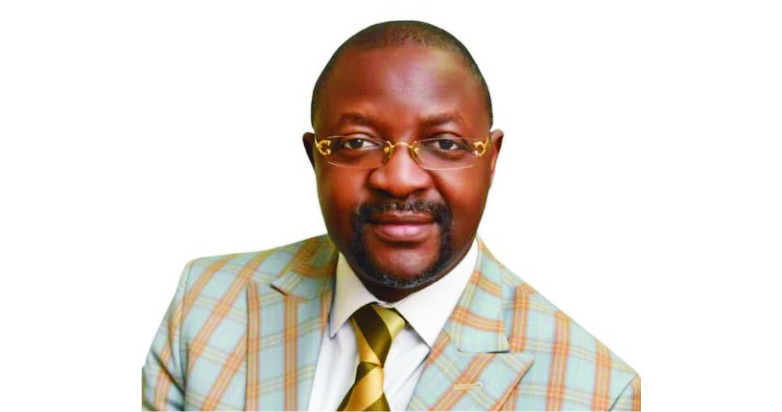
During the launch of the ”Adopt An Athlete Initiative”, in Lagos, the Sports Minister, Sunday Dare noted that the sports sector has what it takes to massively contribute to the country’s economy.
The campaign is calling on private individuals and corporate organisations to pick an athlete or a team and sponsor them to greater heights.
“The hope of the athlete is to be at the Olympics, or the World Championship for their sport; to stand on the podium, and fly their country’s flag. They want to be the reasons why Nigeria’s flag should be hoisted and the national anthem is sung while the world watches.
“This is their reward; but it is also our honour and prestige, and pride among nations. It is this hope that drives them to invest in themselves, to work hard, to endure all odds, and try to surmount every challenge.
“The Adoption Programme is our baby, all of us. By it, we hope to change the narrative about sports in Nigeria. While what we are doing here tonight has the feel of a pilot programme to it, we are hard at work to institutionalise frameworks that will ensure that individuals and corporate organisations get value for whatever they put in sports.
Another is the 2020 National Sports Industry Policy (NSIP), which is still at the draft stage. The NSIP is aimed at leveraging Nigeria’s remarkable sporting talent, passion, interest and excellence to advance and navigate diplomatic relations, and more importantly, generate employment, create jobs, increase government revenue and bolster the economy. It has its objectives to promote national unity, ensure good governance, effective regulation and efficient administration of sports. Others include, to improve sporting officiating and participation to world class standards, institution and maintenance of efficient sport-specific dispute resolution mechanisms, promote public/Private sector engagement to engrave sports as an important driver and contributor to the national economy and to ensure utilization of ICT.
DEATHS WITHIN THE SPORTS CIRCLE
Several deaths were recorded in the country within the year under review.
Some personalities within the sports circles lost their lives and would not be around to see what this year has to offer.
Ajibade Babalade
The former Super Eagles defender died on September 4 in Ibadan, the Oyo State capital.
Babalade, 48, took ill a day before his death and was taken to the University College Hospital Ibadan where he passed away.
The hard-tackling retired defender was part of the Super Eagles squad to the 1992 Africa Cup of Nations in Senegal where the national team won the bronze.
Chineme Martins
The death of the 23-year-old was quite painful as many believe it was one that was avoidable if the minimum health facilities were in place on the day of his demise at the Lafia Township Stadium.
The Nasarawa United defender died on March 8 during a Nigeria Professional Football League game.
Martins fell unconscious during the second half of Nasarawa’s league match against Katsina United.
Martins’ death was the second time fans in Lafia witnessed a tragedy in recent years.
In December 2018, Kano Pillars’ star Dominic Dukudod collapsed while warming up in a friendly against Nasarawa United.
John Felagha
The former National U17 and U20 goalkeeper died on August 30 in Senegal.
Felagha was a member of the 2009 Golden Eaglets squad though he was on the bench throughout the tournament as Nigeria won silver behind Switzerland.
He was also part of the 2013 FIFA U-20 World Cup but failed to make any appearance in that tournament.
The 26-year-old was said to be awaiting airlifting back to Nigeria on holidays before the unfortunate incident.
Razak Okedeyi
Okedeyi was one of the country’s fast-rising basketball referees until his death and was a key member of the Nigerian Basketball Referees Council.
He was last seen in action during 2019/2020 Total Division One League held earlier this year in Lagos.
Okedeyi was the Public Relations Officer (PRO) of the Lagos State Referees Council as well as the founder and head coach of Flygerian Basketball Academy.
Deborah Onu
This was another sad death that may have been avoided as the deceased for a long time was being treated for the wrong ailment.
Instead of being treated for tuberculosis of the spine, basketball prodigy, Onu at different times across different health facilities was subjected to treatment for ulcer, typhoid, and even back pain.
The 16-year-old was due to write her Senior Secondary School examination in May/June 2020 and her basketball potentials suggests she could even be on her way to the United States afterward, but what looks like a bright future was truncated by the sad death.
Michael Ojo
The Nigerian-American basketball player died after suffering a heart attack during a training session.
Ojo, who plays for Serbian team Crvena Zvezda, collapsed at the Partizan Stadium in Belgrade and was taken to a local hospital where he later died.
An invitee to the Nigeria men’s National Basketball team, D’Tigers, Ojo represented Florida State University as a college senior before heading to Serbia to pursue a professional career.
Uremu Adu
The grassroots athletics coach died on May 10 in Lagos after a brief illness.
A regular face across several sporting facilities in Lagos, Coach Adu has produced a lot of sporting talents; some of whom are already in the United States to further their education and career.
Emmanuel Ibah
The Nigeria Football Federation had its own fair of share deaths in 2020 and one of the big losses was Mr. Ibah.
He was the NFF coordinator for the South-South zone and was also the Akwa Ibom football association chairman until his death. He was 61 years of age.
Chidi Okenwa
This was another painful death in the country’s football administration circles.
Mr. Okenwa was Chairman of the Nigeria National League until his death and was also a member of the Executive Committee of the Nigeria Football Federation (NFF). He died on May 5 aged 50.
Musa Duhu
The NFF Exco Committee Member passed on in September 19. Until his date, the Late Duhu was also the Chairman of the Adamawa State Football Association.
Apart from the death recorded in Nigeria, there were a number of other high-profile deaths across the world including Diego Maradona, Kobe Byrant, Palo Rossi among many others.


Pics 1: Fencing in action.
President of the Nigeria Fencing Federation, Adeyinka Samuel, has said the country will host a unique 2026 Commonwealth Fencing Championships as the first sub-Saharan nation to stage the tournament, Tidesports source reports.
The championship will be held in Lagos from August 9 to 14, with the federation announcing that Rugby School Nigeria will host the event.
The Commonwealth Fencing Federation formally awarded the hosting rights for the 2026 championships to Nigeria in March 2025.
“It is the third international tournament the country will host, having also become the first to stage a junior épée World Cup, which was held in Lagos in December 2024. Nigeria also hosted the 23rd African Fencing Championships last year.
Nigeria’s hosting will be unique in several ways. First, it will be the inaugural edition on African soil, giving it historic significance. Second, we are integrating development initiatives such as an international training camp to foster technical exchange. Finally, the event will showcase African hospitality, culture, and energy, offering athletes a rich experience beyond the competition,” Samuel said on Wednesday.
“Preparations have advanced steadily across competition planning, venue readiness, logistics, athlete services, and partnerships.”
He also noted that over 24 Commonwealth nations have already registered.
“We are organising a pre-championship international training camp in Lagos to unite athletes ahead of the competition. Everything is moving in the right direction, and our focus is on delivering a world-class event that reflects Nigeria’s ability to host major international tournaments.”
The last two tournaments hosted by Nigeria were held at Charterhouse Lagos, and Samuel explained the choice of Rugby School Nigeria for this championship.
“The venue was selected for its modern, state-of-the-art facilities and its proximity to hospitality, tourism, and entertainment hubs. This ensures athletes and officials will enjoy excellent accommodation, transport, and leisure options during their stay.”
While thanking the private sector for its support in organising the championship, the president also called for greater government intervention in the fast-growing sport.
“The private sector has shown encouraging support, with institutions like Rugby School Nigeria and companies such as Flour Mills of Nigeria backing the championships. However, stronger government involvement is needed. Hosting the 2026 Commonwealth Fencing Championships is a milestone achievement, and we believe institutional support will help Nigeria maximise the opportunity and deliver a truly memorable event.”
The final draw was concluded at CAF Headquarters in Cairo, Egypt, on Wednesday and posted on the body’s website.
Notably, hosts Morocco will face a North African showdown in Group A, drawn alongside Tunisia, Egypt, and Ethiopia.
Only the top two teams from each group will advance to the quarter-finals, making Group A particularly competitive.
Group B features former champions Côte d’Ivoire and Cameroon, alongside Uganda and debutants DR Congo.
In Group C, 2015 and 2017 champions and last year’s runners-up, Mali, will meet Angola, Mozambique, and Tanzania.
Group D is led by 2023 champions Senegal, who will face South Africa (2015 runners-up),
The eight quarter-finalists from the tournament will automatically qualify for the 2026 FIFA U-17 World Cup in Qatar.
The teams finishing third in each group will contest two play-off matches to determine the final two qualifiers, bringing the total number of African representatives at the global finals to ten nations.
2026 CAF U-17 Africa Cup of Nations – Groups:
- Group A: Morocco, Tunisia, Egypt, Ethiopia
- Group B: Côte d’Ivoire, Cameroon, Uganda, DR Congo
- Group C: Mali, Angola, Tanzania, Mozambique
- Group D: Senegal, South Africa, Algeria, Ghana
Tidesports source reports that Nigeria will not feature at the tournament for the second consecutive edition.
The Golden Eaglets suffered a 2-0 defeat to rivals Ghana in the semi-finals of the WAFU Zone B qualifiers in September 2025, dashing their hopes of advancing to the finals.
The Super Eagles of Nigeria will begin their title defence at the 2026 Unity Cup with a semi-final clash against Zimbabwe on May 26 at The Valley in South London, Tidesports source reports.
The four-nation tournament, which also features Jamaica and India, returns to its historic venue after the success of the 2025 edition in Brentford, where Nigeria emerged champions.
The competition, scheduled to run from May 26 to 30, blends elite football with cultural celebration, bringing together Afrocentric and global diaspora communities.
Nigeria’s opening fixture against Zimbabwe serves as a rematch of their recent encounters in the 2026 FIFA World Cup qualifiers, setting the stage for a highly competitive contest.
The winner will progress to the final on May 30, while the second semi-final between Jamaica and India will be played a day later.
President of the Nigeria Football Federation, Ibrahim Gusau, expressed confidence in the Super Eagles’ chances while acknowledging the quality of the opposition.
“The Nigeria Football Federation is pleased with another opportunity to see the Super Eagles compete at the highly exciting and entertaining Unity Cup Tournament,” Gusau said.
“As perennial champions, the Super Eagles will look to retain their title again this summer, even as they will not underrate the other participating teams viz India, Jamaica and Zimbabwe. The tournament promises to be explosive and that is the setting in which the Super Eagles thrive best.”
The Unity Cup will culminate in a finals day featuring both the third-place play-off and the final, alongside a festival atmosphere that includes cultural showcases, food exhibitions, and live performances.
Zimbabwe Football Association president Nqobile Magwizi described his nation’s participation as a landmark moment, highlighting the opportunity to compete on an international stage in England for the first time.
“The Unity Cup represents far more than a celebration of football and culture, it is a powerful platform that reflects Zimbabwe football’s growing ambition to compete, perform, and excel on the global stage,” Magwizi said.
With Nigeria seeking to retain their crown and rivals eager to make their mark, the opening clash against Zimbabwe is expected to set the tone for what promises to be a fiercely contested and culturally vibrant tournament.
-
 Editorial15 hours ago
Domesticate FG’s Exit Benefit Scheme
-
 News16 hours ago
DHQ Confirms Deaths Of Terrorists, Soldiers In Borno Attack
-

 News12 hours ago
RSU Unveils Five-Year Strategic Dev Plan …Calls For Collective Commitment To Institutional Excellence
-
Rivers14 hours ago
Dep Gov Seeks Collaboration, Transparency Between RIVCHPP, PHCMB
-
Nation12 hours ago
Rumuji Youth Leader Condemns Protest, Disowns Alleged Government Empowerment Claim
-
 Featured14 hours ago
FG Reaffirms Nigeria’s Stability As US Embassy Suspends Visa Appointments In Abuja Office
-

 News13 hours ago
Tinubu Commissions Bayelsa Gas Turbine, Other Projects Today
-

 Nation12 hours ago
Haniel Jack Foundation Awards Five Rivers Indigenes Scholarship