
Business
Capital Market Stakeholders Seek Alternative Infrastructure Dev Funding

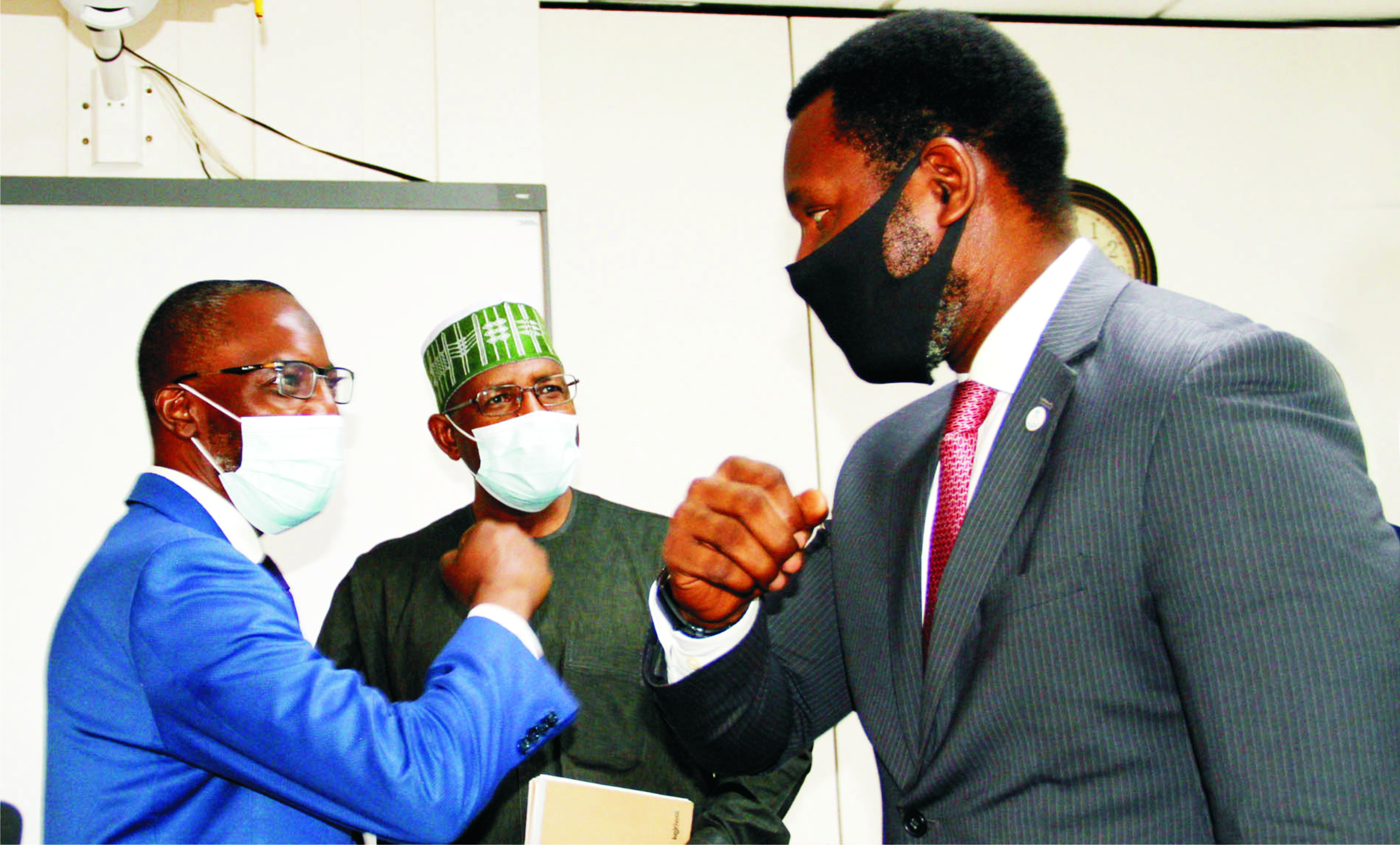
Worried by budgetary pressure and reduction in the level of public funds, stakeholders in the capital market are calling for alternative sources of financing to support infrastructure development
They spoke yesterday at a webinar session targeted at the infrastructure sector and organised by FMDQ Debt Capital Markets Development Project 2025 Infrastructure Finance Sub-Committee.
The webinar was themed, “Leveraging the Debt Capital Markets for Infrastructure Development”.
Chief Executive Officer, FMDQ Group, Mr Bola Onadelesaid at the webinar that the debt capital market provided a key avenue through which infrastructure growth could be fostered to promote economic development.
Onadele said alternative sources of financing were required to support infrastructure development, given the reduction in the level of public funds available due to budgetary pressures.
He said that increased public debt to GDP and the inability of the public sector to deliver a more efficient investment spending, with the presence of competing priorities, called for alternative source of financing.
Onadele said that infrastructure development was critical for economic growth, reduced poverty, job creation as well as improving the wellbeing of the citizenry.
According to him, the McKinsey Global Institute estimates that $3.3 trillion must be spent annually through 2030 to address Africa’s huge Infrastructure gap.
He noted that private sector financing was critical and the capital market needed to be harnessed to raise alternate finance to be deployed to diverse projects through issuance of long term securities.
Onadele said access to financing ranked as a top challenge in infrastructure development, according to a PricewaterhouseCoopers survey.
He said that the existence of an enabling political and regulatory environment was also important in attracting both local and foreign investors into the infrastructure development sphere.
Onadele said the Federal Government had been supportive in creating an enabling environment for infrastructure development through different initiatives.
These, he said, included the establishment of the Infrastructure Credit Guarantee Company Limited (“InfraCredit”).
He said that government had “actively encouraged Public-Private Partnerships (PPP) which are an effective way of transferring life-cycle costs of infrastructure off public-sector budgets and simultaneously creating investable assets for the private sector.”
The Chief Executive Officer, Chapel Hill Denham and Chair, Steering Committee, FMDQ Debt Capital Markets Development Project, Mr Bolaji Balogun said government budget could not be enough for infrastructure development.
Balogun said $35/$40 billion was needed annually to address infrastructure problem, noting that, government budget was completely inadequate.
“We are only scraping the surface: only if investment in infrastructure grows by 15 to 18 per cent a year can we reach eight per cent economic growth.
“Unlocking institutional capital domestically, regionally and globally is the only way to deliver infrastructure for Africa,” he said.
The Director-General, Infrasturcture Concession Regulatory Commission, Mr Chidi Izuwah said COVID-19 had changed the national policy, hence the need to plan along with that.



The facility will be disbursed through participating Microfinance Institutions (MFIs), which will in turn extend the loans to their customers, particularly SMEs, as they directly interface with businesses at the grassroots level.
The Executive Director of COMCIN, Mr. Micheal Ogbaa who represented the Chairman, Dr. Iredele Oyedele (FCA, FCCA), said the initiative is designed to strengthen micro-lending institutions and expand access to finance for grassroots entrepreneurs, particularly women and youths in the informal sector.
Ogbaa explained that COMCIN does not lend directly to individuals but works through its network of microfinance and cooperative institutions, which in turn provide loans to end users.
“We came together to advocate for the microfinance ecosystem. Commercial banks often exclude people at the grassroots, but our members are positioned to reach them. This facility will empower them to do more,” he said.
He noted that the loan scheme offers low interest rates and flexible repayment plans, making it more accessible to small business owners.
According to him, about 90 percent of beneficiaries are expected to be women, who play a key role in sustaining families and driving economic activities at the local level.
“Our focus is on traders, service providers, and players in the informal sector. These are the real movers of the economy. By supporting them, we are strengthening families and contributing to national development,” he added.
Ogbaa disclosed that eligible SMEs with proven integrity and business track records could access up to N5 million each through participating micro-lending institutions. The rollout has commenced in Lagos and will extend to Abuja, Enugu, and other regions, including the South-West, South-East, and North-East.
He said 12 micro-lending institutions have already benefited from the scheme, while 85 applications are currently being processed under the pilot phase.
“Our target is to reach at least 100,000 SMEs nationwide. We are building a platform that connects funding partners with credible micro-lending institutions, creating a reliable channel for financial inclusion,” Ogbaa said.
He added that COMCIN is also working to attract larger funding pools from development finance institutions and private investors, noting that successful implementation of the pilot phase would boost confidence and unlock more capital for SMEs.
“We have seen encouraging testimonies from early beneficiaries. As we demonstrate transparency and efficiency, more institutions will be willing to channel funds through us,” he said.


-
Opinion2 days ago
Ozoro Festival: Tradition or Tyranny?
-

 News3 days ago
RSG Reiterates Commitment To Youth Dev
-

 Oil & Energy3 days ago
Transcorp Energy, Renewvia Partner On Renewable Energy Gap
-
Politics2 days ago
RIVERS WOMEN RALLY SUPPORT, CONTINUOUS PRAYERS FOR TINUBU
-
Politics2 days ago
AKPABIO, DIRI, OBOREVWORI, OTHERS VOW TO REELECT TINUBU …AS GIADOM RETAINS APC ZONAL CHAIR
-

 Business3 days ago
NSCDC Discloses Illegal Dump Site In Ikwerre Community
-
Politics2 days ago
Viral 2027 Nomination Forms Price List Fake, Misleading – APC
-
 Business3 days ago
Yenagoa’s Radisson Hotel Ready December — NCDMB, Other