
Featured
Fresh Allegations Of N6.2bn Fraud Hits NDDC …As Appointee Petitions Lawan, Gbajabiamila …Buhari Gives NDDC Ultimatum To Pay Scholarship Monies

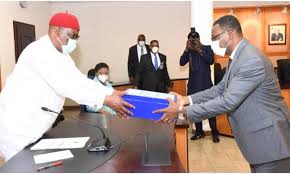
The crisis rocking the Niger Delta Development Commission (NDDC) hits harder as the Chairman of the Palliative Distribution Committee of the commission, Chief Sobomabo Jackrich, last Monday, alleged embezzlement of N6.2billion by the Interim Management Committee (IMC) led by Prof. Daniel Pondei under the guise of palliatives distribution.
Jackrich, in a 12-paragraph petition dated August 3, 2020, and separately addressed to the Senate President, Dr. Ahmad Lawan, and the Speaker, House of Representatives, Hon. Femi Gbajabiamila, stated that the N6.2billion palliatives scam was different from the N1.5billion relief funds shared to over 4,000 staffers of the commission and some members of the high command of the Nigeria Police Force by the IMC in April.
According to him, the N6.2billion was specifically approved by President Muhammadu Buhari in April this year for procurement and distribution of palliatives to residents of the nine states covered by the commission.
The commission’s Palliative Committee, chairman in his petition, titled “Demand for Investigation over alleged Misappropriation and Diversion of N6.2billion NDDC Palliatives Money”, further alleged that the Pondei-led IMC, pushed him aside as chairman of the Palliatives Distribution Committee when the money was to be spent.
He added that rather than using the money for the purposes for which it was meant for, the IMC only stage-managed the distribution of items not worth up to N1million.
The petition read in parts, “Today, all of that can be regrettably described as a show of shame and a scam. The N6,250,000,000.00 only that was magnanimously approved by Mr. President to help the poor and indigents of the Niger Delta during this difficult period of the pandemic as palliatives has curiously been allegedly misappropriated and embezzled by the IMC of the NDDC and their co-conspirators.
“As the chairman of the Palliatives Distribution Committee, my findings is not only that the money cannot be accounted for, but there is nothing on ground to show that that N6.2billion of our hard earned tax payers money was invested for its original purpose which the President approved.
”The materials and supplies according to the statement were to be done through Emergency Procurement method as provided in Sections 42(b) (c) and 43 of the Public Procurement Act, 2007″.
He consequently called for dissolution of the Pondei-led IMC to ensure thorough financial sanitation of the commission and allowing the motive behind the ongoing forensic auditing, to see the light of the day.
Expressing fury over the activities of the Pondei-led IMC, he further revealed that, “As the chairman of the Palliatives Distribution Committee, I cannot account for the palliatives as my committee was sidelined just because I as the chairman demanded for accountability and transparency in the processes as well as value for money with respect to the palliatives.
“That I was handed the template for the distribution of the Palliatives wherein it was indicated that nine trucks of food items will be distributed to each of the nine states in the region.
“However, the IMC hijacked the entire process. They called and handed me with few bags of rice and beans just to induce me to play along with them giving the false impression that the process was successful.
“This appears to me as a cover-up plot. Most of the food items that they claimed to have distributed were spoilt and unhealthy for human consumption.
“Thus only the IMC can tell where they got those poisonous and rotten food items from. The next thing we hear surprisingly, is that the palliatives has been distributed. I managed to monitor from a distance the charade and show-off since I and my committee was stripped of our assignments by the IMC in the distribution processes and left us incommunicado.
“As chairman of the Palliatives Distribution Committee, I am aware that what was distributed under the guise of medical equipment were old goods and wares in the commission’s warehouses which was put on Camera just to deceive the unsuspecting public and mislead the President.
“This too was staged. No single kits or Covid-19 Test Centres were set up by the commission in the Nine Niger Delta states till date. It is for the records that I state these facts. The money for Palliatives approved by Mr. President was allegedly corruptly diverted by the IMC in concert with identifiable powerful forces and so cannot be accounted for.
“Surprisingly again, at their corrupt leisure and malevolent unbridled appetite, the managing director openly on camera admitted to some disturbing embzzlement of unbudgetted funds in the commission during this pandemic. Responding to questions at the National Assembly regarding the Covid-19 Relief Fund paid to NDDC staff the MD said “ONLY N1.3 billion was used to take care of staff” despite being paid their salaries.
“There have been several barefaced embezzlement of billions of Naira from the Commission that was originally established to help the people of the region but to no avail”.
Jackruch also alleged that the Pondei-led committee was grossly involved in contracts scams.
According to him, the IMC smartly procured some dubious non-governmental organizations (NGO)’s to defend and cover up their corrupt practices and give them a clean bill through procured reports and presentations during the course of the recent investigations.
Similarly, President Muhammadu Buhari has given the Niger Delta Development Commission (NDDC) one week to pay the beneficiaries of the commission’s scholarship scheme.
The NDDC’s Director of Corporate Affairs, Charles Odili, revealed this after delivering the management’s invitation to the president, to inaugurate the 29-kilometre Ogbia-Nembe Road in Bayelsa State.
In a statement, yesterday, Odili said the students would be paid by the end of the week following Buhari’s order.
He explained that the delay was due to the sudden death of former Acting Executive Director, Finance and Administration, Ibanga Etang, in May.
“Under the commission’s finance protocol, only the executive director (finance) and the executive director (projects) can sign for the release of funds from the commission’s domiciliary accounts with the Central Bank of Nigeria,” Odili noted.
“With the death of Chief Etang, the remittance has to await the appointment of a new EDFA.
“Senator Akpabio, the Honourable Minister, said President Buhari who has been briefed on the protest by students at the Nigerian High Commission in London, has ordered that all stops be pulled to pay the students by the end of this week. We expect a new EDFA to be appointed this week. As soon as that is done, they would all be paid.”
The beneficiaries of NDDC’s scholarship in the UK, had, last Monday, protested over the non-payment of their tuition fees and allowances in one year.
The students gathered at the Nigerian High Commission in London, to express their displeasure over “negligence of their welfare”.
However, the Ijaw Youths Council (IYC) Worldwide has identified the ongoing delay in the payment of students under the scholarship scheme of the Niger Delta Development Commission (NDDC) as a fresh threat to the fragile peace in the Niger Delta region.
The new President of IYC, Comrade Peter Igbifa, who spoke in Port Harcourt, Rivers State, yesterday, described the conditions of the affected students in abroad as pitiable and unacceptable.
He said the youths were agitated to see their kinsmen carrying placards abroad to protest neglect by the NDDC and the Federal Government while huge resources belonging to their region were being diverted and squandered on frivolous activities.
“I watched the recent protest by the scholars and I was moved into tears. It is embarrassing, shameful and unacceptable to see our ambassadors abandoned and neglected by the NDDC and the Federal Government.
“Since my emergence as the 8th President of the IYC, this is one major issue that has been threatening the fragile peace and causing tension in the region.
“I have had to hold several meetings to calm down frayed nerves, who wanted to start fresh violent agitation over the suffering of our kinsmen sent abroad to study by the NDDC.
“There is a limit to which I can hold them back. If something drastic and urgent is not done to settle the financial obligations of these scholars, I am afraid, the temper will boil over and anything can happen,” Igbifa said.
The IYC boss wondered why sensitive issues affecting the region were not given the required swift attention by responsible authorities despite the huge revenue accruing to the country from the Niger Delta.
Igbifa called on President Muhammadu Buhari, the National Security Adviser (NSA) and the security chiefs to treat the issues of the abandoned Niger Delta students abroad as a matter of national emergency.
He said: “This is not the time to shift blames. The youths in the region are already angry and they don’t want to listen to any blame games.
“They don’t want the Federal Government to blame the NDDC and they don’t want the NDDC to blame the National Assembly or the Coronavirus pandemic. What they are expecting is an end to this shame.
“The NDDC management is appointed by the Presidency and it expected that the commission should be supervised strictly by the Presidency to ensure it lives up to the mandate of the NDDC Act.
“If it fails, it means the Federal Government has also failed in its supervisory role. Therefore, all of them have failed the Niger Delta.
“We hold them responsible for allowing this matter to degenerate to this embarrassing level.
“We want them to know that a new leadership of the IYC is on board and under my watch, the council, which is the umbrella body of all Ijaw youths worldwide will not tolerate this degree of recklessness”.
Igbifa appealed to Buhari to avert emerging crisis in the region by urgently giving directives to responsible authorities including the NDDC to settle the financial obligations of the abandoned students.
Meanwhile, the Niger Delta Development Commission (NDDC), yesterday, said it stood by the list of prominent Niger Delta leaders released by the Minister of Niger Delta Affairs, Senator Godswill Akpabio, as contractors in the commission, saying that what the minister released was only a tip of the iceberg.
The Director, Corporate Affairs, NDDC, Mr. Charles Odili, said the commission has details of the contracts and proxies used to collect them.
Speaking on the release of list of NDDC contracts handled by members of the National Assembly, Odili said: “The one submitted by Senator Akpabio was not compiled by the minister but came from the files in the commission.”
The NDDC spokesperson clarified that the list submitted to the National Assembly was actually compiled by the then management of the commission in 2018.
He observed that there was another set of lists for emergency project contracts awarded in 2017 and 2019, but added that these were not submitted to the National Assembly.
Odili affirmed: “The Interim Management Committee (IMC) of the commission stands by the list, which came from files already in the possession of the forensic auditors. It is not an Akpabio’s list, but the NDDC’s list. The list is part of the volume of 8,000 documents already handed over to the forensic auditors.”
He also said that prominent indigenes of the Niger Delta whose names were on the list should not panic, as the commission knew that people used the names of prominent persons in the region to secure contracts, adding that the ongoing forensic audit would unearth those behind the contracts.
The spokesperson said the intention of the list was to expose committee chairmen in the National Assembly who used fronts to collect contracts from the commission, some of which were never executed.
Odili added that the list did not include the unique case of 250 contracts which were signed for and collected in one day by one person, ostensibly for members of the National Assembly.
On the forensic audit exercise, he said that it was on course, and the commission had positioned 185 media support specialists to identify the sites of every project captured in its books for verification by the forensic auditors.
Odili advised members of the public to discountenance the “avalanche of falsehood being orchestrated by mischief makers,” regretting that “more insinuations and accusations may be thrown into the public space by those opposed to the IMC.”
On the payment of scholars, Odili explained: “The delay in the remittance of the fees was caused by the sudden death of Chief Ibanga Etang, the then Acting Executive Director, Finance and Administration (EDFA) of the commission in May.”
“Under the commission’s finance protocol, only the Executive Director (Finance) and the Executive Director (Projects) can sign for the release of funds from the commission’s domiciliary accounts with the Central Bank of Nigeria (CBN).
“With the death of Chief Etang, the remittance has to await the appointment of a new EDFA.”














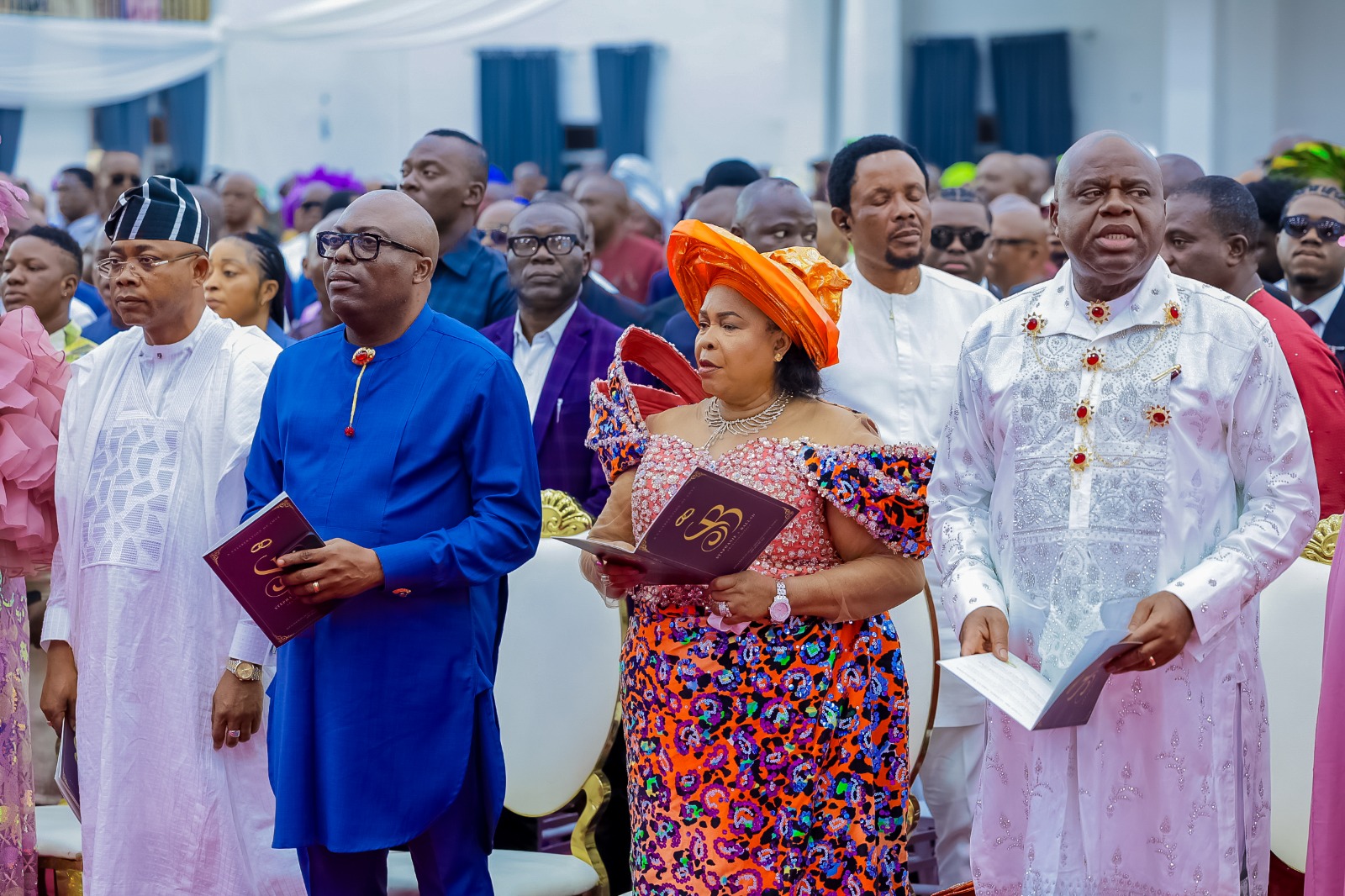
Rivers State, Sir Siminalayi Fubara, has assured members of the National Youth Service Corps (NYSC) of his administration’s commitment to supporting and strengthening the scheme in the State.
Fubara gave the assurance last Friday at the NYSC permanent orientation camp, Nonwa-Gbam, Tai Local Government Area in the State, during the swearing-in ceremony of 2026 Batch B Stream II orientation course.
Represented by the Permanent Secretary, Cabinet Bureau, Office of the Secretary to the State Government, Dr. Promise Oguzie, the governor said the State Government would remain intentional in providing the necessary support to improve the NYSC scheme and enhance the experiences of corps members deployed to the state.
He charged the corps members to be role models and quality nation-builders in their service to the good people of Rivers State in particular, and Nigeria at large.
“I charge you to be exemplary, dedicated and committed in all you do. Take full advantage of all the camp programmes and activities to enrich yourselves”, he said.
In his welcome address, the State Coordinator of NYSC in Rivers State, Mr. Moses Oleghe, urged corps members to see their deployment to Rivers State as a “veritable opportunity to make meaningful contribution to the growth of the State in particular and Nigeria at large.”
He further charged them to serve with all sense of “integrity, discipline, and the fear of God, especially when they will be engaged as INEC ad-hoc staff that will conduct the 2027 general elections.”
A total of 3,584 corps members composed of 1,421 males and 2,163 females were sworn in by the Chief Judge of Rivers State, who was represented by Justice Godspower Aguma.

Governor of Rivers State, Sir Siminalayi Fubara, says Nigeria needs God-fearing leaders for the nation to move in the right direction and make meaningful progress.
The Governor stated this yesterday when he received in audience, the World President of the Seventh Day Adventist Church, Pastor Erton Kohler; his wife, Andriene Marques Kohler; daughter Mariana Marques Kohler and a retinue of ministers of the church at Government House, Port Harcourt.
Fubara who hailed the Seventh Day Adventist Church for its contributions to education and the grooming of future leaders in Nigeria, expressed delight that the Church had over the years, been investing in education at various levels and currently runs two universities in the country.
He commended the church for not only using its institutions to spread the gospel of Christianity but to groom future leaders for the country.
According to him, religion should not be just about defending one’s faith, but also making meaningful impact on the lives of the people.
He said that by floating these educational institutions, the church has demonstrated capacity to support Nigeria in the task of producing not only educated people but a breed of God-fearing leaders.
“Our country is where it is today because we lack the fear of God. If you have the fear of God, there should be a limit to what you can do because you understand the supremacy of God. But when God is not in your equation, you’ll go beyond the line and that is what has brought us to where we are today.
“So, I feel very happy that you are contributing to the development of our future leaders in this country. We need the right people being in the right place; prepared properly with good minds; that is what we need, not just in Nigeria but round the whole world.,” he said.
Governor Fubara further observed that the absence of God-fearing people in high places to take the right decisions that could impact positively on the society, has also given rise to other problems such as social inequality, poverty, corruption and criminality. According to him, Nigeria needs a system where the average parent could afford quality education for their children and a guarantee that upon graduation, the average child will have the capacity to compete favourably with anybody, anywhere in the world.
“If we have a situation where the little money that you’re being paid as wage can also afford you quality healthcare and after working at least for 15-20 years, you have a roof over your head, tell me why you should be involved in any kind of crime? At that point, you’ll feel secured and this attitude of insecurity about the future that leads to all the social vices we have today won’t be there,” he said.
Governor Fubara expressed appreciation to the delegation for the visit and for their prayers for Rivers State, assuring them of his continued support for their programmes in the state.
Leader of the delegation and World President of the Seventh Day Adventist Church, Pastor Erton Kohler said he was in Nigeria for a special conference of the church during which thousands of the church’s ministers will be undergoing an empowerment programme to further equip them for the task of herding their flocks and serving the society.
He expressed gratitude to the Governor for the warm reception accorded his entourage, saying the memory of the visit will linger in his mind for a lifetime.
Kohler disclosed that the Church has over twenty -four million (24,000,000) members and more than 182,000 places of worship, spread across 212 countries of the world.

The Rivers State House of Assembly has approved the 2026–2028 Medium Term Expenditure Framework (MTEF) submitted by Governor Siminalayi Fubara.
This reaffirms the lawmakers’ commitment to enacting laws and taking legislative actions geared towards the overall development of the State.
The Assembly gave the approval during its Second Legislative Sitting of the Fourth Session held last Friday.
Speaking on the MTEF document during plenary, the House Speaker, Rt. Hon. Martin Amaewhule, noted that by the provision of Section 10(1)(b) of the Rivers State Fiscal Responsibility Law No. 8 of 2010, the MTEF ought to have been laid before the House in September 2025.
Amaewhule explained that traditionally, the document is expected to be presented four months before the commencement of the next financial year and immediately after the expiration of every three-year fiscal cycle.
He, however, stated that in the interest of the State and its people, the House considered it necessary to deliberate on the document, describing it as a precursor to the 2026 Budget Estimates.
The Speaker expressed concern that the year had already progressed significantly before the presentation of the framework.
During deliberations on the document, members examined the assumptions and projections contained in the MTEF and observed that strict adherence to the outlined fiscal parameters would ultimately serve the interest of Rivers people.
The lawmakers maintained that effective implementation of the framework would promote prudent financial management and enhance developmental planning across the State.
Following the debate and positive consideration by members, the Speaker put the question to the House and members voted overwhelmingly in support of the approval of the MTEF.
Meanwhile, during the same sitting last Friday, the House also received a petition from the Chairman of Obio/Akpor Local Government Council, Dr. Gift Worlu.
The petition was presented by the member representing Obio/Akpor Constituency II, Hon. Emilia Amadi.
According to the petition, concerns were raised over an imminent security breach, threats to lives, destruction of property and alleged forceful takeover of property by some lawless persons within parts of the Local Government Area.
Presenting the petition before the House, Hon. Amadi appealed to the lawmakers to revisit the matter and take necessary steps aimed at safeguarding lives and property in the affected communities.
The House is expected to further deliberate on the petition and consider measures to address the concerns raised in order to sustain peace and security in the area.
King Onunwor
-

 News3 days ago
RSG Targets Nine Million Residents in Mosquito Net Distribution Campaign
-

 Oil & Energy3 days ago
Aiyedatiwa Signs New Electricity Bill
-

 Maritime3 days ago
Marine Minister Commends President Tinubu On NPERA Bill Assent
-

 Oil & Energy3 days ago
NLNG Commissions Research And Innovation Centre In RSU
-

 News3 days ago
KenPoly Holds Eight Convocations, August 29
-

 News3 days ago
RSG Begins Another Phase of Projects Commissioning Today
-

 News3 days ago
RMAFC Completes Revenue Sharing Review, Proposes New Pay
-

 Maritime3 days ago
NAGAFF Petitions IGP Over Alleged Maritime Police Harassment