
Nation
Don Seeks Funding of Language Centres

A professor of English linguistics at the Rivers State University (RSU) Nkpolu Oroworukwu Port Harcourt, Prof. Isaac Enyi Ngulube, has advocated for better and improved funding for language centres in Nigeria, such as NINLAN Aba and Nigeria French Language Village, Badagry, for optimum value and effective local languages development.
He also called for funded research on the development of orthographies and language documents across the country to rescue local languages from extinction, as well as having a well-planned and implemented mother tongue education in all institutions in the country, from primary to tertiary.
Prof. Ngulube made with these assertions while presenting his inaugural lecture at the university’s 121st inaugural lecture with the topic “The Career of Rough Beats: Language, Literature and the Development of our Common Humanity” held in Port Harcourt, Wednesday.
The erudite scholar, in the lecture, stressed that the study of English language, linguistics, and literature is very broad, large, and difficult, adding that he overcame the rough roads through resilience and determination.
He described language as “a purely human and non-instinctive means of communicating ideas and emotions,” noting that “the word is a fundamental need in language; you cannot study language without the use of language.”
He urged parents to be cautious with their utterances, warning that “what they refer to their children as is what they will automatically end up becoming.”
He recommended a branded English language for every profession or course of study, stressing that embedding oral literature in the teaching of students from primary to tertiary level will enable them to know their traditions and roots of origin.
“Tell them the folk stories and moonlight tales; you are sending them back to their people. You must be a human being first before becoming a medical doctor, engineer, or anything else,” Ngulube said.
He also called for better and improved production of quality language and literature teachers, provision of modern teaching/instructional materials, improved welfare packages for teachers, and provision of better infrastructure at both primary and secondary school levels.
He used the opportunity to appreciate the Vice Chancellor for the approval of the Department of English Language and Literature, adding that it had been his long-held dream for the university.
In his speech, the Vice Chancellor, Prof. Isaac Zeb-Obipi, while highlighting the lecture, opined that the lecturer x-rayed the lecturer’s journey into the study of English language, linguistics, and literature, describing the field as broad, large, and difficult, but with determination and focus, he was able to defeat the beasts he encountered on his way.
Zeb-Obipi agreed with the lecturer’s recommendations on ways to improve indigenous languages in the country and directed that modalities be worked out for the university to have the Department of English Language and Literature, among others.
He highlighted RSU’s recent victory in the Bilingual Community Project organized by the French Embassy, describing it as proof of the university’s rising excellence in language studies.


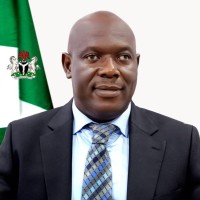
The Hydrocarbon Pollution Remediation Project (HYPREP) has commemorated the 15th anniversary of the release of the United Nations Environment Programme (UNEP) Environmental Assessment Report on Ogoniland, reaffirming its commitment to restoring the environment and improving the livelihoods of affected communities.
In a statement signed by the Project Coordinator, Prof Nenibarini Zabbey, to commemorate the anniversary, HYPREP described the anniversary as a significant milestone in Nigeria’s environmental restoration efforts, noting that the project has made remarkable progress in implementing the recommendations of the landmark UNEP report released on August 4, 2011.
The UNEP report had revealed extensive oil pollution across Ogoniland, severe environmental degradation, and serious public health risks resulting from decades of petroleum operations. It also recommended an initial $1 billion fund to commence the cleanup of the affected communities.
According to HYPREP, the Federal Government formally launched the Ogoni clean-up in 2016, while the Project Coordination Office was established in 2017 to drive the implementation of UNEP’s recommendations.
Zabbey said the current administration has continued to prioritise the project under the Renewed Hope Agenda.
Providing an update on the cleanup, the Project Coordinator disclosed that 30 of the 65 contaminated sites identified by UNEP have been fully remediated, while work is ongoing at several medium- and high-risk locations. It also stated that more than 1.5 million mangrove seedlings have been planted as part of what it described as the world’s largest restoration of oil-degraded mangroves, with over 1,000 hectares of shoreline already rehabilitated.
Zabbey further revealed that 49 Ogoni communities have been connected to potable water schemes through multiple water projects and booster stations aimed at providing safe drinking water across the region.
In the health sector, he said the 100-bed Ogoni Specialist Hospital in Kpite and the 43-bed Cottage Hospital in Buan are nearing completion, adding that several existing health facilities have been upgraded with modern medical equipment, while five ambulances have been donated to improve emergency healthcare services. The Project Coordinator also disclosed that a three-year human health biomonitoring study is being conducted in collaboration with the World Health Organization’s International Agency for Research on Cancer (IARC).
On economic empowerment, Zabbey stated that the Project has created more than 8,000 direct jobs and trained thousands of Ogoni youths and women in various vocational and technical skills, including software development, cybersecurity, aviation, commercial diving, seafaring, mechatronics, and creative arts. The project also reported awarding scholarships to more than 1,000 students, providing grants to small businesses, and supporting persons living with special needs through skills acquisition programmes.
The statement further highlighted ongoing legacy projects, including the Ogoni Power Project and the Centre of Excellence for Environmental Restoration, which it said is about 96 per cent complete. HYPREP also welcomed the recent designation of the Ogoni Wetland as a Ramsar Site of International Importance and pledged to continue promoting biodiversity conservation and sustainable management of the ecosystem.
Marking the anniversary, Zabbey said the progress achieved over the past 15 years demonstrates the collective commitment of government, development partners, stakeholders, and local communities to restoring Ogoniland. He called for renewed collaboration to sustain the cleanup effort, promote environmental sustainability, and support the long-term development of the region. 3
-

 News2 days ago
RSG Targets Nine Million Residents in Mosquito Net Distribution Campaign
-

 Oil & Energy2 days ago
Aiyedatiwa Signs New Electricity Bill
-

 Maritime2 days ago
Marine Minister Commends President Tinubu On NPERA Bill Assent
-

 Oil & Energy2 days ago
NLNG Commissions Research And Innovation Centre In RSU
-

 News2 days ago
KenPoly Holds Eight Convocations, August 29
-

 News2 days ago
RSG Begins Another Phase of Projects Commissioning Today
-

 News2 days ago
RMAFC Completes Revenue Sharing Review, Proposes New Pay
-

 Maritime2 days ago
NAGAFF Petitions IGP Over Alleged Maritime Police Harassment