
Nation
Tinubu Committed To Environmental Sustainability, Benefits To Ogoni–Minister


As the Ogoni cleanup programme being implemented by the Hydrocarbon Pollution Remediation Project(HYPREP) continues to record significant milestones across thematic areas, the Federal Government says such gestures further demonstrate President Bola Tinubu’s commitment under the Renewed Hope Agenda to environmental sustainability and ensuring the Project brings benefits to Ogoni people.
The Minister of Environment, Malam Balarabe Abbas Lawal, who made this assertion during the commissioning of the Bane and Gwara water schemes in Khana Local Government Area of Rivers State, in line with HYPREP’s mandate to provide potable water to Ogoniland, said the provision of potable water is a critical step towards improving public health, reducing waterborne diseases and enhancing the overall quality of life.
The latest commissioning brings the water stations to 16, providing access to potable water to 45 Ogoni communities , a development the Minister explains as part of President Tinubu’s commitment to peace ,environmental justice and socio-economic empowerment in Ogoniland, a beacon of hope for communities long affected by environmental degradation.
Lawal noted that the latest commissioning is restoring hope and dignity to the communities long deprived of this essential resource .
”The provision of potable water is a critical step towards improving public health, reducing waterborne diseases and enhancing the overall quality of life. It also signifies a renewed commitment to ensuring that the people of Ogoniland reap the full benefits of environmental remediation efforts.We
will continue to ensure that communities in Ogoniland have access to clean, safe and sustainable drinking water. With this initiative, we are not just commissioning infrastructure but restoring hope and dignity to the communities long deprived of this essential resource”, he said.
While commending the Project Coordinator of HYPREP, Prof Nenibarini Zabbey, development partners, stakeholders and traditional rulers, among others for their relentless commitment towards the actualisation of these projects, he urged communities to protect and take ownership of the projects, emphasising that their longevity and effectiveness depend on their collective efforts of maintaining and protecting them for posterity.
In his speech at the event, the Project Coordinator of HYPREP, Prof Nenibarini Zabbey maintained that the Project remains resolute in its resolve to ensure that it completes and delivers all projects initiated within the time frame for the use and benefit of Ogoni people in line with the directives of the Governing Council and under the leadership of the Minister of Environment, Malam Balarabe Abbas Lawal.
To achieve this, Zabbey explained that “We
continue to work closely with community leaders, youth and women, contractors and other stakeholders to ensure solutions are identified and implementation continues smoothly.
”We remain guided by the principle of partnership, dialogue, transparency and accountability, knowing that sustainable progress is best achieved through collaboration and mutual understanding. That is the hallmark of HYPREP,” he said.
He appealed to the people to continue to reinforce peace and understanding, using dialogue as a vital tool for resolving disputes, especially around project sites and within communities, noting that the concurrent implementation of over 100 projects across Ogoniland reflects the seriousness and dedication of HYPREP, a momentum that must be sustained through mutual trust and collaboration.
For the Project Coordinator, the event was an ideal opportunity to provide a project status update to Ogoni people, as he excitedly announced the milestone achievements recorded so far to include environmental remediation-94 percent completion in Phase 1 of mangrove restoration; shoreline at 67.1percent; Phase 2 land remediation at 36.55 percent; potable water-14 completed water facilities inaugurated, supplying potable water to 40 Ogoni communities, while the commissioning of the Bane and Gwara water facilities last Saturday increased the number of communities with access to clean and safe water to 45.
Other milestones are the Centre of Excellence for Environmental Restoration (CEER) at 92 percent complete and the processes of operationalising the Centre has begun with the just concluded colloquium, while the Ogoni Power Project is progressing steadily with wayleave compensation and construction works at Bodo and Wiiyaakara substations ongoing. The Ogoni Specialist Hospital is at 76.8 percent with 98.7 percent achieved in the Buan Cottage Hospital. The Ogoni public study being conducted by the World Health Organisation’s (WHO) International Agency for Research on Cancer (IARC); over 7,000 women and youths have benefited from various employment opportunities, while over 5,000 have been trained in multiple skills and provided start-up skits, among other programmes.
Zabbey further hinted of the commencement of some demand-driven skills areas this quarter, which include cybersecurity, full-stack development, mud logging, software development, GIS and commercial diving.
In their separate goodwill messages, the member representing Khana/Gokana Federal Constituency in the House of Representatives, Rt Hon Dumnamene Deekor; Chairman,Great Green Wall, Senator Magnus Ngei Abe; Chairman, Board of Trustees, Ogoni Trust Fund Incorporated, Hon Emmanuel Deeyah; Permanent Secretary, Rivers State Ministry of Water Resources and Rural Development, Mr Nwizug Gordon; representative of the Managing Director/Chief Executive Officer, Renaissance Africa Energy Company Limited and General Manager, Relations and Sustainable Development, Mr Igo Weli; former Secretary to Rivers State Government, Chief Kenneth Kobani; and former Rivers State Commissioner for Environment, Prof Roseline Konya; all commended the Minister of Environment and HYPREP for their commitment to the Ogoni cleanup programme.
Earlier, the Minister and his entourage had paid a courtesy call on Mene Bua Kenwigbara, King D.Y Barile, at his palace, where the former was conferred a chieftaincy title of Mene Anua Le Maa 1 of Ken-Khana Kingdom; and the Project Coordinator of HYPREP as Mene doo Letam 1 of Ken-Khana Kingdom.
Also decorated were the Chairman of Ogoni Trust Fund Incorporated, Hon Emmanuel Deeyah; and the Permanent Secretary, Federal Ministry of Environment, Mahmud Kambari.
Highpoints of the event were the formal commissioning of the Bane and Gwara water facilities by the Minister and the Managing Director/ Chief Executive Officer, Renaissance Africa Energy Company Limited, Engr Tony Attach,represented by Mr Igo Weli; the symbolic issuance of education support Items;and the visit to the Ken Saro-Wiwa Memorial Park for symbolic tree planting by the Minister; the Project Coordinator; BoT Chairman; Senator Abe; Igo Weli; Director General, NEASRA, Prof Innocent Barikor; and Zina Wiwa, the daughter of the legendary environmentalist; and the visit to the CEER.
In two years, the Minister of Environment, has visited Ogoniland five times to commission 16 water stations, supplying potable water to 45 Ogoni communities and ensuring that other projects get equal attention, a clear demonstration of his unflinching commitment to the accelerated implementation of the Ogoni cleanup programme in line with Priority 3, Deliverable 3 of President Bola Ahmed Tinubu’s Renewed Hope Agenda and driven under the visionary and passionate leadership of Prof Nenibarini Zabbey as Project Coordinator.


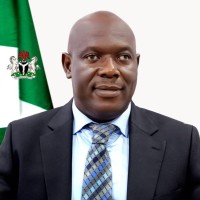
The Hydrocarbon Pollution Remediation Project (HYPREP) has commemorated the 15th anniversary of the release of the United Nations Environment Programme (UNEP) Environmental Assessment Report on Ogoniland, reaffirming its commitment to restoring the environment and improving the livelihoods of affected communities.
In a statement signed by the Project Coordinator, Prof Nenibarini Zabbey, to commemorate the anniversary, HYPREP described the anniversary as a significant milestone in Nigeria’s environmental restoration efforts, noting that the project has made remarkable progress in implementing the recommendations of the landmark UNEP report released on August 4, 2011.
The UNEP report had revealed extensive oil pollution across Ogoniland, severe environmental degradation, and serious public health risks resulting from decades of petroleum operations. It also recommended an initial $1 billion fund to commence the cleanup of the affected communities.
According to HYPREP, the Federal Government formally launched the Ogoni clean-up in 2016, while the Project Coordination Office was established in 2017 to drive the implementation of UNEP’s recommendations.
Zabbey said the current administration has continued to prioritise the project under the Renewed Hope Agenda.
Providing an update on the cleanup, the Project Coordinator disclosed that 30 of the 65 contaminated sites identified by UNEP have been fully remediated, while work is ongoing at several medium- and high-risk locations. It also stated that more than 1.5 million mangrove seedlings have been planted as part of what it described as the world’s largest restoration of oil-degraded mangroves, with over 1,000 hectares of shoreline already rehabilitated.
Zabbey further revealed that 49 Ogoni communities have been connected to potable water schemes through multiple water projects and booster stations aimed at providing safe drinking water across the region.
In the health sector, he said the 100-bed Ogoni Specialist Hospital in Kpite and the 43-bed Cottage Hospital in Buan are nearing completion, adding that several existing health facilities have been upgraded with modern medical equipment, while five ambulances have been donated to improve emergency healthcare services. The Project Coordinator also disclosed that a three-year human health biomonitoring study is being conducted in collaboration with the World Health Organization’s International Agency for Research on Cancer (IARC).
On economic empowerment, Zabbey stated that the Project has created more than 8,000 direct jobs and trained thousands of Ogoni youths and women in various vocational and technical skills, including software development, cybersecurity, aviation, commercial diving, seafaring, mechatronics, and creative arts. The project also reported awarding scholarships to more than 1,000 students, providing grants to small businesses, and supporting persons living with special needs through skills acquisition programmes.
The statement further highlighted ongoing legacy projects, including the Ogoni Power Project and the Centre of Excellence for Environmental Restoration, which it said is about 96 per cent complete. HYPREP also welcomed the recent designation of the Ogoni Wetland as a Ramsar Site of International Importance and pledged to continue promoting biodiversity conservation and sustainable management of the ecosystem.
Marking the anniversary, Zabbey said the progress achieved over the past 15 years demonstrates the collective commitment of government, development partners, stakeholders, and local communities to restoring Ogoniland. He called for renewed collaboration to sustain the cleanup effort, promote environmental sustainability, and support the long-term development of the region. 3
-

 News2 days ago
RSG Targets Nine Million Residents in Mosquito Net Distribution Campaign
-

 Oil & Energy1 day ago
Aiyedatiwa Signs New Electricity Bill
-

 Oil & Energy1 day ago
NLNG Commissions Research And Innovation Centre In RSU
-

 Maritime1 day ago
Marine Minister Commends President Tinubu On NPERA Bill Assent
-

 News2 days ago
KenPoly Holds Eight Convocations, August 29
-

 News2 days ago
RSG Begins Another Phase of Projects Commissioning Today
-

 News2 days ago
RMAFC Completes Revenue Sharing Review, Proposes New Pay
-

 Maritime1 day ago
NAGAFF Petitions IGP Over Alleged Maritime Police Harassment