
Oil & Energy
Need For Sustainable Power Supply

The problem of poor power supply in Nigeria has been terribly lamentable and the situation seems to have defied all efforts by previous governments since in the 80s. one is tempted to now ask what the present administration under President Goodluck Jonathan can do to salvage the country from the ugly trend.
From on-set, the Federal Governemnt has been matching words with action on how better to improve the power sector by ensuring that the mega watt rose to 150 from less than 50, even within the short period of this present dispensation. This was after the Chief executive officer of Olornrisogo Power Station was redeployed to the headquarters for efficiency.
The redeployment followed the warning by the Minister of Power, Professor Barth Nnaji that all managers of the different sections of the utility company –Power Holding Company of Nigeria (PHCN), from generation, transmission to distribution should either sit up or be prepared to be booted out. Nnaji first had a meeting with the Chief Executive officers of the different sections of the utility’s value chain when he stressed the need for them to show commitment to duty to give Nigerians the long expected power supply.
Although he agreed that the sector had suffered grave or gross neglect in a couple of decades ago, particularly under the military administration, he was optimistic that if the capacity Nigeria currently has fully utilized, there would be considerable improvement in power delivery. The question now is, who is the cause of Nigeria’s predicament in the power sector. Is it the government or the authorities of the utility company?
With the efforts so far made by the government, one would think that the utility firm, PHCN is to be held responsible for the incessant epileptic power supply in the country. The helmsmen of the company just as the former Nigeria Electricity Power Authority (NEPA), feel that their duties and at coming to defend their budgets and collecting electric bills and share same among themselves and sit back and seek frivolous reasons to justify spending such funds without practical evidence on ground.
Unlike in the past when all the funds that come to the different sections of PHCN pass through the headquarters, the CEOs of the different units currently go to government to defend their annual budgets and spend the money according to their discretions thereby and up at not utilizing the money to provide constant electricity for the people. Some utilize the money in providing poor service leaving undone what the money is meant for.
However, the Chief executive officers saw that it was no business as usual when the minister clamped down on four of their colleagues and that the ministry didn’t come to the combat in child’s gloves. Although, ever since that was done, the situation changed in terms of power supply but a lot needs to be done. The minister needs to tour all the power facilities across the country including the South-South and Port Harcourt in particular to see for himself or have a practical feel of what the people of the area are suffering. All is not well with the PHCN formations across the country and for the Niger Delta region that produces the bulk of the nation’s wealth, special attention should be paid to give the a sense of belonging and to compensate them for the long neglect.
The minister should extend his “Capacity Recovery” to Rivers State because from the look of things lack of commitment and human errors account for considerable power failure in the state. There is need to ensure sustainable electricity supply in Rivers State considering its population and economic contribution coupled with the fact that sustainable and successful business is bi-product of constant electricity supply.
An auto manufacturing company could not be built in Nnewi, Anambra State because of poor power supply in the country. According to the Minister of Power, his efforts as a key player in the do were fruitless as the planned power supply.
In a paper he presented during the 20th anniversary of Anambra State Nnaji said “it was the fledging auto industry in Nnewi which inspired me in the late 1990s to take steps to establish in Nigeria a state-of-the-art company to manufacture auto parts including engines, when I was the ALCOA foundation Professor of Manufacturing Engineering at the University of Pitts burgh”.
The only way to attract investment to Nigeria is for the government to ensure steady and uninterrupted electricity at all levels. The country is blessed with all kinds of natural resources which can attract foreign investors but because of the non-availability of uninterrupted electricity, investors are scared.
Most investors after carrying out feasibility study of the kind of investment they intend to bring into the country will end up being deterred because of the huge, cost of acquiring and fueling a generating plant that would be able to power their investment. Reports have shown that everyday industries and other manufacturing concerns are collspsing and unemployment rate rising as investors are not willing to come and do business in the country because of lack of sustainable power supply.
Sadly, an average Nigerian home spends more than the N18,000 minimum wage which is yet to be paid, a month to power its generator to have power. Much of the economic undevelopment in the country today is because of lack of power, at trend all patriotic Nigerians must not allow to continue. This power has risen to a point that the President, Dr. Goodluck Jonathan and all the state governors should make steady power supply their one-point agenda and do everything humanly possible to ensure that this is achieved before the end of 2012.
Obviously, the government at federal and state levels should partner with other stakeholders or establishments in ensuring that the power problem becomes a thing of the past because until that is done, no matter how much we spend on jingles and advertisements in the local and foreign media to woo investors to come and invest here, it will continue to be a mirage.
Ghana and other industrialized countries did not advertise in international media before virtually multinational and local companies were attracted to invest there. The issue of power supply is however, over-flogged because it is the main key to industrialization and self-reliance in any country and any country without steady electricity remains impoverished with its people.
It has become necessary to suggest that Nigerian governments should send delegations to China and other countries and engage energy companies that will give the country steady power supply so that we can become economically viable, as that is the only way to generate to generate employment for our teeming youths.
In pursuance of its regulatory functions, the Nigerian Electricity Regulatory Commission (NERC) in collaboration with the Standards Organization of Nigeria (SON) and the National Environmental Standards and Regulations Enforcement Agency (NESREA) has approved standards and guidelines for the issuance of clearance certificates for importers of generating sets and broken-down parts. This is to ensure that all generating sets to be imported into the country meet all the approved standards and quality and to stop the indiscriminate importation of generating sets into the country.
There has been little or no difference in the state of power supply in the country since the power reform was initiated by former president Olusegun Obasanjo’s government in 2005. This is why the Nigerian Electricity Regulatory Commission (NERC) has embarked on a process of consulting with stakeholders over the need or otherwise to increase electricity tarriff in the country. Chief executive officer of NERC, Dr Sam Amadi, at a workshop on major Review of the Multi-year Tarriff Order (MYTO) urged the shareholders to be objective over the review process, noting that “public power supply in the country is still a standby in most homes and offices, as it was in 2005 when the reform in the power sector began.”
If we must achieve the goal of giving every citizen access to stable, reliable and fairly priced electric power, a reliable and sustainable framework must be put in place to ensure the robust interaction of market forces with social policy to attain equilibrium. This we can do by establishing a pricing regime that will sustain massive private sector investment and guarantee a positive return on investment, while also being fair to underprivileged consumers. The power industry is characterized by lack of a transparent price determination process and abysmally low tariffs, all based on the political whims and considerations of the PHCN, as opposed to the economic principle of full cost recovery.
Shedie Okpara



-

 News2 days ago
RSG Targets Nine Million Residents in Mosquito Net Distribution Campaign
-

 Oil & Energy1 day ago
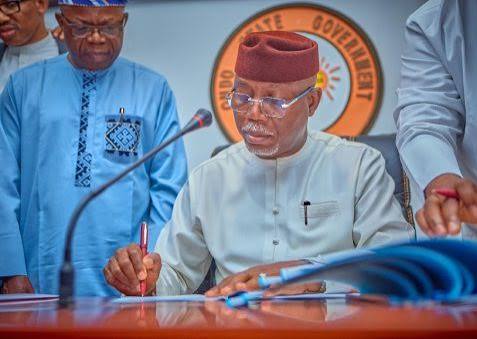
Aiyedatiwa Signs New Electricity Bill
-

 Maritime1 day ago
Marine Minister Commends President Tinubu On NPERA Bill Assent
-

 Oil & Energy1 day ago
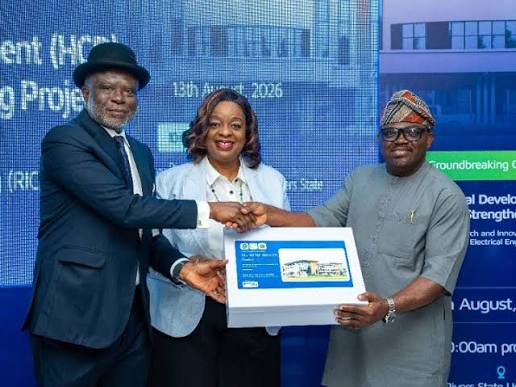
NLNG Commissions Research And Innovation Centre In RSU
-

 News2 days ago
KenPoly Holds Eight Convocations, August 29
-

 News2 days ago
RMAFC Completes Revenue Sharing Review, Proposes New Pay
-

 News2 days ago
RSG Begins Another Phase of Projects Commissioning Today
-

 Maritime1 day ago
NAGAFF Petitions IGP Over Alleged Maritime Police Harassment