
Oil & Energy
Resource Wars Are Here and Oil Is the First Casualty


In just over a year, the world saw several instances of a choked supply of commodities indispensable for today’s economies and military capabilities.
From China’s restrictions on rare earths and critical minerals supply to the de facto closure of the Strait of Hormuz, policymakers and analysts began to realize that the control of oil, critical minerals, rare earths, and magnets is as important as building and maintaining stockpiles of advanced weapons. It also became clear that without these resources, defense and military capabilities could be weakened. The actual arms race goes hand in hand with the new battle for the resources that underpin economic, manufacturing, and advanced military development.
“Great-power competition has returned to basics: who controls the physical resources that modern economies and militaries run on,” Alice Gower, a partner at London-based political-risk advisory firm Azure Strategy, told the Wall Street Journal.
“Energy, critical minerals and industrial capacity are leverage, not just economic assets,” Gower added.
The war in the Middle East and the blockage at the Strait of Hormuz laid bare the reality of choked energy supply. The world’s most vital oil and LNG chokepoint, through which 20% of daily global trade flowed before the Iran war, has been essentially closed for most tanker traffic for more than three weeks.
The massive supply shock, the worst disruption in the oil market in history, showed that the world is dependent on energy resources, and that geography and actual physical supply matter. With so much oil and gas stranded in the Middle East, oil prices spiked to above $100 per barrel, natural gas prices in Europe doubled, and Asian spot LNG prices hit multi-year highs.
The precarious situation in the Middle East is reverberating across Asia, the region most dependent on oil and LNG supply from the Persian Gulf. Asian refiners pay sky-high premiums for non-Middle Eastern crude, many are considering cutting or have already cut processing rates, and countries have started to enact fuel-preserving measures, from four-day work weeks to bans on fuel exports.
In Europe, the gas refilling season will be the toughest yet, as Asia is outbidding Europe for spot LNG supply after Qatar’s LNG is effectively sidelined and full capacity may not return for up to five years following Iranian missile attacks last week.
Even the ‘energy independent’ United States, the world’s top oil producer, is not independent when it comes to global supply shocks of such magnitude.
The national average price of gasoline is approaching $4 per gallon nationwide, more than $1 a gallon compared to a month ago, before the start of the war.
Oil is a global resource, traded on a global market, and prices reflect fundamentals, although they have been driven by hectic trading activity on geopolitics in recent weeks. But the fundamentals show that there is no resource available to plug the gap that has opened in Middle Eastern supply. Producers are slashing output due to a lack of storage capacity, which further delays a rapid recovery in supply when this mess ends.
All this goes to show that whoever controls the Strait of Hormuz has enormous leverage on inflicting global economic pain.
While the world is focused on the Strait of Hormuz, the race for rare earths and critical minerals continues, with the U.S. and Western countries scrambling to dent China’s dominance.
Since China restricted exports of rare earth elements early in 2025, Western countries have raced to create mine-to-magnet supply chains to reduce dependence on Chinese supply in the key military and automotive industries.
China holds a 59% share of the mining of rare earths, 91% in refining, and a whopping 94% in magnet manufacturing, the International Energy Agency (IEA) estimates.
The U.S. has responded by taking stakes in minerals mining companies, the launch of a U.S. Strategic Critical Minerals Reserve, known as Project Vault, and is leading efforts to break the Chinese stronghold on the pricing of these minerals critical for the defense and auto industries and national security.
Chinese dominance could be eroded, but it would take years.
Still, rising neodymium-praseodymium (NdPr) supply from countries like the U.S. and Australia is set to reduce China’s market share to 69% by 2030 from 90% in 2024, Bloomberg Intelligence (BI) said in new research this month.
“We’re seeing a surge in rare-earth investment as modern technologies demand more critical materials,” said Jack Baxter, Global Metals & Mining Analyst at BI and co-author of the report.
“That said, we anticipate a significant shortfall in supply due to trade uncertainties, with lead times as long as 10 years to get new material out of the ground,” Baxter added.
“This will give pricing power to the few producers that currently are able to supply critical materials outside of China, fracturing the globalized market.”
Amid fractured markets and high geopolitical uncertainty, one thing is certain – the next arms race, alongside the actual arms race, will be for control of key resources such as oil and critical minerals.
By Tsvetana Paraskova


Continue Reading
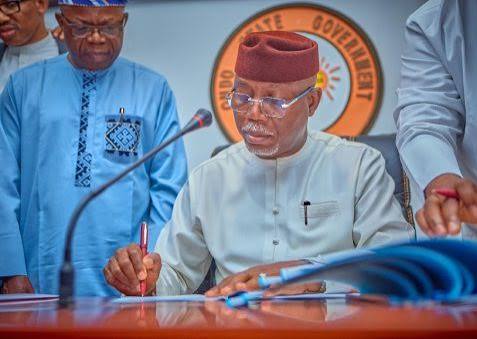
Ondo State Governor, Lucky Aiyedatiwa has signed the State Electric Power Sector (Amendment) Law, 2026, aimed at strengthening regulation and attracting investment into electricity generation, transmission and distribution across the state.
The new legislation, passed by the State House of Assembly, amends Ondo State Electric Power Sector Law, 2020, and aligns the state’s electricity framework with recent constitutional and statutory developments, particularly the Electricity Act, 2023.
A statement issued by the Chief Press Secretary to the Governor, Prince Ebenezer Adeniyan, said a major provision of the law was the establishment of State Electricity Regulatory Commission (SERC), an independent body responsible for regulating electricity activities and standards in Ondo State.
It added that the commission would oversee tariffs, open access, franchises, third-party investments, mini-grids and renewable energy development, while also issuing licences and permits for electricity generation, transmission and distribution facilities.
“The law also provides for the establishment of the State Independent System Operator (SISO) and State Market Operator (SMO) to facilitate the effective operation and development of the state’s electricity market.
“Under the amended law, compulsory metering is required for both grid-connected and off-grid electricity consumers. Electricity sellers are mandated to provide appropriate meters, while consumers will maintain direct service and payment relationships with their respective electricity providers.
“The legislation also provides legal protection for electricity infrastructure financed by communities, associations and private individuals. Transformers, distribution lines and other facilities connected to the public distribution network are protected against arbitrary interference,” the statement said.
It stated further that the law creates the offence of “Electricity Infrastructure Expansion Sabotage” for anyone who deliberately prevents certified electricity infrastructure from being connected to the grid.
According to the statement, first conviction attracts a N2 million fine, as well as an additional N25,000 for every day the refusal continues after written notice from the regulatory authority.
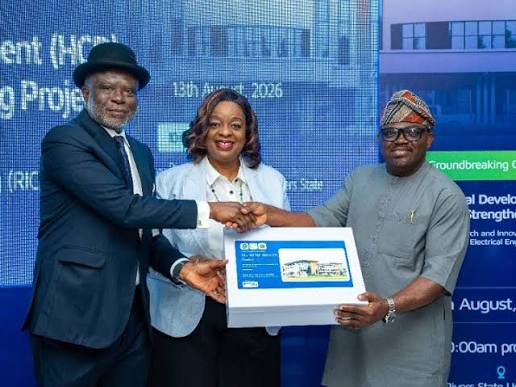
The Nigeria Liquified Natural Gas (NLNG) has launched the Research and Innovation Centre for Computer and Electrical Engineering (RICCEE), in the Rivers State University, a major research and development initiative jointly promoted by Nigeria LNG Limited (NLNG) and the Nigerian Content Development and Monitoring Board (NCDMB).
The project, valued at US$6.2 million, is being implemented under NLNG’s Human Capacity Development (HCD) Plan and forms part of the NCDMB Human Capital Development Institutional Strengthening Programme.
The centre is designed to strengthen the university’s capacity for advanced, industry-relevant research, specialised training, technology development and practical problem-solving in computer, electrical and electronics engineering.
The initiative is expected to promote industry-focused research and develop innovative solutions to operational challenges confronting Nigeria’s energy and industrial sectors.
The facility would be developed on approximately 9,336 square metres of land within Rivers State University and will comprise a three-storey building of more than 9,000 square metres, containing 18 specialised laboratories.
The laboratories would include facilities for Electronics and Signal Processing, Robotics and Embedded Systems, Software Engineering and Digital Forensics and Cybersecurity as well as provide offices, storage areas and technical administration spaces to support research, teaching and equipment management.
The building would incorporate sustainability features, including solar energy provisions, energy-efficient lighting and environmentally responsible systems designed to reduce operating costs and support reliable research activities.
A US$1.2 million Professorial Chair would also be established as part of the initiative to support advanced research, academic leadership, and industry collaboration.
Speaking at the groundbreaking ceremony, last Thursday, the Managing Director and Chief Executive Officer of NLNG, Adeleye Falade, who was represented by Dr Sophia Horsfall, General Manager, External Relations and Sustainable Development of NLNG, described the new engineering facility as more than infrastructure, noting that it would serve as a hub for equipping students, lecturers and researchers with the tools required for practical learning, applied research and innovation in computer, electrical and electronics engineering.
Represented by the General Manager, External Relations and Sustainable Development, NLNG, Sophia Horsfall, Falade stated that the centre would strengthen collaboration between academia and industry and ensure that research outcomes from Rivers State University directly address operational and societal challenges facing Nigeria.
He explained that the project is aimed at improving the capacity of institutions of learning through upgraded infrastructure, modern research facilities, technical equipment and industry-aligned training programmes that extend human capital development beyond the classroom.
According to him, the centre would help bridge the gap between academic knowledge and practical industry requirements by enabling researchers and professionals to collaborate on innovations with commercial and developmental relevance.
Falade emphasised that while infrastructure is important, people remain the greatest investment, noting that education delivers the highest return by building confidence, competence and capacity for national development.
He further announced that NLNG’s Research and Development Implementation Consultancy would be based at the centre upon completion adding that the consultancy would support the development of a robust research and development framework in line with the Nigerian Oil and Gas Industry Content Development Act, 2010 and facilitate commercially viable, industry-relevant research in partnership with selected tertiary institutions.
Falade commended the Nigerian Content Development and Monitoring Board (NCDMB) for its leadership in bringing industry and academia together and reaffirmed NLNG’s commitment to sustainable human capital development and indigenous technological advancement.
On his part, the Executive Secretary of NCDMB, Engr. Felix Omatsola Ogbe, who was represented by the Director, Capacity Building Directorate, Engr. Abayomi Bamidele, described the groundbreaking ceremony as a significant milestone in the implementation of the Board’s Human Capital Development objectives.
Ogbe confirmed that NCDMB is fully aligned with NLNG in the implementation of the RICCEE project and would work closely with all stakeholders to ensure its successful execution and completion, commending the NLNG for its commitment to the project.
He explained that the project forms part of NCDMB’s Institutional Strengthening Programme, which seeks to establish enduring partnerships with institutions of higher learning by providing infrastructure that enhances teaching, research, innovation and practical skills development.
He challenged the centre to become a vibrant hub of discovery, creativity, enterprise and technological advancement, where students would be inspired to innovate, researchers would develop solutions to real-world challenges and industry would find reliable partners for research and development.
He also commended NLNG for its commitment to the project and praised the Governing Council, Vice-Chancellor and management of Rivers State University for their dedication to academic ex.
In his address, the Vice-Chancellor of Rivers State University, Prof. Isaac Zeb-Obipi, described the occasion as a historic milestone for the institution and reaffirmed the university’s vision of becoming a leading institution focused on solving practical societal problems through research, innovation and human capacity development.
Prof. Zeb-Obipi stated that the RICCEE project aligns with the university’s 2026–2030 Strategic Development Plan, which prioritises the improvement of academic programmes and the strengthening of research collaboration, innovation and entrepreneurship.
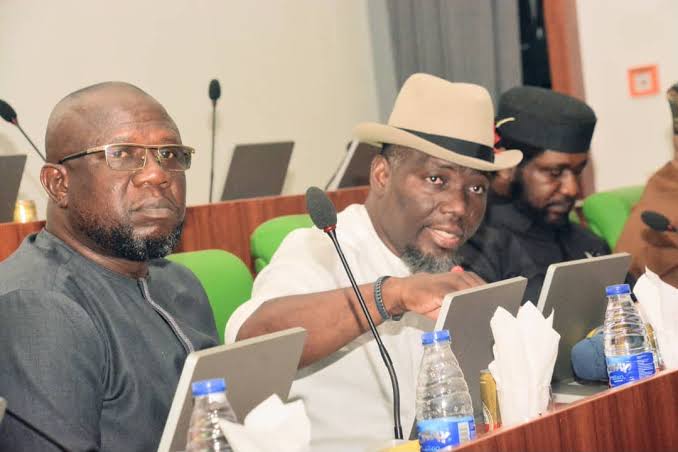
The House of Representatives Committee on South-South Development Commission has demanded urgent and concrete measures to resolve the prolonged gas seepage in Bille Community, Rivers State, and the oil spill affecting Odidi Federated Community in Delta State.
Chairman of the Committee, Hon. Julius Gbabojor Pondi, made the demand during an urgent Stakeholders’ Engagement on the Bille gas seepage and a Legislative Hearing on the Odidi oil spill, in Abuja, last week.
Pondi said the two incidents had exposed host communities in the oil-producing region to prolonged environmental hazards while responses from relevant authorities had yet to produce satisfactory and timely resolutions.
The Committee’s intervention comes amid growing concerns over environmental degradation in the Niger Delta, where communities dependent largely on fishing, farming and other natural-resource-based livelihoods continue to contend with the consequences of oil and gas activities.
Pondi said the Committee’s concern over the Bille incident was heightened following its engagement with the Nigerian Upstream Petroleum Regulatory Commission (NUPRC) and the National Oil Spill Detection and Response Agency (NOSDRA) on July 30, 2026.
He said the Committee was deeply concerned that the gas seepage had persisted for approximately nine months without a clear end in sight.
“The implications are serious. Beyond the potential risks to health, safety and the environment, the incident has imposed severe economic hardship on the people of Bille,” Pondi said.
He noted that Bille, a predominantly fishing community, had suffered consequences affecting livelihoods, food security, household income, education and the general well-being of families.
“It is unacceptable for an incident of this magnitude to persist for so long without a clear, time-bound and effective resolution strategy,” he stated.
According to Pondi, the engagement was intended to establish the facts surrounding the incident, assess the response so far, identify obstacles and agree on practical, measurable and time-bound actions.
He said the Committee expected comprehensive briefings from the operating company, NUPRC, NOSDRA and other relevant agencies on the cause, extent and current status of the seepage, while representatives of Bille Community would be given an opportunity to present their concerns and the relief and interventions required.
“Most importantly, we want to move from prolonged discussion to concrete action and lasting resolution,” he said.
Giving an account of the agency’s technical findings, a Director of NOSDRA, Dr Yusuf Rigasa, said investigations had established what he described as “multi-point subsurface gas bubbling” at several locations in Bille.
He stated that gas bubbling had been detected around the premises of the Government Primary and Secondary School, as well as in waterways and certain mangrove areas.
According to him, NOSDRA conducted an air-quality assessment on December 6, 2025, across 19 stations and recorded elevated levels of hydrogen sulphide, methane, volatile organic compounds and carbon dioxide.
Rigasa explained that hydrogen sulphide has a characteristic rotten-egg smell, while methane is highly flammable and potentially explosive.
The concentrations recorded, he said, exceeded applicable regulatory thresholds.
Rigasa stated that the agency’s reference laboratory also analysed samples collected on December 16, 2025, and found elevated levels of total petroleum hydrocarbons in groundwater, surface water and sediment samples adding that
findings indicated that soil, surface water and groundwater in parts of Bille had been affected by pollution.
What we can confirm for the House is that the air, the groundwater, the surface water and the sediment in the swampy areas in that village, they are all polluted,” he said.
The NOSDRA official, however, said the agency had not established that the gas was from a hydrocarbon source.
-

 News2 days ago
RSG Targets Nine Million Residents in Mosquito Net Distribution Campaign
-

 Oil & Energy2 days ago
Aiyedatiwa Signs New Electricity Bill
-

 Maritime2 days ago
Marine Minister Commends President Tinubu On NPERA Bill Assent
-

 Oil & Energy2 days ago
NLNG Commissions Research And Innovation Centre In RSU
-

 News2 days ago
KenPoly Holds Eight Convocations, August 29
-

 News2 days ago
RMAFC Completes Revenue Sharing Review, Proposes New Pay
-

 News2 days ago
RSG Begins Another Phase of Projects Commissioning Today
-

 Maritime2 days ago
NAGAFF Petitions IGP Over Alleged Maritime Police Harassment