
Nation
Obasanjo Hails Chinese Party, CPC At 100

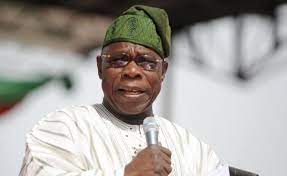
Former President Olusegun Obasanjo, has extolled the Communist Party of China (CPC) for the remarkable achievements it has recorded in the various spheres of China since it was founded 100 years ago.
In a goodwill message addressed to Chinese President Xi Jinping, who is the General Secretary of the CPC and Premier of the State Council of the People’s Republic of China, Li Keqiang and members of the Standing Committee of the CPC, Obasanjo declared that China’s growth and strength were unstoppable.
Obasanjo noted that since the establishment of diplomatic relations between Nigeria and China in 1971, Nigeria’s relationship with China has developed into one of the most important bilateral relationships maintained by either country.
The relationship, he added, has broadened and deepened with China’s growing power and interest in securing its regional interests, particularly within the South China Sea, and taking its place as a major global actor.
China and Nigeria, Obasanjo further noted, have signed a number of agreements on trade, economic and technological cooperation, as well as in the area of investment protection.
Obasanjo said, “In May, 1999 when Nigeria returned to constitutional democracy, I visited China twice in 2001 and 2005, respectively with my Chinese counterpart reciprocating both visits. The combination of domestic political and economic reforms and policy re-alignment enabled Nigeria to re-open dialogue and cooperation with major trading partners.
“As a result, there was evidence of growth in the country’s trade relations with its traditional allies, as well as emerging economies such as India and China. Indeed, by 2004-2005, China has succeeded in displacing other countries such as the United States, United Kingdom and the Netherlands as Nigeria’s biggest trading partner.
“During former President Hu Jintao’s visit to Nigeria in 2006, as Nigerian President, I remember making the following remarks, ‘From our assessment, this twenty-first century is the century for China to lead the world. And when you are leading the world, we want to be close behind you. When you are going to the moon, we don’t want to be left behind’.
“Today, China is one of the most important lenders of development finance to Nigeria. Chinese firms and finance play a prominent role in Nigeria’s infrastructure development. This is notably in the construction of railway lines and road reconstruction across the country. Nigeria marked symbolic progress of railway service in July, 2016, when its first completed standard gauge railway modernization project, Kaduna to Abuja, assisted by China was put into commercial operation. The light rail, the first of its kind in West Africa, fully reflects China’s technology, quality and speed.
“As of 2017, Nigeria was China’s largest engineering contract market, second largest export market, third largest trading partner, and major foreign direct investment destination in Africa. Nigeria is also the first African country to accept Chinese renminbi (RMB) in its foreign reserve. China and Nigeria have maintained a steady development of Lekki and Ogun free trade zones in the Southern part of the country. The zones aim to attract foreign investors and manufacturers to optimize Nigeria’s industrial structure and improve its national living standard.
“Clearly, the relationship has become more economic as China evolved from a political power to a global economic giant. The growing trade and presence of Chinese finance in Nigeria has also led to changing narratives about increased migration on both sides. China has also contributed to the development of Nigeria’s human capital. Many Nigerian students now study in Chinese schools – with a few on scholarships.
“China’s visibility in Africa’s infrastructural landscape is clear. From the landmark $200million African Union Secretariat building in Addis Ababa, Ethiopia, which was a gift in 2012 by China, to the roads, airports, railways, universities and libraries, Chinese investment in Africa increased from around $75million in 2003 to $2.7billion in 2019. Africa has also served as a market for Chinese manufacturing and as a source of raw materials.
“Chinese companies are also building education and training facilities in Nigeria. Nigeria was the first African country to establish a cultural centre in China, and the Chinese Cultural Centre was established in Nigeria in 2013. Every year, many cultural and academic groups from both countries visit each other, promoting art and people-to-people exchanges between the two countries.
“Let me conclude with a poser I raised in the Vol. III of my memoir, My Watch: Now and Then, ‘What events are we to watch for in the future?’ China’s growth and strength remain unstoppable. How China uses its increased power will matter to the world. Technology will keep moving. Africa must be innovative, shrewd and resourceful to know where and how to jumpstart technology, not by re-inventing the wheel but by being only a step behind the cutting edge of science and technology and by being part of the creation of relevant technology for our needs, development and progress. Africa must not be detached from the world of science, technology and innovation led by China,” Obasanjo wrote.
In the message, the former president congratulated the Chinese community all over the world and the entire good people of China on the 100 years celebration of the CPC, which he said, was the second largest political party in the world.
“I am, indeed, pleased and honoured for the opportunity accorded me to send in my goodwill message in support of the centenary celebration. I bring to you the good wishes of the entire people of my great country, Nigeria.
“Founded in 1921, the Communist Party of China (CPC) has always been committed to its original aspiration and mission of seeking happiness for the Chinese people and rejuvenation for the Chinese nation. It is important to note that, China’s success can be ascribed to its political system. The party has led the country from the era of Chairman Mao to become the economic powerhouse it is today. At $16.64trillion GDP, it’s the second largest economy after USA with $22.68trillion GDP.
“The Peoples’ Republic of China is sometimes referred to as a modern day miracle and continues to draw the attention of the entire world for the remarkable progress it has made in economic development, science and technology. There are several important elements that led China to the Superpower status. One of the factors that have contributed immensely to the growth of the country is the leadership of the party. Indeed, the party exercises overall leadership over all areas of endeavour in every part of the country, and thus guides the socialist modernization of China.
“With the founding of the People’s Republic of China, headed by Mao Zedong who is regarded as the Founding Father of Modern China, China’s leaders began their exploration of the road to socialist industrialization and modernization. Working towards the goal of economic modernization, their strategy moved from ‘national industrialization to four modernizations’. Mao was responsible for many of the political initiatives that transformed the face of China.
“Following Mao’s death in 1976, the new leader, Deng Xiaoping, commenced a series of reforms that radically changed China. Deng encouraged international trade and allowed foreign capital investment. The result has been China’s phenomenal entry into world markets and a booming economy. The economic reforms that were introduced by Deng Xiaoping in the late seventies have transformed the Chinese economy and produced a period of spectacular growth. With Deng Xiaping’s reform policies of the 1970s and 1980s, China’s dramatic growth and modernization and attendant industrial, energy and market expansion needs brought it into greater contact with Africa,” Obasanjo also said.

Nation
Rumuaholu Community Denies Land Grabbing Allegations, Accuses Obio/Akpor Chairman of Interference in Land Dispute


The Rivers State Commissioner for Education, Dr. Peters Nwagor, has commended the orderly conduct of the ongoing 2026 West African Senior School Certificate Examination in the state and urged schools to sustain the standard.
Dr. Nwagor gave the commendation on Tuesday during a monitoring tour of selected secondary schools in Port Harcourt and environs where the WAEC exam is ongoing.
The commissioner, who was accompanied by directors and monitors from the Ministry of Education, said he was impressed with the peaceful atmosphere at the centres visited.
“The students conducted themselves properly and wrote their papers under conducive conditions. Invigilators and supervisors also performed their duties professionally,” he stated.

Nwagor noted that the Rivers State Government had invested heavily to ensure the smooth and credible conduct of the examination across the state
He urged candidates to reciprocate government’s effort by shunning all forms of examination malpractice and focusing on their studies.
“Government has done so much to ensure successful examinations in our schools. Students should take advantage of it by remaining focused,” the commissioner said.
While no case of malpractice was recorded in the centres inspected, Dr. Nwagor warned that any principal, teacher, invigilator, or official caught aiding malpractice would face strict sanctions in line with regulations.
He also commended school administrators, teachers, WAEC officials, and security personnel for upholding the integrity of the process.
Centres visited included County Grammar School, Ikwerre/Etche; Government Comprehensive Secondary School, Borokiri; Government Secondary School, Borokiri; and Pabod Model Secondary School.
-
Nation5 days ago
Asarama Kingdom Condemns Gruesome Murder of A Commercial Vehicle Driver
-
Rivers5 days ago
Monarch Raises Alarm Over Defamatory Politics … Urges For Unity In Ogoni
-
News5 days ago
Nigeria, Ethiopia Seal Agreement To Transfer 100 Nigerian Prisoners
-
News5 days ago
Nigeria No Longer Safe For Drug Cartels – Marwa
-
News5 days ago
Xenophobia: 268 Nigerian Returnees Arrive In Lagos From S’Africa
-
 News5 days ago
FG Declares Today Public Holiday To Mark Democracy Day
-
Women5 days ago
Nigerian Women And Dividends Of Democracy
-
Business5 days ago
FG Approves $1 Bn AFCFTA Credit Facility For Nigerian Exporters