
Featured
El-Zakzaky’s Dramatic Return From India Raises More Dust …FG Wants Me Dead, Kirikiri Prison Better Than Indian Hospital -El-Zakzaky …He’s Unruly, India Willing To Send Him Back, FG Claims

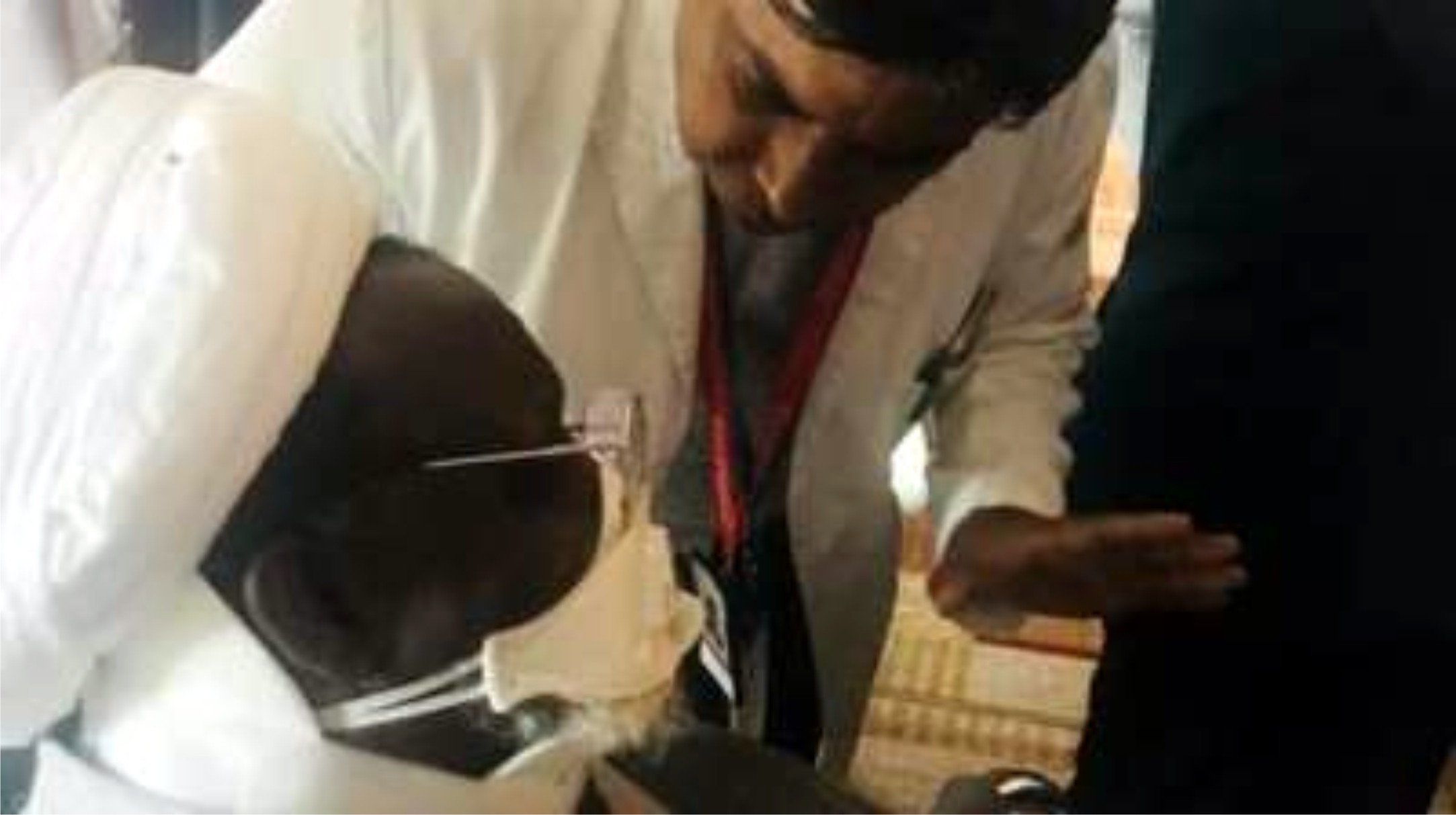
Barely 96 hours after landing in New Delhi for medical treatment, leader of the Islamic Movement in Nigeria (IMN), Sheikh Ibraheem el-Zakzaky, has reportedly discharged himself from the Medenta Hospital and may likely return to Nigeria, today.
The President, Media Forum of IMN, Ibrahim Musa, said that El-Zakzaky and his wife, Zeenat, who were airborne as at the time of speaking with our correspondent, yesterday evening, left New Delhi around 5:00 p.m. Nigerian time, heading back to the country.
Musa, in a statement, blamed the Federal Government for scuttling the IMN leader’s planned treatment.
He said, “Following lack of a breakthrough in the impasse that ensued in the treatment in New Delhi of Sheikh Ibraheem Zakzaky, it is now confirmed that the Sheikh is on his way back to Abuja.
“In a video message sent through his office, the Sheikh said it was decided that they will be taken to the airport to be flown back to Nigeria.
“He has left Delhi by 17:00 Nigerian time.”
He prayed that “may that be the best option in the circumstances.”
The group added, “The Nigerian government’s interference and scuttling of the whole process rather than supervision as ordered by the court is the direct cause of the impasse.
“The government never wanted the medical leave in the first place, and did whatever to stop it by all means possible,” Musa alleged.
The Federal Government had earlier refuted El-Zakzaky’s allegations, stating that he attempted to violate the conditions of his treatment by making unreasonable demands, including insisting on lodging in a five-star hotel in New Delhi with free access to “all manner of visitors.”
Earlier, the leader of the Islamic Movement of Nigeria, IMN, Sheikh Ibraheem El-Zakzaky, yesterday, had condemned Federal Government’s claims that he was unruly in India.
It would be recalled that the Federal Government had claimed that the leader of IMN had refused treatment from those he called “unknown doctors” put in place to treat him in India.
The Shiites leader insisted he wanted to be treated by those booked to treat him before he and his wife left Nigeria.
However, the IMN leader, in a short statement, yesterday, said, “I have heard that the Nigerian authorities have issued some statements which are laced with lies.
“It is up to people to agree with me or with the government’s version of the story.”
But the Federal Government had apologized to India for what it termed El-Zakzaky’s “unruly behaviour” in the country.
A statement signed by the Permanent Secretary, Federal Ministry of Information and Culture, Grace Isu Gekpe, said that the cleric refused to subject himself to preliminary medical checks after state officials resisted his pressure to hand-over his International Passport to him.
It states: “He also demanded free movement and access to visitors of all kinds, and also requested to be allowed to check into a 5-Star Hotel instead of being admitted in the hospital.
“That request was rejected on the ground that he came into the country for medicals, and not as a tourist, especially with the Visa issued on medical grounds and not for tourism.”
Meanwhile, there was mild drama at the Medanta Hospital, New Delhi, India, yesterday, as leader of Islamic Movement in Nigeria, IMN, Sheikh Ibraheem El-Zakzaky, and his wife, Zeenat, refused to be treated by those he described as unknown doctors deployed to treat them, saying they were different from those engaged for their treatment before they departed Nigeria.
El-Zakzaky, who spoke through an audio recording, also alleged that the condition at the Indian hospital he was taken to was worse than Kirikiri prisons.
The Shi’ites leader and his wife arrived in India last Tuesday for treatment, following the ruling of Kaduna State High Court.
This is even as his group, IMN, yesterday called on the Federal Government to allow the personal doctors of the El-Zakzakys to take over their medical care. In the audio recording, El-Zakzaky accused the Federal Government of frustrating his medical treatment in India.
Speaking in Hausa, he said the situation at the hospital in India was “pathetic and worrisome,” alleging that the management of Medanta Hospital, New Delhi, had been threatened not to admit him for treatment.
He said: “The hospital officials received us well, they told us that they parked two ambulance vehicles to deceive the crowd while taking us out of the airport through another way, saying it was for our own safety.
“On getting to the hospital, we were placed under tighter security worse than what we witnessed in Nigeria. We are currently more confined than when we were in Nigeria, worse than a prison setting.
“Contrary to what was agreed before our arrival that our own personal doctors would supervise this treatment, they’ve changed the arrangement. So, we objected receiving treatment from strange doctors without the supervision of our own trusted physicians.”
However, hours later, the hospital, according to the Islamic Human Rights Commission, agreed to the request of Sheikh El-Zakzaky to use known and appointed doctors for his treatment.
Speaking further, the Shi’ites leader had said: ‘’Right now, we are in the city of New Delhi in India. Like you all know, we came here for medical treatment due to some ailments that I and my wife, Zeenat, have been suffering from.
‘’There is a bullet in Zeenat’s body and there is also the need for her to get her two knee caps replaced, among other ailments.
“On my own part, there are also particles of bullets that were broken into pieces in my eyes, hands and thighs which have been poisonous to my body.
“I think what they are supposed to do first of all is to extract these bullets of which I know the surgery cannot be done in Nigeria, hence the reason for my referral abroad.
‘’Second, the poison needs to be extracted from my body, some of which they said is in my bones and they said the surgery will take some time.
‘’I also have problems with my eyes. Since the second surgery, my eyes have been weak and I was also advised to travel to India for surgery.
“We were happy because we know that by coming here, we’ll get a befitting hospital that will perform the surgery. The medical advice to come to this hospital, which they called Mendata, was given to us by some foreign doctors that visited us in Nigeria and that was why we requested to be brought to this hospital.
“While in Nigeria, we got information that the United States Embassy had given instruction that we shouldn’t be accepted in this hospital. We also heard that they obeyed the order and said they won’t accept us, so we were even thinking of going elsewhere in India but were later informed that the order had been lifted.
“We then proceeded to India. On our arrival, we were received by the hospital staff from the airport and they escorted us down to the hospital. His fans at the airport
‘’While on our way from the airport to the hospital in an ambulance, the staff of the hospital were narrating how some people besieged the airport just to see us before proceeding to the hospital, but they (the hospital) tricked them by keeping two ambulances at the location where my supporters were waiting and drove us out in another ambulance at a different location.
‘’They also said another set of people besieged the hospital just to see our arrival but they decided to use an alternative entrance to the hospital because they were trying to avert stampede.
‘’When we got here, a staff of the Nigerian Embassy told us they had already assembled, with the staff of this hospital and security operatives discussing on what to do when we arrive. They later took us to an Indian security outfit that is even more sophisticated than the one we were kept in Nigeria.
“Back home in Nigeria, they agreed that nobody should take us to any other hospital but we got to realise that the doctors they brought to us were there just to give advice. We then told them we won’t allow any other doctor, aside from our trusted doctors, to attend to us so they don’t do to us what they couldn’t do with their bullets in Nigeria.
“All that we have seen here have shown that there is no trust, they just brought us here for another detention. I have been in detention for many years but I’ve never seen this kind of security that I’m seeing here. Even at the door of my hospital room, there are many heavily armed security personnel waiting.
“They didn’t even allow me to go to the next room, I started asking myself that all these while I have been in detention, I have never seen this type. Even if I’m in the cell, they usually lock us up around 9 p.m. and open the cell around 7 a.m. and they allowed us to go anywhere we want in the area we are. “
“It will not be possible for us to come out of detention just to get medical attention and now find ourselves in another form of detention. We won’t submit ourselves to people we don’t trust. There is a need for us to go back home since it has been agreed that we should travel out to get medical attention and India is not a place we can trust.
‘’There are other countries that have volunteered to take care of our treatment, including Malaysia, Indonesia and Turkey. We can choose from among these three.”
Meanwhile, a member of the Islamic Human Rights Commission, IHRC, who spoke on condition of anonymity, said the attitude of the Indian government has portrayed El-Zakzaky as a common criminal when no court in Nigeria has convicted him.
He said the Indian government had given El-Zakzaky an ultimatum to leave Indian soil if he refused to receive treatment from unknown doctors billed to treat him.
He said: “I just received very worrying news from the Indian government that ultimatum has been given to the leader of IMN, to leave India if he does not agree to the doctors specified to treat him. It is extremely bad the way he is treated.
“Under the current situation, it seems he has no choice than to go back to Nigeria. He has been given some hours to respond to their ultimatum. This, to me, is totally unacceptable by any standard.
“This is a man that has not been found guilty of anything, to the extent that in his own country, the highest court has granted him permission to be treated.
‘’The Indian government, by its behaviour, depicts Sheikh El-Zakzaky as a common criminal. This is really outrageous and those who stand for justice should please respond.”
But in a statement, Grace Gekpe, Permanent Secretary, Ministry of Information, said the IMN leader had violated the terms under which the court allowed him to travel. Gekpe said he demanded to have his passport and sought free movement, adding that he wanted to receive visitors and also made a request to be checked into a 5-star hotel. She said he had behaved so badly that the Indian authorities were willing to return him to Nigeria.
Her statement read: “The court on August 5, 2019, granted Sheikh Ibraheem EL-Zakzaky leave to travel to India for medical treatment. Consequently, the government and its relevant agencies took steps to comply with the Order.
“In line with the court order, El-Zakzaky was approved to embark on the trip with state officials and his choice to be accompanied by his aides and personal doctors was not opposed by the government.
“On August 12, 2019, he and other members of the entourage went to India via Dubai. It is to be noted that El-Zakzaky particularly chose Medanta Hospital, India. However, on reaching Dubai, El-Zakzaky began to display ulterior motives against laid down procedures.
“He requested that his passport be handed over to him but the state officials would not budge to his pressure. The situation became worse in India as he refused to subject himself to preliminary medical checks. ‘’
In addition, he demanded free movement and access to visitors of all kinds as well as requested to be allowed to check into a 5-star hotel instead of being admitted in the hospital. ‘’
The request was refused on the ground that he came into the country for medicals and not as a tourist (more so that his visa was issued on medical grounds and not for tourism).
He also demanded that police protection be withdrawn from him by the Indian authorities.
“Against medical ethics and standard practice, he requested to nominate doctors of his choice to join the ones tasked by Medanta Hospital to perform medical treatment on him and his wife. This created a stalemate, which the hospital insisted that he would not dictate to it on the choice of medical personnel to carry the required medical treatment.
‘’Frustrated by his antics, the Indian authorities have expressed willingness to return him to Nigeria with immediate effect. This is on the account that they will not allow him to use their country to internationalise his group’s activities.
El-Zakzaky “Against this background, the Nigerian government wishes to commend the stand of the Indian government as well as apologise to her for the unruly behaviour of El-Zakzaky.
“Similarly, the attention of the public and indeed the international community is hereby drawn to these unfortunate developments.
“The government also wishes to use this opportunity to affirm its readiness to undertake the prosecution of El-Zakzaky through the due process if and when he is returned to the country. On this note, his foul cry that he is being held in circumstances worse than he was in Nigeria should be disregarded.’’
India denies detaining El-Zakzaky, wife, meanwhile, the Indian High Commission in Nigeria has denied detaining El-Zakzaky, stating that there was no condition or ultimatum to the patient.
In a series of tweets from its official Twitter handle @india_nigeria, the High Commission assured that medical treatment is provided to consenting patients.
The tweets read: “Please be assured that medical treatment at reputed Indian hospitals is provided to consenting patients, as per medical norms. Protocol and safety steps are taken as necessary. There is no condition or ultimatum by India.”
It also denied reports that Indian police and security services were collaborating with Nigerian security services to place, El-Zakzaky, the Shi’ite leader in custody.
The mission added: “Such reports are not true. India has always been responsive to humanitarian requests. Medical treatment request was received from both El-Zakzaky and the Government of Nigeria, and we readily agreed. No other connotation should be attached to the matter.”
Meanwhile, the Federal Government has said that the Indian authorities have expressed willingness to return the leader of the Islamic Movement of Nigeria (IMN) back to Nigeria with immediate effect for fear of his internationalising his group’s activities in the country.
The Permanent Secretary, Ministry of Information and Culture, Grace Isu Gekpe, disclosed this in a statement issued to newsmen in Abuja.
She said El-Zakzaky’s cry that he is being held in circumstances worse than he was in Nigeria should be disregarded because since arriving in India as he refused to subject himself to preliminary medical checks.
“The court on 5th August, 2019, granted Sheikh Ibraheem El-Zakzaky leave to travel to India for medical treatment. Consequently, the government and its relevant agencies took steps to comply with the order.
“In line with the court order, El-Zakzaky was approved to embark on the trip with state officials and his choice to be accompanied by his aides and personal Doctors was not opposed by the government.
“On 12th August, 2019, he and other members of the entourage went to India via Dubai. It is to be noted that El-Zakzaky particularly chose Medanta Hospital, India. However, on reaching Dubai, El-Zakzaky began to display ulterior motives against laid down procedures.













Rivers State, Sir Siminalayi Fubara, has assured members of the National Youth Service Corps (NYSC) of his administration’s commitment to supporting and strengthening the scheme in the State.
Fubara gave the assurance last Friday at the NYSC permanent orientation camp, Nonwa-Gbam, Tai Local Government Area in the State, during the swearing-in ceremony of 2026 Batch B Stream II orientation course.
Represented by the Permanent Secretary, Cabinet Bureau, Office of the Secretary to the State Government, Dr. Promise Oguzie, the governor said the State Government would remain intentional in providing the necessary support to improve the NYSC scheme and enhance the experiences of corps members deployed to the state.
He charged the corps members to be role models and quality nation-builders in their service to the good people of Rivers State in particular, and Nigeria at large.
“I charge you to be exemplary, dedicated and committed in all you do. Take full advantage of all the camp programmes and activities to enrich yourselves”, he said.
In his welcome address, the State Coordinator of NYSC in Rivers State, Mr. Moses Oleghe, urged corps members to see their deployment to Rivers State as a “veritable opportunity to make meaningful contribution to the growth of the State in particular and Nigeria at large.”
He further charged them to serve with all sense of “integrity, discipline, and the fear of God, especially when they will be engaged as INEC ad-hoc staff that will conduct the 2027 general elections.”
A total of 3,584 corps members composed of 1,421 males and 2,163 females were sworn in by the Chief Judge of Rivers State, who was represented by Justice Godspower Aguma.

Governor of Rivers State, Sir Siminalayi Fubara, says Nigeria needs God-fearing leaders for the nation to move in the right direction and make meaningful progress.
The Governor stated this yesterday when he received in audience, the World President of the Seventh Day Adventist Church, Pastor Erton Kohler; his wife, Andriene Marques Kohler; daughter Mariana Marques Kohler and a retinue of ministers of the church at Government House, Port Harcourt.
Fubara who hailed the Seventh Day Adventist Church for its contributions to education and the grooming of future leaders in Nigeria, expressed delight that the Church had over the years, been investing in education at various levels and currently runs two universities in the country.
He commended the church for not only using its institutions to spread the gospel of Christianity but to groom future leaders for the country.
According to him, religion should not be just about defending one’s faith, but also making meaningful impact on the lives of the people.
He said that by floating these educational institutions, the church has demonstrated capacity to support Nigeria in the task of producing not only educated people but a breed of God-fearing leaders.
“Our country is where it is today because we lack the fear of God. If you have the fear of God, there should be a limit to what you can do because you understand the supremacy of God. But when God is not in your equation, you’ll go beyond the line and that is what has brought us to where we are today.
“So, I feel very happy that you are contributing to the development of our future leaders in this country. We need the right people being in the right place; prepared properly with good minds; that is what we need, not just in Nigeria but round the whole world.,” he said.
Governor Fubara further observed that the absence of God-fearing people in high places to take the right decisions that could impact positively on the society, has also given rise to other problems such as social inequality, poverty, corruption and criminality. According to him, Nigeria needs a system where the average parent could afford quality education for their children and a guarantee that upon graduation, the average child will have the capacity to compete favourably with anybody, anywhere in the world.
“If we have a situation where the little money that you’re being paid as wage can also afford you quality healthcare and after working at least for 15-20 years, you have a roof over your head, tell me why you should be involved in any kind of crime? At that point, you’ll feel secured and this attitude of insecurity about the future that leads to all the social vices we have today won’t be there,” he said.
Governor Fubara expressed appreciation to the delegation for the visit and for their prayers for Rivers State, assuring them of his continued support for their programmes in the state.
Leader of the delegation and World President of the Seventh Day Adventist Church, Pastor Erton Kohler said he was in Nigeria for a special conference of the church during which thousands of the church’s ministers will be undergoing an empowerment programme to further equip them for the task of herding their flocks and serving the society.
He expressed gratitude to the Governor for the warm reception accorded his entourage, saying the memory of the visit will linger in his mind for a lifetime.
Kohler disclosed that the Church has over twenty -four million (24,000,000) members and more than 182,000 places of worship, spread across 212 countries of the world.

The Rivers State House of Assembly has approved the 2026–2028 Medium Term Expenditure Framework (MTEF) submitted by Governor Siminalayi Fubara.
This reaffirms the lawmakers’ commitment to enacting laws and taking legislative actions geared towards the overall development of the State.
The Assembly gave the approval during its Second Legislative Sitting of the Fourth Session held last Friday.
Speaking on the MTEF document during plenary, the House Speaker, Rt. Hon. Martin Amaewhule, noted that by the provision of Section 10(1)(b) of the Rivers State Fiscal Responsibility Law No. 8 of 2010, the MTEF ought to have been laid before the House in September 2025.
Amaewhule explained that traditionally, the document is expected to be presented four months before the commencement of the next financial year and immediately after the expiration of every three-year fiscal cycle.
He, however, stated that in the interest of the State and its people, the House considered it necessary to deliberate on the document, describing it as a precursor to the 2026 Budget Estimates.
The Speaker expressed concern that the year had already progressed significantly before the presentation of the framework.
During deliberations on the document, members examined the assumptions and projections contained in the MTEF and observed that strict adherence to the outlined fiscal parameters would ultimately serve the interest of Rivers people.
The lawmakers maintained that effective implementation of the framework would promote prudent financial management and enhance developmental planning across the State.
Following the debate and positive consideration by members, the Speaker put the question to the House and members voted overwhelmingly in support of the approval of the MTEF.
Meanwhile, during the same sitting last Friday, the House also received a petition from the Chairman of Obio/Akpor Local Government Council, Dr. Gift Worlu.
The petition was presented by the member representing Obio/Akpor Constituency II, Hon. Emilia Amadi.
According to the petition, concerns were raised over an imminent security breach, threats to lives, destruction of property and alleged forceful takeover of property by some lawless persons within parts of the Local Government Area.
Presenting the petition before the House, Hon. Amadi appealed to the lawmakers to revisit the matter and take necessary steps aimed at safeguarding lives and property in the affected communities.
The House is expected to further deliberate on the petition and consider measures to address the concerns raised in order to sustain peace and security in the area.
King Onunwor
-

 News2 days ago
RSG Targets Nine Million Residents in Mosquito Net Distribution Campaign
-

 Oil & Energy2 days ago
Aiyedatiwa Signs New Electricity Bill
-

 Oil & Energy2 days ago
NLNG Commissions Research And Innovation Centre In RSU
-

 Maritime2 days ago
Marine Minister Commends President Tinubu On NPERA Bill Assent
-

 News2 days ago
KenPoly Holds Eight Convocations, August 29
-

 News2 days ago
RSG Begins Another Phase of Projects Commissioning Today
-

 News2 days ago
RMAFC Completes Revenue Sharing Review, Proposes New Pay
-

 Maritime2 days ago
NAGAFF Petitions IGP Over Alleged Maritime Police Harassment