Connect with us

Nation

THE STATES

Published

on

Ekiti
An Ado-Ekiti Customary Court last Tuesday dissolved the eight-year-old marriage between one Rasak Bello and his wife, Aminat,  over irreconcilable differences.
The President of the court, Mrs Olayinka Akomolede, who listened to both parties,  dissolved the marriage, saying it had broken down irretrievably.
The  union was dissolved  on the grounds of lack of care for the petitioner and children, mismanagement of  his business,  fetishism, infidelity, stubbornness and frequent fighting.
The petitioner, Mr Rasak Bello, 43, a businessman, and a resident of No.7,  Basiri Street, Ado-Ekiti, had earlier told the court that he had  known the respondent for eight  years and they conducted a traditional marriage.

FCT
Chief of Air Staff, Air Marshal Sadique Abubakar has described late NAF instructor pilot, Group Capt. Adanu Ochai, who died in a plane crash in Kaduna as a hero who contributed  immensely to the nation.
Abubakar made the remark when he led senior officers of the Nigerian Air Force (NAF) on a condolence visit to the family of the deceased in Kaduna.
A statement by the NAF Director, Public Relations and Information, Air Commodore Olatokunbo Adesanya, last Tuesday in Abuja, said the air chief pledged to support the family left behind by Ochai.
Late Ochai was the sole pilot on board the NAF Air Beetle aircraft which crashed in Kaduna on August 24.
During the visit, prayers were said for the family of late Ochai as well as for the repose of his soul.

Gombe
Gombe State Sector Command of the Federal Road Safety Commission (FRSC)   recorded “motor accident free” Eid-el Kabir, the Sector Commander, Malam Ibrahim Abubakar has said.
Abubakar made the disclosure lastTuesday in Gombe in an interview with newsmen.
He attributed the development to series of sensitisation campaigns embarked upon by the command.
“Our sensitisation campaigns yielded positive result; that was why we recorded crash free sallah.
“Since I came to Gombe State two months ago, we have not recorded any serious crash.
“Thank God the sallah celebration has come and gone, it was hitch-free no crash recorded.
“I am appealing to motorists to sustain the tempo by desisting from any act capable of causing crash,” he said.

Kaduna
A group of suspected kidnappers who abducted a director with the Kaduna State Ministry of Education, Science and Technology is demanding  N40 million ransom, an official in the ministry has said.
The victim, Mr John Gorah, was abducted at midnight last Sunday at his residence located in Mararaban Rido, Kaduna.
The Deputy Director, Higher Education in the ministry, Mr Steven Haruna, told newsmen in Kaduna last Tuesday that the kidnappers had contacted the victim’s family.
Haruna explained that the kidnappers stormed the victim’s house, fired multiple gunshots in the air to scare people and pulled down a section of the fence before taking Gorah away.

Katsina
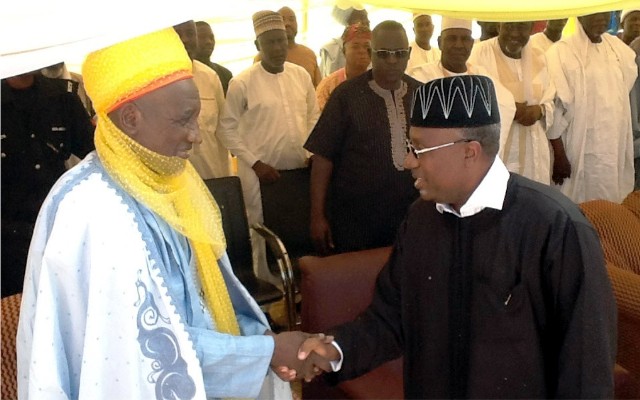
The Emir of Daura in Katsina State, Alhaji Farouk Umar has commended the President of Niger, Alhaji Muhammadou Yusouffou for his efforts in strengthening and sustaining the bond of brotherhood and mutual relationship between Nigeria and Niger.
Farouk made the commendation in Daura last Tuesday when he hosted the visiting president at his palace.
He said the relationship between Nigeria and Niger predated political independence of the two nations, stressing that “we inter-marry and conduct business activities together for many years.”
The emir said President Muhammadu Buhari returned from his UK medical trip in good spirit, saying “we would continue to support his policies and programmes for the development of Nigeria and Africa.

Kebbi
Association of People with Disabilities in Kebbi State last Tuesday appealed to the state Governor, Alhaji Atiku Bagudu to appoint members as special advisers for a sense of belonging.
The Chairman of the association, Malam Muhammad Argungu made the appeal in Birnin Kebbi when he led a delegation on a courtesy visit to the governor.
He said the appointment of members of the association as special advisers would ensure their access to government and enable them to contribute to the state’s policy and decision making.
He also appealed for award of scholarship to children of the members of the association schooling in tertiary institutions.

Kogi
The police in Kogi State have killed a suspected notorious armed robber and kidnapper on their wanted list for many years, the Commissioner of Police, Mr Wilson Inalegwu, said in Lokoja last Monday.
Inalegwu said that the suspect, identified as Lukman, was killed by men of the Special Anti-Robbery Squad (SARS) in Obeiba in Ihima area of the state on Sunday afternoon..
He said the suspect was shot during an encounter with a team of SARS operatives.
Inalegwu said that Lukman was shot dead during a cross -fire with SARS men who came in from Abuja to arrest him.

Niger
The Police Command in Niger State says it has recorded “a no-crime, no-violence” Eid-el-Kabir celebration in the state.
The Commissioner of Police, Mr Austine Agbonlahor, disclosed this during an interview with newsmen in Minna last Tuesday.
Agbonlahor commended residents of the state  for their peaceful conduct during the celebration.
He said the feat was achieved through the cooperation the residents across the 25 local government areas of the state accorded police personnel.
He said the command would continue to initiate techniques that would guarantee safety and security of lives and property as well as create safe haven for legitimate businesses to thrive in the state.

Oyo
This year’s  ministers’ conference of the Nigeria Baptist Theological Seminary,  Ogbomoso (NBTS) will focus on renewing the spirituality and fellowship of  participants in order to promote   the country’s  peaceful co-existence, social harmony, economic buoyancy and political stability.
The President of  NBTS,  Rev.  Emiola Nihinlola said this  at the seminary in Ogbomoso while shedding light  on the  theme of this year’s conference tagged: “The Dynamics of Competent Gospel Ministry”.
Nihinlola, a professor and  Vice-Chairman, Association for Christian Theological Education in Africa (ACTEA),  said the conference would also focus on the principles, methods and critical issues related to the work of the gospel.

Plateau
The National Drug Law Enforcement Agency (NDLEA) in Plateau State last Tuesday said it had arrested a 25-year-old man, Zulkifil Aliyu, who specialised in illegal narcotics trade within Jos metropolis.
The agency’s Commander in the State, Mr Ibrahim Bragi, confirmed Aliyu’s arrest to newsmen in Jos.
Bragi said that operatives of the agency arrested the suspect on May 19 at Laranto Village in Jos North.
He said during his arrest, the operatives found on the suspect 200 grammes of Tramadol tablets; 150 grammes of Diazepam tablets; 74 grammes of Exol tablets and 51 grammes of Cannabis Sativa.
According to him, the suspect in a confessional statement told the agency that he has been in the business for only three months.
The commander said the suspect confessed that he was getting his supplies from a man at Bauchi Road, and he in turn sold the substances as a retailer for profit.

Sokoto
Governor Aminu Tambuwal of Sokoto State, recently met with the President of Niger Republic, Muhammadou Yusouffou  at the Presidential Palace in Niamey to discuss issues of common interest for improved relations.
Tambuwal’s spokesman, Malam Imam Imam said in a statement that the two leaders discussed issues of cooperation for the benefit of their citizens.
Imam said the two discussed important issues that bordered on education, trade and cultural integration between Sokoto State and Niger Republic.
“Sokoto and Niger Republic have long standing cultural, religious and family ties.
“So, our visit to the Palais De Presidence is meant to enhance these ties and also explore other important areas of cooperation like education and trade,” he  said.

Zamfara
Zamfara State Police Command last Tuesday said it had commenced massive search for three policemen who went missing after Monday’s attack on their outpost in Keta village, Tsafe Local Government Area.
A press release issued by the command’s spokesman in Gusau, DSP Mohammed Shehu, denied online media reports that the policemen and their DPO were kidnapped.
“No one was kidnapped as a result of the attack on the facility,” Shehu said, and called on the general public to disregard the report.
He explained that a police outpost was not managed by a Divisional Police Officer (DPO), adding that the three missing policemen ran into the bushes when the outpost was attacked.
The spokesman said “at the moment, combined units of Police Anti-Robbery Squad, Anti-Kidnapping and Mobile Force are combing the bushes in search of their colleagues as well as to arrest the gunmen.”


Continue Reading

Nation

Ogoni Mangrove Wetlands Gain International Recognition As Ramsar Site

Published

on

The Hydrocarbon Pollution Remediation Project (HYPREP) has announced that the mangrove wetlands in Ogoniland have been officially designated a Ramsar Site of International Importance by the Secretariat of the Ramsar Convention on Wetlands.

The designation, according to HYPREP, underscores the global ecological significance of Ogoniland’s mangrove wetlands and highlights ongoing restoration efforts aimed at addressing environmental degradation in the area.

In a press statement issued by the Project Coordinator of HYPREP, Prof Nenibarini Zabbey, the recognition was described as a major milestone for the agency, the people of Ogoni and other stakeholders working towards environmental restoration in the region.

Zabbey explained that the mangrove wetlands, which cover more than 31,700 hectares, consist of islands, tidal creeks, mudflats and mangrove forests that support a wide range of biodiversity. The ecosystem provides habitat for several species including fin fish, shellfish, crustaceans, crocodiles, turtles and the endangered grey parrot.

He noted that beyond biodiversity conservation, the wetland also provides essential ecosystem services such as fisheries production, flood control, water purification and carbon storage. According to him, the international recognition will further support local livelihoods, promote ecotourism and bring global attention to the region.

The HYPREP coordinator disclosed that the designation followed a meticulous process that began in 2024 when the project submitted a memorandum to the National Council on Environment seeking support for the recognition of the Ogoni wetlands as a Ramsar site.

Following the council’s review and approval, the Honourable Minister of Environment and Chairman of HYPREP’s Governing Council, Balarabe Abbas Lawal, formally wrote to the Ramsar Convention Secretariat requesting international recognition of the wetlands.

After a comprehensive ecological assessment, the Ramsar Secretariat granted the designation, officially recognising the Ogoniland wetlands as one of the world’s sites of international importance.

Zabbey said the recognition would strengthen ongoing environmental restoration efforts in the area and encourage stronger conservation measures and sustainable management of the wetlands for the benefit of present and future generations.

He added that the designation also fulfils a key recommendation of the United Nations Environment Programme (UNEP) Environmental Assessment Report on Ogoniland, marking another significant step in the implementation of the report’s recommendations.

The HYPREP project coordinator reaffirmed the agency’s commitment to restoring the Ogoni environment through the remediation of oil-polluted land, shorelines and mangrove ecosystems.

He also called for collective responsibility and stakeholder support to sustain the progress of the Ogoni cleanup programme and facilitate the development of a comprehensive and sustainable management plan for the Ogoni mangrove wetlands.

Continue Reading

Nation

Perm Sec Explains Success Of FGM Elimination Programme In Rivers

Published

on

The Permanent Secretary, Rivers State Ministry of Social Welfare and Rehabilitation, Mrs Lauretta Davies-Dimkpa, has attributed the successes of the 12-day programme organised for adolescent girls aimed at eliminating Female Genital Mutilation(FGM) in some parts of the State to the ability of the respective stakeholders to take ownership of the programme.

Mrs Davies-Dimkpa, who dropped the hint in an interview at the end of the programme in Elele-Alimini Community in Emohua Local Government Area on Saturday, said the event had a buy-in component, an ownership mentality, whereby facilitators, staff, and everyone involved took ownership of the project.

She explained that the Rivers State Ministry of Social Welfare and Rehabilitation, in collaboration with the United Nations Children’s Fund (UNICEF) and the United Nations Population Fund (UNFPA) had packaged a series of training sessions for adolescent girls aimed at ending the practice of Female Genital Mutilation (FGM) in some communities across the State.

According to her, the initiative was designed to educate young girls on the harmful effects of the practice and empower them to become advocates against it within their communities.

She noted that the programme, which lasted for several weeks, targeted adolescent girls from different local government areas where the practice is still prevalent, stressing that
data collected by UNICEF and the Ministry revealed that Female Genital Mutilation is still practised in some parts of the State, prompting the need for intensified sensitisation and community engagement.

Mrs Davies-Dimkpa explained that the programme adopted a “train-the-trainer” approach where adolescent girls were educated on the dangers of the practice and encouraged to share the knowledge with their peers, families and communities.

“This is a programme by the Rivers State Ministry of Social Welfare and Rehabilitation with support from UNICEF and UNFPA to train adolescent girls towards ending Female Genital Mutilation, which is still practised in some local government areas,” she said.

She further explained that each participating local government area had a three-day training session, with the exercise running for a total of 12 days.

The local government areas, where the programme took place, she noted, included Ahoada West, Abua-Odual, and Emohua, adding that the initiative is part of broader efforts by the state government and development partners to eliminate harmful traditional practices and protect the rights and wellbeing of girls.

She revealed that prior to the training of the adolescent girls, the Ministry and its partners had also engaged community facilitators, including older women and men, to sensitise them on the dangers associated with Female Genital Mutilation.

According to her, the involvement of community leaders and adults is essential in addressing the cultural and social factors that sustain the practice.

Speaking on the response of the participants, the permanent secretary expressed satisfaction with the level of engagement and enthusiasm shown by the girls throughout the training sessions.

She noted that many of the participants said they were learning about the harmful effects of Female Genital Mutilation for the first time.

“The girls are between the ages of 12 and 17 and from the interactions we had with them, they were very excited. Some of them are hearing these things for the first time and never knew that the practice is harmful,” she said.

She expressed optimism that the knowledge gained from the training would enable the girls to serve as advocates for change within their communities.

She added that the Rivers State Government, alongside its partners, would continue to intensify efforts and expand community-based interventions aimed at ending the practice across the State.

Meanwhile, the participants for Emohua Local Government Area were drawn from Elele-Alimini, Egbeda, Rumuji, Ibaa, Rumuekpe, Rumuakunde, Eligbarada, and Ogbakiri Communities.

The participants,who spoke in separate interviews described the training as eye-opening, noting that it helped them better understand issues surrounding adolescent health, personal hygiene, reproductive health, and the harmful consequences of Female Genital Mutilation.

Favour Azukwu from Rumuekpe community, said the programme provided a deeper understanding of the dangers associated with the practice, particularly its impact on the health and wellbeing of girls and women.

She explained that the training sessions exposed participants to the medical, social and psychological effects of Female Genital Mutilation, including severe bleeding, infections and complications during childbirth.

She revealed that she personally experienced the practice at the age of 12 and suffered heavy bleeding afterwards, an experience that has strengthened her determination to advocate for its eradication.

According to her, many communities still practise Female Genital Mutilation because it is perceived as a cultural tradition, despite the dangers associated with it.

“I do not support Female Genital Mutilation because there are many dangers involved. I experienced severe bleeding when it was done to me as a child.

Another participant, Glory Ken, a 16-year-old secondary school student from Rumuji community, said the programme broadened her understanding of several important topics affecting adolescents.

She explained that beyond the discussion on Female Genital Mutilation, the training also focused on issues such as personal hygiene, reproductive health, peer education, and self-care.

According to her, the sessions helped participants understand the importance of making informed health decisions and supporting one another as peer educators.

“I learned about many things that affect young people in society and how to take care of myself. I also learned that Female Genital Mutilation is harmful to our health. The message I am taking back to my community is that this practice should stop,” she said.

Also speaking, Goodness Kenjika Nyeche described the programme as very impactful.

She noted that the training equipped participants with the skills and confidence to educate others about the harmful effects of Female Genital Mutilation.

She said she plans to organise sensitisation among adolescents in her community, particularly girls between the ages of 10 and 19, to ensure they understand the dangers associated with the practice.

“I learned many things from this programme and I feel very good about it. I will educate other young girls in my community and help them understand why Female Genital Mutilation should not continue,” she said.

For Queen Dike from Ibaa community, the programme helped clarify misconceptions surrounding the practice.

She explained that in some communities, the practice is still referred to as circumcision and is viewed as part of cultural identity.

She said the training helped participants understand that Female Genital Mutilation involves the cutting or removal of parts of the female genital organs and that it has serious health consequences.

She stressed that awareness and education are key to ending the practice, especially among communities that continue to uphold it as tradition.

“I think the programme is very helpful because many people still believe it is part of culture. More awareness is needed so people can understand why it should stop,” she said.

Another participant, MyJoy Echika Amadi, said the programme provided critical information about adolescent health and the dangers associated with Female Genital Mutilation.

She described the initiative as enlightening and said it encouraged young people to become advocates for change in their communities.

According to her, participants were encouraged to use various platforms such as churches, peer groups, schools and community gatherings to spread awareness about the harmful effects of the practice.

“This programme has enlightened us about the dangers of Female Genital Mutilation. I will do my best to create awareness in my community and encourage people to stop the practice,” she said.

Many of the participants emphasised that the knowledge gained during the programme has empowered them to challenge harmful traditions and promote healthier practices among young people.

They also called on the Rivers State Government, development partners and civil society organisations to sustain the sensitisation campaigns and extend the training to more communities across the State.

According to them, empowering young people with the right information will play a critical role in eliminating Female Genital Mutilation and protecting the rights, health and dignity of girls in Rivers State.

The participants expressed appreciation to the Rivers State Ministry of Social Welfare and Rehabilitation, UNICEF and UNFPA for organising the programme and for investing in the wellbeing and future of adolescent girls in the State.

Continue Reading

Nation

UNIZIK Honours Business Mogul, Ezekwe, For Philanthropism

Published

on

The Nnamdi Azikiwe University (UNIZIK) has conferred the Award of Digital Academic Promoter on the Managing Director and Chief Executive Officer of Arrowconn Group, High Chief (Dr.) Emeka Ezekwe, for his philanthropic gestures.
Chief Ezekwe received the philanthropist award during a landmark technical workshop organised by the Department of Business Education, Faculty of Technology and Vocational Education, Nnamdi Azikiwe University (UNIZIK), Awka, recently.
Making the presentation, the Vice Chancellor of the university, Prof. Ugochukwu Stanley Anyaehie, said the award was in recognition of Ezekwe’s philanthropic contributions, academic support, and dedication to human capital development, hailing his commitment to bridging industry and academia.
Ezekwe who is also the Chairman of Port Harcourt Chamber of Commerce Professional Services and Consultancy Trade Group, delivered a keynote address at the event with a theme: “Technicalities and Application of Artificial Intelligence (AI) in Business and Education.”
In his address, Ezekwe described the current AI surge as a civilizational shift rather than a mere technological upgrade.
He compared AI’s rapid trajectory to past innovations like electricity, computers, the Internet, and mobile phones, which he said, progressed from luxuries to necessities.
“AI is reshaping value creation, knowledge sharing, and decision-making at unprecedented speed. It has moved from experimentation to execution, powering business forecasting, academic research, digital learning, and strategic decisions,” he said.
The business mogul, however, warned that in business, delays lead to losses, while in education, irrelevance spells failure.
“AI is no longer optional, it is a necessity,” he declared.
Ezekwe highlighted the critical AI skill gap, driven by curriculum lags, limited training, and fear of the unknown, but stressed the bigger danger which is exclusion.
“Those who master AI will shape markets, education, and policy; those who lag will be shaped by others,” he said.
The Arrowconn Group boss also outlined AI’s practical advantages for businesses —including data-driven strategies, smarter investments, scalable customer insights, and competitive edges for SMEs.
In education, he clarified that AI empowers rather than replaces teachers, enabling personalized learning, efficient lesson planning, assessment support, and accelerated research.
He advocated a shift from rote memorization to critical thinking, creativity, and problem-solving, while preserving human strengths in engagement, judgment, and collaboration.
Ezekwe urged ethical AI development, warning that “technology without values is dangerous,” and called on institutions like UNIZIK to update curricula, train educators, promote interdisciplinary work, forge industry partnerships, and produce graduates who are solution providers in an AI-driven world.
The workshop also marked the unveiling of the maiden edition of the UNIZIK Journal of Business Education and Entrepreneurship, reinforcing the department’s push for scholarly innovation in AI applications.
Continue Reading

Trending