Connect with us

Nation

THE STATES

Published

on

Adamawa

The National Emergency Management Agency
(NEMA) has opened new operation offices in Adamawa, Edo and Kano states in its efforts to bring disaster management closer to communities and reduce response time, its Director General, Muhammad Sani Sidi, announced.
Sidi made the announcement in a statement issued by Mr Sani Datti, the Media and Public Relations Officer of the agency in Yola.
He stated that “as the agency saddled with responsibility of coordinating disaster management and related matters, NEMA is making efforts to build stakeholders’ capacity and appropriate mechanism to address various facets of disaster risk reduction.”
He explained that the mechanisms being put in place to reduce disaster risks were prevention, mitigation, preparedness, quick response and recovery.

FCT

The Minister of State, Petroleum Resources, Dr Ibe
Kachikwu, has urged parastatal agencies under the ministry to develop a roadmap for self funding of their activities within the next three to  four years.
A statement by Head of Press, Petroleum Technology Development Fund (PTDF) Kalu Otisi  in Abuja yesterday, stated that Kachikwu gave the charge while inspecting PTDF’s upgraded projects in PTI  Effurum Delta-State.
“ According to the statement, facilities inspected by the minister included an ultra-modern laboratory complex, a one- stop laboratory for research and training in diverse areas of onshore and offshore operations.
Other projects are facilities for exploration, drilling and production provided by PTDF, a demonstration training land rig with flow station rehabilitated and made functional by PTDF and the latest drilling simulators, welding and mechanical workshops.
Kachikwu, accompanied by some senior officials of the  ministry  including the new Executive Secretary of PTDF, Dr. Bello Aliyu Gusau, commended the Fund for the rigorous implementation of its capacity building programmes.

Ibadan

The Economic and Financial Crimes Commission
(EFCC), Ibadan Zonal Office has arraigned in a Federal High Court, Ado-Ekiti an illegal polytechnic operator.
The alleged illegal operator, Johnson Babatola was arraigned before Justice Taiwo Taiwo on a 7-count charge bordering on Advance fee fraud and operation of illegal Polytechnic.
Babatola, a former Principal Manager of the Central Bank of Nigeria, Ado-Ekiti branch pleaded not guilty to the charges.
The EFCC said that the suspect was arrested following a petition from the National Board for Technical Education in Kaduna, alleging that he was operating an illegal Polytechnic named Teedek Polytechnic at Ilogbo, Ekiti State.
The board said that the accused had allegedly extorted gullible students, who were not aware of the status of the institution.

Jigawa

The Jigawa State Board of Internal Revenue has ad
vised vehicles owners in the state whose number plates had faded and no longer identifiable, to replace them.
The Coordinator of Road Taxes of the board, Alhaji Salisu Sani, gave the advice in an interview with newsmen in Dutse yesterday.
Sani said that vehicles with such faded number plates could be used to commit crimes since the information on them was no longer visible.
“We want to urge such vehicle owners to, as quickly as possible, replace the faded numbers.
“This is because such numbers are no longer identifiable, and as such, some criminals can hide under that and commit certain crimes.
“And the replacement can also help the board to generate more revenue for our dear state,” Sani said.
Kaduna

The Provost, College of Agriculture and Animal Sci
ence, Mondo, Dr Balarabe Jahun, says diversification to agriculture by government is the right direction to pull Nigeria out of economic rot.
Jahun told newsmen in Kaduna that, if Nigeria can produce over 50 per cent of its agricultural needs, it would reduce the country’s challenges and ensure stability.
According to him, self sufficiency in food production and export of the excess will boost the economy, increase the country’s Gross Domestic Product and create employment.
The provost said that Nigeria has the capacity to produce all it required and export the surplus.

Kano

The authorities of Bayero University, Kano, have con
firmed the release of its lecturer, Mr Saminu Aliyu-Kiri, who was kidnapped in Kaduna State on Thursday night.
The Director, Public Affairs of the university, Malam Ahmed Shehu, confirmed the release of the abducted lecturer in an interview with newsmen in Kano.
Shehu said the lecturer, who regained his freedom on October 7, had since been reunited with his family in Kano.
“As I am talking to you now, the lecturer has regained his freedom since Friday, October 7, and reunited with his family,” he said.
Shehu, who, did not state whether ramson was paid before the release, said it was by the miracle of God that the lecturer regained his freedom.

Kebbi
The Fidelity Youth Empowerment Academy yesterday
began training of 500 youths on skill acquisition, digital media and enterprise in Kebbi.
Our correspondent reports that the academy is carrying out the exercise in Birnin Kebbi in collaboration with the Gazzalle Academy Vocational Centre.
The Managing Director of Fidelity Bank Plc., Mr Nnamdi Okonkwo, said at the commencement of the training that the five-day programme was part of the bank’s Corporate Social Responsibility (CSR).
Okonkwo, represented by an official of the bank, Malam Abdulrahman Ibrahim, said that the initiative would produce a new breed of Nigerian entrepreneurs.

Lagos
Governor Akinwunmi Ambode of Lagos State has
ordered the immediate demolition of all shanties around the creeks and on the waterways.
Ambode gave the order when he visited the Ilubirin LagosHomes project during an inspection tour of some parts of the state.
He asked all illegal occupants of the shanties to leave within seven days and stressed that the safety of citizens was paramount, hence the government’s zero tolerance for kidnapping and other crimes.
Ambode assured residents that government would review the laws on kidnapping and promised prompt and quick rescue of the students and teachers of Igbonla Model College, Epe,  kidnapped on Thursday in their school.
Nasarawa

The Nasarawa State Judiciary yesterday constituted
five appeal panels to review 127 judgments delivered by lower courts in the state.
The state Chief Judge, Justice Suleiman Dikko, announced this at the inauguration of 2016 Second Call-Over Special Appeal Session at the State High Court in Keffi.
“The 127 cases to be reviewed include; 81 civil cases and 46 criminal cases,” Dikko said.
He added that out of the 127 cases, 102 were old cases, while 39 were new.

Niger
Niger State government said it will discontinue the
payment of West African Examination Certificate (WAEC) and National Examination Council (NECO), fees for its students in Secondary Schools in the state.
Governor Sani Bello of Niger, disclosed this yesterday when he visited Justice Legbo Kutigi Secondary School to inspect the ongoing renovation of the school in Lavun local government areas of the state.
Bello said that government can not continue to pay N800 million every year for students that only 5 per cent of them are able to pass with four credits.
Ogun

The Ogun State government has urged residents liv
ing in areas severely affected by flood to relocate in order to guide against loss of lives and property.
The State Commissioner for Environment, Mr Bolaji Oyeleye, made the plea in a statement yesterday in Abeokuta.
According to him, some of the affected areas include: Kara, Isheri, Denro, Akute, Wawa and Warewa, all in Ifo and Obafemi Owode Local Government Areas of the state.

Sokoto
Governor Aminu Tambuwal of Sokoto State, has called
on the Federal Government to rehabilitate the Zari’a-Funtua-Gusau-Sokoto highway.
The governor made the call in Sokoto when he received the Minister of Power, Works and Housing, Babatunde Fashola, who paid him a courtesy visit.
He said that the call became necessary in view of the importance of the highway which links almost all the states in the North-west geopolitical zone.
He thanked the Federal Government for the on-going rehabilitation of Sokoto-Jega-Kontagora road.

Yobe

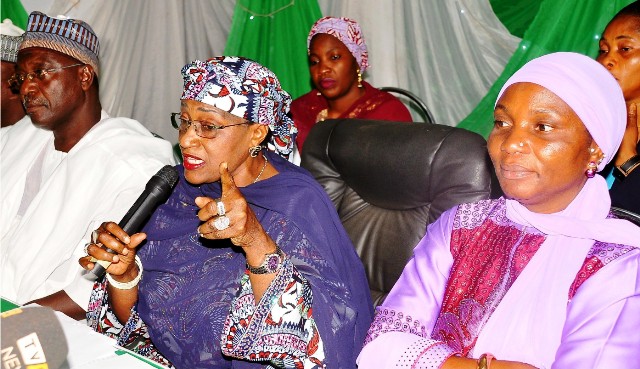
The Minister of State, Foreign Affairs, Hajia Khadija
Ibrahim, donated 5,136 (50kg) bags of rice to Yobe Government as intervention to Internally Displaced Personss in Gujba Local Government Area and it environs to improve standard of living.
Ibrahim handed over the commodity in Gujba area of  Yobe.
She said the the aim of the intervention was to alleviate the plight of the people affected by the activities of insurgents in the Northeast.

Continue Reading

Nation

Ogoni Mangrove Wetlands Gain International Recognition As Ramsar Site

Published

on

The Hydrocarbon Pollution Remediation Project (HYPREP) has announced that the mangrove wetlands in Ogoniland have been officially designated a Ramsar Site of International Importance by the Secretariat of the Ramsar Convention on Wetlands.

The designation, according to HYPREP, underscores the global ecological significance of Ogoniland’s mangrove wetlands and highlights ongoing restoration efforts aimed at addressing environmental degradation in the area.

In a press statement issued by the Project Coordinator of HYPREP, Prof Nenibarini Zabbey, the recognition was described as a major milestone for the agency, the people of Ogoni and other stakeholders working towards environmental restoration in the region.

Zabbey explained that the mangrove wetlands, which cover more than 31,700 hectares, consist of islands, tidal creeks, mudflats and mangrove forests that support a wide range of biodiversity. The ecosystem provides habitat for several species including fin fish, shellfish, crustaceans, crocodiles, turtles and the endangered grey parrot.

He noted that beyond biodiversity conservation, the wetland also provides essential ecosystem services such as fisheries production, flood control, water purification and carbon storage. According to him, the international recognition will further support local livelihoods, promote ecotourism and bring global attention to the region.

The HYPREP coordinator disclosed that the designation followed a meticulous process that began in 2024 when the project submitted a memorandum to the National Council on Environment seeking support for the recognition of the Ogoni wetlands as a Ramsar site.

Following the council’s review and approval, the Honourable Minister of Environment and Chairman of HYPREP’s Governing Council, Balarabe Abbas Lawal, formally wrote to the Ramsar Convention Secretariat requesting international recognition of the wetlands.

After a comprehensive ecological assessment, the Ramsar Secretariat granted the designation, officially recognising the Ogoniland wetlands as one of the world’s sites of international importance.

Zabbey said the recognition would strengthen ongoing environmental restoration efforts in the area and encourage stronger conservation measures and sustainable management of the wetlands for the benefit of present and future generations.

He added that the designation also fulfils a key recommendation of the United Nations Environment Programme (UNEP) Environmental Assessment Report on Ogoniland, marking another significant step in the implementation of the report’s recommendations.

The HYPREP project coordinator reaffirmed the agency’s commitment to restoring the Ogoni environment through the remediation of oil-polluted land, shorelines and mangrove ecosystems.

He also called for collective responsibility and stakeholder support to sustain the progress of the Ogoni cleanup programme and facilitate the development of a comprehensive and sustainable management plan for the Ogoni mangrove wetlands.

Continue Reading

Nation

Perm Sec Explains Success Of FGM Elimination Programme In Rivers

Published

on

The Permanent Secretary, Rivers State Ministry of Social Welfare and Rehabilitation, Mrs Lauretta Davies-Dimkpa, has attributed the successes of the 12-day programme organised for adolescent girls aimed at eliminating Female Genital Mutilation(FGM) in some parts of the State to the ability of the respective stakeholders to take ownership of the programme.

Mrs Davies-Dimkpa, who dropped the hint in an interview at the end of the programme in Elele-Alimini Community in Emohua Local Government Area on Saturday, said the event had a buy-in component, an ownership mentality, whereby facilitators, staff, and everyone involved took ownership of the project.

She explained that the Rivers State Ministry of Social Welfare and Rehabilitation, in collaboration with the United Nations Children’s Fund (UNICEF) and the United Nations Population Fund (UNFPA) had packaged a series of training sessions for adolescent girls aimed at ending the practice of Female Genital Mutilation (FGM) in some communities across the State.

According to her, the initiative was designed to educate young girls on the harmful effects of the practice and empower them to become advocates against it within their communities.

She noted that the programme, which lasted for several weeks, targeted adolescent girls from different local government areas where the practice is still prevalent, stressing that
data collected by UNICEF and the Ministry revealed that Female Genital Mutilation is still practised in some parts of the State, prompting the need for intensified sensitisation and community engagement.

Mrs Davies-Dimkpa explained that the programme adopted a “train-the-trainer” approach where adolescent girls were educated on the dangers of the practice and encouraged to share the knowledge with their peers, families and communities.

“This is a programme by the Rivers State Ministry of Social Welfare and Rehabilitation with support from UNICEF and UNFPA to train adolescent girls towards ending Female Genital Mutilation, which is still practised in some local government areas,” she said.

She further explained that each participating local government area had a three-day training session, with the exercise running for a total of 12 days.

The local government areas, where the programme took place, she noted, included Ahoada West, Abua-Odual, and Emohua, adding that the initiative is part of broader efforts by the state government and development partners to eliminate harmful traditional practices and protect the rights and wellbeing of girls.

She revealed that prior to the training of the adolescent girls, the Ministry and its partners had also engaged community facilitators, including older women and men, to sensitise them on the dangers associated with Female Genital Mutilation.

According to her, the involvement of community leaders and adults is essential in addressing the cultural and social factors that sustain the practice.

Speaking on the response of the participants, the permanent secretary expressed satisfaction with the level of engagement and enthusiasm shown by the girls throughout the training sessions.

She noted that many of the participants said they were learning about the harmful effects of Female Genital Mutilation for the first time.

“The girls are between the ages of 12 and 17 and from the interactions we had with them, they were very excited. Some of them are hearing these things for the first time and never knew that the practice is harmful,” she said.

She expressed optimism that the knowledge gained from the training would enable the girls to serve as advocates for change within their communities.

She added that the Rivers State Government, alongside its partners, would continue to intensify efforts and expand community-based interventions aimed at ending the practice across the State.

Meanwhile, the participants for Emohua Local Government Area were drawn from Elele-Alimini, Egbeda, Rumuji, Ibaa, Rumuekpe, Rumuakunde, Eligbarada, and Ogbakiri Communities.

The participants,who spoke in separate interviews described the training as eye-opening, noting that it helped them better understand issues surrounding adolescent health, personal hygiene, reproductive health, and the harmful consequences of Female Genital Mutilation.

Favour Azukwu from Rumuekpe community, said the programme provided a deeper understanding of the dangers associated with the practice, particularly its impact on the health and wellbeing of girls and women.

She explained that the training sessions exposed participants to the medical, social and psychological effects of Female Genital Mutilation, including severe bleeding, infections and complications during childbirth.

She revealed that she personally experienced the practice at the age of 12 and suffered heavy bleeding afterwards, an experience that has strengthened her determination to advocate for its eradication.

According to her, many communities still practise Female Genital Mutilation because it is perceived as a cultural tradition, despite the dangers associated with it.

“I do not support Female Genital Mutilation because there are many dangers involved. I experienced severe bleeding when it was done to me as a child.

Another participant, Glory Ken, a 16-year-old secondary school student from Rumuji community, said the programme broadened her understanding of several important topics affecting adolescents.

She explained that beyond the discussion on Female Genital Mutilation, the training also focused on issues such as personal hygiene, reproductive health, peer education, and self-care.

According to her, the sessions helped participants understand the importance of making informed health decisions and supporting one another as peer educators.

“I learned about many things that affect young people in society and how to take care of myself. I also learned that Female Genital Mutilation is harmful to our health. The message I am taking back to my community is that this practice should stop,” she said.

Also speaking, Goodness Kenjika Nyeche described the programme as very impactful.

She noted that the training equipped participants with the skills and confidence to educate others about the harmful effects of Female Genital Mutilation.

She said she plans to organise sensitisation among adolescents in her community, particularly girls between the ages of 10 and 19, to ensure they understand the dangers associated with the practice.

“I learned many things from this programme and I feel very good about it. I will educate other young girls in my community and help them understand why Female Genital Mutilation should not continue,” she said.

For Queen Dike from Ibaa community, the programme helped clarify misconceptions surrounding the practice.

She explained that in some communities, the practice is still referred to as circumcision and is viewed as part of cultural identity.

She said the training helped participants understand that Female Genital Mutilation involves the cutting or removal of parts of the female genital organs and that it has serious health consequences.

She stressed that awareness and education are key to ending the practice, especially among communities that continue to uphold it as tradition.

“I think the programme is very helpful because many people still believe it is part of culture. More awareness is needed so people can understand why it should stop,” she said.

Another participant, MyJoy Echika Amadi, said the programme provided critical information about adolescent health and the dangers associated with Female Genital Mutilation.

She described the initiative as enlightening and said it encouraged young people to become advocates for change in their communities.

According to her, participants were encouraged to use various platforms such as churches, peer groups, schools and community gatherings to spread awareness about the harmful effects of the practice.

“This programme has enlightened us about the dangers of Female Genital Mutilation. I will do my best to create awareness in my community and encourage people to stop the practice,” she said.

Many of the participants emphasised that the knowledge gained during the programme has empowered them to challenge harmful traditions and promote healthier practices among young people.

They also called on the Rivers State Government, development partners and civil society organisations to sustain the sensitisation campaigns and extend the training to more communities across the State.

According to them, empowering young people with the right information will play a critical role in eliminating Female Genital Mutilation and protecting the rights, health and dignity of girls in Rivers State.

The participants expressed appreciation to the Rivers State Ministry of Social Welfare and Rehabilitation, UNICEF and UNFPA for organising the programme and for investing in the wellbeing and future of adolescent girls in the State.

Continue Reading

Nation

UNIZIK Honours Business Mogul, Ezekwe, For Philanthropism

Published

on

The Nnamdi Azikiwe University (UNIZIK) has conferred the Award of Digital Academic Promoter on the Managing Director and Chief Executive Officer of Arrowconn Group, High Chief (Dr.) Emeka Ezekwe, for his philanthropic gestures.
Chief Ezekwe received the philanthropist award during a landmark technical workshop organised by the Department of Business Education, Faculty of Technology and Vocational Education, Nnamdi Azikiwe University (UNIZIK), Awka, recently.
Making the presentation, the Vice Chancellor of the university, Prof. Ugochukwu Stanley Anyaehie, said the award was in recognition of Ezekwe’s philanthropic contributions, academic support, and dedication to human capital development, hailing his commitment to bridging industry and academia.
Ezekwe who is also the Chairman of Port Harcourt Chamber of Commerce Professional Services and Consultancy Trade Group, delivered a keynote address at the event with a theme: “Technicalities and Application of Artificial Intelligence (AI) in Business and Education.”
In his address, Ezekwe described the current AI surge as a civilizational shift rather than a mere technological upgrade.
He compared AI’s rapid trajectory to past innovations like electricity, computers, the Internet, and mobile phones, which he said, progressed from luxuries to necessities.
“AI is reshaping value creation, knowledge sharing, and decision-making at unprecedented speed. It has moved from experimentation to execution, powering business forecasting, academic research, digital learning, and strategic decisions,” he said.
The business mogul, however, warned that in business, delays lead to losses, while in education, irrelevance spells failure.
“AI is no longer optional, it is a necessity,” he declared.
Ezekwe highlighted the critical AI skill gap, driven by curriculum lags, limited training, and fear of the unknown, but stressed the bigger danger which is exclusion.
“Those who master AI will shape markets, education, and policy; those who lag will be shaped by others,” he said.
The Arrowconn Group boss also outlined AI’s practical advantages for businesses —including data-driven strategies, smarter investments, scalable customer insights, and competitive edges for SMEs.
In education, he clarified that AI empowers rather than replaces teachers, enabling personalized learning, efficient lesson planning, assessment support, and accelerated research.
He advocated a shift from rote memorization to critical thinking, creativity, and problem-solving, while preserving human strengths in engagement, judgment, and collaboration.
Ezekwe urged ethical AI development, warning that “technology without values is dangerous,” and called on institutions like UNIZIK to update curricula, train educators, promote interdisciplinary work, forge industry partnerships, and produce graduates who are solution providers in an AI-driven world.
The workshop also marked the unveiling of the maiden edition of the UNIZIK Journal of Business Education and Entrepreneurship, reinforcing the department’s push for scholarly innovation in AI applications.
Continue Reading

Trending