
Connect with us

Nation

THE STATES

Published

on

Borno
The Federal Government said recently that it had put in
place adequate security for all Nigerians before, during and after the forthcoming general elections.
Alhaji Mohammed Wakil, the Minister of State for Power, said this in Maduguri at a town hall meeting with different socio-cultural groups who were in support of the re-election bid of President Goodluck Jonathan.
This is contained in a statement issued in Maiduguri by Mr Olawale Rasheed, the Special Assistant to Wakil on Media.
It said the minister called on Nigerians living in different parts of the country to remain in their respective places and cast their votes toward the victory of President Jonathan, rather than flee to their home states.

Ekiti
Farmers in Ikole-Ekiti and its environs, have expressed
concern with the indiscriminate logging that is fast degrading forest and destroying their tree crops in the area.
A cross section of the farmers expressed this concern in an interview with newsmen in Ikole-Ekiti, recently.
The farmers said the illegal activities of some timber contractors, who cut down trees indiscriminately in the area, were becoming worrisome.
They urged the Forestry Department in the state to step up efforts to curb the menace, so as to reduce the level of deforestation and save tree crops from total destruction.
A cocoa farmer, Mr Ezekiel Ojo, decried increase in the number of timber contractors indulging in the felling of trees with impunity in the area.
Ojo warned that cocoa, Kola, palm trees and other cash crops in the area might soon go into extinction, if urgent steps were not taken to address the situation.

FCT
The Nigerian Navy last Tuesday disclosed that the country
lost an estimate of N 433 billion annually to crude oil theft due to poor law enforcement presence on the water ways.
The Chief of Naval Staff, Rear Admiral Usman Jibrin, made the disclosure while defending the 2015 Budget Proposal in Abuja.
Jibrin, who was represented by the Chief of Logistics, Rear Admiral Peter Agba, credited the statistics to recent revelation made by the Chatham House, London.
He said the statistics did not include the amount of oil suspected to have been stolen from export pipelines, cost of oil spillage cleanup, loss of income to fishing communities and environmental degradation.
“The Nigerian Navy is constitutionally tasked with the protection of our maritime assets and recently the Chatham House revealed that Nigerian crude oil is being stolen at an industrial scale.
“It conservatively estimates that about 100,000 barrel per day, valued at N1.18 billion is stolen daily due to poor law enforcement presence, which is translated to N433.62 billion annually,” he said.

Kaduna
Commissioner of Police in Kaduna State, Alhaji Umar
Usman-Shehu, said the success of the forthcoming elections depended on the level at which politicians would abide by the law.
He stated this while addressing newsmen shortly after the signing of peace accord by candidates of some political parties in Kaduna North Senatorial District at Sabongari.
Usman-Shehu, “we expect to conduct peaceful elections and this can only be achieved if politicians conduct themselves in accordance with the laws of the land.
“We are here to sign a peace accord following similar ones held in Abuja and Kaduna.
“All Police Area Commands are directed to have this kind of gathering for politicians to sign peace accord,” he said.
He said that the police would not spare anybody who contravened the treaty, stressing, “Anybody who goes contrary to it will definitely be arrested and charged to court.
“Nobody is too big to be arrested if he goes contrary to the law; I assure you that there is no body that is untouchable in the state.
“The only person exempted by the law is the governor and his deputy; beside that, nobody is untouchable according to the Constitution,” the police boss said.
Kogi
The First Lady, Dame Patience Jonathan, last Tuesday,
said the Federal Government was currently constructing special secondary schools for girls in 27 states.
Jonathan, who spoke at the PDP Women rally in Lokoja, said the project was a fulfillment of part of President Goodluck Jonathan’s social contract with Nigerian women.
She said Jonathan, who is a friend of the women, believed in the capabilities of Nigerian women hence the implementation of the 35 per cent affirmative action.
The First Lady said Jonathan’s administration had created various opportunities for women to contribute their quota to nation building.
She urged the women of Kogi to ensure that they collected their Personal Voter Cards (PVCs) to enable them vote for Jonathan at the Presidential election in March 28.
Governor Idris Wada lauded the First Lady for inspiring and creating awareness among Nigerian women.

Lagos
The PDP governorship candidate for Lagos State, Mr Jimi
Agbaje, recently promised to build a pedestrian bridge for use by traders in the Ladipo Auto Spare Parts Market in the state.
Our correspondent reports that the PDP candidate made the pledge when he took his campaign to markets in Ladipo, Idi-Oro, Oshodi and Ikeja.
A crowd of admirers, including commercial motorcyclists and traders from Mushin and Oshodi converged at the Matori area and blocked the nearby Apapa-Oshodi Expressway.
Addressing the crowd of traders at the Ladipo rally, Agbaje also promised to improve sanitation in the market and improve the welfare of the traders.
He said that he would build a pedestrian bridge at the Toyota Bus Stop as well as establish a system for overnight waste management.

Nasarawa
Senator Abdullahi Adamu, has urged Nigerians to vote
only leaders of proven integrity in the interest of peace and rapid development in Nigeria.
Adamu, (APC-Nasarawa West) also appealed to his people to collect their Permanent Voter Cards (PVCs) before closing date.
He made call during his campaign tour to Udeni Magaji community in Udege development area of the Nasarawa State.
Adamu said the importance of PVCs in any election cannot be overemphasised, hence the need for all registered voters to collect their PVCs in order to exercise their franchise.
“I am here to solicit for your support and votes to enable me and other APC candidates of our great party to win during the forthcoming March 28 and April 11 elections in order to ensure continuity in the provision of more dividend of democracy.
Niger
The Peoples’ Democratic Party (PDP) and All Progressives
Party (APC) in Niger State have signed a peace pact at the Police Area Command headquarters in Bida.
The event was attended by the PDP and the APC House of Assembly candidates from the zone.
The members representing Lavun and Gbako Local Government Areas in the house, Mr Jacob Majin-Gana and Mohammed Alkali, were present.
The exercise was observed by CSP Umar Ango, Divisional Police Officer (DPO) ‘A’ Division, Bida, who represented the Area Commander, ACP Micheal Gbenga.
Others are DPO of Mokwa, Lavun, Edati, Gbako, Katcha, Doko and ‘B’ divisions, Bida, and all heads of other sister security agencies in the area.
Gbenga, who addressed the politicians, warned youths against any act that would breach the existing peace in the area before, during and after the forthcoming general elections.

Plateau
The Millennium Development Goals (MDGs) in Plateau
Statehas pledged to build two modern staff quarters in two selected Primary Healthcare Centres (PHCs) in Pankshin Local Government.
It says another five selected PHCs in the council will be well equipped to serve the people of the council better.
Mr Peter Nyam-Gai, Plateau MDGs’ Project Coordinator, said this yesterday during inauguration of a free medical outreach at Nyelleng town in Pankshin.
“MDG has chosen two medical centres here in Pankshin, where in the next two weeks, we shall start building a modern staff quarters, twin quarters, each with a solar power in the centres.

Sokoto
The First Lady, Dame Patience Jonathan, has declared that
the Peoples’ Democratic Party (PDP) will continue to rule Nigeria for the next 60 years.
Jonathan, represented by the Minister of Women Affairs, Hajiya Zainab Maina, spoke at the party’s women rally in Sokoto recently.
She said that Nigerian women had got their fare share and attention in Jonathan’s administration by holding about 50 per cent of the posts. “The president has fulfilled all the promises he has made to Nigerian women in 2011 and he will do more if re-elected,” she said.
The first lady also said that the president had 13 women in his cabinet, and had empowered women in a myriad of ways.
She further said that the president was also working tirelessly to curb the menace of insurgency.
“We have also picked five PHCs in Pankshin which will be supplied with all the necessary Medical equipment,” he said.
Nyam-Gai said, “We will continue to ensure that the little resources we have will be deployed to help the people, especially the rural dwellers.”
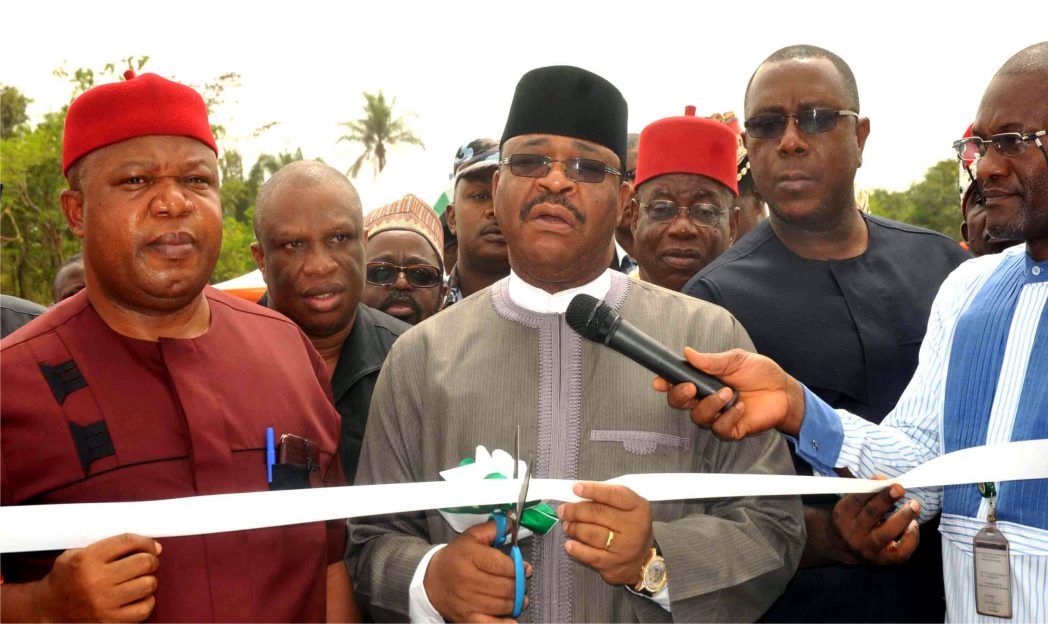
Chairman, House Committee on Works, Hon. Ogbuefi Ozomgbachi, Minister of Works, Mr Mike Onolememen, Enugu State Commissioner for Works and Infrastructure, Mr Goddy Madueke and others, at the inauguration of the rehabilitated Enugu-Port Harcourt Expressway, Section Three, from Enugu To Lokpanta in Enugu State, yesterday.

Chairman, House Committee on Works, Hon. Ogbuefi Ozomgbachi, Minister of Works, Mr Mike Onolememen, Enugu State Commissioner for Works and Infrastructure, Mr Goddy Madueke and others, at the inauguration of the rehabilitated Enugu-Port Harcourt Expressway, Section Three, from Enugu To Lokpanta in Enugu State, yesterday.

Continue Reading

Nation

Ogoni Mangrove Wetlands Gain International Recognition As Ramsar Site

Published

on

The Hydrocarbon Pollution Remediation Project (HYPREP) has announced that the mangrove wetlands in Ogoniland have been officially designated a Ramsar Site of International Importance by the Secretariat of the Ramsar Convention on Wetlands.

The designation, according to HYPREP, underscores the global ecological significance of Ogoniland’s mangrove wetlands and highlights ongoing restoration efforts aimed at addressing environmental degradation in the area.

In a press statement issued by the Project Coordinator of HYPREP, Prof Nenibarini Zabbey, the recognition was described as a major milestone for the agency, the people of Ogoni and other stakeholders working towards environmental restoration in the region.

Zabbey explained that the mangrove wetlands, which cover more than 31,700 hectares, consist of islands, tidal creeks, mudflats and mangrove forests that support a wide range of biodiversity. The ecosystem provides habitat for several species including fin fish, shellfish, crustaceans, crocodiles, turtles and the endangered grey parrot.

He noted that beyond biodiversity conservation, the wetland also provides essential ecosystem services such as fisheries production, flood control, water purification and carbon storage. According to him, the international recognition will further support local livelihoods, promote ecotourism and bring global attention to the region.

The HYPREP coordinator disclosed that the designation followed a meticulous process that began in 2024 when the project submitted a memorandum to the National Council on Environment seeking support for the recognition of the Ogoni wetlands as a Ramsar site.

Following the council’s review and approval, the Honourable Minister of Environment and Chairman of HYPREP’s Governing Council, Balarabe Abbas Lawal, formally wrote to the Ramsar Convention Secretariat requesting international recognition of the wetlands.

After a comprehensive ecological assessment, the Ramsar Secretariat granted the designation, officially recognising the Ogoniland wetlands as one of the world’s sites of international importance.

Zabbey said the recognition would strengthen ongoing environmental restoration efforts in the area and encourage stronger conservation measures and sustainable management of the wetlands for the benefit of present and future generations.

He added that the designation also fulfils a key recommendation of the United Nations Environment Programme (UNEP) Environmental Assessment Report on Ogoniland, marking another significant step in the implementation of the report’s recommendations.

The HYPREP project coordinator reaffirmed the agency’s commitment to restoring the Ogoni environment through the remediation of oil-polluted land, shorelines and mangrove ecosystems.

He also called for collective responsibility and stakeholder support to sustain the progress of the Ogoni cleanup programme and facilitate the development of a comprehensive and sustainable management plan for the Ogoni mangrove wetlands.

Continue Reading

Nation

Perm Sec Explains Success Of FGM Elimination Programme In Rivers

Published

on

The Permanent Secretary, Rivers State Ministry of Social Welfare and Rehabilitation, Mrs Lauretta Davies-Dimkpa, has attributed the successes of the 12-day programme organised for adolescent girls aimed at eliminating Female Genital Mutilation(FGM) in some parts of the State to the ability of the respective stakeholders to take ownership of the programme.

Mrs Davies-Dimkpa, who dropped the hint in an interview at the end of the programme in Elele-Alimini Community in Emohua Local Government Area on Saturday, said the event had a buy-in component, an ownership mentality, whereby facilitators, staff, and everyone involved took ownership of the project.

She explained that the Rivers State Ministry of Social Welfare and Rehabilitation, in collaboration with the United Nations Children’s Fund (UNICEF) and the United Nations Population Fund (UNFPA) had packaged a series of training sessions for adolescent girls aimed at ending the practice of Female Genital Mutilation (FGM) in some communities across the State.

According to her, the initiative was designed to educate young girls on the harmful effects of the practice and empower them to become advocates against it within their communities.

She noted that the programme, which lasted for several weeks, targeted adolescent girls from different local government areas where the practice is still prevalent, stressing that
data collected by UNICEF and the Ministry revealed that Female Genital Mutilation is still practised in some parts of the State, prompting the need for intensified sensitisation and community engagement.

Mrs Davies-Dimkpa explained that the programme adopted a “train-the-trainer” approach where adolescent girls were educated on the dangers of the practice and encouraged to share the knowledge with their peers, families and communities.

“This is a programme by the Rivers State Ministry of Social Welfare and Rehabilitation with support from UNICEF and UNFPA to train adolescent girls towards ending Female Genital Mutilation, which is still practised in some local government areas,” she said.

She further explained that each participating local government area had a three-day training session, with the exercise running for a total of 12 days.

The local government areas, where the programme took place, she noted, included Ahoada West, Abua-Odual, and Emohua, adding that the initiative is part of broader efforts by the state government and development partners to eliminate harmful traditional practices and protect the rights and wellbeing of girls.

She revealed that prior to the training of the adolescent girls, the Ministry and its partners had also engaged community facilitators, including older women and men, to sensitise them on the dangers associated with Female Genital Mutilation.

According to her, the involvement of community leaders and adults is essential in addressing the cultural and social factors that sustain the practice.

Speaking on the response of the participants, the permanent secretary expressed satisfaction with the level of engagement and enthusiasm shown by the girls throughout the training sessions.

She noted that many of the participants said they were learning about the harmful effects of Female Genital Mutilation for the first time.

“The girls are between the ages of 12 and 17 and from the interactions we had with them, they were very excited. Some of them are hearing these things for the first time and never knew that the practice is harmful,” she said.

She expressed optimism that the knowledge gained from the training would enable the girls to serve as advocates for change within their communities.

She added that the Rivers State Government, alongside its partners, would continue to intensify efforts and expand community-based interventions aimed at ending the practice across the State.

Meanwhile, the participants for Emohua Local Government Area were drawn from Elele-Alimini, Egbeda, Rumuji, Ibaa, Rumuekpe, Rumuakunde, Eligbarada, and Ogbakiri Communities.

The participants,who spoke in separate interviews described the training as eye-opening, noting that it helped them better understand issues surrounding adolescent health, personal hygiene, reproductive health, and the harmful consequences of Female Genital Mutilation.

Favour Azukwu from Rumuekpe community, said the programme provided a deeper understanding of the dangers associated with the practice, particularly its impact on the health and wellbeing of girls and women.

She explained that the training sessions exposed participants to the medical, social and psychological effects of Female Genital Mutilation, including severe bleeding, infections and complications during childbirth.

She revealed that she personally experienced the practice at the age of 12 and suffered heavy bleeding afterwards, an experience that has strengthened her determination to advocate for its eradication.

According to her, many communities still practise Female Genital Mutilation because it is perceived as a cultural tradition, despite the dangers associated with it.

“I do not support Female Genital Mutilation because there are many dangers involved. I experienced severe bleeding when it was done to me as a child.

Another participant, Glory Ken, a 16-year-old secondary school student from Rumuji community, said the programme broadened her understanding of several important topics affecting adolescents.

She explained that beyond the discussion on Female Genital Mutilation, the training also focused on issues such as personal hygiene, reproductive health, peer education, and self-care.

According to her, the sessions helped participants understand the importance of making informed health decisions and supporting one another as peer educators.

“I learned about many things that affect young people in society and how to take care of myself. I also learned that Female Genital Mutilation is harmful to our health. The message I am taking back to my community is that this practice should stop,” she said.

Also speaking, Goodness Kenjika Nyeche described the programme as very impactful.

She noted that the training equipped participants with the skills and confidence to educate others about the harmful effects of Female Genital Mutilation.

She said she plans to organise sensitisation among adolescents in her community, particularly girls between the ages of 10 and 19, to ensure they understand the dangers associated with the practice.

“I learned many things from this programme and I feel very good about it. I will educate other young girls in my community and help them understand why Female Genital Mutilation should not continue,” she said.

For Queen Dike from Ibaa community, the programme helped clarify misconceptions surrounding the practice.

She explained that in some communities, the practice is still referred to as circumcision and is viewed as part of cultural identity.

She said the training helped participants understand that Female Genital Mutilation involves the cutting or removal of parts of the female genital organs and that it has serious health consequences.

She stressed that awareness and education are key to ending the practice, especially among communities that continue to uphold it as tradition.

“I think the programme is very helpful because many people still believe it is part of culture. More awareness is needed so people can understand why it should stop,” she said.

Another participant, MyJoy Echika Amadi, said the programme provided critical information about adolescent health and the dangers associated with Female Genital Mutilation.

She described the initiative as enlightening and said it encouraged young people to become advocates for change in their communities.

According to her, participants were encouraged to use various platforms such as churches, peer groups, schools and community gatherings to spread awareness about the harmful effects of the practice.

“This programme has enlightened us about the dangers of Female Genital Mutilation. I will do my best to create awareness in my community and encourage people to stop the practice,” she said.

Many of the participants emphasised that the knowledge gained during the programme has empowered them to challenge harmful traditions and promote healthier practices among young people.

They also called on the Rivers State Government, development partners and civil society organisations to sustain the sensitisation campaigns and extend the training to more communities across the State.

According to them, empowering young people with the right information will play a critical role in eliminating Female Genital Mutilation and protecting the rights, health and dignity of girls in Rivers State.

The participants expressed appreciation to the Rivers State Ministry of Social Welfare and Rehabilitation, UNICEF and UNFPA for organising the programme and for investing in the wellbeing and future of adolescent girls in the State.

Continue Reading

Nation

UNIZIK Honours Business Mogul, Ezekwe, For Philanthropism

Published

on

The Nnamdi Azikiwe University (UNIZIK) has conferred the Award of Digital Academic Promoter on the Managing Director and Chief Executive Officer of Arrowconn Group, High Chief (Dr.) Emeka Ezekwe, for his philanthropic gestures.
Chief Ezekwe received the philanthropist award during a landmark technical workshop organised by the Department of Business Education, Faculty of Technology and Vocational Education, Nnamdi Azikiwe University (UNIZIK), Awka, recently.
Making the presentation, the Vice Chancellor of the university, Prof. Ugochukwu Stanley Anyaehie, said the award was in recognition of Ezekwe’s philanthropic contributions, academic support, and dedication to human capital development, hailing his commitment to bridging industry and academia.
Ezekwe who is also the Chairman of Port Harcourt Chamber of Commerce Professional Services and Consultancy Trade Group, delivered a keynote address at the event with a theme: “Technicalities and Application of Artificial Intelligence (AI) in Business and Education.”
In his address, Ezekwe described the current AI surge as a civilizational shift rather than a mere technological upgrade.
He compared AI’s rapid trajectory to past innovations like electricity, computers, the Internet, and mobile phones, which he said, progressed from luxuries to necessities.
“AI is reshaping value creation, knowledge sharing, and decision-making at unprecedented speed. It has moved from experimentation to execution, powering business forecasting, academic research, digital learning, and strategic decisions,” he said.
The business mogul, however, warned that in business, delays lead to losses, while in education, irrelevance spells failure.
“AI is no longer optional, it is a necessity,” he declared.
Ezekwe highlighted the critical AI skill gap, driven by curriculum lags, limited training, and fear of the unknown, but stressed the bigger danger which is exclusion.
“Those who master AI will shape markets, education, and policy; those who lag will be shaped by others,” he said.
The Arrowconn Group boss also outlined AI’s practical advantages for businesses —including data-driven strategies, smarter investments, scalable customer insights, and competitive edges for SMEs.
In education, he clarified that AI empowers rather than replaces teachers, enabling personalized learning, efficient lesson planning, assessment support, and accelerated research.
He advocated a shift from rote memorization to critical thinking, creativity, and problem-solving, while preserving human strengths in engagement, judgment, and collaboration.
Ezekwe urged ethical AI development, warning that “technology without values is dangerous,” and called on institutions like UNIZIK to update curricula, train educators, promote interdisciplinary work, forge industry partnerships, and produce graduates who are solution providers in an AI-driven world.
The workshop also marked the unveiling of the maiden edition of the UNIZIK Journal of Business Education and Entrepreneurship, reinforcing the department’s push for scholarly innovation in AI applications.
Continue Reading

Trending