
Nation
THE STATES

Benue
The board of the Federal Medical Centre (FMC), Makurdi, last Thursday approved the establishment of an outreach centre in Mbatyerev, Gboko Local Government Area of Benue.
The Chairman of the board, Sen. Emmanuel Nwaka, said during a press briefing in Makurdi at the end of its facility tour that the approval was to meet up with the medical needs of the rural dwellers of the state.
He said that the board had also discovered that the FMC was the major source of health care service delivery in Benue.
According to him, “the Federal Government, through the FMC, is meeting up its responsibility of bringing quality medical services closer to the rural dwellers’’.
The board chairman explained that the exact amount needed for the entire project was not yet known as the work was done in accordance with funds released by the Federal Government.
Jigawa
The Jigawa State Pilgrims Welfare Board last Wednesday inaugurated a 132-member committee to facilitate training of prospective pilgrims in the state.
The National Hajj Commission of Nigeria (NAHCON), had allocated more than 3,000 seats to the state for the 2013 Hajj exercise.
The Executive Secretary of the Board, Alhaji Sani Alhassan, who inaugurated the committee, said the gesture was to ensure proper training of prospective pilgrims on the basic tenets of Hajj exercise.
Alhassan said the committee was made up of males and females selected from the 27 local government areas of the state.
According to him, the state government has adopted proactive measures to improve the well being of the pilgrims and ensure a hitch-free Hajj.
In a remark, Alhaji Falalu Gantsa, chairman of the board, urged the facilitators to ensure proper training of the prospective pilgrims in accordance with the guidelines set by the board.
Malam Muhammad Yusuf, who spoke on behalf of members of the committee, pledged to be fair and just in the discharge of their duties.
Katsina
The Katsina State Government says it will spend N1.3 billion to dualise Nagogo Township Road and upgrade Barhin Housing Estate Road in Katsina metropolis.
The Commissioner for Works and Housing, Alhaji Mustapha Maikudi, made this known when he briefed newsmen on the outcome of the state executive council meeting in Katsina last Thursday.
Maikudi said that the dualisation of Nagogo Road would gulp over N1billion, while the upgrading of Barhin Housing Estate Road would gulp N300 million.
He said that work on the three kilometres Nagogo road was awarded to Borini Prono Nig. Ltd. with a completion of period of 15 months.
The commissioner said that the 11.5km Barhin Road was awarded to CDC Nig. Ltd. with a completion period of six months and reiterated the commitment of government to the development of the state.
Kogi
The First Lady, Mrs Patience Jonathan, has called on Nigerian women to champion the cause of peace in finding a lasting solution to the security challenges in the country.
The first lady made the call in Lokoja last Thursday while addressing delegates to the 15th regular meeting of the National Council on Women Affairs and Social Development.
She called for more women participation in addressing the remote causes of the widespread violence now pervading some parts of the country.
Mrs Jonathan called on women to rise up with the firm resolution of providing an environment where peace could reign and women rights freely-expressed.
She said that, although women had achieved appreciable progress in the country, they should still work towards the attainment of the 35 per cent affirmative action across board.
Kwara
The Senior Special Assistant to Governor Abdulfatah Ahmed of Kwara State on Poverty Alleviation, Hajia Sarat Adebayo has urged women to strive to be role models and shun begging for alms.
Adebayo who made the appeal last Thursday in an interview in Ilorin, said that women should shun begging on the streets and government offices since the state government was committed to their welfare.
Adebayo urged them to be productive and to engage in entrepreneurial activities instead of begging.
“There is no gain in begging. It is unchristian and unislamic for women to go about begging instead of engaging in productive activities.”Women should uphold their dignity inwardly and outwardly by striving to be role models at all times,” she advised.
Adebayo also urged them to look inward on how they could add value to the people around them.
Lagos
The Lagos State Scholarship Board says the state government has approved N160.1 million for the payment of bursaries to its indigenes in tertiary institutions.
The Secretary to the Board, Mrs Yetunde Jegede, said on Thursday in Lagos that the amount covered the 2011/2012 academic session.
Jegede said that out of the total sum, N63.4million was for the state indigenes in Lagos State University (LASU) adding that for now the board would immediately pay LASU students and others thereafter.
According to her, the indigenes are expected to bring their scholarship award letters, school identity cards and two passport photographs.
“They are also to provide a progress report for the respective year duly stamped and signed by their school authorities,” she said.
Jegede said that the board would soon begin the documentation of the state indigenes for the 2012/2013 academic session.
Nasarawa
The 2012 Batch ‘B’ corps members posted to Nasarawa State concluded their service year last Thursday without the usual passing out parade and fun-fare.
The NYSC State Coordinator, Mr Stephen Alabi, said the ceremony was shelved because of the security challenges facing the state.
According to him, certificates are being presented quietly to the outgoing corps members simultaneously across all the zonal headquarters in the state.
Alabi said a total of 2,871 corps members successfully completed the service year and would be given Certificates of National Service.
In his remark, the Commissioner for Sports and Youth Development, Mr Angama Weibey, congratulated the corps members for their meritorious service.
He assured them that the state government would always provide an enabling environment for those, who would want to start their post-service life in the state.
Ondo
Rector, Sacred Heart Catholic Minor Seminary, Akure, Rev.fr Valentine Omolakin, has urged government at all levels to return schools belonging to missionaries.
Omolakin who made this known at a press conference in Akure on Thursday ahead of its Sacred Heart Feast, scheduled for June 7, said it would help to achieve the purpose for which the schools were created.
The cleric noted that Gov. Olusegun Mimiko had promised to set-up a panel to look into the issue of returning schools to the missionaries.
Mimiko, he said, made the promise when the Papal Nuncio, Augustin Kasuja, visited the country in August 2012.He noted that there was a difference between a Catholic School and a Minor Seminary.
“The return of schools to the missionaries is long overdue in Ondo State and it should not be politicised,” he said.
Oyo
Retired Gen. Adeyinka Adebayo, former governor of Western Region and Chairman of the Governing Council, University of Ibadan, has called on residents of Oyo State to support government in its transformation efforts.
Adebayo made the call when he led members of the council on a visit to Gov. Abiola Ajimobi in Ibadan on Thursday.
Adebayo said Ajimobi had given the education sector a boost, adding that the university had benefited from the educational initiatives of the state government.
Responding, Ajimobi said the state government attached much importance to education because of its belief that no nation could develop without quality education for its youths.
Zamfara
Two persons have been confirmed dead while 20 others were injured following a rainstorm which destroyed over 300 houses on Tuesday in Gusau.
Executive Secretary of Zamfara Emergency Management Agency, Alhaji Atiku Maradun, said this in an interview on Thursday in Gusau.
Maradun, who spoke on behalf of Alhaji Musa Kwatarkwashi, Special Adviser on the state governor on Emergency Management, said that the adviser had already visited the affected areas namely Abarma, Janyau Fulani, Gidan Dutse, Gada Biyu and Unguwar Danfodio.
According to him, two girls, aged 11 and 15 were killed in the incident, adding that the residents also lost foodstuffs and animals.
He said that the Agency was compiling a report on the disaster for submission to the state and federal governments for immediate assistance and appealed to the victims to plant trees around their homes to minimise the effect of such disaster.



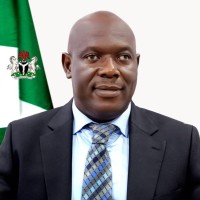
The Hydrocarbon Pollution Remediation Project (HYPREP) has commemorated the 15th anniversary of the release of the United Nations Environment Programme (UNEP) Environmental Assessment Report on Ogoniland, reaffirming its commitment to restoring the environment and improving the livelihoods of affected communities.
In a statement signed by the Project Coordinator, Prof Nenibarini Zabbey, to commemorate the anniversary, HYPREP described the anniversary as a significant milestone in Nigeria’s environmental restoration efforts, noting that the project has made remarkable progress in implementing the recommendations of the landmark UNEP report released on August 4, 2011.
The UNEP report had revealed extensive oil pollution across Ogoniland, severe environmental degradation, and serious public health risks resulting from decades of petroleum operations. It also recommended an initial $1 billion fund to commence the cleanup of the affected communities.
According to HYPREP, the Federal Government formally launched the Ogoni clean-up in 2016, while the Project Coordination Office was established in 2017 to drive the implementation of UNEP’s recommendations.
Zabbey said the current administration has continued to prioritise the project under the Renewed Hope Agenda.
Providing an update on the cleanup, the Project Coordinator disclosed that 30 of the 65 contaminated sites identified by UNEP have been fully remediated, while work is ongoing at several medium- and high-risk locations. It also stated that more than 1.5 million mangrove seedlings have been planted as part of what it described as the world’s largest restoration of oil-degraded mangroves, with over 1,000 hectares of shoreline already rehabilitated.
Zabbey further revealed that 49 Ogoni communities have been connected to potable water schemes through multiple water projects and booster stations aimed at providing safe drinking water across the region.
In the health sector, he said the 100-bed Ogoni Specialist Hospital in Kpite and the 43-bed Cottage Hospital in Buan are nearing completion, adding that several existing health facilities have been upgraded with modern medical equipment, while five ambulances have been donated to improve emergency healthcare services. The Project Coordinator also disclosed that a three-year human health biomonitoring study is being conducted in collaboration with the World Health Organization’s International Agency for Research on Cancer (IARC).
On economic empowerment, Zabbey stated that the Project has created more than 8,000 direct jobs and trained thousands of Ogoni youths and women in various vocational and technical skills, including software development, cybersecurity, aviation, commercial diving, seafaring, mechatronics, and creative arts. The project also reported awarding scholarships to more than 1,000 students, providing grants to small businesses, and supporting persons living with special needs through skills acquisition programmes.
The statement further highlighted ongoing legacy projects, including the Ogoni Power Project and the Centre of Excellence for Environmental Restoration, which it said is about 96 per cent complete. HYPREP also welcomed the recent designation of the Ogoni Wetland as a Ramsar Site of International Importance and pledged to continue promoting biodiversity conservation and sustainable management of the ecosystem.
Marking the anniversary, Zabbey said the progress achieved over the past 15 years demonstrates the collective commitment of government, development partners, stakeholders, and local communities to restoring Ogoniland. He called for renewed collaboration to sustain the cleanup effort, promote environmental sustainability, and support the long-term development of the region. 3
-

 News1 day ago
RSG Targets Nine Million Residents in Mosquito Net Distribution Campaign
-

 Oil & Energy1 day ago
Aiyedatiwa Signs New Electricity Bill
-

 Maritime1 day ago
Marine Minister Commends President Tinubu On NPERA Bill Assent
-

 Oil & Energy1 day ago
NLNG Commissions Research And Innovation Centre In RSU
-

 News1 day ago
KenPoly Holds Eight Convocations, August 29
-

 News1 day ago
RMAFC Completes Revenue Sharing Review, Proposes New Pay
-

 News1 day ago
RSG Begins Another Phase of Projects Commissioning Today
-

 Maritime1 day ago
NAGAFF Petitions IGP Over Alleged Maritime Police Harassment