
Nation
THE STATES

Bauchi
The National Orientation Agency (NOA) in Bauchi State has called on wives of the local government chairmen in the state to educate rural women on government policies and gender mainstreaming issues.
Director of the agency, Hajiya Jummai Liman-Bello made the call in an interview last Friday in Bauchi.
She said that the measure would foster better understanding of gender mainstreaming issues by women at the grassroots, and commended the state’s Ministry for Women Affairs for enlightening the wives of top government functionaries in the state on gender issues.
FCT
A former Director-General of the Peoples Democratic Institute (PDI), Mr Anthony Ubani, has commended President Goodluck Jonathan for showing courage and good judgement in slamming state of emergency on Borno, Yobe and Adamawa States.
In a statement in Abuja last Thursday, Ubani described the president’s state of emergency declaration as a bold and constitutional move, designed to arrest the mindless bloodletting in some parts of the north.
He expressed his optimism that the president’s action would restore peace, law and order in the three states that had been under siege because of the activities of the Islamist Boko Haram sect.
Jigawa
The National Drug Law Enforcement Agency (NDLEA) in Jigawa last Thursday appealed to the state assembly to enact laws to prohibit the sales of illicit drugs and substances.
The Commandant of the NDLEA, Malam Ibrahim Abdu, who made the appeal in an interview in Dutse said this had become necessary in view of the proliferation and abuse of drugs, including cough syrup, forte-win injection, rubber solution, tramol, and local gin (ogogoro), among others.
He said that the trade had persisted in the state because there were no laws banning the sales and consumption of these substances.
Lagos
One person is suspected to have died in a collapsed building located at Godo Blocks Estate, Ibereko in Badagry last Saturday.
The victim, Kehinde Williams (28), a carpenter, was working in the building when it collapsed.
An eyewitness, who visited the scene, learnt that the building collapsed about 10a.m. but the rescue work did not begin till 12.24p.m.
An eyewitness said that the deceased was trying to remove the planks from the deck of the building when it collapsed.
“At about 10a.m., Kehinde came to the building to remove the planks from the deck recently constructed.
“From our observations, it appeared that the blocks used for the construction were not of high quality and the cement was not yet dry before he started removing the planks from the deck.
“It was while removing the planks that the building collapsed,” the witness said.
The source said if attention was immediately rendered to the victim, he might still be alive.
Kaduna
The Arewa Consultative Forum (ACF), last Thursday said it would constitute a team that would monitor the conduct of the military in enforcing the state of emergency declared in Borno, Yobe and Adamawa states.
The decision was contained in a statement issued by the ACF Deputy National Publicity Secretary, Fati Ibrahim after its National Executive Council meeting chaired by Alhaji Aliko Mohammed in Kaduna.
Sani-Sidi made the call last Thursday in Abuja when he received a delegation from the National Institute for Policy and Strategic Studies (NIPSS), on a tour of the agency.
The director-general said that the collaboration among government institutions, individuals and critical stakeholders would safeguard lives, property and vital infrastructure, as well as sustain the development of the country.
Kano
Bayero University Kano (BUK), has indicated interest to partner with universities in Saudi Arabia in the area of science, technology and staff exchange.
This is contained in the official bulletin of the university issued by its Publications and Documentation Unit and made available to newsmen in Kano recently.
According to the bulletin, the Vice Chancellor of the university, Prof Abubakar Rasheed, made the proposal to the Consul-General of the Kingdom of Saudi Arabia, Majid Muhammad Al-khatani when he visited him.
Katsina
The Katsina State Government has begun the disbursement of N35.8 million under its Conditional Cash Transfer (CCT) programme to 6, 966 primary school girls in the state.
The Special Adviser to Gov. Ibrahim Shema on Girl-child Education and Development, Hajiya Bilkisu Kaikai, said the amount was being disbursed to selected pupils under the fifth round of the programme.
She said while issuing out the grant to some of the beneficiaries at Unguwar Tsamiya village in Kaita Local Government Area of the state recently, that each of the girls would receive N5,000.
She added that the money was to support pupils from very poor homes in the pursuit of primary school education and urged parents in the state to enrol their wards especially girls into schools.
Kogi
The Kogi State Government is to partner with a U.S. firm, Carghil, to establish a starch company at Agbadu in the Kogi West Senatorial District.
Gov. Idris Wada, who made the announcement in Lokoja recently, said that the company would also produce sucrose and other sweeteners to be used in the manufacturing of other products. He said that the company would source its raw materials from a special variety of cassava which it intended to introduce to Nigeria through the Kogi Government, adding that 15, 000 hectares of land has been allocated to the company.
Oyo
The Chairman, National Certification Committee for Guinea Worm Eradication, Prof. Kayode Oyediran, has expressed optimism that Nigeria would be certified free of guinea worm by the World Health Organisation (WHO).
“I believe we will be certified fully in June when the International Certification Team of the WHO comes to Nigeria for the final assessment,’’ he told newsmen in Ibadan last Saturday.
Oyediran spoke on the sideline of the sensitisation meeting organised by the Nigeria Guinea Worm Eradication Programme (NIGEP).
The former Vice-Chancellor of the University of Ibadan said the WHO certification team would be concerned about the number of the disease’s “rumoured cases and actual cases’’ during the period.
Plateau
Rep Godfrey Gaiya (PDP-Kaduna) has suggested the return of mobile police check points to deter criminals, especially in flash points around the country.
The lawmaker said in Jos that “their mere presence is enough to scare many criminals”.
Gaiya said that such complaints were nothing compared to the usefulness of the road blocks to the Nigerian society.
He blamed the massive insecurity on the absence of the police on the roads and decried a situation where criminals could travel very long distances without being accosted with their loots or illegal arms.
Sokoto
The Minister of Youth Development, Alhaji Inuwa Abdulkadir, has restated the commitment of the Federal Government to maximise the desired impact of the NYSC programme on national unity.
Abdulkadir said this in Sokoto Wednesday at the opening of the 2013 Annual Management Conference of the NYSC scheme, recently.
He noted that the NYSC Programme was in tandem with the transformation agenda of President Goodluck Jonathan’s administration.
The theme of the conference is “The Relevance of NYSC to National Development: Achievements, Challenges, Prospects and the Way Forward.’’
Abdulkadir, however, said that the scheme would have recorded greater successes but for the current security challenges.
Zamfara
The Inspector-General of Police, Mohammed Abubakar, says police will now strengthen partnership with communities to identify potential national security threats.
The IG said this on Saturday in Gusau at the opening of a one-day Intelligence Sensitisation and Community Partnership Workshop.
Abubakar, who was represented on the occasion by the AIG North West Zone, Suleiman Fakai, said partnership with communities would now take “central role in preventing and responding to terrorism and reducing citizens’ security concerns”.
The measure, according to him, will also enhance national security, protection of lives and property and stabilise democracy.
He said through community vigilance, an effective policing of the society would be ensured as more useful information on criminals and their activities would be forthcoming.
He said the workshop, which also involved the participation of media practitioners, would encourage newsmen to assist in reducing tension.
He said through feedback methods, “the media can also help to monitor and evaluate government performances to meet the minimum expectations of the people”.



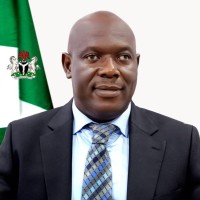
The Hydrocarbon Pollution Remediation Project (HYPREP) has commemorated the 15th anniversary of the release of the United Nations Environment Programme (UNEP) Environmental Assessment Report on Ogoniland, reaffirming its commitment to restoring the environment and improving the livelihoods of affected communities.
In a statement signed by the Project Coordinator, Prof Nenibarini Zabbey, to commemorate the anniversary, HYPREP described the anniversary as a significant milestone in Nigeria’s environmental restoration efforts, noting that the project has made remarkable progress in implementing the recommendations of the landmark UNEP report released on August 4, 2011.
The UNEP report had revealed extensive oil pollution across Ogoniland, severe environmental degradation, and serious public health risks resulting from decades of petroleum operations. It also recommended an initial $1 billion fund to commence the cleanup of the affected communities.
According to HYPREP, the Federal Government formally launched the Ogoni clean-up in 2016, while the Project Coordination Office was established in 2017 to drive the implementation of UNEP’s recommendations.
Zabbey said the current administration has continued to prioritise the project under the Renewed Hope Agenda.
Providing an update on the cleanup, the Project Coordinator disclosed that 30 of the 65 contaminated sites identified by UNEP have been fully remediated, while work is ongoing at several medium- and high-risk locations. It also stated that more than 1.5 million mangrove seedlings have been planted as part of what it described as the world’s largest restoration of oil-degraded mangroves, with over 1,000 hectares of shoreline already rehabilitated.
Zabbey further revealed that 49 Ogoni communities have been connected to potable water schemes through multiple water projects and booster stations aimed at providing safe drinking water across the region.
In the health sector, he said the 100-bed Ogoni Specialist Hospital in Kpite and the 43-bed Cottage Hospital in Buan are nearing completion, adding that several existing health facilities have been upgraded with modern medical equipment, while five ambulances have been donated to improve emergency healthcare services. The Project Coordinator also disclosed that a three-year human health biomonitoring study is being conducted in collaboration with the World Health Organization’s International Agency for Research on Cancer (IARC).
On economic empowerment, Zabbey stated that the Project has created more than 8,000 direct jobs and trained thousands of Ogoni youths and women in various vocational and technical skills, including software development, cybersecurity, aviation, commercial diving, seafaring, mechatronics, and creative arts. The project also reported awarding scholarships to more than 1,000 students, providing grants to small businesses, and supporting persons living with special needs through skills acquisition programmes.
The statement further highlighted ongoing legacy projects, including the Ogoni Power Project and the Centre of Excellence for Environmental Restoration, which it said is about 96 per cent complete. HYPREP also welcomed the recent designation of the Ogoni Wetland as a Ramsar Site of International Importance and pledged to continue promoting biodiversity conservation and sustainable management of the ecosystem.
Marking the anniversary, Zabbey said the progress achieved over the past 15 years demonstrates the collective commitment of government, development partners, stakeholders, and local communities to restoring Ogoniland. He called for renewed collaboration to sustain the cleanup effort, promote environmental sustainability, and support the long-term development of the region. 3
-

 News2 days ago
RSG Targets Nine Million Residents in Mosquito Net Distribution Campaign
-

 Oil & Energy2 days ago
Aiyedatiwa Signs New Electricity Bill
-

 Oil & Energy2 days ago
NLNG Commissions Research And Innovation Centre In RSU
-

 Maritime2 days ago
Marine Minister Commends President Tinubu On NPERA Bill Assent
-

 News2 days ago
KenPoly Holds Eight Convocations, August 29
-

 News2 days ago
RSG Begins Another Phase of Projects Commissioning Today
-

 News2 days ago
RMAFC Completes Revenue Sharing Review, Proposes New Pay
-

 Maritime2 days ago
NAGAFF Petitions IGP Over Alleged Maritime Police Harassment