
Nation
THE STATES

Benue
Gov. Gabriel Suswam of Benue State has signed the state’s 2012 Appropriation bill of N112 billion.
The governor also signed three other bills namely a bill to amend Local Government Law 2007, a bill to amend Benue Independent Electoral Commission Act and a bill to amend Benue State Electoral Law 2007.
Speaking after appending his signature to the appropriation bill, Suswam said he would ensure that only proposals captured in the budget were funded.
He warned that no ministry, department or agency would be allowed to indulge in extra budgetary spending.
The governor urged commissioners and permanent secretaries to adhere strictly to only provisions captured in the budget.
Earlier, Mr David Iorhemba, Speaker, Benue State House of Assembly, assured that the legislature would ensure full implementation of the budget through its oversight functions.
Bornoo
The Borno Government said on Tuesday that it would plant two million trees across the state in a bid to check desert encroachment.
The state Commissioner for Environment, Alhaji Mustapha Hassan, disclosed this in Maiduguri while speaking with newsmen.
“The state government is working towards planting two million trees as part of efforts to control desert encroachment in the state.
“In planting the trees, we are also hoping to empower rural farmers so that they can generate income from the trees,” Hassan said.
He said that government would soon procure the seedlings, adding that it would assorted economic and non- economic trees.
“Additionally, the government will encourage the establishment of orchards in all parts of the state to further accelerate the programme.”
Edo
The Edo State Police Command has deployed the Special Anti-Robbery Squad has been deplored to Auchi, to curb the incessant bank robbery in the area.
The deployment was as a result of an agreement between the banks and the authorities for the banks to open for business after a week of closure.
It will be recalled that there has been incessant attack on banks in the area by armed robbers, the latest of which was that of April 9, when robbers attacked bullion vans in the area.
The attack had led to the Edo branch of the Bankers Forum to order banks to close their doors against costumers until the security situation in the area was addressed.
The banks, however, agreed to reopen for business on Monday with strong a condition.
Kaduna
Gov. Patrick Yakowa of Kaduna State on Monday urged residents to assist the state government to tackle the current security challenges.
Yakowa, who made the call when he paid sympathy visit to the victims of the Easter day bomb explosion in Kaduna, described the explosion as “unfortunate and unnecessary”.
He said the people must resolve to ensure the security of their environment and to collaborate with security agencies to safeguard their lives and property.
“Security is the business of everybody, the people in the state should take security seriously, the security agencies can only succeed if we provide information to them.”
He assured the people that the government would continue to partner with traditional and religious leaders to preach peace and unity in the state.
“In the north we have a structure and a system, if properly used, from the chief, the village head to every household, we would be able to resolve the security challenges.”
He commiserated with families of the victims, assuring them that appropriate assistance would be offered to them.
Kano
The Rural Water and Sanitation Agency (RUWASA) in Kano State says that it will construct public conveniences in 12 markets and motor parks in some local government areas of the state.
The decision is part of the renewed effort to check indiscriminate open defecation in public places, especially among villagers in the rural areas.
Alhaji Garba Durbunde, the state Commissioner for Rural and Community Development, disclosed this while briefing newsmen in Kano on Tuesday.
“The toilets to be constructed are modern ones as they will have water and other necessary facilities in them.’’
He also said that the Japan International Cooperation Agency (JICA) had also promised to construct additional public conveniences in some of the local government areas of the state.
Katsina
The Katsina State Government built 1,172 units of houses for civil servants in the last four years, Gov. Ibrahim Shema said.
The governor made the statement in Katsina on Tuesday when he received a delegation from the Federal Housing Authority (FHA), led by its Executive Director, Alhaji Bello Isah Gachi.
He said the houses were sold at subsidised prices to workers, who were required to deposit 10 per cent of the cost and pay the remainder in instalments for 15 years.
Shema said the 34 local governments in the state had also constructed some houses for workers.
“The gesture is in line with the efforts of government to alleviate the accommodation needs of workers,” he said.
The governor, who described shelter as a ‘’basic necessity in life’’, said the intention of FHA to build more houses in Katsina State was `timely’.
He said the agency’s efforts would complement the effort of the state government to provide more houses for the people.
Kwara
Residents of Moro, Edu, Patigi and Kaiama Local Government Areas in Kwara have been urged to take proactive measures to minimise damages from heavy rainfall and flood expected due to a forecast.
The Commissioner for Environment and Forestry, Hon. Samuel Bamisaiye, gave this charge in an interview in Ilorin.
According to him, the warning becomes necessary in order to minimise damages that may occur as a result of the forecast heavy rainfall and its attendant flood.
He said that after an alert from the Federal Ministry of Environment through its Flood Early Warning System (FEWS), the ministry decided to sensitise residents.
Bamisaiye said there was the need for all buildings and structures along river banks or on streams to be evacuated with immediate effect.
Lagos
The Agboyi-Ketu Local Council Development Area (LCDA) of Lagos State is organising free holiday lessons for secondary school students, to address the mass failure in O’ Level examinations.
The Chairman of the LCDA, Mr Obafemi Durosimi, told the News Agency of Nigeria (NAN) on Tuesday in Lagos that the council was worried at the continued mass failure.
Durosimi expressed the hope that the lessons would also divert the attention of students from vices.
“The council has also acquired three buses for the students to facilitate their movement to their various schools.’’
Nasarawa
Nasarawa State Government said on Tuesday that it had concluded arrangements to re-equip all public secondary schools with science laboratories and library facilities to boost education.
Alhaj iHussaini Abubakar, the Commissioner for Education, announced the plan in Lafia at a three-day capacity building workshop for principals and deans of studies of secondary schools.
The commissioner, who was represented by the Permanent Secretary in the ministry, Hajiya Zainab Abdulmuminin, said the government was worried about the decay of infrastructure in public secondary schools.
He said the development prompted the ministry to evolve a blueprint to boost the study of science and technical education to enable the state to grow technologically.
Plateau
Gov. Jonah Jang of Plateau says his administration will make the state self-sustaining by making agriculture the mainstay of its economy and relying less on the federal revenue allocation.
Jang, who stated this on Monday in Jos when he received participants of the National Institute for Policy and Strategic Studies (NIPSS) Senior Executive Course 34, said that Plateau was blessed with abundant natural resources.
He expressed regret that the state used to rely on the meagre monthly federal revenue allocation, but assured that it could no longer continue to rely on the federation account and was now developing its huge agriculture potential.
Sokoto
The Sokoto State Commissioner for Agriculture and Natural Resources, Dr. Jabbi Kilgore, on Tuesday urged the Federal Government to equip the National Directorate of Employment (NDE) to enable it to train the teeming youth on new farming techniques.
Kilgore said in Sokoto that the provision of job opportunities among the youth would enhance peace and political growth of the country.
He said the directorate should engage the unemployed youth in various methods of modern farming, including dry and rainy season cropping, to ensure massive food production.
The Commissioner said the measure would eradicate poverty in the society, adding that the country was blessed with abundant vast land suitable for various crops production.



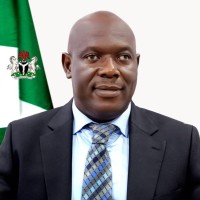
The Hydrocarbon Pollution Remediation Project (HYPREP) has commemorated the 15th anniversary of the release of the United Nations Environment Programme (UNEP) Environmental Assessment Report on Ogoniland, reaffirming its commitment to restoring the environment and improving the livelihoods of affected communities.
In a statement signed by the Project Coordinator, Prof Nenibarini Zabbey, to commemorate the anniversary, HYPREP described the anniversary as a significant milestone in Nigeria’s environmental restoration efforts, noting that the project has made remarkable progress in implementing the recommendations of the landmark UNEP report released on August 4, 2011.
The UNEP report had revealed extensive oil pollution across Ogoniland, severe environmental degradation, and serious public health risks resulting from decades of petroleum operations. It also recommended an initial $1 billion fund to commence the cleanup of the affected communities.
According to HYPREP, the Federal Government formally launched the Ogoni clean-up in 2016, while the Project Coordination Office was established in 2017 to drive the implementation of UNEP’s recommendations.
Zabbey said the current administration has continued to prioritise the project under the Renewed Hope Agenda.
Providing an update on the cleanup, the Project Coordinator disclosed that 30 of the 65 contaminated sites identified by UNEP have been fully remediated, while work is ongoing at several medium- and high-risk locations. It also stated that more than 1.5 million mangrove seedlings have been planted as part of what it described as the world’s largest restoration of oil-degraded mangroves, with over 1,000 hectares of shoreline already rehabilitated.
Zabbey further revealed that 49 Ogoni communities have been connected to potable water schemes through multiple water projects and booster stations aimed at providing safe drinking water across the region.
In the health sector, he said the 100-bed Ogoni Specialist Hospital in Kpite and the 43-bed Cottage Hospital in Buan are nearing completion, adding that several existing health facilities have been upgraded with modern medical equipment, while five ambulances have been donated to improve emergency healthcare services. The Project Coordinator also disclosed that a three-year human health biomonitoring study is being conducted in collaboration with the World Health Organization’s International Agency for Research on Cancer (IARC).
On economic empowerment, Zabbey stated that the Project has created more than 8,000 direct jobs and trained thousands of Ogoni youths and women in various vocational and technical skills, including software development, cybersecurity, aviation, commercial diving, seafaring, mechatronics, and creative arts. The project also reported awarding scholarships to more than 1,000 students, providing grants to small businesses, and supporting persons living with special needs through skills acquisition programmes.
The statement further highlighted ongoing legacy projects, including the Ogoni Power Project and the Centre of Excellence for Environmental Restoration, which it said is about 96 per cent complete. HYPREP also welcomed the recent designation of the Ogoni Wetland as a Ramsar Site of International Importance and pledged to continue promoting biodiversity conservation and sustainable management of the ecosystem.
Marking the anniversary, Zabbey said the progress achieved over the past 15 years demonstrates the collective commitment of government, development partners, stakeholders, and local communities to restoring Ogoniland. He called for renewed collaboration to sustain the cleanup effort, promote environmental sustainability, and support the long-term development of the region. 3
-

 News2 days ago
RSG Targets Nine Million Residents in Mosquito Net Distribution Campaign
-

 Oil & Energy2 days ago
Aiyedatiwa Signs New Electricity Bill
-

 Oil & Energy2 days ago
NLNG Commissions Research And Innovation Centre In RSU
-

 Maritime2 days ago
Marine Minister Commends President Tinubu On NPERA Bill Assent
-

 News2 days ago
KenPoly Holds Eight Convocations, August 29
-

 News2 days ago
RSG Begins Another Phase of Projects Commissioning Today
-

 News2 days ago
RMAFC Completes Revenue Sharing Review, Proposes New Pay
-

 Maritime2 days ago
NAGAFF Petitions IGP Over Alleged Maritime Police Harassment