
Nation
THE STATES

Borno
Governor Kashim Shettima of Borno has promised to reconstruct public schools destroyed recently by Boko Haram members in Maiduguri metropolis.
The group had taken responsibility for setting ablaze 10 schools in the city last month.
Shettima, who was inspecting one of the schools at Gwange, said the destruction of the schools was a huge set back, but pledged to ensure their quick reconstruction.
“It is hard, it is disturbing that our own sons are busy going about burning schools.
“The burning of schools can not be justified under any guise because the Prophet of Islam during his time urged Muslims to seek knowledge even in far away China.”
Shettima said burning centres of learning was unIslamic and unjustifiable.
“These schools serve many purposes; in the morning pupils take lessons, in the afternoon they serve as adult classses and in the evening women classes are held.
Ekiti
A non-government organisation, Centre for Human Development, has been rallying support for all female candidates ahead of the local government election in Ekiti State.
The executive director of the centre, Prof. Simi Afouda, said this at a meeting with artisans and other segments of the Society at Aramoko-Ekiti last Tuesday.
She urged the electorate to give woman a chance to be elected into political offices, saying that doing so would speed up development especially at the grassroots.
The CHD is being supported by the department for international development, United Nations Development programme to canvass support for more women to take elective positions.
FCT
The Prisoners Rehabilitation and Welfare Action (PRAWA), an NGO, has called for the sensitisation of the public on their fundamental human rights to address insecurity in the country.
Mr Tony Agbor, the Assistant Programmes Coordinator of PRAWA in the FCT Zone, made the call in an interview with newsmen on Tuesday in Abuja.
He said it was unfortunate that the security challenge in the country was hindering efforts at growing the economy.
“The issue of insecurity in Nigeria can be looked up from the position of people who are predisposed to violence.
“Government should look at providing basic access to information that will educate people on their rights and how to better exercise their rights.
“Government should take a look at this angle and provide capacity building in this area, creating awareness around laws that are set is vital.”
Gombe
The Magistrates’ Court number one, Kasuwar Shanu Gombe, on Tuesday arraigned one Abubakar Inuwa, 37, of Tudun Wada quarters Gombe, for alleged criminal breach of trust and cheating.
The Prosecutor, ASP Aminu Ibrahim, told the court that on January 23, the accused person collected the sum of N1.5 million from one Alhaji Abubakar Ahmed of Bajoga, Funakaye Local Government Area of Gombe.
According to the prosecutor, the accused person was sent with the money to give Alhaji Sadiq Umar, a brother to Ahmed and the accused converted the amount to his own personal use, thereby committing an offence contrary to section 311 and 320 of the Penal Code.
Counsel to the accused, Mr Sunday Akporido, who cited sections 341 and 36 of the Constitution, urged the court to grant the accused person bail.
Kaduna
The Kaduna State Fadama III Office says it has so far disbursed N300 million to 17,254 farming groups in the state.
The Project Coordinator, Mr Ishaku Dauda, told newsmen in Kaduna, that the group included 5,496 women.
.Dauda said that the programme had also constructed 30 kms of feeder roads, enabling farmers to transport their produce to the markets.
According to him, 100 stalls were also constructed in selected rural markets in Birnin Gwari, Zaria and Sanga Local Governments areas state.
Dauda said that the programme had also assisted Fadama User Groups with irrigation pumps, processing machines, sprayers, work bull and ox ridges, to boost their productivity.
Kano
Hotel owners in Kano State say there are experiencing low patronage due to the prevailing insecurity in the state.
Some of the operators, who spoke to newsmen in Kano said that the low level of patronage had affected their profits and the cost of maintaining facilities.
The hotel owners said the prevailing situation had prevented many people from coming into the state to do business and that the development had forced many customers to stay away from hotels.
Mr Mike Ado, a Hotel Manager, said that the situation in the state had adversely affected businesses and other social activities.
“Many customers, who come to the state from far and near including neighbouring Niger and Cameroon, for business, have stopped coming here due to the security challenge.’’
Lagos
The Chairman of Nigerian Insurers Association (NIA), Mr Ladipo Ajayi, has promised to ensure that unlicensed intermediaries were stopped from selling insurance products.
He told newsmen in Lagos that the association was determined to stamp out quacks.
Ajayi said that some unlicensed intermediaries planned to form a cartel to monopolise products of few insurance companies.
“Now, the NIA is working to stamp out this practice.
“Every insurance company must be able to sell its products anywhere in the county.
“Anyone, who must be involved in the distribution of insurance products, must be licenced by the National Insurance Commission (NAICOM) and be subjected to its control,’’ he said.
Ajayi said that the association was taking the measure to ensure that insurance companies got the commensurate premium to be able to pay claims when they arose.
Nasarawa
The Nasarawa State Police Command has arrested a herdsman with 20 rounds of AK 47 ammunition and one cartridge of a single barrel gun.
The arrest followed repeated attacks on Kadarko town and environ in Keana Local Government Area of the state.
Confirming the arrest the Police Public Relations Officer (PPRO) Mr Cornelius Ocholi, said that the suspect was arrested on Monday evening at Kwarra Village on his way to Giza Development Area.
Ocholi told newsmen that the suspect, in his confessional statement, said, the ammunition were given to him by one ‘Burorno’ now at large, to be taken to their kinsmen who were fighting ‘a war’ in Giza.
He said that the suspect was being detained at state Criminal Investigation Department (CID) in Lafia, while investigation was on to arrest more suspects following useful information given by the suspect.
Ogun
The National Association of Women Journalists (NAWOJ) has called on the Federal Government to impose stiffer penalties for rapists to serve as a deterrent to others.
This was contained in a communiqué issued at the end of its 2012 National Executive Council (NEC) meeting held in Abeokuta last Saturday.
NAWOJ also advocated for a legislation to cater for domestic violence as well as protect young girls against harmful traditional practices and molestation.
“NAWOJ is also calling on the Federal Government to domesticate the CEDAW bill and the total elimination of all kinds of violence against women,’’ the communiqué said.
The association urged the Federal Government to fully implement the 35 per cent affirmative action and commended the Inspector-General of Police for the removal of road blocks across the country.
It, however, advocated for the introduction of community policing, vigilante groups and other security structures to assist the police in ensuring the safety of lives and property.
Oyo
The Acting State Librarian in Oyo, Mrs Adetokunbo Adigun, says the State Library Board is to open its e-resource centre in April.
She told newsmen in Ibadan that the move was in line with the governor’s resolve to ensure that the library met world standards.
Adigun, who commended Gov. Abiola Ajimobi for his desire to transform the state, further said:
“The Ajimobi-led government is different. Innovative intellectuals are positioned in key sectors in restoring the state to it previous glory as a pace setter.
“The library itself is already beaming positively as reflected by the improvement in infrastructure and socio-dynamic services, and I must say, the feedback is overwhelming and encouraging.
“The icing on the cake for us will be the inauguration of our e-resource centre later in April by His Excellency, the first of its kind in the history of this state,’’ she said.
Plateau
An optometrist, Dr. Francisa Ekwuribe, has described glaucoma as a major cause of irreversible blindness in humans.
Ekwuribe, who works at the Tadam Medical Centre, Jos, told newsmen that only a few sufferers were, however, aware that they had the disease.
She explained that eye disease lacked early warning signs or symptoms in most people, a situation that usually makes it difficult for such individuals to be aware of what was happening.
“ The Optometrist described glaucoma as an eye disease that damages the optic nerve that is responsible for transmitting electrical impulses to the brain.
Ekwuribe said the damage usually occurs as a result of elevated pressure of the fluid in the eye.
According to her, such pressure is also known as “intraocular pressure’’.



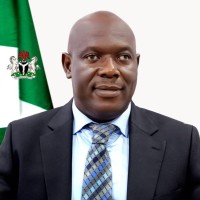
The Hydrocarbon Pollution Remediation Project (HYPREP) has commemorated the 15th anniversary of the release of the United Nations Environment Programme (UNEP) Environmental Assessment Report on Ogoniland, reaffirming its commitment to restoring the environment and improving the livelihoods of affected communities.
In a statement signed by the Project Coordinator, Prof Nenibarini Zabbey, to commemorate the anniversary, HYPREP described the anniversary as a significant milestone in Nigeria’s environmental restoration efforts, noting that the project has made remarkable progress in implementing the recommendations of the landmark UNEP report released on August 4, 2011.
The UNEP report had revealed extensive oil pollution across Ogoniland, severe environmental degradation, and serious public health risks resulting from decades of petroleum operations. It also recommended an initial $1 billion fund to commence the cleanup of the affected communities.
According to HYPREP, the Federal Government formally launched the Ogoni clean-up in 2016, while the Project Coordination Office was established in 2017 to drive the implementation of UNEP’s recommendations.
Zabbey said the current administration has continued to prioritise the project under the Renewed Hope Agenda.
Providing an update on the cleanup, the Project Coordinator disclosed that 30 of the 65 contaminated sites identified by UNEP have been fully remediated, while work is ongoing at several medium- and high-risk locations. It also stated that more than 1.5 million mangrove seedlings have been planted as part of what it described as the world’s largest restoration of oil-degraded mangroves, with over 1,000 hectares of shoreline already rehabilitated.
Zabbey further revealed that 49 Ogoni communities have been connected to potable water schemes through multiple water projects and booster stations aimed at providing safe drinking water across the region.
In the health sector, he said the 100-bed Ogoni Specialist Hospital in Kpite and the 43-bed Cottage Hospital in Buan are nearing completion, adding that several existing health facilities have been upgraded with modern medical equipment, while five ambulances have been donated to improve emergency healthcare services. The Project Coordinator also disclosed that a three-year human health biomonitoring study is being conducted in collaboration with the World Health Organization’s International Agency for Research on Cancer (IARC).
On economic empowerment, Zabbey stated that the Project has created more than 8,000 direct jobs and trained thousands of Ogoni youths and women in various vocational and technical skills, including software development, cybersecurity, aviation, commercial diving, seafaring, mechatronics, and creative arts. The project also reported awarding scholarships to more than 1,000 students, providing grants to small businesses, and supporting persons living with special needs through skills acquisition programmes.
The statement further highlighted ongoing legacy projects, including the Ogoni Power Project and the Centre of Excellence for Environmental Restoration, which it said is about 96 per cent complete. HYPREP also welcomed the recent designation of the Ogoni Wetland as a Ramsar Site of International Importance and pledged to continue promoting biodiversity conservation and sustainable management of the ecosystem.
Marking the anniversary, Zabbey said the progress achieved over the past 15 years demonstrates the collective commitment of government, development partners, stakeholders, and local communities to restoring Ogoniland. He called for renewed collaboration to sustain the cleanup effort, promote environmental sustainability, and support the long-term development of the region. 3
-

 News2 days ago
RSG Targets Nine Million Residents in Mosquito Net Distribution Campaign
-

 Oil & Energy2 days ago
Aiyedatiwa Signs New Electricity Bill
-

 Oil & Energy2 days ago
NLNG Commissions Research And Innovation Centre In RSU
-

 Maritime2 days ago
Marine Minister Commends President Tinubu On NPERA Bill Assent
-

 News2 days ago
KenPoly Holds Eight Convocations, August 29
-

 News2 days ago
RSG Begins Another Phase of Projects Commissioning Today
-

 News2 days ago
RMAFC Completes Revenue Sharing Review, Proposes New Pay
-

 Maritime2 days ago
NAGAFF Petitions IGP Over Alleged Maritime Police Harassment