
Nation
THE STATES

Adamawa
Torrential rainfall which resulted to flooding have submerged several houses and bridges in some parts of Yola, the capital of Adamawa.
The rainfall, which lasted for seven hours, damaged houses and destroyed property worth millions of naira.
Our correspondent reports that the worst hit areas of the town includes Yolde-Pate, timber market, Damare, Shagari quarters, Wuro Hausa, Jambutu and Unguwan Tana.
At Yolde-Pate, some big culverts that linked the area with other parts of Yola town were submerged.
As a result of this, residents in flooded areas were stranded as they were unable to relocate to safer areas.
Bauchi
The Conditional Cash Transfer Programme of the Bauchi State Government for girl-child education has gulped N50 million within the last five years.
The Chief Coordinator of the Programme, Alhaji Karijo Buba made this known on Tuesday in Giade.
The programme is being undertaken in line with the Millennium Development Goals (MDGs) .
Buba made the disclosure while distributing letters of invitation to participate in the programme to some selected girls in Darazo, Dambam, Giade, Kirfi, Zaki and Dass local government areas of the state.
Buba said that the programme commenced in 2007 with 260 schools in the six local government areas as a pilot programme.
According to him, 9,880 girls between the ages of eight and 15 years in 245 schools have so far benefited from the programme.
The coordinator said that each of the beneficiaries was being paid N5,000 per term to enable them finance their education within the five year period stipulated by the programme.
Borno
The Borno State Government will soon embark on the spraying of farmlands with chemicals to prevent their invasion by Quela birds and grasshoppers.
Alhaji Usman Zannah, the Commissioner of Agriculture and Natural Resources, made this known on Thursday when he visited the state’s chemical store in Dalori, Maiduguri.
He said that the government had already mobilised the technical staff and other workers of the ministry for the programme.
“We have already begun the mobilisation of the technical staff and others needed for the smooth take-off of the programme.
“The essence is to protect farmlands from the yearly attacks by the invading birds and grasshoppers,’’ he said.
Zannah said that the government was according priority attention to the development of the agriculture sector because of its enormous potential.
“Government believes the sector has great potential of ensuring food security and providing employment for the teeming unemployed youths in the state,” he said.
FCT
The Independent National Electoral Commission (INEC) said in Abuja on Monday that it was set to carry out a major restructuring of political boundaries for the 2015 general elections.
Mr Kayode Idowu, Chief Press Secretary to INEC Chairman Attahiru Jega, made this known in an interview with newsmen.
Idowu said that consensus building and legislative work were crucial considering the intricacies surrounding the delineation exercise.
He noted that the exercise was expected to come with some major proposals and alignments that might shape the politics of the country.
Our correspondent recalls that INEC’s inability to carry out the delineation before April’s general elections was due to limited time available to the new leadership of the commission to prepare for the elections.
“If you understand the intricacies of delineation, it takes a lot of consensus building and legislative actions.
Kaduna
Mr Musa Tete, the Coordinator of World Bank’s N1.4 billion contract, awarded for the construction of 132 bridges in Kaduna State, says that the project is 80 per cent completed.
Tete, who oversees the Rural Access and Mobility Project (RAMP) in Kaduna State, made this known on Thursday, while speaking with newsmen in Kaduna.
He said that 112 river crossing bridges across the 23 local government areas of the state had been completed.
Tete said that 30 projects, including the construction of culverts and bridges, were still ongoing.
Lagos
The Nigerian Electricity Regulatory Commission (NERC) has urged estate management companies to immediately transfer all electricity distribution services to the Power Holding Company of Nigeria (PHCN) distribution companies.
Mr Chijioke Obi, Manager, Legal Licencing and Enforcement of NERC, made the plea on Monday at an enlightenment campaign held for estate developers and Lagos residents.
Obi also urged the distribution companies to seek the commission’s approval for the regularisation of the power supply arrangement in the estates.
Ibrahim said that the commission would embark on enlightenment campaign for Nigerians and estate developers in the six geo-political zones to ensure prompt payment of their electricity bills.
The commission, he said, would also address all the issues and complaints from both the estate developers and residents on the newly introduced Multi-Year Tariff Order (MYTO).
Nasarawa
No fewer than 845 ‘ghost’ workers have been discovered in the Nasarawa Civil Service, with 325 other staff found to have overstayed.
This is contained in a report of a screening, verification and computerisation of payroll and personnel records of ministries, departments and agencies conducted in the month of August.
Presenting the report to Gov. Umaru Al-makura on Thursday in Lafia, the Chairman of the Committee, Alhaji. Shuaibu Ahmed, said that 21,405 staff were on the payroll of the state government with a wage bill of N1.93 billion before the exercise was conducted.
He said the 845 perceived ‘ghost’ workers were those who did not turn up for the screening or had no files and were collecting N62.9 million as salaries monthly.
Niger
The Niger State Government needs about N50 billion to boost its water supply in the next five years, the “Committee on Lasting Solution to Water Supply Problem’’ has declared.
The committee made this known in a statement issued in Minna by its spokesman, Mr Ilya Garba.
It said that the amount would be used for the development of the infrastructure, as well as for the operation and maintenance of water facilities.
It, however, said that due attention ought to be paid to the management of the water facilities across the state so as to achieve regular water supply to the citizens.
The committee said that the adoption of short, medium and long term measures to tackle the people’s water supply problems would reduce the hardship which the people faced in having access to potable water.
It also stressed the need to grant the water board greater autonomy to enable it discharge its responsibilities to the people without any hitches.
Sokoto
Alhaji Muktari Mapia, the Deputy Treasurer of PDP in Sokoto State, has urged the Federal Government to declare a state of emergency in Plateau to stop the cycle of killings going on there.
He made the call on Thursday, while speaking with newsmen in Sokoto.
He stressed that the declaration of a state of emergency was considered imperative because the state government had failed to find a lasting solution to the protracted ethno-religious crises in the state.
Mapia said that intensified security activity was needed to tackle the chaotic situation in Plateau, adding that it had the tendency of threatening the peace of the entire country.
He called on the government to make concerted efforts to restore order in Plateau, while bringing the perpetrators of the killings in the state to justice.
Zamfara
The new Chairman of the Zamfara State Universal Basic Education Board (SUBEB), Alhaji Murtala Jangebe, has ordered the suspension of all bank loans negotiated for teachers by the board.
Jangebe gave the directive in Gusau during a meeting with the education secretaries of the 14 local government councils in the state shortly after assuming duty.
He directed the board’s director of finance to write all commercials banks to stop any further action on the release of loans to the teachers.
The chairman warned that any bank which granted any loan in the name of the board as a guarantor would be doing so at its own risk.



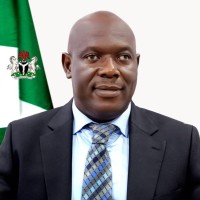
The Hydrocarbon Pollution Remediation Project (HYPREP) has commemorated the 15th anniversary of the release of the United Nations Environment Programme (UNEP) Environmental Assessment Report on Ogoniland, reaffirming its commitment to restoring the environment and improving the livelihoods of affected communities.
In a statement signed by the Project Coordinator, Prof Nenibarini Zabbey, to commemorate the anniversary, HYPREP described the anniversary as a significant milestone in Nigeria’s environmental restoration efforts, noting that the project has made remarkable progress in implementing the recommendations of the landmark UNEP report released on August 4, 2011.
The UNEP report had revealed extensive oil pollution across Ogoniland, severe environmental degradation, and serious public health risks resulting from decades of petroleum operations. It also recommended an initial $1 billion fund to commence the cleanup of the affected communities.
According to HYPREP, the Federal Government formally launched the Ogoni clean-up in 2016, while the Project Coordination Office was established in 2017 to drive the implementation of UNEP’s recommendations.
Zabbey said the current administration has continued to prioritise the project under the Renewed Hope Agenda.
Providing an update on the cleanup, the Project Coordinator disclosed that 30 of the 65 contaminated sites identified by UNEP have been fully remediated, while work is ongoing at several medium- and high-risk locations. It also stated that more than 1.5 million mangrove seedlings have been planted as part of what it described as the world’s largest restoration of oil-degraded mangroves, with over 1,000 hectares of shoreline already rehabilitated.
Zabbey further revealed that 49 Ogoni communities have been connected to potable water schemes through multiple water projects and booster stations aimed at providing safe drinking water across the region.
In the health sector, he said the 100-bed Ogoni Specialist Hospital in Kpite and the 43-bed Cottage Hospital in Buan are nearing completion, adding that several existing health facilities have been upgraded with modern medical equipment, while five ambulances have been donated to improve emergency healthcare services. The Project Coordinator also disclosed that a three-year human health biomonitoring study is being conducted in collaboration with the World Health Organization’s International Agency for Research on Cancer (IARC).
On economic empowerment, Zabbey stated that the Project has created more than 8,000 direct jobs and trained thousands of Ogoni youths and women in various vocational and technical skills, including software development, cybersecurity, aviation, commercial diving, seafaring, mechatronics, and creative arts. The project also reported awarding scholarships to more than 1,000 students, providing grants to small businesses, and supporting persons living with special needs through skills acquisition programmes.
The statement further highlighted ongoing legacy projects, including the Ogoni Power Project and the Centre of Excellence for Environmental Restoration, which it said is about 96 per cent complete. HYPREP also welcomed the recent designation of the Ogoni Wetland as a Ramsar Site of International Importance and pledged to continue promoting biodiversity conservation and sustainable management of the ecosystem.
Marking the anniversary, Zabbey said the progress achieved over the past 15 years demonstrates the collective commitment of government, development partners, stakeholders, and local communities to restoring Ogoniland. He called for renewed collaboration to sustain the cleanup effort, promote environmental sustainability, and support the long-term development of the region. 3
-

 News2 days ago
RSG Targets Nine Million Residents in Mosquito Net Distribution Campaign
-

 Oil & Energy2 days ago
Aiyedatiwa Signs New Electricity Bill
-

 Oil & Energy2 days ago
NLNG Commissions Research And Innovation Centre In RSU
-

 Maritime2 days ago
Marine Minister Commends President Tinubu On NPERA Bill Assent
-

 News2 days ago
KenPoly Holds Eight Convocations, August 29
-

 News2 days ago
RSG Begins Another Phase of Projects Commissioning Today
-

 News2 days ago
RMAFC Completes Revenue Sharing Review, Proposes New Pay
-

 Maritime2 days ago
NAGAFF Petitions IGP Over Alleged Maritime Police Harassment