
Featured
Buhari Has Destroyed Nigeria, Ozekhome Laments

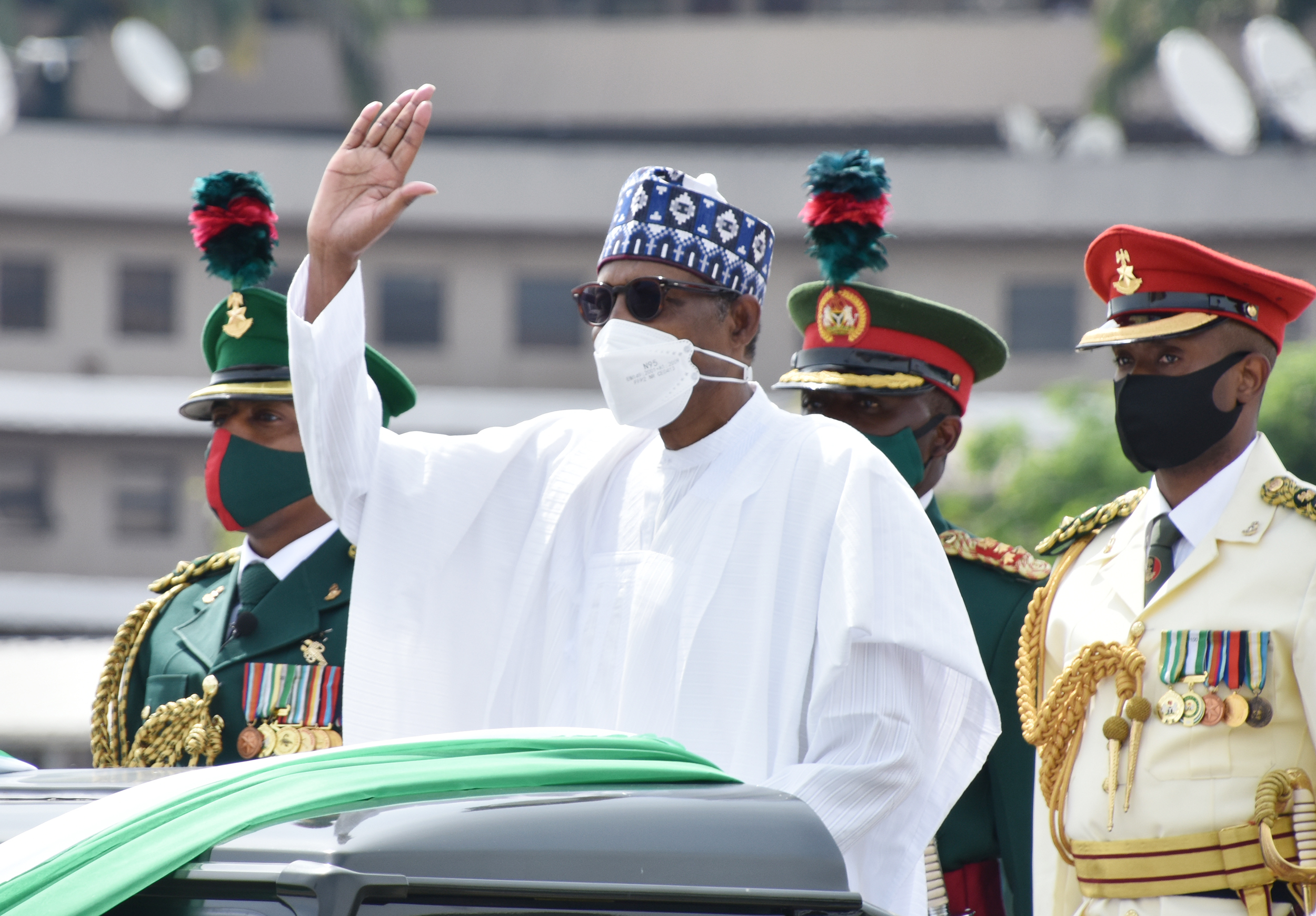
Human rights lawyer, Chief Mike Ozekhome, SAN, has alleged that President Muhammadu Buhari has destroyed Nigeria.
The senior lawyer noted that Buhari has failed in his tripod policies through which he campaigned and won election in 2015 which are: Economy, security and anti-corruption.
The Senior Advocate of Nigeria spoke at a human rights lecture organised by the Human Rights Writers Association of Nigeria (HURIWA), with the theme: “Nigerian School Children; Insecurity and Human Rights”, held in Abuja.
He pointed out that many children can no longer go to school, adding that more than 70percent school children in Nigeria were out of schools.
According to him, from Jangebe to Chibok; from Dapchi to Kaduna between December, 2020, till date, over 700 school children have been kidnapped with some of them killed or forced into marriage.
“[They were] not kidnapped in the forests but from their schools. It got so messy in Kaduna that the kidnappers demanded bags of rice, vegetable oil, salt, beans and other condiments to be cooking for their children pending when they will get enough money to get them released on ransom,” Ozekhome lamented.
He went on to say that Nigeria was currently a failed state and cannot even be called a country anymore, explaining that non-state actors such as Boko Haram, bandits and other terrorists now possess enough powers to challenge the government.
“Is that a country? Does any of you who have children living in hostels and dormitories sleep with your two eyes closed, not knowing of when next they’ll strike? he asked.
“When President Muhammadu Buhari was campaigning for this office…I like my President but I do not like his governance style and policies.
“Policies that have impoverished Nigeria; policies that have made Nigeria the poverty capital of the world, overtaking India. Policies that have made Nigeria that was until 2015 the biggest economy in Africa overtaking South Africa and one of the seven fastest growing economies in the world.
“His tripod policies were on economy, security and anti-corruption. The bad news is that he has dismally failed in all of them. Security is worse right now…Boko Haram we used to have that time, at least, people were able to vote for him in 2015, and he won in the North-East, showing that though Boko Haram existed, they were not so rampant to prevent people from voting.
“Boko Haram has since graduated, strutting around like a proud peacock. Armed banditry has escalated; kidnapping is the order of the day. Insecurity, he has failed.
“In economy, I have already told you, we’re now the poverty capital of the world. What of anti-corruption? Go and check, we’re 168 out of 180 covered by Transparency International.
“In West Africa, we’re the 3rd most corrupt country. So, where have the President and the government helped Nigeria? I had on television and in my write-up challenged Nigerians that anyone who can carry the Holy Quran or take up the Holy Bible or if you’re an atheist, pick up a piece of Sango Iron and say your life is better off today than you were in 2015.
“I challenge the person for a national debate but until now, no one has taken up the challenge because everybody knows things are not right. The deaf can hear it; the dumb can speak it; the blind can see it, and even the numb can feel it.
“So, it’s not a question of whether you are in APC, PDP, APGA, Labour, Zenith or PPA. Hunger knows no strike, religion or nationality. The fact is that things are bad for everyone whether Muslim or Christian, atheist, old men, women, youth and children.
“Things are bad and it could be worse except Nigerians come together and go back to the drawing board. Some people are saying that Nigeria is a failing state, and I say no. I don’t agree.
“If you asked me, with all due respect, I’ll say Nigeria is a failed state. Do you know why? It is because one of the greatest indices of a failed state is when non-state actors like Boko Haram, kidnappers, armed bandits have efficient and commensurate powers to match state actors like security forces. That’s a failed state.
“When Boko Haram, bandits and kidnappers begin to tell the government, ‘this is what we want.’ Taking over lands and planting their flags as Governor Babagana Zulum of Borno State and Sani Bello of Niger State have cried out that in some lands in their states, they have planted flags; they’re demanding for taxation; they issue identity cards and give pass to people to pass.
“We don’t need any other evidence of a failed state. It’s not about liking or not liking a government, it’s about saying the reality on the ground. Please, Nigerians, let’s go back to the drawing board. If you like, bring all the helicopters and fighter jets you can, the truth is that the problem is more endemic than you can see.
“Because on the surface, it looks like insecurity but beneath, it is what we call social injustice and lack of egalitarianism…Nigeria is wobbly, gobbling and fumbling because it was not neatly packaged on the 1st of January, 1848 by Lord Lugard.
“It started with Lady Flora Louise Shaw on the 8th of January, 1897 in an article she wrote on Economic Times where she gave Nigeria her name ‘Niger Area’. And we agreed to live together. And if we agreed, let us live together in peace and unity. Let’s not always say ‘Nigeria is indivisible; it’s indestructible.’
“We don’t say that by words of the mouth, we nurture it. Pakistan and India used to be one country; Eritrea and Ethiopia used to be one country as well as Sudan and Southern Sudan. So, it’s not by merely saying it, you have to nurture it.
“We must have peace and social justice… we are talking about the kind of peace and social justice Chief M.K.O. Abiola preached…Let us reformat and reengineer Nigeria. Let’s make a new constitution for ourselves. A constitution that will be… Indigenous, owned by the people and respected by all and legitimate.
“Not a constitution that was imposed by the General Abdusalami Abubakar government when they were going back to the barracks. How many of you know that Nigerians actually contested the 1999 elections without a constitution? Nigerians never made the constitution by themselves but even if we’re to manage it, Section 14 of that constitution said that the primary purpose of the government is to provide welfare and security for the people. Are we having it?”, he asked.














Fubara gave the assurance last Friday at the NYSC permanent orientation camp, Nonwa-Gbam, Tai Local Government Area in the State, during the swearing-in ceremony of 2026 Batch B Stream II orientation course.
Represented by the Permanent Secretary, Cabinet Bureau, Office of the Secretary to the State Government, Dr. Promise Oguzie, the governor said the State Government would remain intentional in providing the necessary support to improve the NYSC scheme and enhance the experiences of corps members deployed to the state.
He charged the corps members to be role models and quality nation-builders in their service to the good people of Rivers State in particular, and Nigeria at large.
“I charge you to be exemplary, dedicated and committed in all you do. Take full advantage of all the camp programmes and activities to enrich yourselves”, he said.
In his welcome address, the State Coordinator of NYSC in Rivers State, Mr. Moses Oleghe, urged corps members to see their deployment to Rivers State as a “veritable opportunity to make meaningful contribution to the growth of the State in particular and Nigeria at large.”
He further charged them to serve with all sense of “integrity, discipline, and the fear of God, especially when they will be engaged as INEC ad-hoc staff that will conduct the 2027 general elections.”
A total of 3,584 corps members composed of 1,421 males and 2,163 females were sworn in by the Chief Judge of Rivers State, who was represented by Justice Godspower Aguma.

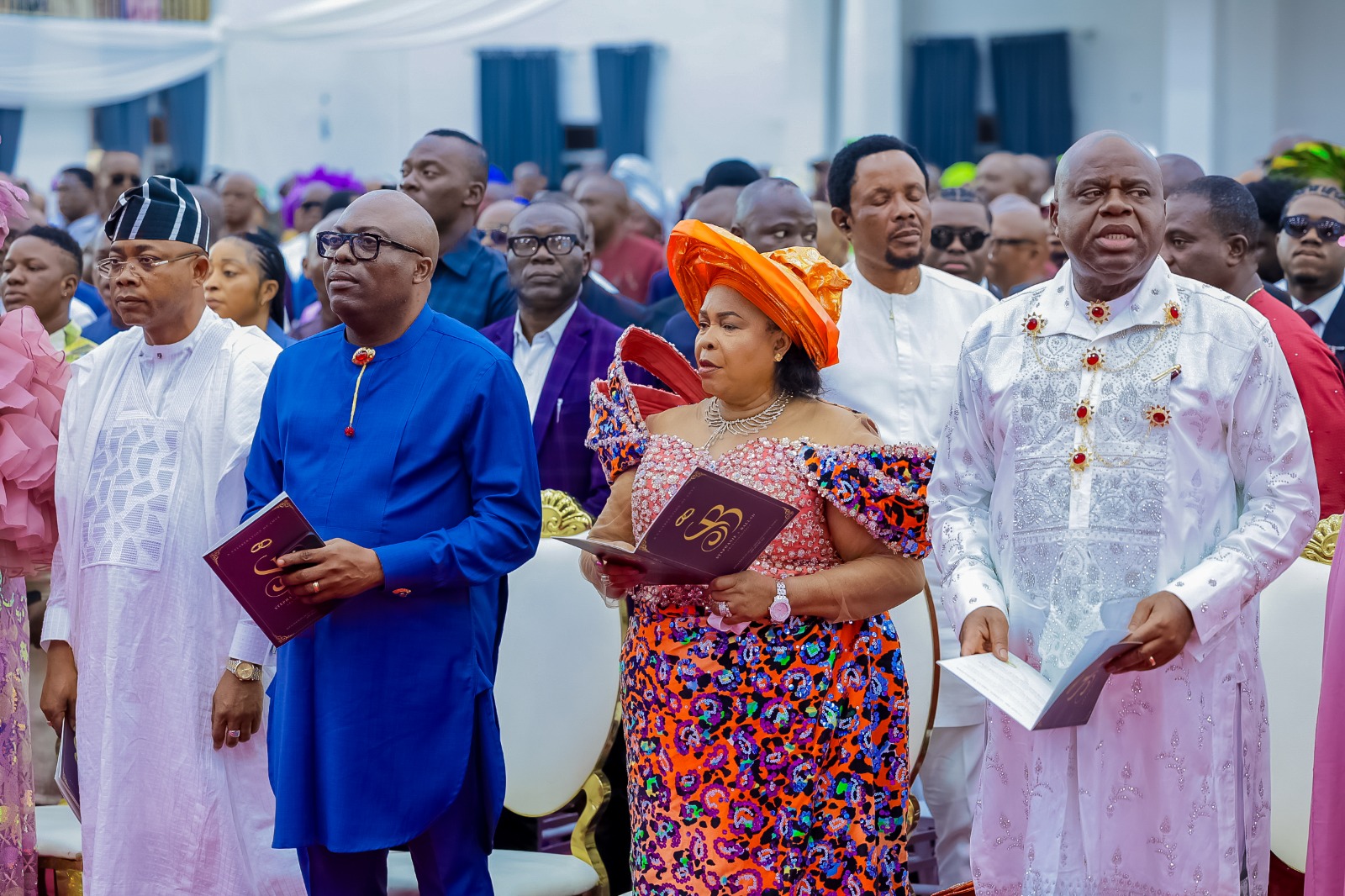
The Governor stated this yesterday when he received in audience, the World President of the Seventh Day Adventist Church, Pastor Erton Kohler; his wife, Andriene Marques Kohler; daughter Mariana Marques Kohler and a retinue of ministers of the church at Government House, Port Harcourt.
Fubara who hailed the Seventh Day Adventist Church for its contributions to education and the grooming of future leaders in Nigeria, expressed delight that the Church had over the years, been investing in education at various levels and currently runs two universities in the country.
He commended the church for not only using its institutions to spread the gospel of Christianity but to groom future leaders for the country.
According to him, religion should not be just about defending one’s faith, but also making meaningful impact on the lives of the people.
He said that by floating these educational institutions, the church has demonstrated capacity to support Nigeria in the task of producing not only educated people but a breed of God-fearing leaders.
“Our country is where it is today because we lack the fear of God. If you have the fear of God, there should be a limit to what you can do because you understand the supremacy of God. But when God is not in your equation, you’ll go beyond the line and that is what has brought us to where we are today.
“So, I feel very happy that you are contributing to the development of our future leaders in this country. We need the right people being in the right place; prepared properly with good minds; that is what we need, not just in Nigeria but round the whole world.,” he said.
Governor Fubara further observed that the absence of God-fearing people in high places to take the right decisions that could impact positively on the society, has also given rise to other problems such as social inequality, poverty, corruption and criminality. According to him, Nigeria needs a system where the average parent could afford quality education for their children and a guarantee that upon graduation, the average child will have the capacity to compete favourably with anybody, anywhere in the world.
“If we have a situation where the little money that you’re being paid as wage can also afford you quality healthcare and after working at least for 15-20 years, you have a roof over your head, tell me why you should be involved in any kind of crime? At that point, you’ll feel secured and this attitude of insecurity about the future that leads to all the social vices we have today won’t be there,” he said.
Governor Fubara expressed appreciation to the delegation for the visit and for their prayers for Rivers State, assuring them of his continued support for their programmes in the state.
Leader of the delegation and World President of the Seventh Day Adventist Church, Pastor Erton Kohler said he was in Nigeria for a special conference of the church during which thousands of the church’s ministers will be undergoing an empowerment programme to further equip them for the task of herding their flocks and serving the society.
He expressed gratitude to the Governor for the warm reception accorded his entourage, saying the memory of the visit will linger in his mind for a lifetime.
Kohler disclosed that the Church has over twenty -four million (24,000,000) members and more than 182,000 places of worship, spread across 212 countries of the world.

This reaffirms the lawmakers’ commitment to enacting laws and taking legislative actions geared towards the overall development of the State.
The Assembly gave the approval during its Second Legislative Sitting of the Fourth Session held last Friday.
Speaking on the MTEF document during plenary, the House Speaker, Rt. Hon. Martin Amaewhule, noted that by the provision of Section 10(1)(b) of the Rivers State Fiscal Responsibility Law No. 8 of 2010, the MTEF ought to have been laid before the House in September 2025.
Amaewhule explained that traditionally, the document is expected to be presented four months before the commencement of the next financial year and immediately after the expiration of every three-year fiscal cycle.
He, however, stated that in the interest of the State and its people, the House considered it necessary to deliberate on the document, describing it as a precursor to the 2026 Budget Estimates.
The Speaker expressed concern that the year had already progressed significantly before the presentation of the framework.
During deliberations on the document, members examined the assumptions and projections contained in the MTEF and observed that strict adherence to the outlined fiscal parameters would ultimately serve the interest of Rivers people.
The lawmakers maintained that effective implementation of the framework would promote prudent financial management and enhance developmental planning across the State.
Following the debate and positive consideration by members, the Speaker put the question to the House and members voted overwhelmingly in support of the approval of the MTEF.
Meanwhile, during the same sitting last Friday, the House also received a petition from the Chairman of Obio/Akpor Local Government Council, Dr. Gift Worlu.
The petition was presented by the member representing Obio/Akpor Constituency II, Hon. Emilia Amadi.
According to the petition, concerns were raised over an imminent security breach, threats to lives, destruction of property and alleged forceful takeover of property by some lawless persons within parts of the Local Government Area.
Presenting the petition before the House, Hon. Amadi appealed to the lawmakers to revisit the matter and take necessary steps aimed at safeguarding lives and property in the affected communities.
The House is expected to further deliberate on the petition and consider measures to address the concerns raised in order to sustain peace and security in the area.
King Onunwor
-

 News1 day ago
RSG Targets Nine Million Residents in Mosquito Net Distribution Campaign
-

 Oil & Energy1 day ago
Aiyedatiwa Signs New Electricity Bill
-

 Oil & Energy1 day ago
NLNG Commissions Research And Innovation Centre In RSU
-

 Maritime1 day ago
Marine Minister Commends President Tinubu On NPERA Bill Assent
-

 News1 day ago
KenPoly Holds Eight Convocations, August 29
-

 News1 day ago
RSG Begins Another Phase of Projects Commissioning Today
-

 News1 day ago
RMAFC Completes Revenue Sharing Review, Proposes New Pay
-

 Maritime1 day ago
NAGAFF Petitions IGP Over Alleged Maritime Police Harassment