
Nation
Key Regulators, Asset Owners Impressed With HYPREP’s Milestones


Strategic regulators and other stakeholders have expressed satisfaction with the pace, quality and magnitude of work carried out by the Hydrocarbon Pollution Remediation Project (HYPREP) in Ogoniland, in line with the recommendations of the United Nations Environment Programme (UNEP).
In their separate speeches at the 2025 4th quarter key regulators / asset owners meeting held in Port Harcourt, the strategic stakeholders commended HYPREP for the significant milestones achieved with excellent efficiency and transparency, demonstrating capacity and commitment to sustaining collaboration with development partners for the overall success of the Project.
The regulators particularly lauded HYPREP for the landmark success in the implementation of the land and shoreline remediation, mangrove restoration, provision of reticulated potable water, the various sustainable livelihood programmes, donation of ambulances to health facilities in Ogoni, the construction of Centre of Excellence for Environmental Restoration, as well as the ongoing Ogoni Power Project, adding that their independent field reports have shown proofs of HYPREP driving even beyond its mandates.
The goodwill messages were made by representatives of the National Oil Spill Detection and Response Agency (NOSDRA), Centre for Environment and Human Rights Development (CEHRD), Society for Women and Youths Affairs (SWAYA), Stakeholders Democracy Network (SDN), Nigerian Pipelines and Storage Company (NPSC), and Federal Ministry of Environment. Others are the Rivers State Ministry of Environment, the Rivers State Ministry of Health, the National Upstream Petroleum Regulatory Commission (NUPRC), the Rivers State Ministry of Power, the Rivers State University, the Rivers State Ministry of Water and Rural Development, and Renaissance Africa Energy Company Limited.
Following the Monitoring and Evaluation Unit’s presentation on the status of HYPREP projects, participants offered feedback on areas of concern. They reassured HYPREP and the people of Ogoni of their continued support for the Project’s success. They also suggested that the quarterly review meeting be sustained as it enables them to report, evaluate and proffer solutions to areas of concern.
Participants also commended HYPREP for improved community and stakeholder engagement and for adding to what they saw the previous time. “We commend HYPREP for the quality work done at sites. The progress is phenomenal, because HYPREP is scoring good grades, above average,” Prof. Iyenemi Kakulu from Rivers State University said.
In his speech at the event, the Project Coordinator of HYPREP, Prof Nenibarini Zabbey, who was represented by Prof Damian-Paul Aguiyi, Director of Technical Services, commended the regulators and asset owners for their cooperation with the Project, and for making themselves available for fieldwork and the regular review meetings.
Prof Zabbey reiterated HYPREP’s commitment to best practice in waste management, particularly waste generation and disposal, calling on the Regulators for adequate logistics support, saying HYPREP’s priority is to focus on the core recommendations by UNEP, especially, remediation(soil, shoreline) mangrove restoration, provision of potable water, interventions in public health care services and sustainable livelihood for the people.
The Project Coordinator further highlighted the status of the Project, the successes achieved across all thematic areas, and assured that HYPREP will soon complete most of the ongoing projects and roll out others. He explained that the purpose of the meeting was to review the progress of the Ogoni cleanup, ensure quality control, and foster effective collaboration.
Consequently, the quarterly key regulators/asset owners meeting is HYPREP’s strategic stakeholder management model, further underscoring the Project’s commitment to transparency, partnership for development, and accountability, all of which are harbingers of effective project delivery.
Speaking to newsmen, HYPREP Project Support Lead and representative of Renaissance Africa Energy Company Limited, Engr Ehioze Igbinomwanhia, described his involvement with HYPREPas an encouraging and insightful experience, saying, the Project is implementing a wide range of projects across Ogoniland, spanning immediate remediation works as well as livelihood support initiatives aimed at improving the welfare of affected communities.
Engr Igbinomwanhia emphasised that Renaissance Africa Energy remains fully committed to supporting the objectives of the Ogoni cleanup project, noting that the company has a long history of collaboration with HYPREP.
He added that the partnership has been characterised by continuous learning, adaptation and a willingness to respond to observations and recommendations aimed at improving outcomes.
He further emphasised the importance of safety in all project operations, particularly given the challenging terrain and operating conditions in Ogoniland.
He noted that safety is treated as a critical priority and that contractors are continually reminded to maintain high safety standards, stressing that lessons learnt from previous operational challenges like the collapse of the water tank in Gwara Community are being applied to strengthen safety practices and overall performance.


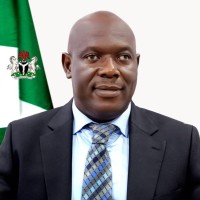
The Hydrocarbon Pollution Remediation Project (HYPREP) has commemorated the 15th anniversary of the release of the United Nations Environment Programme (UNEP) Environmental Assessment Report on Ogoniland, reaffirming its commitment to restoring the environment and improving the livelihoods of affected communities.
In a statement signed by the Project Coordinator, Prof Nenibarini Zabbey, to commemorate the anniversary, HYPREP described the anniversary as a significant milestone in Nigeria’s environmental restoration efforts, noting that the project has made remarkable progress in implementing the recommendations of the landmark UNEP report released on August 4, 2011.
The UNEP report had revealed extensive oil pollution across Ogoniland, severe environmental degradation, and serious public health risks resulting from decades of petroleum operations. It also recommended an initial $1 billion fund to commence the cleanup of the affected communities.
According to HYPREP, the Federal Government formally launched the Ogoni clean-up in 2016, while the Project Coordination Office was established in 2017 to drive the implementation of UNEP’s recommendations.
Zabbey said the current administration has continued to prioritise the project under the Renewed Hope Agenda.
Providing an update on the cleanup, the Project Coordinator disclosed that 30 of the 65 contaminated sites identified by UNEP have been fully remediated, while work is ongoing at several medium- and high-risk locations. It also stated that more than 1.5 million mangrove seedlings have been planted as part of what it described as the world’s largest restoration of oil-degraded mangroves, with over 1,000 hectares of shoreline already rehabilitated.
Zabbey further revealed that 49 Ogoni communities have been connected to potable water schemes through multiple water projects and booster stations aimed at providing safe drinking water across the region.
In the health sector, he said the 100-bed Ogoni Specialist Hospital in Kpite and the 43-bed Cottage Hospital in Buan are nearing completion, adding that several existing health facilities have been upgraded with modern medical equipment, while five ambulances have been donated to improve emergency healthcare services. The Project Coordinator also disclosed that a three-year human health biomonitoring study is being conducted in collaboration with the World Health Organization’s International Agency for Research on Cancer (IARC).
On economic empowerment, Zabbey stated that the Project has created more than 8,000 direct jobs and trained thousands of Ogoni youths and women in various vocational and technical skills, including software development, cybersecurity, aviation, commercial diving, seafaring, mechatronics, and creative arts. The project also reported awarding scholarships to more than 1,000 students, providing grants to small businesses, and supporting persons living with special needs through skills acquisition programmes.
The statement further highlighted ongoing legacy projects, including the Ogoni Power Project and the Centre of Excellence for Environmental Restoration, which it said is about 96 per cent complete. HYPREP also welcomed the recent designation of the Ogoni Wetland as a Ramsar Site of International Importance and pledged to continue promoting biodiversity conservation and sustainable management of the ecosystem.
Marking the anniversary, Zabbey said the progress achieved over the past 15 years demonstrates the collective commitment of government, development partners, stakeholders, and local communities to restoring Ogoniland. He called for renewed collaboration to sustain the cleanup effort, promote environmental sustainability, and support the long-term development of the region. 3
-

 News2 days ago
RSG Targets Nine Million Residents in Mosquito Net Distribution Campaign
-

 Oil & Energy2 days ago
Aiyedatiwa Signs New Electricity Bill
-

 Oil & Energy2 days ago
NLNG Commissions Research And Innovation Centre In RSU
-

 Maritime2 days ago
Marine Minister Commends President Tinubu On NPERA Bill Assent
-

 News2 days ago
KenPoly Holds Eight Convocations, August 29
-

 News2 days ago
RSG Begins Another Phase of Projects Commissioning Today
-

 News2 days ago
RMAFC Completes Revenue Sharing Review, Proposes New Pay
-

 Maritime2 days ago
NAGAFF Petitions IGP Over Alleged Maritime Police Harassment