
Nation
RIVCHPP Enrols Over 140,000 Residents as Rivers Marks Universal Health Coverage Day



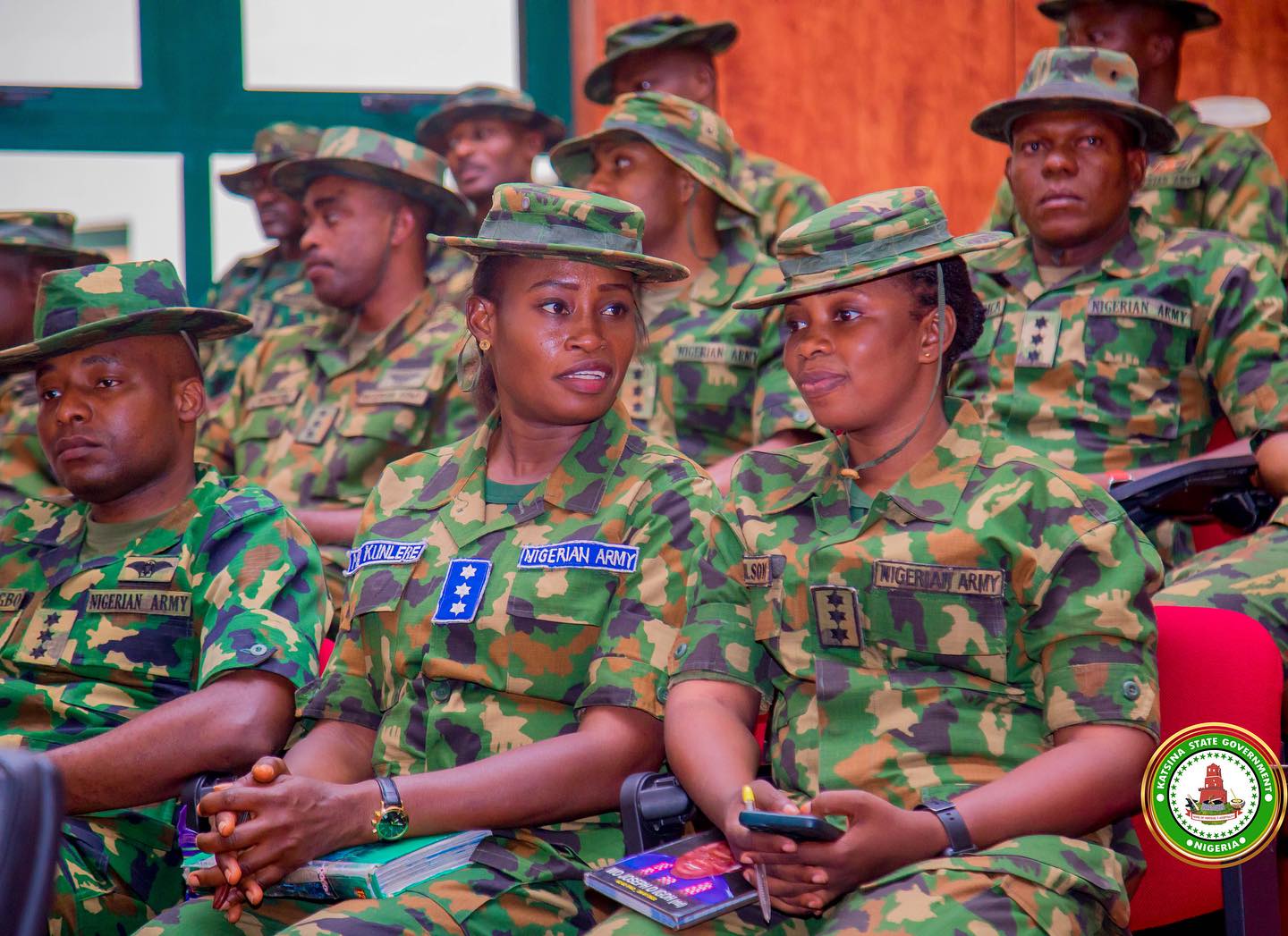
The Nigerian Army has passed out 384 female soldiers of the 90 Regular Recruit Intake (90 RRI) following the successful completion of Exercise SHINING STAR 2026 in Giri, Abuja.
In a post shared on the Nigerian Army’s X handle, yesterday, the Assistant Director, Army Public Relations, Nigerian Army Women Command, Giri, Abuja, Major Nsima Essien, said the passing-out ceremony was held on Wednesday, 28 October 2026, at the Nigerian Army School of Public Relations and Information (NASPRI), Giri, with the Chief of Army Staff (COAS), Lieutenant General W. Shaibu, represented by Major General Umar Gital Yusuf, as the Guest of Honour.
In his address, the Army Chief commended the female personnel for their dedication, resilience, discipline and commitment throughout the training exercise.
He described the successful completion of the exercise as an important milestone in their military careers and reaffirmed the Nigerian Army’s commitment to developing a professional, disciplined and combat-ready force.
He urged the newly trained soldiers to uphold the values of teamwork, courage, loyalty and professionalism, while applying the knowledge and skills acquired during the exercise to their military duties.
Shaibu emphasised the importance of continuous training, physical fitness and operational preparedness in addressing contemporary security challenges before declaring the exercise closed.
Earlier, the Acting Commander of the Nigerian Army Women Command (NAWC), Colonel S. M. Ahmed, welcomed the special guest and other dignitaries to the ceremony.
Ahmed highlighted the significance of Exercise SHINING STAR 2026 in enhancing the physical fitness, military competence, discipline and operational readiness of the female personnel.
He also acknowledged the contributions of the authorities, instructors and other personnel whose efforts ensured the successful conduct of the exercise.
Highlights of the ceremony included obstacle-crossing demonstrations and weapons-handling exercises, during which the female soldiers demonstrated their ability to strip and assemble AK-47 rifles while blindfolded.
The demonstrations showcased the personnel’s physical endurance, confidence, weapons-handling skills and proficiency in basic military tasks.
“A total of 384 female personnel of the 90 RRI participated in the exercise, alongside 14 male personnel from the Headquarters, Directorate of Army Physical Training (HQ DAPT), and 70 male personnel from the 167 Special Forces Battalion, “ Ahmed said.
The ceremony attracted senior military officers from various units and formations, representatives of paramilitary agencies and other invited guests.
Eight male and female personnel who distinguished themselves during the exercise received awards presented by the Acting Commander of NAWC.
The event also featured a vote of thanks delivered by one of the beneficiaries, the presentation of souvenirs and a group photograph to commemorate the successful completion of the exercise.
The exercise forms part of the Nigerian Army’s efforts to strengthen personnel development, improve military competence and enhance operational readiness in response to the country’s evolving security challenges.
As the world marked the 2026 International Day of the Girl Child on Sunday, October 11, 2026, a non-governmental organisation, Stand Up for Women Society (SWS) has intensified its campaign against child marriage, urging schoolgirls to prioritise education, protect their rights and develop skills for a better future.
The organisation joined the global observance of the day under the theme, “International Day of the Girl Child: End Child Marriage and Invest in Girls’ Rights,” with a sensitisation programme at Government Girls Secondary School, Oromenike, D-Line, Port Harcourt, Rivers State.
Led by its Vice Chairperson, Daba Benebo, the group engaged the students in discussions on the dangers of early marriage, teenage pregnancy, sexual abuse and other challenges that threaten the education, safety and development of the girl child.
Speaking during the programme, Benebo urged the students to reject early marriage and remain focused on their studies, stressing that education would empower them to make informed decisions about their lives and future.
She cautioned the girls against allowing anyone to deprive them of their right to education and dignity, advising them to report cases of harassment, abuse and other violations of their rights to the appropriate authorities.
Benebo assured the students that SWS remained available to support them whenever they encountered violations of their rights.
She also encouraged them to maintain discipline and responsible conduct while avoiding behaviours that could expose them to negative influences and jeopardise their future.
Beyond formal education, the SWS vice chairperson urged the students to acquire vocational skills that could provide additional opportunities for economic independence and help them navigate future challenges.
The sensitisation programme, enlivened by singing, dancing and to share their views and experiences on issues affecting the girl child interactive sessions, provided an opportunity for the students to share their views and experiences on issues affecting the girl child.
One of the major issues raised during the discussion was the appropriate age for marriage. While some participants maintained that 18 years was the constitutionally approved age, the discussion highlighted the need to consider not only age but also the maturity, preparedness and responsibilities associated with marriage.
The speaker stressed that marriage required adequate mental and emotional preparation, as well as the capacity to shoulder its responsibilities.
She therefore advised the students to concentrate on acquiring a sound education before considering marriage, noting that education would equip them with the knowledge and skills needed to make responsible decisions and manage family life.
The issue of teenage pregnancy also featured prominently during the question-and-answer session.
In addressing the subject, the speaker explained that pregnancy could occur even at the age of 12, using the example to underscore the vulnerability of young girls to the consequences of early sexual activity.
She advised the students to avoid sexual intercourse and prioritise their education, personal safety and future aspirations.
The discussion also examined the difficulties some girls encounter when living with hostile spouses, relatives or guardians.
Benebo encouraged the students to cultivate patience, humility and diligence, noting that these qualities could help them navigate difficult situations and build a brighter future.
However, she warned that patience and humility should never be interpreted as an obligation to endure violence, abuse or degrading treatment.
She urged girls experiencing hostile or abusive living conditions to seek help from their parents, trusted adults or appropriate support services rather than remain in environments that could expose them to physical or emotional trauma.
“When such happens, please return to your parents and engage in petty trade or learn a skill to support your education rather than stay in a hostile environment,” Benebo stressed.
The programme also underscored the importance of protecting girls from early marriage and other harmful practices that can disrupt their education, compromise their well-being and limit their opportunities in life.
It also reinforced the need for families, schools, communities and relevant organisations to work together to ensure that girls have access to education, vocational training, protection and the support they need to realise their potential.
For SWS, the message was clear: empowering the girl child begins with protecting her rights, investing in her education and equipping her with the confidence and skills to make informed choices about her future.
Stories by Kevin Nengia
The Egberipapa Foundation has unveiled a mass transit scheme aimed at easing transportation difficulties and improving connectivity among communities in the three Kalabari local government areas of Asari-Toru, Degema and Akuku-Toru in Rivers State.
The initiative, established by former Caretaker Committee Chairman of Akuku-Toru Local Government Council, High Chief Sobomabo Jackrich, popularly known as Egberipapa, is designed to make transportation more accessible and affordable for residents across the Kalabari area.
The scheme was launched on Monday, October 12, 2026, and is expected to address longstanding transportation challenges confronting residents, particularly those in riverine and hard-to-reach communities.
Communities expected to benefit from the initiative include Krakrama, Minama, Angulama, Sangama, Omekwe-Tariama and Omekwe-Ama.
The project is expected to ease movement within and beyond the Central Group area, while providing residents with a more convenient means of transportation for their daily activities.
For decades, transportation difficulties have posed significant challenges to several Kalabari communities, making movement between settlements both cumbersome and expensive. These challenges have also affected commercial activities, social interactions and access to essential services.
The introduction of the mass transit scheme is therefore expected to provide relief to residents, strengthen inter-community connections and stimulate economic activities across the benefiting communities.
Beyond improving mobility, the initiative could contribute to community development by facilitating the movement of people and goods, supporting local businesses and enhancing social and economic interactions within the Kalabari area.
As the scheme gets underway, attention will be focused on its implementation, accessibility and sustainability, as well as its capacity to deliver lasting transportation benefits to the target communities.
The initiative represents a potentially significant step towards addressing transportation challenges and promoting grassroots development across the Kalabari Kingdom.
-
News5 days ago
Bayelsa Boat Mishap: Tinubu Donates N250m As Death Toll Hits 29
-
News5 days ago
Odu Pays Tribute To Late Chinwah, Describes Him As Courageous, Selfless Academic
-

 Maritime5 days ago
Nigeria, Russia Customs Sign MOU To Trade Facilitations
-

 Sports5 days ago
World marathon champion gets three-year doping ban
-

 Maritime5 days ago
South-South Governors Urges To Shake Off Collective Lethargic To Embrace Blue Economy
-

 Maritime5 days ago
Oyetola Woos Investors With Nigeria’s Seabed Resources, Marine Biotechnology
-

 Business5 days ago
Moniepoint MfB transaction volume hits 1trn daily — CEO
-

 Sports5 days ago
RSG PLEDGES TO PARTNER SWAN FOR SPORTS PROMOTION, DEVELOPMENT