Connect with us

Business

W’Bank Likely To Grant Nigeria’s $1.1bn Loan Request 

Published

on

The World Bank is set to approve a total of $1.13billion in loans for Nigeria before the end of March 2025.
This is part of ongoing efforts to support the country’s economic resilience, health security, and education reforms.
Information published on the World Bank’s website, stats that three key projects for Nigeria are at the stage of negotiation, with approval dates set for this month.
Among the projects set for negotiation is the Accelerating Nutrition Results in Nigeria 2.0 programme, valued at $80million, which is expected to be approved by March 31, 2025.
This initiative is aimed at improving nutrition outcomes, particularly among vulnerable groups, by enhancing access to essential dietary support and reducing malnutrition rates.
Another project in the negotiation phase is the Community Action for Resilience and Economic Stimulus Programme, which has a commitment value of $500million and is expected to be approved by March 24, 2025.
The project is designed to provide economic stimulus for community-driven initiatives to strengthen economic resilience and growth.
The “HOPE for Quality Basic Education for All” programme, with a proposed funding of $552.2million, is also at the negotiation stage and is expected to secure approval by March 31, 2025.
This initiative seeks to improve the quality of basic education by addressing infrastructure deficits, enhancing teacher training, and increasing educational accessibility across the country.
The potential approval of these loans comes at a time when Nigeria continues to grapple with economic challenges, including foreign exchange liquidity constraints, fiscal deficits, and mounting debt servicing obligations.
The Tide’s source had earlier reported that the Federal Government would likely secure six new loans totalling $2.23billion from the World Bank in 2025 as the international financial institution continues to support the country’s economic and structural reforms.
Data from the World Bank’s official website indicates that this will bring Nigeria’s total approved loans to $9.25billion over three years, reflecting a growing reliance on multilateral funding to support critical sectors of the economy, including infrastructure, healthcare, education, and economic resilience.
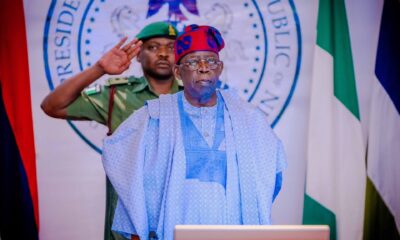
An analysis of Nigeria’s loan approvals from the World Bank since 2023 under the administration of President Bola Tinubu shows a significant increase in funding commitments.
In 2023, the World Bank approved loans amounting to $2.7billion, which primarily targeted projects in renewable energy, women’s empowerment, education, and the power sector.
The funding approvals recorded in 2024 significantly surpassed those of the previous year, with a total of $4.32billion allocated to various projects. This increase was largely due to Nigeria’s growing need for financial assistance to stabilise the economy amid mounting fiscal pressures and rising public debt.
For 2025, Nigeria is looking to secure six new loans from the World Bank, with a combined value of $2.23billion. The planned loans cover key sectors, such as digital infrastructure, healthcare, education, nutrition, and community resilience.
While the proposed World Bank loans could provide much-needed fiscal relief, concerns remain over the country’s rising debt burden. Recent data from the Central Bank of Nigeria indicate that the country has spent $5.47bn on external debt servicing in the past 14 months, highlighting the strain on its foreign reserves.
The Minister of Finance and Coordinating Minister of the Economy, Wale Edun, earlier said that rather than accumulating more debt, the government is prioritising alternative funding sources such as revenue generation, concessional loans, and strategic investments.
“We are at that optimisation stage, where there is less focus on borrowing, particularly from the commercial markets, which is quite high. We are focusing more on optimising assets and attracting private sector investment, whether domestic or foreign,” Edun said.
However, the consistent growth in the World Bank’s financial commitments to Nigeria, from $2.7bn in 2023 to $4.32bn in 2024, and the anticipated $2.23bn in 2025, highlights the country’s increasing dependence on concessional financing to drive structural reforms and public sector investments.
The source further observed that Nigeria has retained its position as the third-largest debtor to the World Bank’s International Development Association, despite its exposure dropping to $16.8bn as of December 31, 2024.
According to the World Bank’s latest financial statements for the fiscal year up to December 2024, Nigeria’s debt to the IDA dropped by $300m in three months from $17.1bn recorded in September 2024.
However, the current amount is still higher than the $16.5bn recorded in June 2024.
According to data from the external debt report released by the Debt Management Office, the World Bank’s share of Nigeria’s debt totals $17.32bn, with the majority owed to the International Development Association, which accounts for $16.84bn, which represents 39.14 per cent of Nigeria’s total external debt.
The International Bank for Reconstruction and Development, another arm of the World Bank, is owed $485.08m, or 1.13 per cent.

Continue Reading

Business

NCDMB, Jake Riley Empower 250 Youths On Vocational Skills 

Published

on

 As parts of efforts to promote self-reliance and job creation, the Nigerian Content Development and Monitoring Board, in collaboration with Jake Riley Academy, has trained 250 Lagos youths in different vocational skills.
The month-long intensive training programme aimed at equipping them with full range of skills was also designed to enable them become self-reliant and contribute meaningfully to the industrial development of the country.
The programme was conceived and conducted under the FAST Selling Skills Training Programme, to sharpen the skills of Nigerian youths and equip them with business starter packs that enable them launch out into commercial services.
Speaking at the event, the Director, Capacity Building, Directorate of the Board, Abayomi Bamidele, challenged Nigerian youths to embrace skills acquisition as a viable pathway to self-reliance and national development.
Bamidele, who was represented by the Supervisor, Marine Vessel Categorization and Technical Assistant to the Director, John Barigha, urged the graduands to take full advantage of the opportunity, stressing that their success would largely depend on how effectively they apply the skills acquired.
He cautioned the beneficiaries against trivialising the programme, noting that discipline, dedication and commitment would determine how far they progress in their chosen fields.
He also disclosed that the Board is concluding plans to introduce a new training programme targeted at youths aged 35 years and below, particularly those with engineering backgrounds, to enhance participation and create more opportunities within the oil and gas sector.
He urged beneficiaries to utilise their starter packs effectively, cautioning against selling the equipment provided.
“We are not giving you fish; we are teaching you how to fish.“What we have given you today is the net. It is now left for you to make meaningful use of it,” Bamidele said.
He stressed that the Board invested heavily to ensure the programme delivered lasting impact.
Also speaking, the Chief Executive Officer, Jake Riley Ltd, Mrs Funmi Ogbue, described the graduation as a defining moment for 250 young Nigerians.
Ogbue said the programme reflected NCDMB’s expanding role in local content development, with youth empowerment central to economic transformation.
She described the programme as a strategic investment in Nigeria’s future, noting that NCDMB continues to demonstrate that human capital development is central to national growth.
“Today celebrates not just achievement, but a national vision positioning young people as drivers of Nigeria’s economic future,” Ogbue said.
Ogbue described the initiative as a strategic human capital investment aligned with President Bola Tinubu’s inclusive growth agenda adding that the training prioritised market-ready skills capable of generating immediate income across growth sectors.
“What these graduands have received is not charity, but capability,” she said.
Ogbue noted that beneficiaries underwent transparent selection and intensive foundation training before advancing into seven specialised skill tracks of solar installation, fashion design, catering, digital freelancing, textile and Adire making, electrical installation and GSM phone repair.
“These skills were chosen to meet market demand and expand employment opportunities nationwide,” Ogbue added.
She commended NCDMB leadership, especially Director of Capacity Building, Bamidele Abayomi, for championing demand-driven training.
Ogbue also praised trainers, facilitators and Jake Riley Academy for blending technical excellence with entrepreneurship.
A beneficiary, Anuba Chidera, a solar installation trainee, described the training as life-changing with strong real-world focus.
Continue Reading

Business

NUJ Partners RSIRS On New Tax Law Education 

Published

on

The Nigeria Union of Journalists NUJ,Rivers State Council has reiterated its commitment to interpreting new Policies  to empower citizens, not just report them.
The Chairman of Council Comrade Paul Bazia -Nsaneh made the  commitment while responding to the Executive Chairman of the Rivers State Internal Revenue Service, Sir Israel Egbunefu when his team paid a courtesy visit to the Council.
Comrade Paul Bazia -Nsaneh emphasized the media’s  role in interpreting policies for citizens in crucial economic changes like the new tax reforms .
He stressed that educating  journalists about the New 2025 Nigerian Tax Laws by conducting trainings and workshops is paramount, focusing on how these reforms affect Journalists and the public.
According to the NUJ Chairman ” journalists are trained to look at the facts, if we must look at the facts , it will come from authorities like yours, hence it is very important that we are trained so we can properly inform members of the public”
” If journalists are properly equipped, they will in turn ensure that the people are educated” he added.
The Chairman who asked them to send their personnel to the upcoming Congress to speak to members assured them that the NUJ will play it’s role to ensure that the people are educated on the new tax law .
Earlier , the Executive Chairman of Rivers State Internal Revenue Service who was represented by his Special Adviser on Special Duties, Dr Emmanuel Legbosi said the Agency is poised to educate the citizens on the operations of the tax laws.
Dr Emmanuel Legbosi who stated that the visit to the Council is necessitated by Agency’s ongoing advocacy, said they are willing to partner with NUJ to ensure that the people are educated on the New Tax Regime, to ensure they get the information to the common man.
He noted that the new tax law signed into law by President Bola Tinubu in 2025 came with worries in the mind of the citizens, stating that their mission is to douse tension.
According to him, part of their mandate and with law that  established the body is to ensure that the people are not duped by people who will pretend to be tax collectors ” we notice that people come from neighbouring states to harass citizens in the name of tax collectors”
” Our people need to identify what the law is and what the law is not, identify what is tax clearance and what is not a tax clearance”
” We want to work with you to see that all these are forestall, with  NUJ being the forth estate of the realm , the news will be closer to the people” he added.
Dr Legbosi however, used the opportunity to commend the Executive Governor of Rivers State, Sir Siminalayi Fubara for tying projects such as the Port Harcourt ring road and the trans kakabari road to internally generated revenue.
[1/22, 5:01 PM] King Onunwor: Council Chairman Bars Street Trading At Oil, Its Environs
The Chairman of ObioAkpor Local Government Area had banned  all forms of market and street trading within and  the Rumuokwurusi Market popularly known as Oil Mill Market.
This was contained in a statement signed by the Council Chairman, Dr. Gift Worlu and made available to the public  in Obio /Akpor Local Government Area within the week.
The statement stressed that the  ban was  total and applied at all times, being enforced 24 hours, day and night, Monday through Sunday, including weekends and public holidays.
” There will be no exceptions, waivers, or designated trading periods within the affected areas. No one is allowed to trade in the affected areas at any time”, it said.
This decisive action, according to the statement,  became necessary following persistent disregard for Council directives by some individuals who have continued to engage in illegal trading activities within this corridor.
Their actions have rendered the area unconducive, obstructed free vehicular and pedestrian movement, posed safety and security risks, and caused undue inconvenience to residents and commuters who make daily use of this important roadway.
Consequently, all traders, hawkers, and roadside vendors operating within the affected areas are directed to vacate immediately.
It also warned that any defaulter will be arrested and prosecuted in accordance with the law, without exception.
“All security agencies within Obio/Akpor Local Government Area are hereby mandated to enforce this ban strictly, in collaboration with the Council Task Force, to ensure full compliance and restore order to the area. No individual or group is exempt from this directive”, it said.
The Chairman through the statement, called on members of the public to cooperate with the Council in maintaining a clean, safe, and orderly environment that reflects the dignity of the LGA  and promotes the collective well-being of all residents.
The statement further revealed that the ban takes immediate effect and should be treated as bithyfinal notice and warning.
By: King Onunwor
Continue Reading

Transport

Nigeria Rates 7th For Visa Application To France —–Schengen Visa

Published

on

Nigeria was the 7th country in 2024, which filed the most schenghen visa to France, with a total of 111,201 of schenghen visa applications made in 2025, out of which 55,833, about 50.2 percent submitted to France
Although 2025 data is unavailable, these figures from Schengen Visa Info implies that France is not merely a preferred destination, but has been a dominant access point for Nigerian short-stay travel into Europe.
France itself has received more than three million Schengen visa applications, making it the most sought-after Schengen destination globally and a leading gateway for long-haul and third-country travellers. It was the top destination for applicants from 51 countries that same year, including many without visa-exemption arrangements with the Schengen Zone, and the sole destination for applicants from seven countries.
Alison Reed, a senior analyst at the European Migration Observatory said, “France’s administrative reach shapes applicant strategy, but it also concentrates risk. If processing times lengthen or documentation standards tighten in Paris, the effects ripple quickly back to capitals such as Abuja.”
The figures underline that this pattern is not unique to Nigeria. In neighbouring West and Central African states such as Gabon, Benin, Togo and Madagascar, more than 90 per cent of Schengen visas were sought via French authorities in 2024, with Chad, Djibouti, the Central African Republic and Comoros submitting applications exclusively to France.
“France acts as the central enumeration point for many African and Asian applicants,” said Manish Khandelwal, founder of Travelobiz.com, which reported the consolidated statistics. “Historical ties, language networks and established diaspora communities all play into that concentration. But volume inevitably invites scrutiny, and that affects refusal rates and processing rigour.”
That scrutiny is visible in the rejection statistics. Of the more than three million French applications in 2024, approximately 481,139 were denied, a rejection rate of about 15.7 per cent. While this rate is lower than in some smaller Schengen states, the sheer volume of applications means France contributes significantly to the total number of refusals within the zone.
For Nigerian applicants and policymakers, one implication is the need to broaden engagement with other Schengen consular hubs. “Over-reliance on a single consulate creates what one might call administrative bottleneck effects,” said Jean-Luc Martin, a professor and expert in European integration and mobility law at Leiden University. “If applicants from Nigeria default to France without exploring legitimate alternatives in countries like Spain, Germany or the Netherlands, they expose themselves to systemic risk
Martin added that the broader context of Schengen visa policy is evolving, with the European Commission’s preparing roll-out of the European Travel Information and Authorisation System (ETIAS) aimed at harmonising pre-travel screening across member states.
For Nigerians seeking leisure, business or educational travel to Europe, these trends suggest that strategic planning and consular diversification could become as important as the completeness of documentation and financial proof. Governments and travel consultancies in Abuja, Lagos and beyond are already advising clients to explore alternative consular pathways and to prepare for more rigorous screening criteria across all Schengen states
By: Enoch Epelle
Continue Reading

Trending