
News
FG Panics As #EndBadGovernance Protest Begins, Aug 1 …Yoruba Youths, Ezekwesili Call For Caution

There is palpable fear within the government circle as the plan to organise a nationwide protest against economic hardships have gained significant traction on social media.
President Bola Tinubu met with some traditional rulers in the country and governors from the All Progressives Congress (APC) under the aegis of the Progressives Governors Forum at the Presidential Villa, Abuja, yesterday.
The President’s meeting with the APC governors began at minutes past 1pm, while the meeting with the traditional rulers began at about 2:30 pm when the President arrived at the Council Chamber.
Although the agenda of the two meetings was not disclosed, sources revealed that it may not be unconnected to the planned protests scheduled for August 1-10.
The planned protests, organised under the hashtag ‘EndBadGovernance,’ have gained significant traction on social media even as the organisers remain largely anonymous, with no group officially claiming responsibility.
This meeting follows an earlier conclave of the Nigeria Governors’ Forum on Wednesday night and comes after a last-minute cancellation of the National Economic Council (NEC) meeting earlier scheduled for yesterday.
Leading the delegation of royal fathers are the Sultan of Sokoto, Muhammad Sa’ad Abubakar III, and the Ooni of Ife, Oba Adeyeye Enitan Ogunwusi, while the APC governors delegation was led by its chairman and Governor of Imo State, Hope Uzodimma.
Present at the meeting are Vice President Kashim Shettima, Secretary to the Government of the Federation, George Akume; the National Security Adviser, Nuhu Ribadu, and the Inspector-General of Police, Kayode Egbetokun, and Governor Abdulrazaq Abdulrahman of Kwara State who is the Chairman of the Nigeria Governors Forum, and Hope Uzodinma of Imo State, who chairs the Progressives Governors Forum.
The Minister of Finance and Coordinating Minister of the Economy, Wale Edun, and the Minister of Budget and Economic Planning, Atiku Bagudu, also joined President Tinubu at the meeting.
Both the APC governors and traditional rulers did not brief the press after the two separate meetings.
However, the Coalition of Yoruba Youth leaders have called on organisers of the planned nationwide protest to shelve the idea and remain calm.
President-General of the coalition, Dr Tolani Hassan, said in a statement in Lagos, yesterday, that the apex umbrella body for all Yoruba youth associations and organisations had dissociated itself from the protest.
Hassan, who is also the National President, Yoruba Youths Association Worldwide , however, said that the coalition recognised the plight of Nigerians.
“The economy is unfriendly, the cost of living is outrageous and out of the reach of the common man.
“It is also true that the inflation rate is in the double digit and the unemployment rate in Nigeria is alarming.
“So many graduates are out there with no means of survival. The Federal Government has not employed people in the last couple of years.
“However, the leadership of Yoruba youth leaders do not want a repeat of the ENDSARS saga, hence, our call for protest cancellation and calm,” he said.
The president-general urged the organisers to rather employ other measures to make the government across levels understand the economic hardship in the land.
“There should be a more refined manner of getting our leaders to hear our plights other than protest.
“There are agitations and insecurity in every part of the country, any attempt to have a protest now may cause mayhem, which is not the solution to our pressing challenges.
“The apex body of the entire youths in Yoruba land expressly dissociates itself from the planned protest.
“We will defend the entire South-West against any form of destruction by disgruntled elements, who may want to cause havoc in the region, particularly, Lagos state,” Hassan said.
Similarly, Hassan emphasized the need to embrace unity, pointing out that dialogue is the best way while consultation is a better approach.
He, however, pleaded with President Bola Tinubu to listen to the youth -”his children”, who were agitated.
“We love you Sir, Mr President, but we are hungry and unemployed,” the president-general said.
The youth leader advised Tinubu to directly interface with all the youth leaders in the various geo-political zones, saying the use of intermediaries would not bring results.
He called for a National Youth Summit, where all the various youth leaders would discuss with Mr President and address all the prevailing issues.
Stressing the coalition’s continued support for the President, Hassan urged the Federal Government to review both the monetary and fiscal policies, in the interest of the Nigerian masses.
He called for concerted effort by both the public and organised private sector to engage in massive employment generation and reduction of job losses.
“The economy should be friendly to both local and foreign investors. The power sector should be completely overhauled. This is the hub of the economy,” Hassan said.
He called for the review of educational curriculum from primary to tertiary level and inculcation of practical skills, including agriculture, to make Nigerian youths self-reliant.
The youth leader, who appreciated the inclusion of youths in the Federal cabinet, demanded for more, and urged the Federal Government to regularly engage the youth leadership of the various geo-political zones.
“35 per cent slots should be given to youths in the federal cabinet and federal boards appointment,” he said.
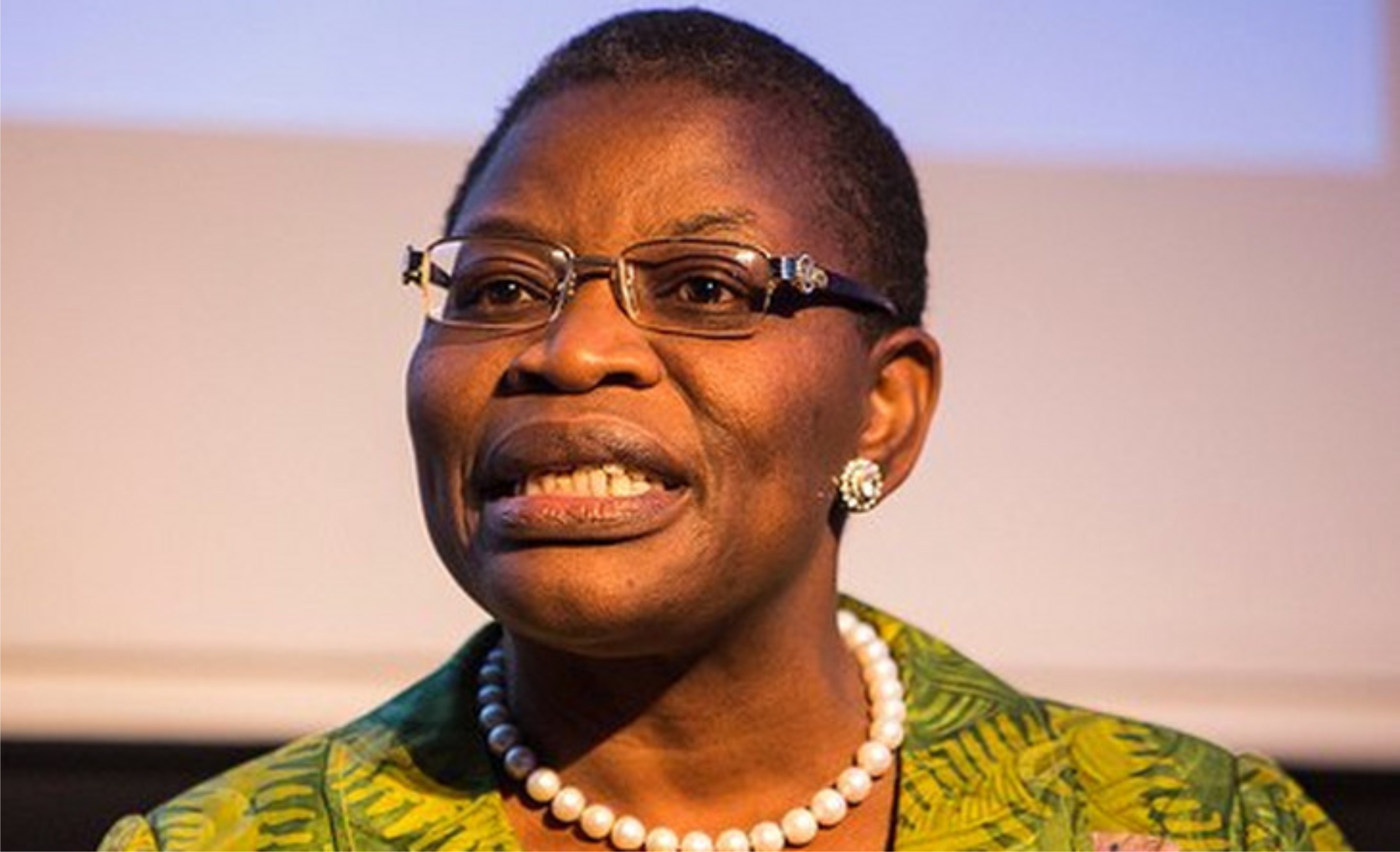
Meanwhile, a former Minister of Education, Oby Ezekwesili, has urged the federal and state governments to handle the planned protests with civility and empathy.
In a statement titled “My Position on the Nationwide Protest of our Young Citizens,” and posted on X, yesterday, Ezekwesili highlighted the distress being experienced by many Nigerians, particularly the youth, due to severe economic hardships.
“All reasonable people know that the majority of our citizens—especially the young ones-are distressed on many counts, from biting economic hardship that is prevalent in the country today. They blame it on bad governance and are therefore demanding an end to it,” she stated.
She criticised the reactions of politicians, public officials, and their allies, which she described as undemocratic and lacking empathy.
She pointed out that news of the planned protests has already caused agitation among government officials.
“I hope the Federal Government and its allies can quickly and wisely cease from threatening those among our citizens who wish to exercise their constitutional right of expression, association, and movement through a nationwide protest,” she urged.
The Bring Back Our Girls Convener called on President Bola Tinubu, the National Assembly, and state governors to seize the opportunity presented by the protests to engage with the dissatisfied youths.
She emphasized the importance of protecting and supporting the protesters to ensure peaceful demonstrations.
“Ensure that the protesters are protected and supported by the police and related agencies like the Civil Defence Corps to protest peacefully and orderly in presenting their demands and agitations to the authorities.
“Be guided by the terrible lessons of the mishandling of the #EndSARS protests,” she advised.
Ezekwesili also recommended that the government respond to the protesters with a clear plan to achieve good governance on the issues being raised.
She stressed the need for politicians and public officials to listen and learn from their citizens.
“I hope that our politicians and public officials will heed counsel and allow themselves the humility of listening and learning from their citizens at a time like this,” she added.
Boye Salau



The Chief of Army Staff (COAS), Lt.-Gen. Waidi Shaibu, has tasked troops of Operation SAVANNAH SHIELD to dominate the battlespace and intensify offensive operations against kidnappers, bandits and other criminal elements in the North Central region.
Shaibu gave the directive yesterday during his maiden operational visit to the Headquarters, Joint Task Force North Central (JTF-NC), at Sobi Barracks, Ilorin.
This is contained in a statement by the Acting Director, Army Public Relations, Col. Appolonia Anele, in Abuja, yesterday.
Shaibu said the Nigerian Army would remain resolute in its constitutional responsibility of safeguarding lives and property, stressing that troops must sustain pressure to decisively deny criminal elements freedom of action.
He assured personnel of continued deployment of combat enablers and operational resources to enhance clearance operations and dismantle criminal hideouts across Kwara and Niger states.
The COAS reaffirmed his commitment to troop welfare, noting that improved welfare remained critical to sustaining morale, operational effectiveness and combat readiness.
He urged the troops to remain disciplined, professional and loyal to the Constitution and the democratically elected government.
Earlier, the Theatre Commander, JTF-NC Operation SAVANNAH SHIELD, Maj.-Gen. Yakubu Yahaya, commended the COAS for his strategic leadership and support.
Yahaya assured that troops would remain committed and steadfast in restoring peace and stability in the region.

The Nigerian Navy says it is expanding training and infrastructure to address emerging security threats and strengthen operational efficiency across formations and units nationwide.
The Chief of Naval Staff, Vice Adm. Idi Abbas, spoke during the inauguration of projects at the Nigerian Navy Basic Training School (NNBTS) in Onne, Rivers as part of activities marking the Nigerian Navy’s 70th anniversary.
Abbas, represented by the Flag Officer Commanding, Naval Training Command (NAVTRAC), Rear Adm. Ebiobowei Zipele, said the projects reflected significant progress made by the navy since its establishment in 1956 from the British Royal Navy.
“Training and infrastructure have improved significantly to meet contemporary security challenges and fulfil the navy’s constitutional responsibilities.”
According to him, the anniversary provides the navy an opportunity to reflect on its achievements and contributions over the past seven decades.
Projects inaugurated included a remodelled female trainees’ hostel accommodating more than 500 occupants and an expanded golf course upgraded from one to nine holes.
Others were the NNBTS fuel dump, Chief Boatswain’s Mate House, renovated pharmacy department and a new theatre block at the Naval Medical Centre, Onne.
Abbas described the new theatre as a major milestone for the navy’s medical services.
“Previously, injured personnel requiring surgeries were referred outside the facility.
“With this theatre, surgeries can now be conducted within the base.’’
He added that a 30KVA inverter had also been installed to guarantee uninterrupted electricity supply at the training school.
The naval chief assured officers, ratings and trainees that the navy leadership remained committed to their welfare and wellbeing.
“These infrastructure upgrades show the commitment of the Chief of Naval Staff to addressing operational and welfare challenges promptly,” he said.
In addition, NAVTRAC distributed educational materials to pupils of Community Primary Schools One and Two, Ogale, in Ebubu-Eleme area of Rivers.
Items distributed included exercise books, school bags and other writing materials as part of the navy’s civil-military engagement initiative.
Zipele said the outreach was designed to strengthen relations between the navy and host communities while supporting children’s education.
“Education remains critical to national growth and youth empowerment. Some of these pupils may eventually serve in the Nigerian Navy,” he said.
He noted that the initiative demonstrated the navy’s commitment to educational development, peace, security and sustainable community relations.
Zipele urged the pupils to remain disciplined, focused and committed to their studies while embracing patriotism, integrity and hard work.
He thanked the Ebubu community for its continued support for the naval training command headquarters and the navy.
-
News23 hours ago
Obuah’s Victory Excites Former Lawmaker as APC Primaries Conclude in Rivers West
-

 Politics3 days ago
APC PRIMARIES: FUBARA’S WITHDRAWAL, HISTORIC SACRIFICE FOR NATIONAL STABILITY ……. GROUP
-

 News3 days ago
Court Sentences Seven To Death Over Murder Of Cleric In Rivers
-
News1 day ago
105 Nigerians Killed In S/Africa In Seven Years
-

 Sports3 days ago
PH Arsenal Community Set For Streets Procession, Saturday
-

 Politics3 days ago
IPAC Flays INEC Over Election Guidelines Judgement
-

 Politics3 days ago
NDC To Adopt Electronic Voting For Future Primaries
-

 Politics3 days ago
Ex-IGP Defects To SDP After APC Primary Fiasco