
Politics
Tribunal Orders Substituted Service On Enugu REC Over BVAS

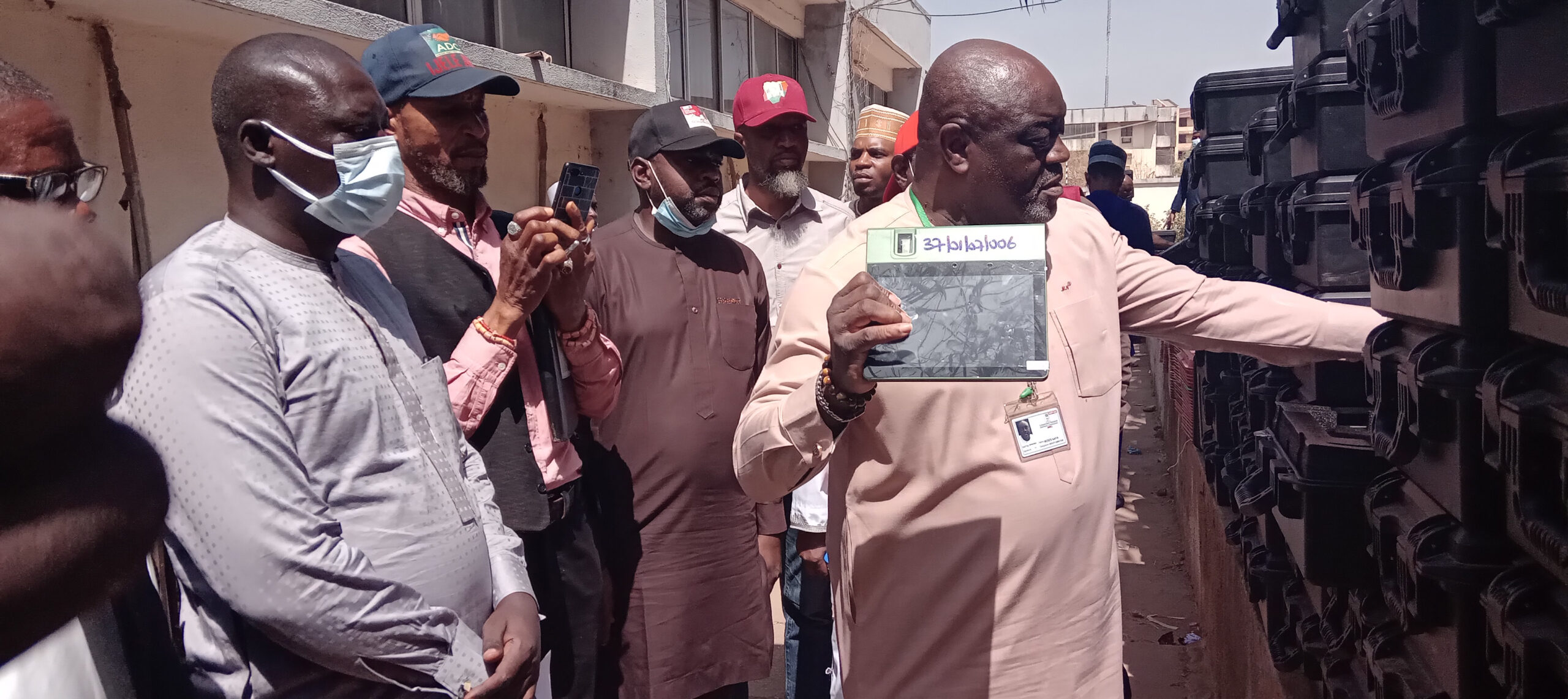
The Governorship Election Petition Tribunal sitting in Enugu, Saturday, ordered substituted service of a subpoena issued on the Resident Electoral Commissioner, REC, in Enugu State, Dr. Chukwuemeka Chukwu.
The tribunal had earlier issued a subpoena ordering the Enugu REC to bring before the court the BVAS machines used for the March 18 governorship election.
When the case came up on Saturday, the petitioners’ counsels led by Valerie Azinge, SAN, who appeared with Chief Alexander Ejesieme, SAN, among others, drew the attention of the tribunal to the subpoena issued on the Enugu REC and inquired as to whether or not he was in court.
At this point, Azinge asked the court to allow Ejesieme to take over the proceeding.
Ejesieme asked the counsel to the 1st respondent, INEC, whether the subpoena witness was in court.
In response, the INEC counsel, Hyacinth Okoli, said: “unfortunately, the subpoena was not served on the REC as stated and as required by law. The law is so specific about subpoena service.”
Citing Order 20 Rule 23 of the Federal High Court Rules 2009 which provides that a subpoena shall be served personally unless the court orders that same be served by substituted means in extreme cases, he said: “the REC was ordered to be served with the subpoena and he is always in the office. My submission is that whom the subpoena was served on is not the REC but one Grace Onuoha a legal officer with INEC.”
Going further, Okoli said: “I urge my Lords to set aside the service of the subpoena served on Grace Onuoha. There is no evidence that the REC evaded service and the tribunal didn’t make an order for substituted service on Grace Onuoha.
“The said subpoena has been returned to the tribunal in company of a letter and an affidavit. We urge the honourable tribunal to set aside the service of the subpoena on Grace Onuoha.”
Similarly, Chief Alex Iziyon, SAN, counsel to the respondents held same position.
In a counter augment, the petitioners’ lawyer, Ejesieme, told the tribunal that the letter and the affidavit returning the subpoena was served on him a few seconds ago.
Replying on points of law, Ejesieme said, “I will be relying on the same Order 20 Rule 23 of the Federal High Court Rules 2009 and I urge my Lords to make an order for a substituted service on Grace Onuoha.
“Also, I will be relying on a similar order made by this tribunal in EPT/003 where the tribunal gave a similar order that the subpoena be served on the counsel.”
Objecting to the oral application made by Ejesieme, the INEC counsel, Okoli said, “My Lords, there is no affidavit before the tribunal to attest that the bailiff made any attempt to serve the subpoena on the REC before serving it on Grace Onuoha.
“I urge my Lords to discountenance the application made by the learned silk to the court. In EPT/003, there was an affidavit before the court made an order for a substituted service on the governor of Enugu state. There was affidavit of non-service, but in the instant case, there is no affidavit of non-service.
Responding also, Iziyon told the tribunal that the application was not grantable under the law.
He said, “An oral application at this stage of the proceedings is not accepted. The application should be made in writing and not orally”.
In its ruling, the tribunal, chaired by Justice K. M. Akano held that the circumstances surrounding the return of the subpoena and the fact that the petitioners have just tomorrow, Sunday, which is the 16th day of July, 2023, to conclude their case, warrants the granting of the application.
It granted the order for substituted service and ordered that the subpoena be served on Grace Onuoha who is a legal officer in the Enugu office of INEC.

Politics
Alleged Coup: Protests Rock N’Assembly As Detained Officers’ Children, Wives Demand Justice


Scores of children and wives of military officers detained over an alleged coup plot yesterday staged a peaceful protest at the National Assembly, demanding a speedy trial and the release of the accused officials.
The protesters who gathered at the entrance of the National Assembly complex, moved in a slow procession while clutching placards with inscriptions such as “Don’t Kill Our Daddies,” “Detention Without Trial is Injustice,” and “Six Months of Torture: Enough Is Enough.”
Amid tears and trembling voices, the children appealed for justice and access to their detained fathers, many of whom they said they had not seen for months.
The appeal was made during a press briefing in Abuja attended by no fewer than 20 wives and several children of the detained officers, including a two-month-old baby.
The families were accompanied by human rights lawyer, Deji Adeyanju and activist Omoyele Sowore.
At the briefing, the families lamented that the officers had been held for over 160 days without trial or contact with their relatives, describing the situation as a violation of their fundamental rights.
Speaking on behalf of the families, Memuna Bashiru said the prolonged detention had thrown their households into uncertainty and emotional distress, noting that while allegations had been widely publicised, families remained in the dark about the fate of their loved ones.
The arrest of the indicted officers was first announced on October 4, 2025, by the then Director of Defense Information, Brigadier General Tukur Gusau, who disclosed that 16 officers were taken into custody for alleged breaches of military regulations and acts of indiscipline.
However, an interim investigation later suggested the existence of a clandestine network of officers, allegedly coordinated by a senior Army officer, which had begun preliminary planning for a coup.
According to the report, the alleged plot involved surveillance of key national assets, including the Presidential Villa, Armed Forces Complex, Niger Barracks in Abuja, and major international airports, with October 25, 2025, cited as the planned date for the operation.
Those reportedly in custody include Brig Gen M. A. Sadiq, Col M. A. Maaji, Lt Col S. Bappah, Lt Col A. A. Hayatu, Lt Col P. Dangnap, Lt Col M. Almakura, Maj A. J. Ibrahim, Maj M. M. Jiddah, Maj M. A. Usman, Maj D. Yusuf, Capt I. Bello, Capt A. A. Yusuf, Lt S. S. Felix, Lt Cdr D. B. Abdullahi, Sqn Ldr S. B. Adamu and Maj I. Dauda.
The alleged plot, according to findings, targeted senior government officials, including President Tinubu and Vice President Kashim Shettima.

In a statement issued yesterday, the party’s National Publicity Secretary, Mr Felix Morka, said the exercise would take place in all wards and designated centres nationwide.
He called on existing members to update their records, while encouraging new entrants to join the party through the digital platform.
“As the electronic membership registration exercise resumes in all wards and designated locations nationwide, we urge existing members to validate their membership while new members are encouraged to register and join the progressive family,” Mr Morka said.
According to him, eligibility for registration is limited to individuals aged 18 and above who possess a valid National Identification Number (NIN).
The party said the initiative is part of efforts to modernise its operations by transitioning to a digital database that would enhance record accuracy and accessibility.
Mr Morka noted that the e-registration would “digitise the party’s membership register, ensure the integrity of records, and enhance efficient access to membership data for planning and management decisions.”
He added that the move is also aimed at promoting internal democracy within the party and strengthening its commitment to democratic innovation.
The APC had previously introduced electronic registration as part of broader reforms to streamline its membership system and improve organisational efficiency.
-

 Editorial2 days ago
Domesticate FG’s Exit Benefit Scheme
-

 News2 days ago
RSU Unveils Five-Year Strategic Dev Plan …Calls For Collective Commitment To Institutional Excellence
-

 News2 days ago
DHQ Confirms Deaths Of Terrorists, Soldiers In Borno Attack
-

 News2 days ago
Tinubu Commissions Bayelsa Gas Turbine, Other Projects Today
-
Business2 days ago
Niger Delta Investment Summit Targets $5bn Inflows, 500,000 Jobs
-
Rivers2 days ago
Dep Gov Seeks Collaboration, Transparency Between RIVCHPP, PHCMB
-
Nation2 days ago
Rumuji Youth Leader Condemns Protest, Disowns Alleged Government Empowerment Claim
-

 Nation2 days ago
Haniel Jack Foundation Awards Five Rivers Indigenes Scholarship