
Nation
Experts Seek Collaboration With Academics, Security Professionals

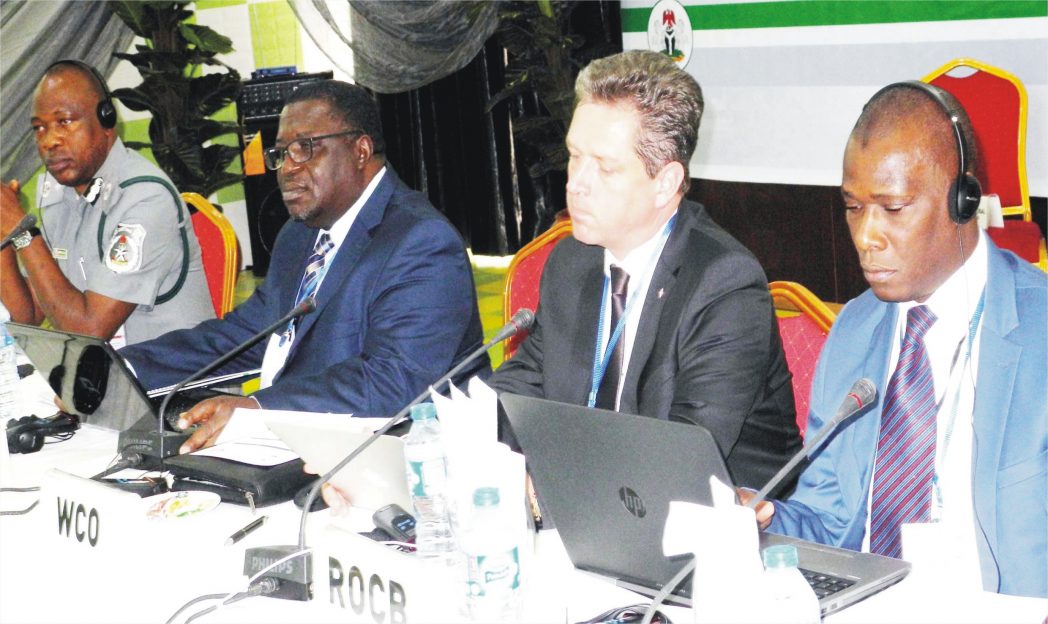
The Institute of Security, Nigeria, has urged the academic community and security professionals to work together to re-examine and re-evaluate the threats and vulnerabilities facing the nation’s security architecture.
The President of the institute, Prof. Oluwatoyin Ogundipe, gave the advice at the 15th International Security conference 2023, on Saturday in Lagos.
The theme of this year’s conference is: National Security Environment and Challenges; Enhancing Security Services for Sustainable Development.
According to him, such collaboration will also go a long way in examining threats to the environment and consequently determine the level of challenges and solutions.
He said that the security practitioners provide security and protection services with the aid of God-given expertise and skills which remain the major tools.
Ogundipe said the theme of the conference was well suited and timely, and to him personally, intriguing.
“We appreciate the complement of some of the best security experts and professionals this country ever produced; well cultured, with excellent character.
“It is worrisome though that we still face security challenges as professionals, where a few among us have by their misconduct brought distain and disrespect to the profession”, he said.
Ogundipe, the immediate past vice chancellor of the University of Lagos, noted that such development had remained a grave concern to the security professionals and the nation at large.
According to him, it is proper to hold the view that those instances of professional misconduct does not represent all the security professionals and experts in the nation.
“We must teach the next generation to act professionally and play a central role in setting the parameters for them that will have the formidable task of safeguarding and securing the nation in the new and challenging context in which we now live.
“There is no other profession that is uniquely positioned to provide internal and territorial security, protection and defence, other than security professionals.
“Every negative ethical behaviour needs to be condemned. The instances of alleged corrupt practices and professional misconducts constitute a minute fraction of members of the security profession”, he said.
The former VC urged Nigerians to repose confidence in security professionals, while they hold them to account and report cases of misconduct.
According to him, the country is on the verge of conducting another general election, hence it is the responsibility of the security professionals to guarantee the security of lives and properties in the country.
Ogundipe further said that there was the need for citizens to also do all that was legitimate within their abilities and be motivated by the desire to find solutions to the many security challenges facing the country.
“All hands must be on deck and all arms of government have to do all that is possible to contribute ideas and actions that will birth the solutions needed to secure lives and properties of Nigerians as envisaged in section 14 (2)(b) of the 1999 constitution.
“It states that ‘the security and welfare of the people shall be the primary welfare of government’.
“I, therefore, believe that the professional actions will fully resolve this complex national security issues and frizzle all forms of corruption facing our country”, Ogundipe stated.
In his welcome address, Mr Adebayo Akinade, Deputy President of the institute, noted that the conference represented a milestone in the effort to create awareness among members of the general public and the law enforcement agencies.
According to him, one of the objectives of the institute is to promote and develop security science, technology and practice in all its ramifications.
He said it also conducts research, collects and disseminates information on security subjects among others.
The Deputy President said there was the need to search for the remote and immediate causes of security challenges, security architecture and other breakdown in the social fabrics of the society.
“There is the need to reflect on the policies which can be put in place to correct these anomalies and restore the lost order in our communities and societies.
“It is only when this order is restored that progress can be made to improve the decayed social standard and in the security trends in the nation.
“The papers to be discussed in the conference today will highlight some of these problems with the possibility of finding solutions to them.
“As we move into the 21st century, let us together find the blueprint of improving the security environment to ensure security, stability, unity, progress, peace and order in our society”, Akinade said.
In his remark, Chairman of the occasion, Prince Olu Bajowa, said the country’s nascent democratic experiment was still occuring with tremendous challenges.
According to him, the country can not remain impervious to the overriding task of democratic consolidation, which must be anchored on the rule and supremacy of the law.
“We have obligation to the nation to mentor the younger members of the security profession. The duty is deliberate and sincere mentorship, which is the only way the ideal security practitioners will progressively place the next generation in the right track.
“We also owe ourselves the duty to preserve the security space for the next generation of security professionals and for these reasons, we must shun all forms of unprofessional and unethical practices that may cast the security professionals in bad light and undermine our place in the society,” he said.
The Tide’s source reports that the high point of the event was the award of distinguished fellowship to eight persons, while 26 professionals were awarded professional fellowship.

Nation
Zabbey Emerges Social Impact Man Of The Year 2025 …Reaffirms Commitment To Ogoni Transformation


The Project Coordinator of the Hydrocarbon Pollution Remediation Project (HYPREP), Prof. Nenibarini Zabbey, has been named Social Impact Man of the Year 2025 by Daily Independent Newspapers.
The award was presented at the Independent Awards 2025 Silver Jubilee Edition held at Eko Hotels and Suites, Lagos, as part of activities marking the organisation’s 25th anniversary of editorial excellence.
Managing Director and Editor-in-Chief of Independent Newspapers, Steve Omanufeme, said the award recognises individuals who have demonstrated exceptional leadership and transformative impact in their respective fields. He explained that recipients emerged through a rigorous process involving public voting, editorial board scrutiny, and assessment by a panel of judges.
Omanufeme noted that Zabbey’s selection reflects his outstanding contributions to environmental restoration and community development in Ogoniland through the Ogoni cleanup project.
With over two decades of experience spanning research, advocacy, capacity development, and administration, Zabbey has, within three years of leading HYPREP, implemented people-focused initiatives aimed at improving livelihoods and restoring degraded ecosystems.
Under his leadership, the project has reportedly created more than 7,000 direct jobs and facilitated the training of thousands of youths and women in high-demand skills, including mechatronics, cybersecurity, commercial diving, underwater welding, and data analytics.
HYPREP has also trained over 5,000 beneficiaries across 21 vocational skill areas, providing start-up kits to support entrepreneurship and economic empowerment.
In the area of environmental sustainability, the agency has established 31 environmental clubs in secondary schools and trained 2,500 youths with International Maritime Organization (IMO) certification to support shoreline cleanup and mangrove restoration efforts.
The project has recorded significant ecological milestones, including the cleanup of over 1,000 hectares of shoreline and restoration of 560 hectares of mangroves. This progress contributed to the designation of Ogoni mangrove wetlands as a Ramsar Site of international importance.
Beyond environmental remediation, HYPREP has expanded its social intervention programmes to include educational grants and scholarships for over 1,000 students, support for small and medium-scale enterprises, and skills training for persons living with special needs.
Infrastructure and healthcare development have also featured prominently, with ongoing projects such as the Ogoni Specialist Hospital, a Cottage Hospital, the Ogoni Power Project, and the Centre of Excellence for Environmental Restoration. The agency has further strengthened emergency healthcare delivery by donating five ambulances to medical facilities in the region.
Additionally, potable water has been provided to more than 40 communities, alongside the construction of wind-powered water systems in underserved areas.
Speaking on the award, Zabbey described it as a validation of HYPREP’s integrated approach to environmental restoration, healthcare improvement, and economic empowerment.
“We remain committed to delivering a cleanup that not only restores the environment but also improves livelihoods in line with the Renewed Hope Agenda of President Bola Ahmed Tinubu,” he said.
HYPREP, in a statement, expressed appreciation to the management of Independent Newspapers for the recognition, the Federal Ministry of Environment for its oversight role, and the Ogoni communities for their continued support and collaboration.
The agency was established by the Federal Government of Nigeria to implement the recommendations of the United Nations Environment Programme (UNEP) report on Ogoniland and restore areas impacted by oil pollution.
Nation
Rivers State Judiciary Counters NBA National Position over Contempt Ruling, Says Judge Acted Within the Law

The Rivers State Judiciary has faulted the Nigerian Bar Association National over its March 26, 2026 press release condemning the jailing of a lawyer for contempt, insisting the trial judge acted lawfully to protect the court’s integrity.
In a rejoinder issued by Chief Registrar High Court,David D. Ihua-Maduenyi, Esq., the judiciary said it was necessary to “set the records straight” following reactions to the NBA’s statement on the contempt conviction of Mrs. Lovinah Ugbana Benjamin.
Titled: “JUDGES MUST NOT BULLY LAWYERS OR
ABUSE POWER TO PUNISH FOR CONTEMPT AS A TOOL
FOR INTIMIDATION OF LAWYERS”
RE: IN THE MATTER OF CONTEMPT OF COURT BY MRS.
LOVINAH UGBANA BENJAMIN
IN SUIT NO.
PHC/301/2016 CORAM C. NWOGU J., OF THE HIGH
COURT OF RIVERS STATE.
The state judiciary explained that case in question is Suit No. PHC/301/2016 before Justice Chinwendu Nwogu of the Rivers State High Court, where Mrs. Benjamin served as defence counsel.
The statement read thus
“We are compelled to make this rejoinder regarding the
incident of the conviction for contempt and subsequent
unconditional discharge of Mrs. Lovinah Ugbana Benjamin,
Learned Counsel for the Defendants in the above suit by Hon.
Justice Chinwendu Nwogu of the High Court of Rivers State in
order to set the records straight, and not allow the
misinformation, misconception and reactions arising from the
NBA National Press Release in the matter to fester as reality or
truth.”
In the suit under reference wherein the said Learned
Counsel appeared for the Defendants, the Learned Counsel
attempted to mislead the Court by her signed and filed final
written address, by knowingly and falsely presenting non-
existent facts and evidence of a witness. When confronted by the
Court, she admitted that what she stated in her final written
the address was not true and she was unapologetic.”
“The to uphold the dignity and integrity of the Court, which the
said Learned Counsel treated with clear and brazen contempt, the
Court after following due process, convicted her for contempt and
sentenced her to prison for 3 days only, instead of the 3 months
statutory term due to passionate plea from the Bar.”
“According to the statement the suggestion of the NBA National in paragraph 10 of the
Press Release under reference that “where a court considers
counsel’s conduct improper, the proper course is to invoke
recognised disciplinary mechanisms, including referring
counsel to the Legal Practitioners Disciplinary Committee
(LPDC), rather than resorting to summary punitive measures”,
is not an invariable rule because the act of the Defence Counsel
constitutes contempt in facie curiae which the Court can punish
instantly, hence the action of the Judge is not an abuse of power
or an act of intimidation.”
“Nevertheless, due to the numerous calls from respected
members of the Bar to the offices of the Chief Registrar and the
Honourable Chief Judge for the release of the said Learned
Counsel, and the intervention of the NBA Port Harcourt Branch
delegation led by its Chairman, Mrs. Cordelia U. Eke to the Judge.
in his Chambers in the morning of 26/03/2026 where the
delegation upon learning the true facts of the incident, apologised
and pleaded for the release of the said Learned Counsel.
“The Judge
having accepted the apology signed a production warrant and
upon her production in court and oral application by Mrs. Cordelia
U. Eke, discharged her unconditionally that same morning.”
The statement further stated that It is therefore shocking to read later that day the NBA
National Press Release signed by its President and Secretary, Mazi
Afam Joseph Osigwe (SAN) and Dr. Mobolaji Ojibara respectively,
fiercely threatening and hastily advocated the following ultimata and
the immediate release of the affected
Counsel.
:That the Hon. Chief Judge of Rivers State
immediately investigate the circumstances
surrounding this incident and take
appropriate administrative action.
That appropriate disciplinary steps be taken
by the National Judicial Council, where
necessary.
That the remand of Mrs. Lovinah Ugbana
Benjamin under the circumstances be
condemned and set aside”
“That all NBA branches in Port Harcourt and
its environs and all legal practitioners
boycott the proceedings before the Court of
Hon. Justice Nwogu for a period of 7 days if
Mrs. Lovinah Ugbana Benjamin is not
released within 24 hours.
“It seems to us that it is either the NBA Port Harcourt Branch
leadership did not relate the true position to the NBA National or
if they did, the NBA National decided to speak daggers, not peace
to impugn the Judge as a villain.
“We find the position of the NBA National on this subject very
offensive and embarrassingly raising a feeling of acrimony against
the Judge in particular, and the High Court bench of Rivers State
in general. We categorically state that the Hon. Justice Chinwendu
Nwogu is one of our respected and respectful Judges with
unblemished integrity.
We view this Press Release as an isolated departure from the
enterprising and amiable leadership of the NBA National,
especially its President, whom we hold in high esteem and
admiration.”
“Whilst we appreciate the concern of the NBA National in
bringing attention to the event of 25th March 2026, we assure that
the Bench and the Bar in Rivers State remain veritable partners
in the administration of justice.
“We firmly restate that the Bench in Rivers State holds the Bar
in high esteem and this event would not disrupt the cordial
relationship between the Bench and the Bar.”
-
Politics3 days ago
ADC ELECTS NEW EXECUTIVES IN RIVERS LGA
-
Politics3 days ago
Ekiti 2026: IPC Trains Journalists On Election Coverage
-
Politics3 days ago
INEC To Display Voters Register April 29 As CVR Phase II Closes Nationwide
-
Sports3 days ago
WAN Mourns Ex-NFF President Galadima
-
Sports3 days ago
Brentford Miss Chance To Move Up
-
Sports3 days ago
NBA PlayOff: Lakers Make Winning Start
-
Politics3 days ago
GROUP BLASTS ATIKU CRITICAL COMMENTS AGAINST JONATHAN … SAYS EX-VP CAREER ASPIRANT
-
Sports3 days ago
NSF champion Osaretin wins at Tour du Faso