
Politics
INEC Insists On Holding Elections As Scheduled, Begins Airlift Of Sensitive Materials

The Independent National Electoral Commission (INEC) has declared its determination to proceed with the conduct of the February/March general elections, two days after it expressed fears about the wave of general insecurity across the country.
INEC had lamented that if not tamed, electoral violence could precipitate a constitutional crisis by way of the forced cancellation of election results or outright postponement of polls.
Presenting the register of voters to chairmen and secretaries of Nigeria’s 18 registered political parties on Wednesday in Abuja, INEC Chairman, Prof. Mahmood Yakubu said the commission has been bolstered by assurances by Nigeria’s defence, security and intelligence architecture that it would ensure a conducive environment for the polls.
Consequently, the electoral umpire said it has commenced the airlift of sensitive and non-sensitive materials to states.
Yakubu noted that with just 44 days to the General Election, and with the presentation of the register of voters to political parties, the Commission has now successfully implemented 11 out of the 14 activities on the timetable and schedule for the polls.
According to him, the implementation of other activities has proceeded in earnest.
Yakubu added that at no time in the recent history of the Commission had so much of the forward planning and implementation been accomplished 44 days ahead of a General Election.
“Therefore, the Commission is not contemplating any adjustment to the election timetable, let alone the postponement of the General Election”, he declared.
He said, for the avoidance of doubt, the Presidential and National Assembly elections will hold on Saturday, 25th February, 2023 while Governorship and State Assembly elections will hold two weeks later on Saturday, 11th March, 2023.
“The repeated assurances by the security agencies for the adequate protection of our personnel, materials and processes also reinforces our determination to proceed. The 2023 General Election will hold as scheduled. Any report to the contrary is not the official position of the Commission.
“As a further affirmation of the Commission’s readiness to conduct the 2023 General Election as scheduled, the final register of voters has been compiled.
“You would recall that for the 2019 General Election, Nigeria had a voter population of 84,004,084. After the cleaning up of the data from the last Continuous Voter Registration (CVR) exercise (June 2021 – July 2022), 9,518,188 new voters were added to the previous register resulting in the preliminary register of 93,522,272 which was presented to Nigerians for claims and objections as required by law.
“At the end of the period for claims and objections by citizens, the Commission received 53,264 objections from Nigerians to the prevalence of ineligible persons on the register by virtue of age, citizenship or death. These names have been verified and removed from the register.
“Consequently, the register of voters for the 2023 General Election stands at 93,469,008. Of this cumulative figure, 49,054,162 (52.5%) are male while 44,414,846 (47.5%) are female. The distribution by age group shows that 37,060,399 (39.65%) are youth between the ages of 18 and 34; 33,413,591 (35.75%) are middle-aged persons between the ages of 35 and 49; 17,700,270 (18.94%) are elderly voters between the ages of 50 and 69 while 5,294,748 (5.66%) are senior citizens aged 70 and above. In terms of occupational distribution, students constitute the largest category with 26,027,481 (27.8%) of all voters, followed by 14,742,554 (15.8%) Farmers/Fishermen and 13,006,939 (13.9%) housewives.
“The data on disability was not collected for previous registration. However, the cumulative figure of 85,362 persons from the recent CVR indicates that there are 21,150 (24.5%) persons with Albinism; 13,387 (15.7%) with physical impediment and 8,103 (9.5%) are blind”, he added.
The INEC boss added that already, substantial quantities of sensitive and non-sensitive materials have been deployed to various locations across the country.
According to him, the last batch of the Bimodal Voter Accreditation System BVAS has been received while the ongoing configuration of the critical technology in readiness for elections will soon be completed.
“In the last two days, we commenced the airlifting of other sensitive materials to States across the country. Already, some of the materials for 17 States in three geo-political zones have been delivered.
“Furthermore, 13,868,441 Permanent Voters’ Cards (PVCs) have been printed, delivered to States and are being collected by citizens as new voters or by existing voters who applied for transfer or replacement of cards as provided by law.
“Similarly, following the display of the voters’ register nationwide and the conclusion of claims and objections by citizens, a new national register of voters has been compiled.
“I would like to reiterate our commitment to a transparent, credible and inclusive 2023 General Election. We will continue to take every step to protect the sanctity of the votes cast by citizens and to deal with infractions, including the arrest and prosecution of persons that attempt to perpetuate illegality at Polling Units on Election Day, be they underaged voters or vote buyers.
“Once again, the Commission appreciates the patience of Nigerians who have been queuing up at the designated centres to collect the PVCs. To make it easier, we devolved the collection to the 8,809 Registration Areas/Wards nationwide. We have also uploaded the comprehensive list of the Ward collection centres nationwide to our website. The locations can also be identified by sending a short text message to any of the two dedicated telephone lines. The details are also available on the Commission’s website”, he added.

Politics
Alleged Coup: Protests Rock N’Assembly As Detained Officers’ Children, Wives Demand Justice

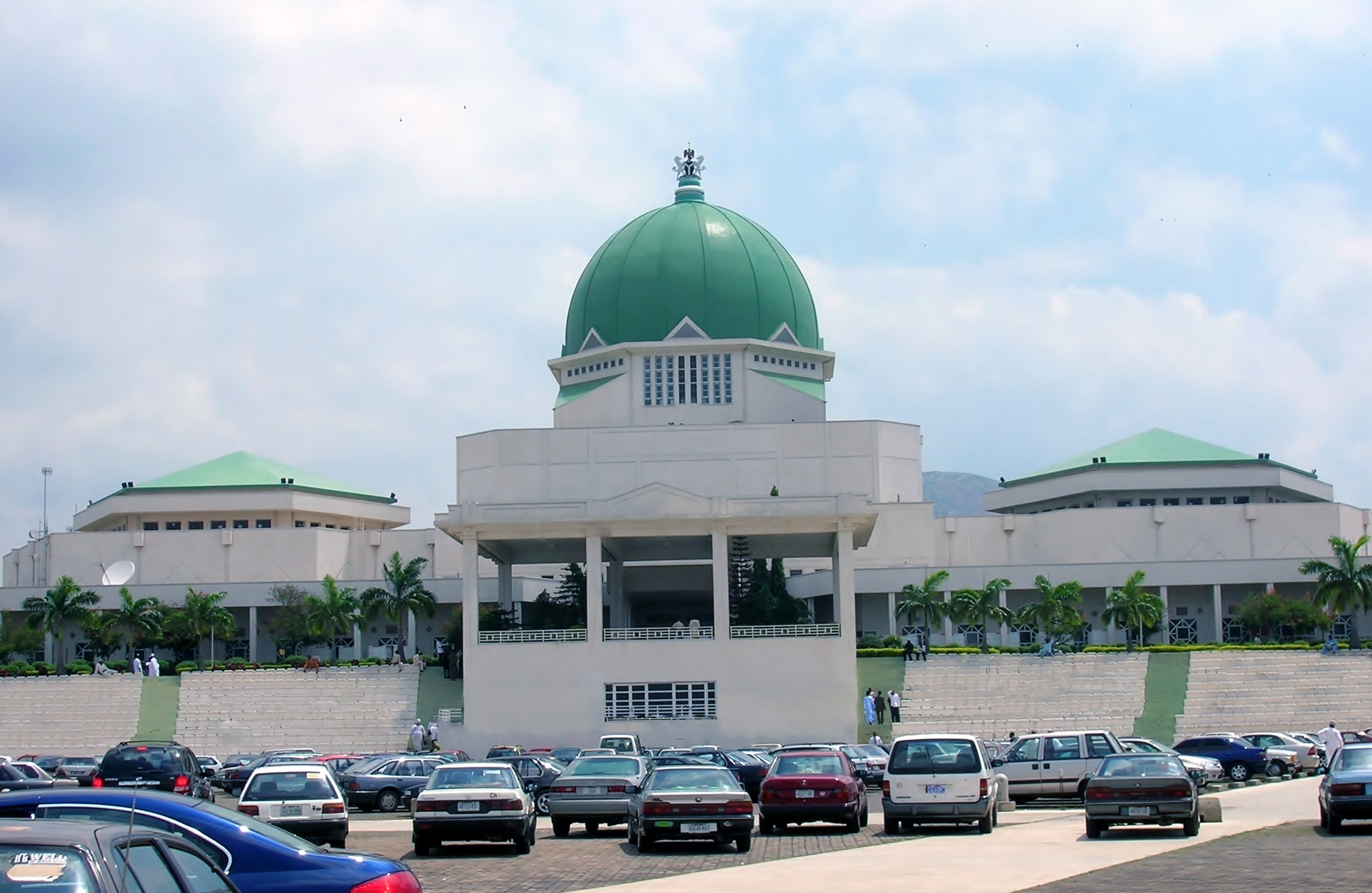
Scores of children and wives of military officers detained over an alleged coup plot yesterday staged a peaceful protest at the National Assembly, demanding a speedy trial and the release of the accused officials.
The protesters who gathered at the entrance of the National Assembly complex, moved in a slow procession while clutching placards with inscriptions such as “Don’t Kill Our Daddies,” “Detention Without Trial is Injustice,” and “Six Months of Torture: Enough Is Enough.”
Amid tears and trembling voices, the children appealed for justice and access to their detained fathers, many of whom they said they had not seen for months.
The appeal was made during a press briefing in Abuja attended by no fewer than 20 wives and several children of the detained officers, including a two-month-old baby.
The families were accompanied by human rights lawyer, Deji Adeyanju and activist Omoyele Sowore.
At the briefing, the families lamented that the officers had been held for over 160 days without trial or contact with their relatives, describing the situation as a violation of their fundamental rights.
Speaking on behalf of the families, Memuna Bashiru said the prolonged detention had thrown their households into uncertainty and emotional distress, noting that while allegations had been widely publicised, families remained in the dark about the fate of their loved ones.
The arrest of the indicted officers was first announced on October 4, 2025, by the then Director of Defense Information, Brigadier General Tukur Gusau, who disclosed that 16 officers were taken into custody for alleged breaches of military regulations and acts of indiscipline.
However, an interim investigation later suggested the existence of a clandestine network of officers, allegedly coordinated by a senior Army officer, which had begun preliminary planning for a coup.
According to the report, the alleged plot involved surveillance of key national assets, including the Presidential Villa, Armed Forces Complex, Niger Barracks in Abuja, and major international airports, with October 25, 2025, cited as the planned date for the operation.
Those reportedly in custody include Brig Gen M. A. Sadiq, Col M. A. Maaji, Lt Col S. Bappah, Lt Col A. A. Hayatu, Lt Col P. Dangnap, Lt Col M. Almakura, Maj A. J. Ibrahim, Maj M. M. Jiddah, Maj M. A. Usman, Maj D. Yusuf, Capt I. Bello, Capt A. A. Yusuf, Lt S. S. Felix, Lt Cdr D. B. Abdullahi, Sqn Ldr S. B. Adamu and Maj I. Dauda.
The alleged plot, according to findings, targeted senior government officials, including President Tinubu and Vice President Kashim Shettima.

In a statement issued yesterday, the party’s National Publicity Secretary, Mr Felix Morka, said the exercise would take place in all wards and designated centres nationwide.
He called on existing members to update their records, while encouraging new entrants to join the party through the digital platform.
“As the electronic membership registration exercise resumes in all wards and designated locations nationwide, we urge existing members to validate their membership while new members are encouraged to register and join the progressive family,” Mr Morka said.
According to him, eligibility for registration is limited to individuals aged 18 and above who possess a valid National Identification Number (NIN).
The party said the initiative is part of efforts to modernise its operations by transitioning to a digital database that would enhance record accuracy and accessibility.
Mr Morka noted that the e-registration would “digitise the party’s membership register, ensure the integrity of records, and enhance efficient access to membership data for planning and management decisions.”
He added that the move is also aimed at promoting internal democracy within the party and strengthening its commitment to democratic innovation.
The APC had previously introduced electronic registration as part of broader reforms to streamline its membership system and improve organisational efficiency.
-
 Editorial5 days ago
Domesticate FG’s Exit Benefit Scheme
-

 News4 days ago
RSU Unveils Five-Year Strategic Dev Plan …Calls For Collective Commitment To Institutional Excellence
-

 News5 days ago
DHQ Confirms Deaths Of Terrorists, Soldiers In Borno Attack
-

 News5 days ago
Tinubu Commissions Bayelsa Gas Turbine, Other Projects Today
-
Business5 days ago
Niger Delta Investment Summit Targets $5bn Inflows, 500,000 Jobs
-
Sports5 days ago
Full Draw For 2026 U-17 AFCON
-
Nation4 days ago
Rumuji Youth Leader Condemns Protest, Disowns Alleged Government Empowerment Claim
-

 Nation5 days ago
Haniel Jack Foundation Awards Five Rivers Indigenes Scholarship