
Nation
Osinbajo Tasks State Assemblies On Speedy LG Autonomy Bill Ratification

Vice President Yemi Osinbajo has called on State Houses of Assembly to speedily ratify the bill seeking total autonomy and devolution of powers to the Local Government Areas in the country.
He made the call last Friday, while delivering the “Distinguished Annual Lecture” of the National Institute for Policy and Strategic Studies (NIPPS), Kuru, near Jos.
The Tide’s source reports that the lecture was titled “Subnational Local Governance in Africa: Rethinking Policies, Frameworks and Institutions”.
Osinbajo, who was represented by Dr Chris Ngige, the Minister of Labour and Employment, said local authorities play key roles towards nation building, but lamented that the third tier of government had over time been neglected and undervalued.
He said the ongoing constitutional amendment seeking to allocate more powers to the local governments is a step in the right direction.
“While the roles of state governments and their scope of authority appear very well appreciated, local governments remain, in my view, quite undervalued, needing more attention from all of us, better funding, organisational and high quality leadership.
“As we speak, a bill for local government autonomy is striving hard to pass the threshold of 24 votes required from state Houses of Assembly, a key milestone towards its passage.
“I believe that efforts being made, through the ongoing constitutional amendment, to cede more responsibilities for control and management of resources to local governments across the country reflect our understanding of how crucial it has become for this tier of government to take full charge of their responsibilities and functions at optimal capacity.
“After all, it is often argued that local government is closest to the people and best placed to impact on their lives,” he said.
The Vice President argued that local government fiscal autonomy would promote peace and security in country, adding that people at rural communities understand their terrain better and know how to deploy resources towards tackling security challenges.
He insisted that the yearning for local government autonomy is a step in the right direction and called on state assemblies to expedite actions toward ratifying the autonomy bill.
He added that the advantages that come with local government autonomy are obviously enormous, adding that it would further consolidate on Nigeria’s democratic system.
“Ratifying the bill that grants local governments fiscal autonomy in Nigeria is indeed a step in the right direction, and we encourage the yet-to-be decided voters from state assemblies to be considerate in this regard and speedily pass it.
“The issue of security for example which has posed significant challenge in the last decades cannot be effectively and consistently tackled with centralised security structure and resources.
“It is clear that Nigeria is too vast to be policed from the centre and the people at the grassroots know the intricacies of their communities better, they know the geography intimately, they understand the ebbs and flows of people and information in a greater deal.
“It is my firm belief that we must strengthen our sub-national administrative units via further devolution of powers and resources for effective performance,” he said.
The Emir of Kano, Alhaji Aminu Ado-Bayero, who chaired the occasion, said that there is a strong nexus between effective local governance and sustainable development, hence Nigeria should not be left behind in this paradigm shift.
He maintained that an effective local authority would address poverty, hunger, inequality, insecurity, illiteracy, among other challenges currently facing the nation.
Earlier, Prof Ayo Omotayo, the Director General of NIPPS, said the distinguished annual lecture was part of activities for the graduation ceremony of the institute’s Senior Executive Course (SEC) 44.



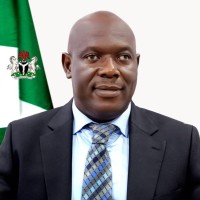
The Hydrocarbon Pollution Remediation Project (HYPREP) has commemorated the 15th anniversary of the release of the United Nations Environment Programme (UNEP) Environmental Assessment Report on Ogoniland, reaffirming its commitment to restoring the environment and improving the livelihoods of affected communities.
In a statement signed by the Project Coordinator, Prof Nenibarini Zabbey, to commemorate the anniversary, HYPREP described the anniversary as a significant milestone in Nigeria’s environmental restoration efforts, noting that the project has made remarkable progress in implementing the recommendations of the landmark UNEP report released on August 4, 2011.
The UNEP report had revealed extensive oil pollution across Ogoniland, severe environmental degradation, and serious public health risks resulting from decades of petroleum operations. It also recommended an initial $1 billion fund to commence the cleanup of the affected communities.
According to HYPREP, the Federal Government formally launched the Ogoni clean-up in 2016, while the Project Coordination Office was established in 2017 to drive the implementation of UNEP’s recommendations.
Zabbey said the current administration has continued to prioritise the project under the Renewed Hope Agenda.
Providing an update on the cleanup, the Project Coordinator disclosed that 30 of the 65 contaminated sites identified by UNEP have been fully remediated, while work is ongoing at several medium- and high-risk locations. It also stated that more than 1.5 million mangrove seedlings have been planted as part of what it described as the world’s largest restoration of oil-degraded mangroves, with over 1,000 hectares of shoreline already rehabilitated.
Zabbey further revealed that 49 Ogoni communities have been connected to potable water schemes through multiple water projects and booster stations aimed at providing safe drinking water across the region.
In the health sector, he said the 100-bed Ogoni Specialist Hospital in Kpite and the 43-bed Cottage Hospital in Buan are nearing completion, adding that several existing health facilities have been upgraded with modern medical equipment, while five ambulances have been donated to improve emergency healthcare services. The Project Coordinator also disclosed that a three-year human health biomonitoring study is being conducted in collaboration with the World Health Organization’s International Agency for Research on Cancer (IARC).
On economic empowerment, Zabbey stated that the Project has created more than 8,000 direct jobs and trained thousands of Ogoni youths and women in various vocational and technical skills, including software development, cybersecurity, aviation, commercial diving, seafaring, mechatronics, and creative arts. The project also reported awarding scholarships to more than 1,000 students, providing grants to small businesses, and supporting persons living with special needs through skills acquisition programmes.
The statement further highlighted ongoing legacy projects, including the Ogoni Power Project and the Centre of Excellence for Environmental Restoration, which it said is about 96 per cent complete. HYPREP also welcomed the recent designation of the Ogoni Wetland as a Ramsar Site of International Importance and pledged to continue promoting biodiversity conservation and sustainable management of the ecosystem.
Marking the anniversary, Zabbey said the progress achieved over the past 15 years demonstrates the collective commitment of government, development partners, stakeholders, and local communities to restoring Ogoniland. He called for renewed collaboration to sustain the cleanup effort, promote environmental sustainability, and support the long-term development of the region. 3
-

 News1 day ago
RSG Targets Nine Million Residents in Mosquito Net Distribution Campaign
-

 Oil & Energy1 day ago
Aiyedatiwa Signs New Electricity Bill
-

 Oil & Energy1 day ago
NLNG Commissions Research And Innovation Centre In RSU
-

 Maritime1 day ago
Marine Minister Commends President Tinubu On NPERA Bill Assent
-

 News1 day ago
KenPoly Holds Eight Convocations, August 29
-

 News1 day ago
RSG Begins Another Phase of Projects Commissioning Today
-

 News1 day ago
RMAFC Completes Revenue Sharing Review, Proposes New Pay
-

 Maritime1 day ago
NAGAFF Petitions IGP Over Alleged Maritime Police Harassment